Why Does My Dog Steal My Spot? Analyzer
Instructions: Select the option that best describes your situation for each category below.
Analysis Result
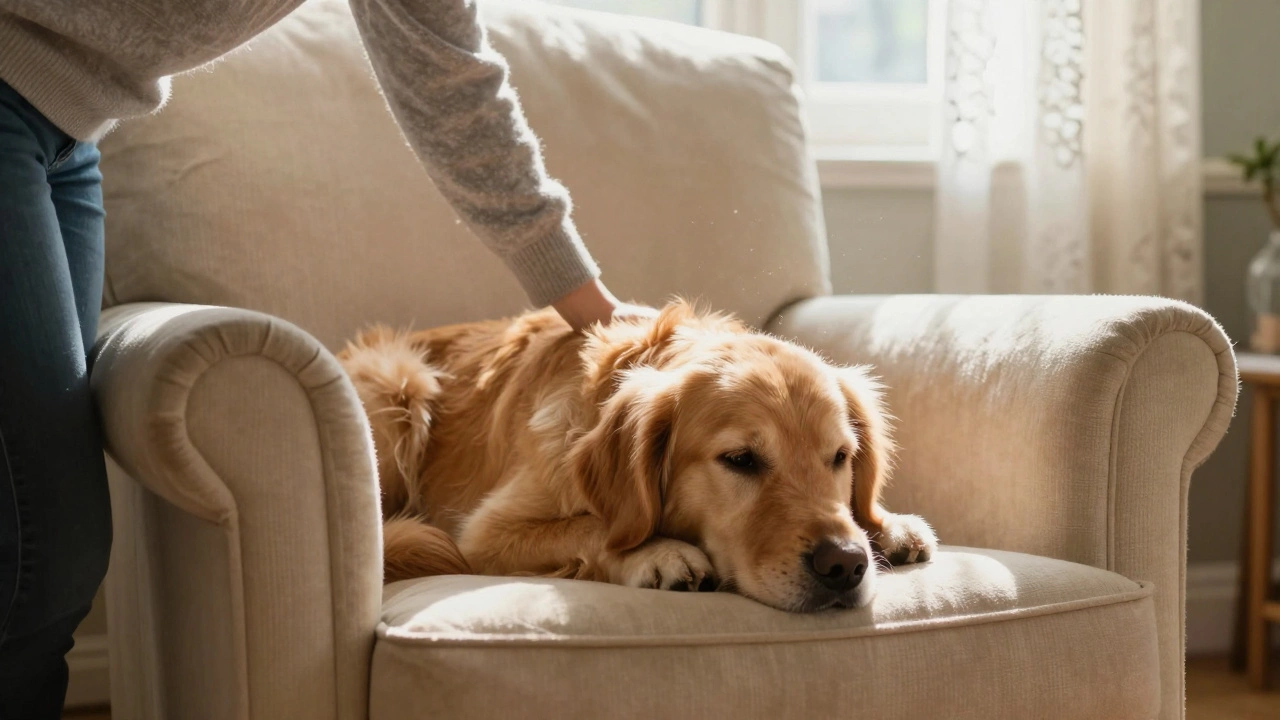
You stand up from your favorite armchair, ready to grab a coffee or check your phone, and suddenly you’re blocked. Your dog has already claimed the warm indentation you just left behind. It’s a common scenario for millions of pet owners, but it can feel like a breach of personal space-or worse, an act of dominance. Before you scold your furry friend, take a breath. This behavior is rarely about trying to overthrow you as the alpha. In fact, it’s usually one of the most affectionate things your dog can do.
Understanding why dogs seek out our recently vacated spots requires looking at their evolutionary history, sensory world, and social needs. Whether your dog is a high-energy Border Collie or a lazy Basset Hound, the reasons are rooted in instinct and emotion. Let’s break down exactly what’s happening in that doggy brain and how you can manage it if it becomes a nuisance.
The Science of Scent: Why Your Spot Smells Like Safety
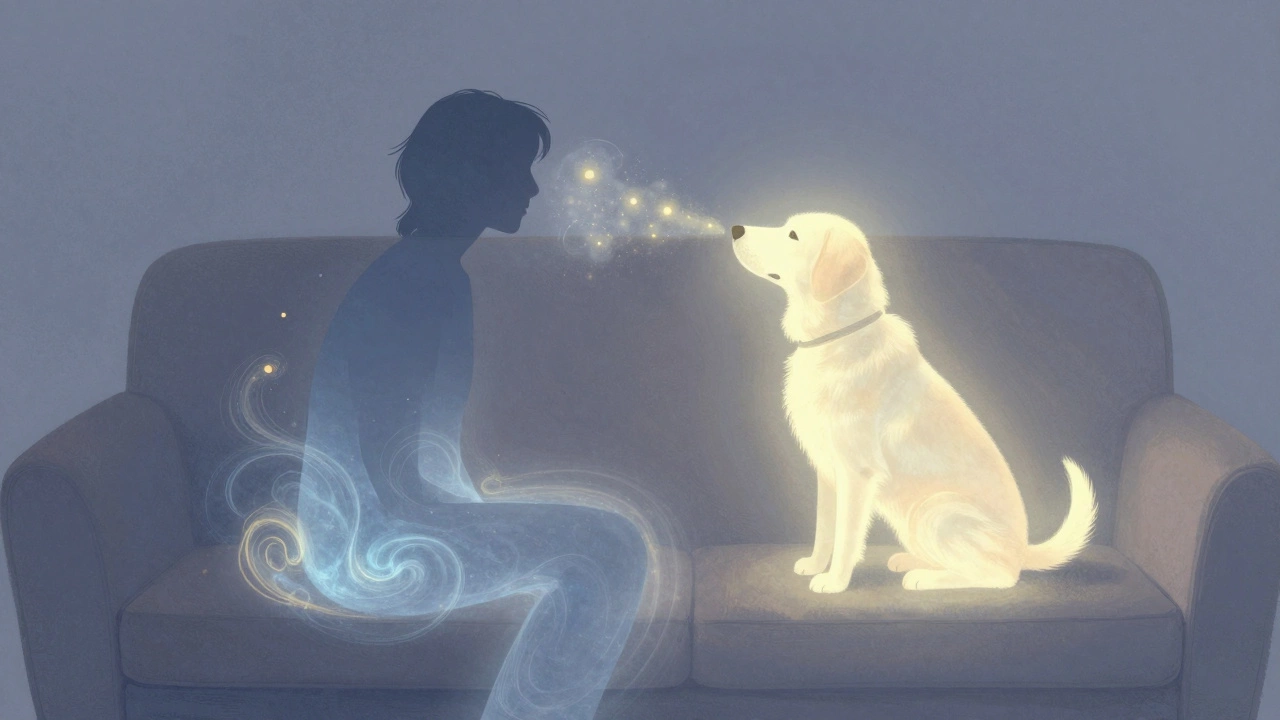
To humans, a chair that someone just sat on might smell faintly of fabric softener or body odor. To a dog, it smells like home, safety, and family. Dogs have approximately 300 million olfactory receptors in their noses, compared to our measly six million. When you sit in a spot, you deposit pheromones, sweat, and skin cells. For your dog, this creates a concentrated scent map of you.
When your dog curls up in your spot, they are literally wrapping themselves in your scent. This provides a psychological buffer against anxiety. The familiar smell of their primary caregiver acts as a calming agent. If your dog suffers from separation anxiety or general nervousness, sitting in your spot isn’t just comfort-it’s a coping mechanism. They are using your scent to self-soothe while you are temporarily absent from the immediate vicinity.
- Pheromone Detection: Dogs detect subtle chemical signals that indicate who was there and when.
- Scent Marking: By lying in your spot, they may also be mixing their scent with yours, reinforcing the bond.
- Anxiety Reduction: Familiar scents lower cortisol levels in anxious dogs.
Thermoregulation: The Warmth Factor
Let’s be honest: furniture is comfortable. But beyond the plush cushioning, there is a practical biological reason your dog loves your spot-heat. Dogs have a higher basal body temperature than humans, averaging around 101-102°F (38.3-38.9°C). However, they still seek external heat sources to conserve energy, especially older dogs or those with thin coats.
When you sit on a sofa or bed, your body heat warms the fabric. Even after you stand up, that residual warmth lingers for several minutes. For a dog, finding a pre-heated bed is like finding a heated car seat in winter. It’s efficient. Why expend energy warming up a cold corner of the rug when you can steal the warmth you’ve been waiting for? This is particularly common in breeds like Greyhounds or Whippets, which have minimal body fat and rely heavily on external warmth.
| Factor | Influence Level | Description |
|---|---|---|
| Scent | High | Provides emotional security and familiarity. |
| Warmth | Medium-High | Residual body heat offers physical comfort. |
| Bonding | High | Mimics pack sleeping arrangements. |
| Territory | Low-Medium | Occasional marking, but rarely aggressive dominance. |
Pack Mentality and Social Bonding
Dogs are descendants of wolves, animals that evolved to sleep in tight-knit packs. In the wild, sleeping close together provided protection from predators and shared warmth. While domestic dogs no longer need to hunt mammoths, that instinctual desire to stay physically close to their "pack" remains strong.
By taking your spot, your dog is maintaining proximity to you. Even though you’ve moved across the room, occupying the space you just held feels like staying connected. It’s a form of social glue. Research in canine cognition suggests that dogs view their human families as part of their social group. They want to be where you are, or at least where you were. If you notice your dog following you from room to room, or choosing your bed over their own, this is the same drive at play. It’s not manipulation; it’s companionship.
This behavior often intensifies during times of change. If you’ve recently moved, had a new baby, or started working from home less frequently, your dog may cling to your scent more tightly. The spot represents stability in a shifting environment.
Is It Dominance? Debunking the Alpha Myth
For decades, popular dog training advice relied on the concept of the "alpha wolf," suggesting that dogs try to dominate their owners through actions like stealing seats. Modern ethology-the study of animal behavior-has largely debunked this. Domestic dogs do not see themselves as competitors for leadership in the way wild wolves once did (and even that wolf theory was flawed).
If your dog sits in your spot, they are not saying, "I am the boss now." They are saying, "I love you, I like your smell, and this is cozy." True dominance aggression involves blocking pathways, growling, resource guarding, or stiffening posture. Simply curling up in your chair is passive and non-confrontational. Labeling this behavior as dominance can lead to unnecessary conflict and damage the trust between you and your pet.
When Stealing Spots Becomes a Problem
While cute in moderation, constant spot-stealing can become frustrating. Maybe you have a strict routine, or perhaps your dog jumps onto expensive furniture they aren’t allowed on. Here’s how to manage the behavior without punishing affection.
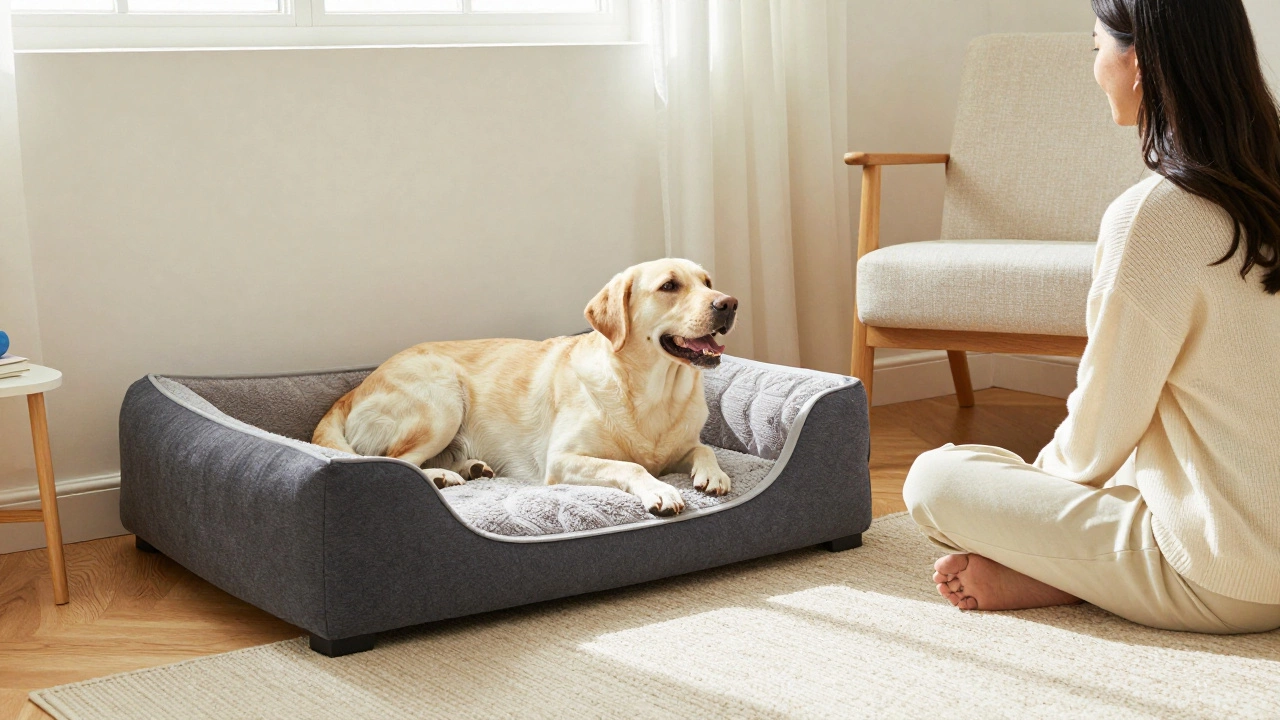
- Provide a Superior Alternative: Invest in a high-quality dog bed that mimics the comfort of your furniture. Look for memory foam or orthopedic supports if your dog is older. Place it near your usual seating area so they stay close but have their own territory.
- Use Positive Reinforcement: When your dog chooses their own bed, reward them immediately with treats or praise. Make their bed the place where good things happen.
- Redirect, Don’t Scold: If you catch them in your spot, calmly guide them to their bed. Avoid yelling, which can create anxiety rather than solving the habit.
- Manage Access: If the issue is jumping on sofas, use baby gates or crate training to limit access when you need uninterrupted time.
Consistency is key. Dogs thrive on predictability. If sometimes they are allowed on the couch and sometimes not, they will keep testing the boundaries. Decide on your rules early and stick to them.
Signs Your Dog Is Overly Attached
There is a line between affectionate bonding and separation anxiety. If your dog only seeks your spot because they panic when you leave, it might be a deeper issue. Watch for these signs:
- Destructive chewing when alone
- Excessive barking or whining upon your departure
- Pacing or restlessness
- Following you to the bathroom constantly
If your dog exhibits these behaviors, simply managing the spot-stealing won’t fix the root cause. You may need to work on desensitization training or consult a veterinary behaviorist. In these cases, the spot is a crutch, not just a comfort.
Creating Harmony in Shared Spaces
Living with a dog means sharing your environment. Accepting that your chair might occasionally be occupied by a furry intruder is part of the deal. However, you can create a balanced dynamic. Establish clear zones for human-only activities and dog-friendly lounging areas. Use rugs or specific chairs designated for pets. This gives your dog a sense of ownership and pride in their space, reducing the urge to invade yours.
Remember, every dog is different. Some breeds, like Labrador Retrievers and Golden Retrievers, are notoriously velcro-like and will always seek closeness. Others, like Shiba Inus, may prefer their independence. Observe your dog’s unique personality and adjust your expectations accordingly.
Should I stop my dog from sitting in my spot?
Not necessarily. If it doesn’t bother you and your dog is happy, it’s a sign of bonding. Only intervene if it disrupts your routine, damages furniture, or indicates anxiety. Redirecting them to their own bed is a better approach than punishment.
Does my dog think they are the alpha?
No. The idea that dogs seek dominance through seating choices is outdated. Most experts agree that this behavior stems from affection, scent-seeking, and comfort, not a desire to control you.
Why does my dog only do this when I’m gone?
Your scent is strongest when you’ve just left. If they do it while you’re away, it’s likely for comfort and security. If they do it while you’re present, it’s more about attention and closeness.
Can I train my dog to ignore my spot?
Yes, through positive reinforcement. Reward your dog for staying on their own bed. You can also use commands like "place" or "go to bed" to direct them to their designated spot consistently.
Is this behavior normal for all dogs?
It is very common, especially in companion breeds. However, independent breeds may show less interest. Individual personality plays a larger role than breed stereotypes.