Puppy Sleep & Bladder Calculator
Your Puppy's Profile
Recommended Night Schedule
Enter your puppy's age to see their estimated bladder control and recommended wake-up times.
It is 2 AM. The house is silent, except for a high-pitched whine coming from the corner of your bedroom. You look over and see your tiny, eight-week-old ball of fur pacing in circles, eyes wide with confusion. This is not just a bad night; it is the first of many. New puppy owners often make the mistake of thinking they can just "let the dog figure it out." But an eight-week-old puppy has no concept of boundaries, bladder control, or independence. If you do not set up a specific sleep environment right now, you are likely to create long-term anxiety and house-training setbacks that will take months to fix.
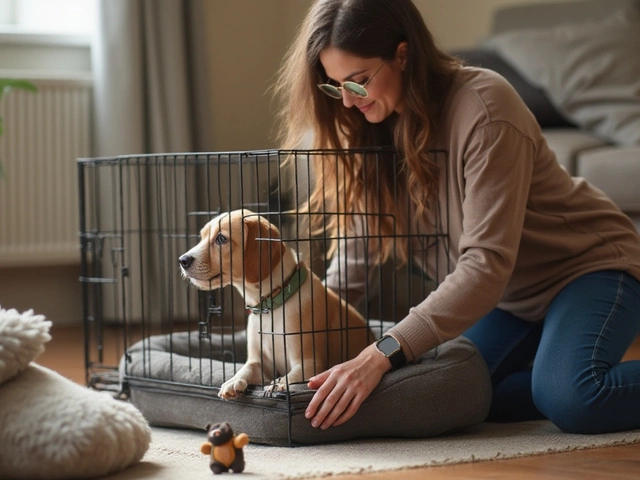
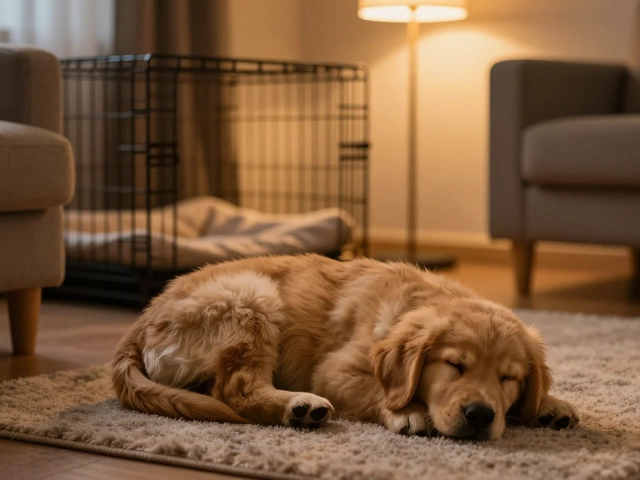
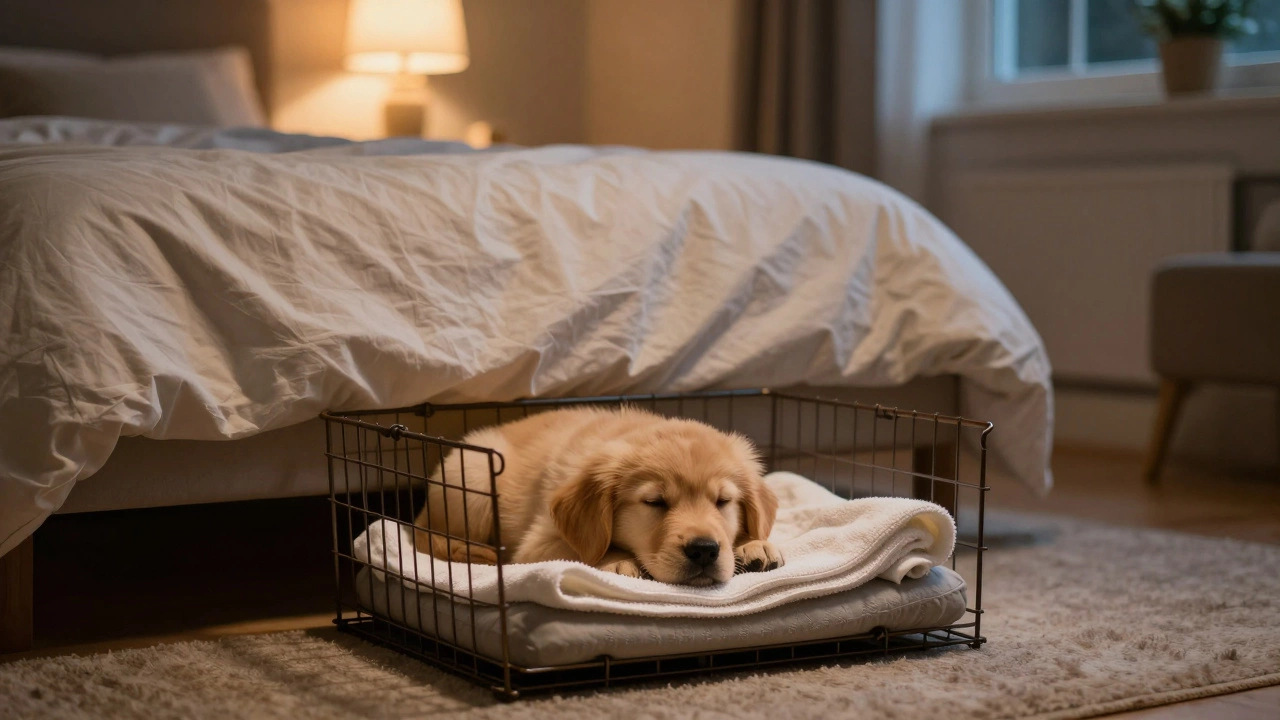
The short answer is simple: your puppy should sleep in a confined space, close to you, but not in your bed. The goal is to balance security with independence. By creating a dedicated sleep zone using a crate or pen, you help your new companion feel safe while establishing the habit of sleeping through the night. Let’s break down exactly how to build this setup, what gear you need, and why those chew toys in the corner matter more than you think.
The Golden Rule: Proximity Without Permission
At eight weeks old, a puppy has just been separated from its mother and littermates. In nature, puppies sleep in a pile for warmth and comfort. When you bring one home, removing that contact causes separation anxiety immediately. The instinctive reaction for many owners is to let the puppy sleep on the bed to stop the crying. While this stops the noise tonight, it creates a dependency problem tomorrow.
The best compromise is proximity without permission. Place your puppy’s sleeping area in your bedroom, ideally within arm's reach of your bed. This allows them to hear your breathing and smell your scent, which calms their nervous system. However, they must have their own defined space. This teaches them that while they are part of the pack (your family), they have their own designated spot. Over time, as they mature into adolescence around six months, you can gradually move this space further away if desired, but starting close by is crucial for the first few months.
Choosing the Right Container: Crate vs. Pen
You need a physical barrier to define the sleep space. The two most common options are wire crates and playpens. Each has distinct advantages depending on your home layout and the puppy's temperament.
| Feature | Wire Crate | Playpen / Exercise Pen |
|---|---|---|
| Space Efficiency | Compact; fits under desks or in corners | Bulky; requires floor space |
| Ventilation & Visibility | High airflow; puppy can see surroundings | Good airflow; limited visibility depending on sides |
| House Training Aid | Excellent; dogs naturally avoid soiling their den | Moderate; may use one side as a bathroom |
| Movement Freedom | Limited; standing/sitting only | High; can turn around, lie down, and stretch |
| Escape Risk | Low if properly sized | Medium; determined puppies can climb or wiggle out |
If you choose a wire crate, a metal enclosure used for safe confinement and transport, ensure it is the correct size. A common mistake is buying a large crate "for when they grow." For an eight-week-old, a crate that is too big defeats the purpose of house training because the puppy will pee in one corner and sleep in the other. Use a divider panel to shrink the interior so the puppy can only stand up, turn around, and lie down comfortably. As they grow, you adjust the divider outward.
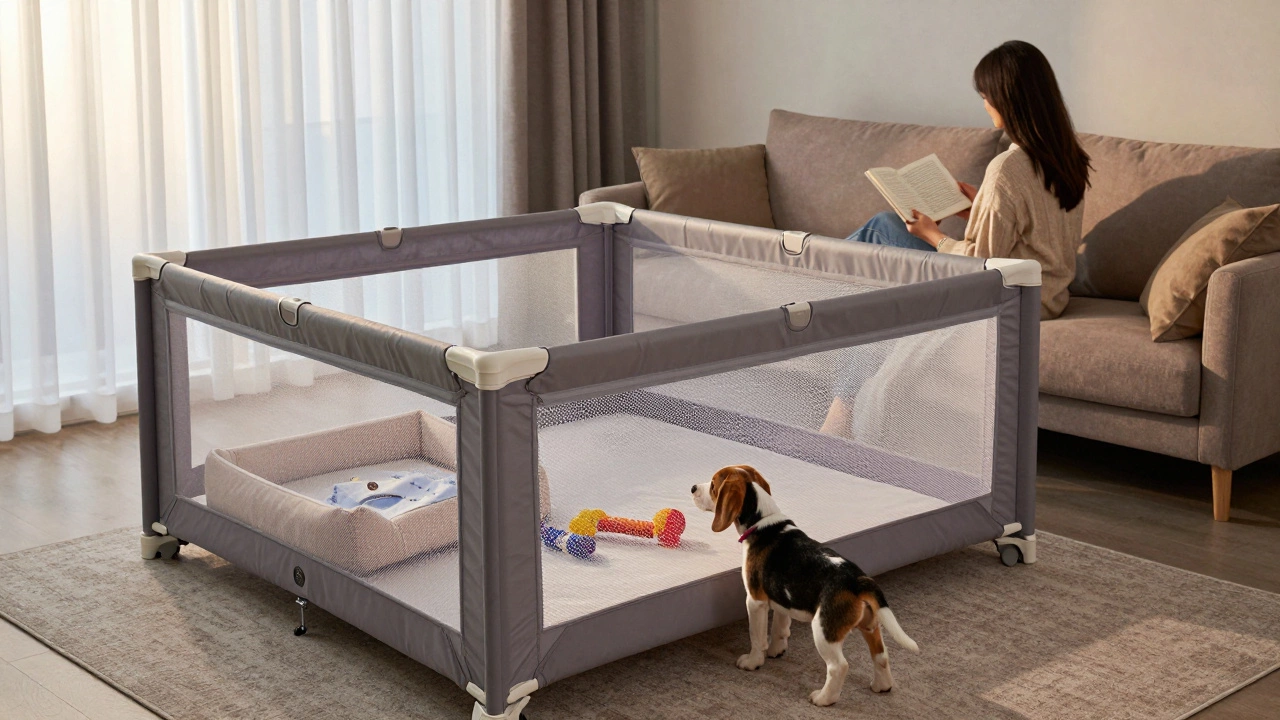
A playpen offers more room but requires careful management. If you use a pen, divide it into two zones: a sleep zone with a bed and a play zone with toys. Never leave food or water bowls in the sleep zone overnight, as spills lead to accidents and damp bedding, which breeds bacteria and discomfort.
The Bedding Layer: Comfort Meets Safety
What goes inside the crate or pen matters just as much as the container itself. Puppies have sensitive joints and developing immune systems. Avoid thick, plush blankets that can be shredded and ingested-a major choking hazard. Instead, opt for durable, machine-washable materials.
- Orthopedic Foam Mats: These provide joint support and mimic the firmness of a natural den floor. They are easy to clean and resist chewing better than fabric.
- Cotton Towels: A simple, folded cotton towel provides warmth and absorbs minor accidents. It is cheap, replaceable, and safe if the puppy decides to gnaw on it briefly.
- Calming Shirts: Some owners swear by pressure-wrap shirts (like Thundershirts) for anxious puppies. These apply gentle, constant pressure that can lower heart rates during thunderstorms or nighttime cries.
Place the bedding in the back corner of the crate. Puppies naturally seek the furthest point from the entrance to feel secure. By placing the softest spot there, you encourage them to settle quickly.
The Role of Puppy Toys in Nighttime Routine
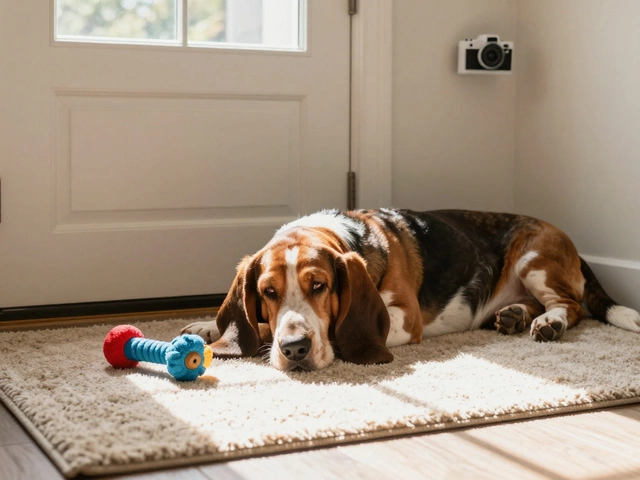
You might wonder why we are discussing puppy toys, objects designed for canine play, mental stimulation, and teething relief in an article about sleep. The connection is critical. An eight-week-old puppy has 28 baby teeth erupting, causing significant gum pain. They also have boundless energy that needs draining before rest. Without appropriate outlets, that energy turns into destructive chewing on crate bars or furniture legs.
Toys are not just for daytime fun; they are essential tools for transitioning your puppy from "play mode" to "sleep mode." Here is how to integrate them effectively:
- The Pre-Bed Burn: Thirty minutes before bedtime, engage in vigorous play. Use tug ropes or fetch balls to elevate the puppy's heart rate. A tired puppy is a sleepy puppy. Aim for 15-20 minutes of active play until the puppy collapses panting.
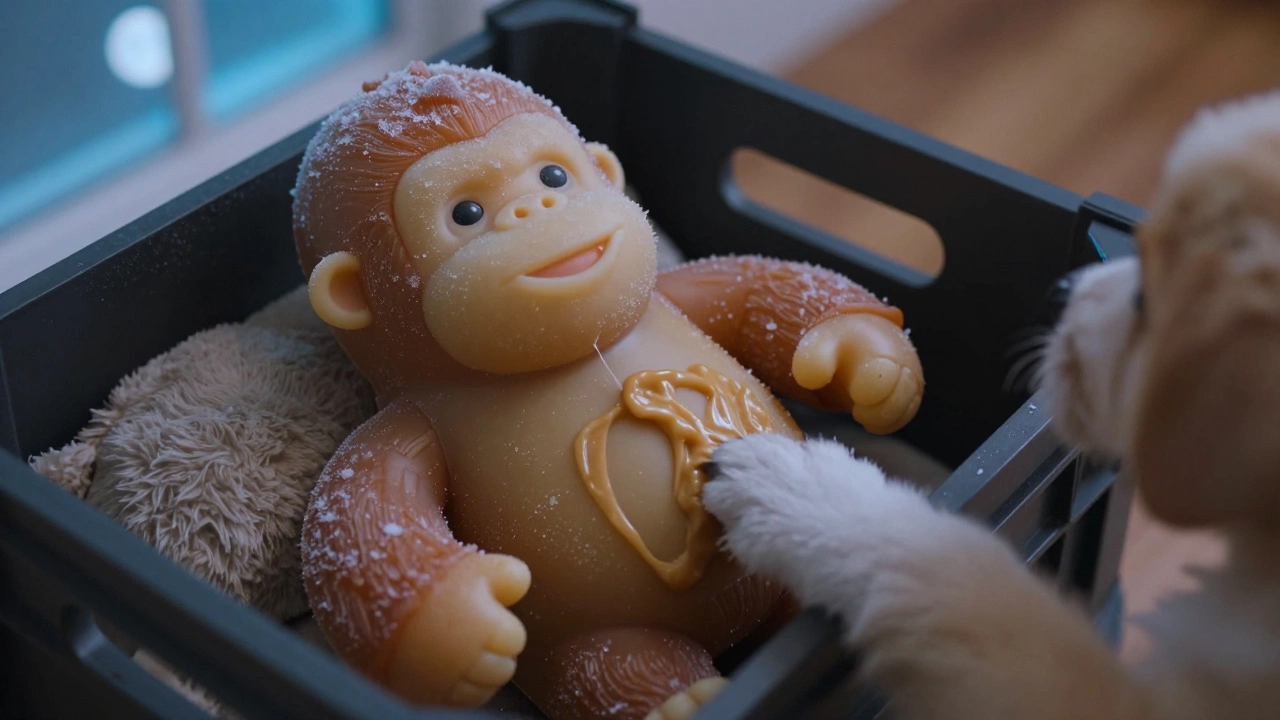
- The Teething Relief: After the burn, offer a frozen treat toy. Stuff a rubber Kong or similar durable toy with peanut butter (xylitol-free) or plain yogurt, then freeze it solid. Give this to the puppy 10 minutes before lights out. The cold numbs sore gums, and the effort required to lick the frozen contents soothes the nervous system. Most puppies will fall asleep while working on this toy.
- The Comfort Object: Leave one soft, non-toxic plush toy in the crate. This serves as a surrogate sibling. Ensure the toy has no small parts like plastic eyes that can be swallowed. Rotate this toy weekly to maintain interest.
Never leave hard nylon bones or aggressive squeakers in the crate overnight. These can cause dental fractures if the puppy chews aggressively in their sleep or become sources of noise that disturb both you and the dog.
Establishing the Nightly Ritual
Puppies thrive on predictability. A chaotic bedtime leads to a chaotic night. Create a consistent sequence of events that signals "sleep time" to your puppy’s brain. Do this every single night, even on weekends.
Start with a final potty break. Take the puppy outside on a leash directly to their designated toilet spot. Wait quietly for them to go. Once they finish, praise calmly and head straight back inside. No play, no treats, no excitement. Go directly to the crate or pen. Dim the lights in the bedroom. Speak in a low, monotone voice. Place the frozen toy inside and close the door.
If the puppy whines, wait. This is the hardest part for new owners. Immediate response reinforces the behavior. Wait 30 seconds, then check if they need to pee. If not, ignore the whining. If the crying escalates to barking or panic, place a hand gently on the top of the crate (not inside) to reassure them you are there, but do not open the door. Consistency here builds trust. The puppy learns that crying does not result in release, but quiet behavior does.
Handling Nighttime Accidents and Waking Up
Even with perfect setup, an eight-week-old puppy cannot hold their bladder for eight hours. Their rule of thumb is one hour per month of age, plus one. So, an eight-week-old (two months) can hold it for about three hours maximum. You must wake up to take them out.
Set alarms for 3:00 AM and 6:00 AM initially. When the alarm goes off, take the puppy out silently. Use a flashlight if needed, but keep interactions minimal. No talking, no eye contact, no play. Just pee, poop, and back to bed. This prevents the puppy from associating nighttime outings with fun social interaction. Gradually extend the intervals between breaks as the puppy grows. By four months, they should be able to sleep through until morning.
Troubleshooting Common Sleep Issues
Sometimes, despite best efforts, things go wrong. Here are solutions to frequent problems:
- Chewing the Crate: If the puppy bites the wires, cover the front with a heavy blanket. This reduces visual stimuli and makes the metal less accessible. Check for sharp edges regularly.
- Excessive Whining: Ensure the puppy isn't too hot or cold. Puppies regulate temperature poorly. A heating pad set to low under half the crate bedding can help. Also, verify they aren't lonely; playing white noise or a radio softly can mask household sounds that trigger alertness.
- Refusing to Enter Crate: Make the crate positive during the day. Feed meals inside with the door open. Toss treats in. Never force the puppy in. If they resist at night, try placing them in the crate after they are already drowsy from the pre-bed routine.
Remember, patience is your most valuable tool. Sleep regression is normal around 4-6 months as permanent teeth come in and hormones shift. Stick to the routine, and the nights will get longer and quieter.
Can I let my 8-week-old puppy sleep in my bed?
While physically possible, it is generally discouraged for an 8-week-old puppy. Co-sleeping disrupts the puppy's ability to learn independent sleep habits and can lead to resource guarding or separation anxiety later. It also increases the risk of accidental injury to the tiny animal. Start with a crate next to your bed, and decide on co-sleeping rules once the puppy is older and trained.
How long can an 8-week-old puppy hold their pee at night?
An 8-week-old puppy can typically hold their bladder for about 2 to 3 hours. You should plan to wake up once or twice during the night to take them outside. As they age, this duration increases by roughly one hour per month of age.
Should I cover my puppy's crate at night?
Yes, covering the crate with a light blanket is highly recommended. It creates a den-like environment that reduces visual distractions and helps the puppy feel secure. Ensure the blanket is breathable and secured so the puppy cannot pull it inside and chew it.
What is the best toy for a puppy to sleep with?
A frozen stuffed Kong or a soft, durable plush toy is ideal. The frozen option soothes teething gums and keeps the puppy occupied until they drift off. The plush toy acts as a comfort object. Avoid hard nylon bones or toys with small detachable parts due to choking hazards.
My puppy won't stop crying in the crate. What do I do?
First, rule out immediate needs like hunger, thirst, or the need to eliminate. If those are met, wait a few minutes before responding. If the crying continues, offer calm reassurance by touching the crate without opening it. Avoid taking the puppy out unless necessary, as this rewards the crying behavior. Consistency is key to teaching them that the crate is safe.