
Escape Artist Safety Calculator
Select Your Current Setup
Standard Buckle
Martingale
Choke Chain
Your Escape Risk Score
Select Options
Choose your gear above to see how safe your setup is against escape artists.
Expert Recommendations
There is nothing quite as heart-stopping as turning around in the backyard and realizing your dog is gone. One second they are digging at the fence line; the next, they have slipped their collar and vanished into the neighborhood. If you own an escape artist, standard flat collars are not just ineffective-they are dangerous. They create a false sense of security while offering zero resistance to a determined puller.
Finding the right gear isn't about punishment. It is about creating a physical barrier that respects your dog's anatomy while stopping them from slipping away. The best solution usually involves a combination of a properly fitted martingale collar, a high-quality body harness, and modern tracking technology. Let’s break down exactly what works, what fails, and how to keep your dog safe without causing injury.
Why Standard Collars Fail Escape Artists
To understand why your dog escapes, you need to look at the mechanics of a standard buckle or D-ring collar. These collars rely on friction against the neck to hold tension. When a dog pulls hard, the collar tightens slightly but often has enough slack to slide over the head if the dog lowers its chin. This is especially true for breeds with narrow heads and wider necks, such as Greyhounds, Whippets, Pit Bulls, and Dobermans.
When a dog slips out, it triggers a prey drive or panic response. The more times they succeed, the more skilled they become at manipulating the hardware. A standard collar does not stop this behavior; it merely delays it until the mechanism fails. For an escape artist, we need equipment that eliminates the gap between the collar and the skin when tension is applied, without choking the animal.
The Gold Standard: Martingale Collars
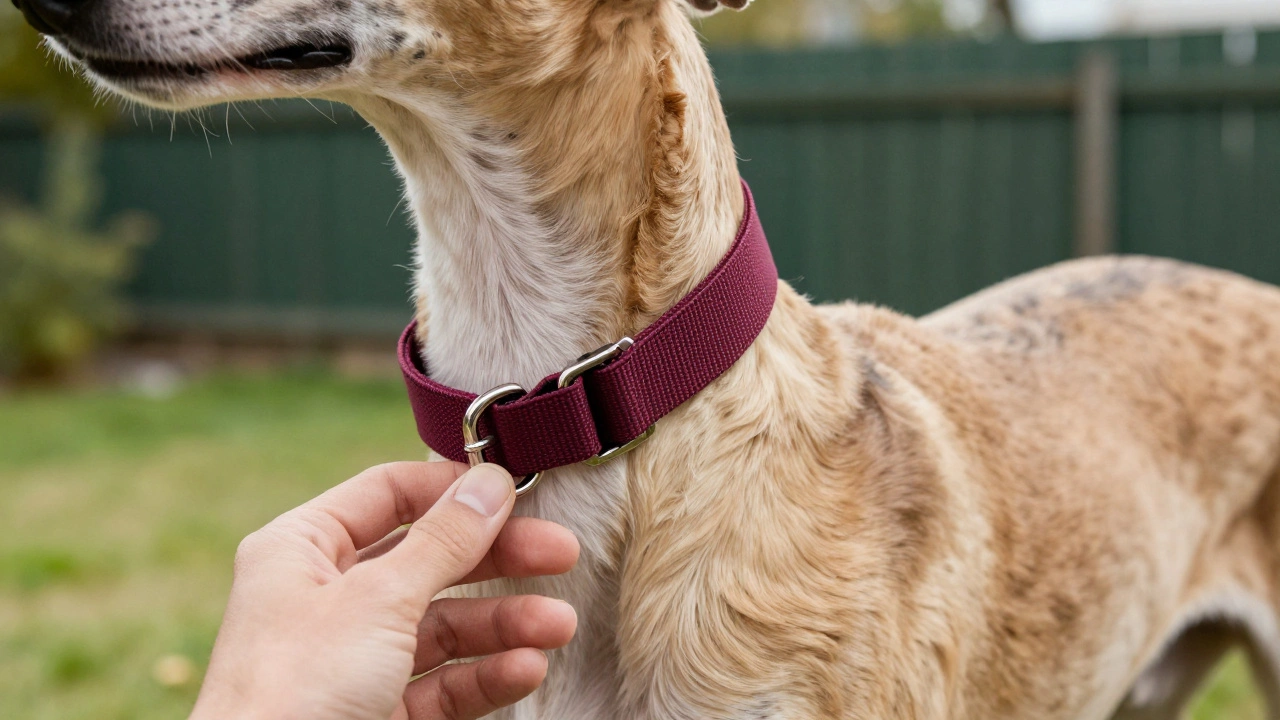
Martingale collars are limited-slip collars designed to tighten slightly when pulled, preventing dogs from backing out while maintaining a safe limit. Unlike choke chains, which can tighten indefinitely and cause tracheal damage, a martingale has a built-in stopper. It tightens only enough to fit snugly around the widest part of the dog's neck, then stops.
This design is critical for safety. It provides control without cruelty. However, many owners buy martingales and still lose their dogs because the collar is sized incorrectly. The most common mistake is buying a collar that is too large. When fully loosened, a martingale should allow two fingers to fit comfortably under the band. When tightened (simulating a pull), it should be snug but not constricting.
If you are using a martingale, ensure the loop that goes over the head is the smaller one, and the larger loop holds the leash attachment. Reversing these can cause the collar to twist and potentially injure the dog during sudden movements. For heavy pullers, consider a martingale made from durable nylon or leather rather than thin fabric, which can stretch over time.
Harnesses vs. Collars: Adding a Second Layer
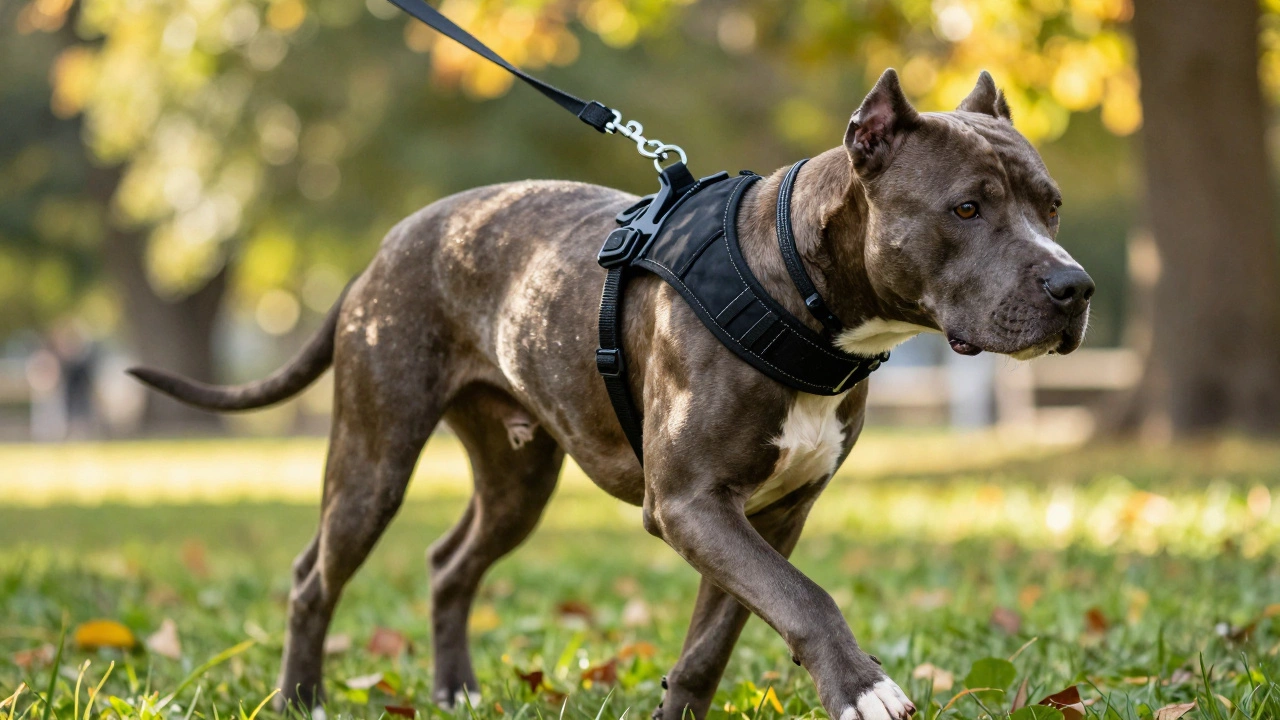
Relying solely on a collar is risky for any powerful dog. A harness distributes pressure across the chest and shoulders, making it much harder for a dog to slip out. However, not all harnesses are created equal. Cheap nylon harnesses often have loose stitching or weak buckles that can burst under sudden force.
For escape artists, look for "no-pull" or front-clip harnesses. These attach the leash to the chest, steering the dog toward you when they lunge forward. This changes the physics of the pull, making it difficult for the dog to generate momentum. Brands like Ruffwear and Hurtgen offer rugged options with reinforced stitching and metal D-rings that withstand significant stress.
Some owners use both a martingale collar and a harness simultaneously. This is known as a dual-attachment system. You clip one end of the leash to the collar and the other to the harness. If one fails, the other holds. This redundancy is crucial for dogs who have a history of escaping enclosures or breaking free from leashes.
Technology Integration: GPS Trackers
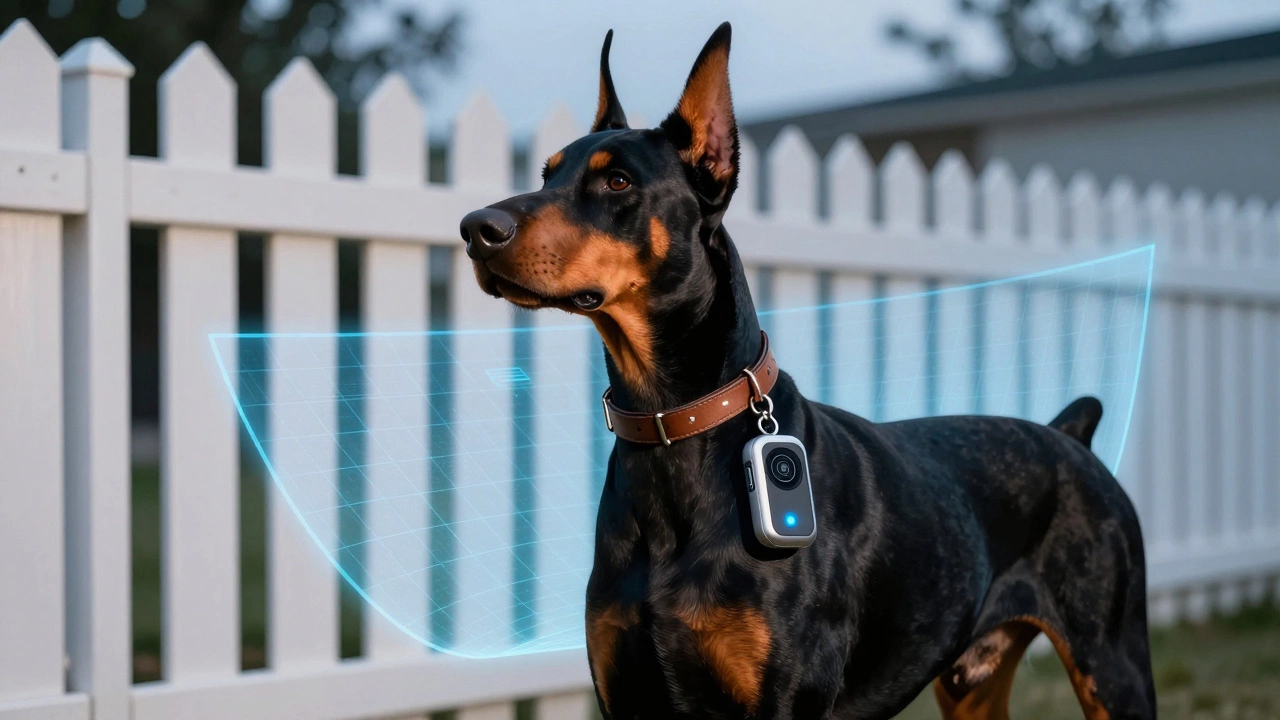
Even the best collar cannot prevent every escape. Dogs can jump fences, dig under gates, or squeeze through gaps. This is where technology becomes your safety net. A GPS tracker is a device that uses satellite signals to provide real-time location data for pets. Modern trackers are small, lightweight, and can be attached directly to a collar or clipped onto a harness.
Devices like Fi, Tractive, and Whistle offer real-time tracking with geofencing alerts. Geofencing allows you to set a virtual boundary around your home or yard. If your dog crosses this line, you receive an immediate notification on your phone. This early warning gives you precious minutes to react before the dog gets far away.
Battery life is a key consideration. Most trackers last 3-7 days on a single charge, depending on usage. Ensure you have a charging routine so the device is never dead when you need it most. Some newer models also include activity monitoring, which can help you identify restlessness or anxiety that might precede an escape attempt.
Training Tools: Slip Leads and Head Halters
Sometimes, gear alone isn't enough. You may need tools that aid in training your dog to check in with you. A slip lead is a simple rope-like leash with a loop at one end. When used correctly, it functions similarly to a martingale but offers more direct control for guiding the dog. It requires practice to avoid accidental choking, so it is best suited for experienced handlers.
Head halters, such as the Gentle Leader or Halti, work by controlling the head, which naturally controls the body. Since you cannot go where your head isn't facing, these devices make it nearly impossible for a dog to pull forward aggressively. They are excellent for walks but require a positive reinforcement introduction. Many dogs hate them initially, so you must associate the halter with treats and praise before taking it outside.
| Gear Type | Security Level | Comfort | Best For |
|---|---|---|---|
| Standard Buckle Collar | Low | High | Calm, non-pulling dogs |
| Martingale Collar | High | Medium-High | Narrow-headed breeds, light pullers |
| No-Pull Harness | Very High | High | Strong pullers, chest-heavy dogs |
| Head Halter | Extreme | Low (initially) | Training reactive or aggressive pullers |
| GPS Tracker | N/A (Recovery) | High | All dogs, especially roamers |
Common Mistakes to Avoid
One major error is assuming that a tighter collar is better. Tightening a standard collar to prevent slipping can restrict blood flow and damage the trachea. Always prioritize proper fit over tightness. Another mistake is ignoring the environment. If your dog escapes through a gate, no collar will fix that problem. You must secure the perimeter first.
Also, avoid using prong or shock collars as a primary solution for escaping. These tools address symptoms, not causes. An escaping dog is often motivated by fear, boredom, or instinct. Punishment can increase anxiety, leading to more frantic escape attempts. Positive reinforcement training, combined with secure gear, yields better long-term results.
Next Steps for Escape Artists
If your dog is already an escape artist, start by assessing your current gear. Does the collar fit correctly? Is it appropriate for your dog's breed and size? If not, invest in a quality martingale or harness immediately. Add a GPS tracker to your setup for peace of mind. Finally, begin training sessions focused on recall and checking in. Use high-value treats to reward your dog for staying close to you. Consistency is key. With the right combination of equipment and training, you can keep your dog safe and secure.
What is the safest collar for a dog that slips out?
A martingale collar is generally considered the safest option for dogs that slip out of standard collars. It tightens slightly to prevent escape but has a limit to prevent choking. For extra security, combine it with a well-fitted harness.
Can a GPS collar stop my dog from escaping?
No, a GPS collar cannot physically stop a dog from escaping. It only tracks their location after they have left. However, it helps you find them quickly, which is crucial for recovery. Use it alongside physical restraints like martingales or harnesses.
Are choke chains effective for escape artists?
Choke chains are not recommended for escape artists. They can cause serious injury if misused and do not address the underlying behavior. Martingales provide similar control without the risk of tracheal damage.
How do I measure my dog for a martingale collar?
Measure the circumference of your dog's neck where the collar sits. Add an inch for comfort. The collar should allow two fingers to fit underneath when loose. When tightened, it should be snug but not restrictive.
Should I use a harness instead of a collar?
Yes, a harness is often safer for strong pullers or escape artists. It distributes pressure across the chest, reducing strain on the neck. Look for front-clip designs to discourage pulling.