
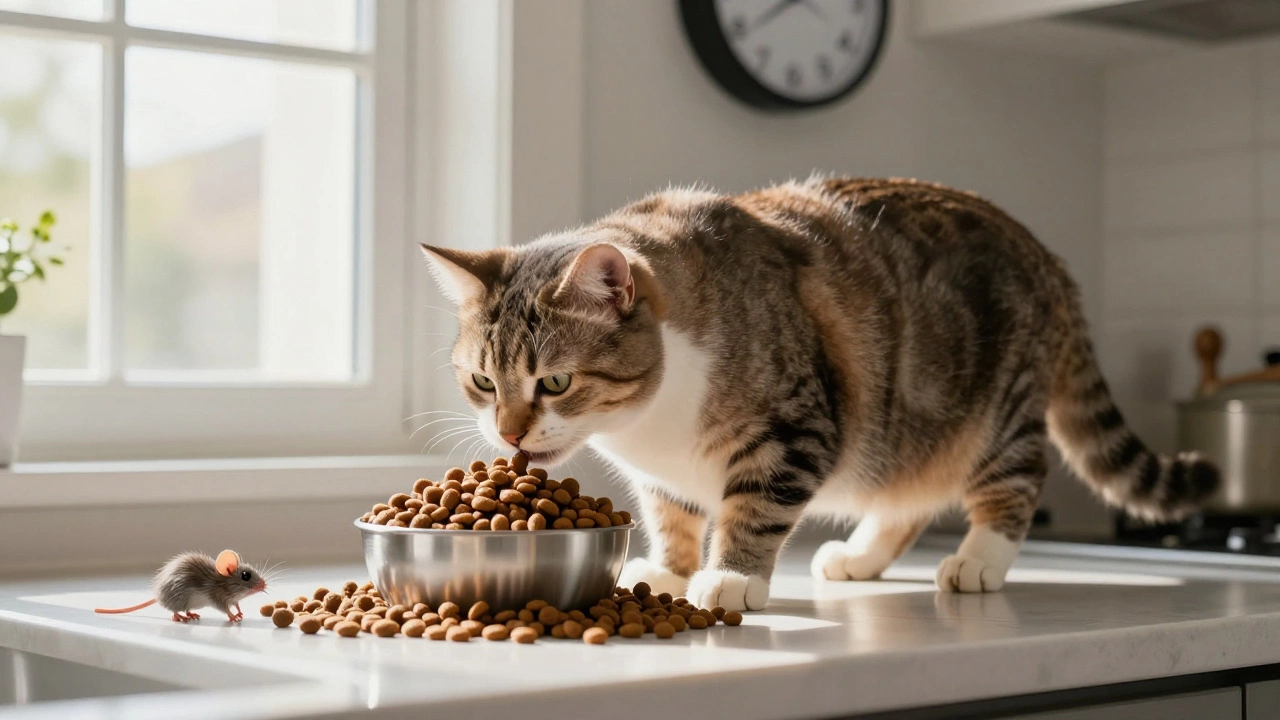
Many cat owners think leaving food out all day is the easiest way to care for their pets. It’s convenient, it feels kind, and it seems like the cat can eat when it’s hungry. But is that really good for your cat? The answer isn’t as simple as yes or no - and the truth might surprise you.
Why Free Feeding Became Popular
Free feeding - leaving dry food out for your cat to graze on whenever they want - became common because it’s easy. You fill the bowl in the morning and forget about it until the next refill. No timers, no measuring, no fuss. It also matches the myth that cats are natural grazers who eat small meals all day long. That part is true: cats in the wild do hunt and eat multiple small meals. But they don’t snack on kibble all day. They catch mice, birds, or insects - high-protein, low-carb meals that take effort to get. That’s not the same as having a bowl of dry food that never runs out.What Happens When Cats Eat All Day
When food is always available, most cats will eat more than they need. They don’t stop because they’re full - they stop because the food is gone or they’re distracted. That’s why indoor cats on free-fed diets are far more likely to become overweight. A 2023 study from the University of Bristol tracked 500 indoor cats over two years. Cats with constant food access gained an average of 1.8 pounds over 12 months. That might not sound like much, but for a cat that weighs 9 pounds, that’s a 20% weight gain - enough to put serious strain on their joints, liver, and pancreas. Obesity in cats leads to diabetes, arthritis, and urinary problems. In fact, over 60% of diabetic cats in the UK are overweight. That’s not a coincidence - it’s a direct result of how we feed them.Is Free Feeding Ever Okay?
There are exceptions. Some cats - especially seniors, underweight cats, or those with medical conditions like hyperthyroidism - may benefit from having food available. But even then, it’s not about leaving a full bowl out. It’s about controlled, measured portions spread across the day. If your vet says your cat needs constant access to food, use a timed feeder that dispenses small portions at set intervals. Or use puzzle feeders that slow down eating and make your cat work for their food. That mimics natural hunting behavior and helps control intake.How Cats Really Eat in the Wild
Cats aren’t designed to eat large meals once or twice a day. They’re not dogs. They’re hunters. In the wild, a cat might catch five to ten small prey items in a 24-hour period. Each one is about 20-30 grams - roughly the size of a tablespoon of dry food. That’s why cats do best with multiple small meals. It keeps their metabolism steady, their blood sugar balanced, and their energy levels consistent. It also reduces stress. Cats feel more secure when they’re actively engaged in finding food - not just waiting for a bowl to refill.
The Best Alternative: Scheduled Feeding
Switching from free feeding to scheduled meals isn’t hard - but it does take patience. Start by measuring out your cat’s daily food amount. Most adult cats need about 200-250 calories per day, depending on weight and activity level. Divide that into at least three meals. For example:- 7 a.m. - 1/3 of daily food
- 1 p.m. - 1/3 of daily food
- 8 p.m. - 1/3 of daily food
What About Wet Food?
Wet food shouldn’t be left out all day. It spoils quickly - especially in warm homes. Bacteria can grow in just a few hours, leading to upset stomachs or worse. Always remove uneaten wet food after 30-45 minutes. If you’re feeding wet food, stick to scheduled meals. You can mix wet and dry, but don’t leave the dry out as a constant snack. Use dry food as a supplement, not a main source.Signs Your Cat Is Overfed
Not sure if your cat is eating too much? Watch for these signs:- They’re visibly overweight - you can’t feel their ribs easily
- They’re lethargic or sleep more than 18 hours a day
- They vomit frequently, especially after eating
- They’re constantly begging, even right after meals
- They have trouble grooming or jumping onto furniture

How to Transition Away from Free Feeding
If your cat has been free-fed for years, they might freak out when you suddenly take the bowl away. Here’s how to do it smoothly:- Start by measuring their daily food - don’t guess. Check the bag or ask your vet.
- Remove the bowl. Don’t refill it.
- Feed them at the same times every day. Consistency matters.
- Use food puzzles or slow-feeders to make meals last longer.
- Ignore begging. Don’t give in - even for a few kibbles. That teaches them it works.
- After a week, add a second meal. Then a third.
What About Multi-Cat Households?
If you have more than one cat, free feeding can turn into a feeding war. The dominant cat eats most of the food. The shy one goes hungry - or eats too fast out of fear. Solution? Feed each cat separately. Use different rooms, elevated platforms, or even closed doors during meal times. You can even use microchip feeders that only open for the right cat. It sounds complicated, but it’s the only way to make sure every cat gets the right amount - and no one’s sneaking extra snacks.Final Thought: It’s Not About Convenience - It’s About Health
Leaving food out all day might feel like the loving thing to do. But real care means doing what’s best for your cat - not what’s easiest for you. Cats thrive on routine, activity, and control over their environment. Food should be part of that, not a constant, mindless background noise. Your cat doesn’t need a full bowl. They need you to be present. To feed them. To play with them. To watch them eat - and know they’re getting just what they need.Is it bad to leave dry cat food out all day?
Yes, for most cats. Leaving dry food out all day leads to overeating, weight gain, and health problems like diabetes and arthritis. Cats don’t self-regulate well with constant access to food. Even if they seem fine now, the long-term risks are real.
How many times a day should I feed my cat?
Most adult cats do best with two to three meals a day. Kittens need three to four. Each meal should be measured - not free-filled. A 10-pound cat typically needs about 200-250 calories daily, split into portions. Wet food should never be left out more than 45 minutes.
Can I use a timed feeder instead of feeding by hand?
Yes, a timed feeder is a great alternative if you’re away often. It mimics scheduled feeding by releasing small portions at set times. But make sure it’s programmed correctly - don’t set it to dispense a full day’s food at once. Use it to split meals, not replace your involvement.
Why does my cat beg for food even after eating?
Cats beg for attention, not just food. If they’ve learned that meowing gets them treats, they’ll keep doing it. It’s a learned behavior, not hunger. Try playing with them for 10 minutes when they beg. Often, they’ll forget about food and just want to chase something.
What’s the best type of food for scheduled feeding?
A mix of wet and dry works well. Wet food provides hydration and is more satisfying. Dry food helps with dental health. But don’t leave dry food out between meals. Use it only during scheduled feedings. Look for high-protein, low-carb formulas - ideally with meat as the first ingredient.
Should I feed my senior cat differently?
Senior cats often need more frequent, smaller meals because their metabolism slows. If your cat is underweight or has kidney disease, your vet may recommend constant access to food - but use a timed feeder or measured portions. Never assume older cats can eat freely without consequences.