Every new puppy owner hears it-the high-pitched whine, the desperate barks, the scratching at the door. It’s 2 a.m. You’re exhausted. Your puppy is crying. And you’re wondering: should I ignore my puppy crying at night? The internet says yes. Your friend says yes. But your heart says no. So what’s the truth?
Why Puppies Cry at Night
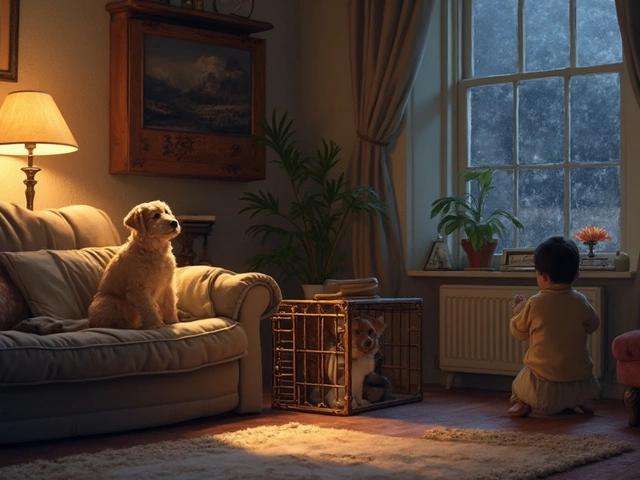
Puppies don’t cry because they’re being manipulative. They cry because they’re scared, lonely, or uncomfortable. At eight weeks old, they’ve just been ripped away from their littermates and mother-the only comfort they’ve ever known. Now they’re in a quiet, cold room, surrounded by unfamiliar smells, and they have no idea when they’ll see their family again.That crying isn’t a test. It’s a distress call. Their tiny bodies haven’t learned how to regulate their emotions yet. They can’t tell time. They don’t understand that you’ll be back in the morning. All they know is: I’m alone. I’m scared. I need help.
Some crying is physical. A full bladder. A tummy ache from new food. Too cold. Too hot. A bump they didn’t notice during the day. Other times, it’s pure anxiety. Studies from the University of Bristol show that over 60% of puppies under 12 weeks show signs of separation distress in their first week at home.
What Happens When You Ignore the Crying
Ignoring the crying might stop the noise. But it doesn’t fix the problem. It just teaches your puppy that no one is coming. That their cries don’t matter. That the world is unsafe.Some trainers swear by the “cry it out” method. But here’s what they don’t tell you: it only works if the puppy is physically comfortable and emotionally ready. For a young pup? They’re not ready. And forcing them to endure it without support can backfire badly.
Research from the Royal Veterinary College found that puppies left to cry for long periods without human interaction showed higher levels of cortisol-the stress hormone-than those given gentle reassurance. These pups were more likely to develop long-term anxiety, fear of being alone, and even destructive behaviors later on.
Ignoring doesn’t build independence. It builds distrust.
What to Do Instead
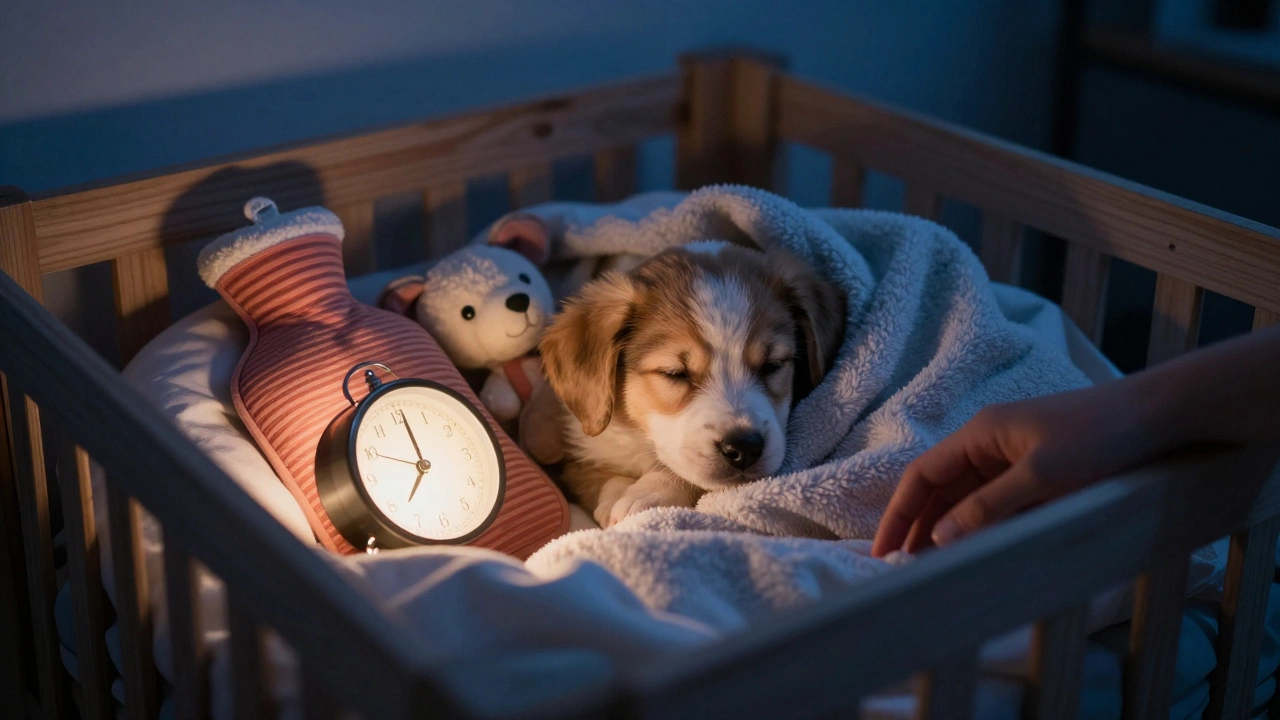
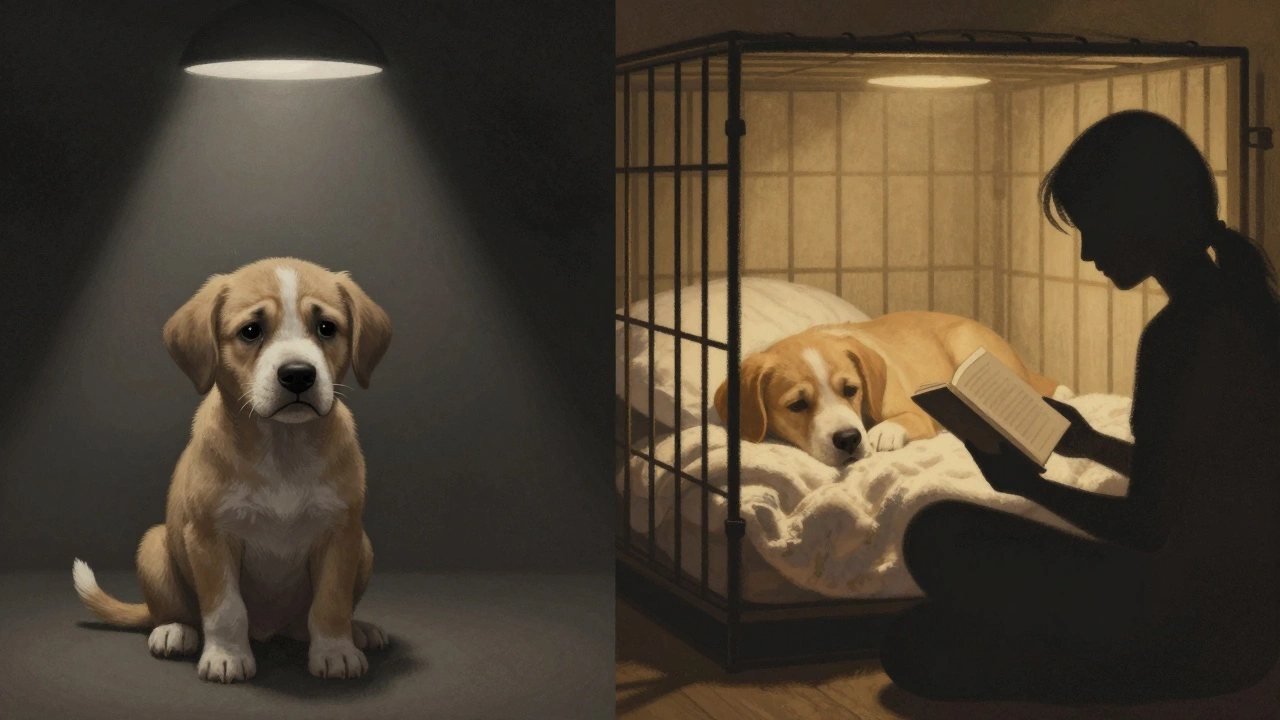
You don’t have to sleep with your puppy. You don’t have to carry them everywhere. But you do need to help them feel safe. Here’s how:- Set up a cozy sleeping space right next to your bed. Use a crate or a bed with soft blankets. Add a warm water bottle (wrapped in a towel) to mimic body heat. Tuck in a stuffed toy with a ticking clock inside-something that sounds like a heartbeat.
- Stick to a routine. Feed them dinner at 6 p.m., take them out for a final potty break at 9 p.m., and then quiet time. No play, no excitement. Just calm petting and a quiet voice.
- Don’t rush to the door. If they cry, wait 5 minutes. Sometimes they settle on their own. If they’re still going after 10, go check. Don’t pick them up. Don’t turn on the lights. Just quietly take them outside. If they pee, praise softly. If they don’t, bring them back. No talking. No eye contact. Just the task.
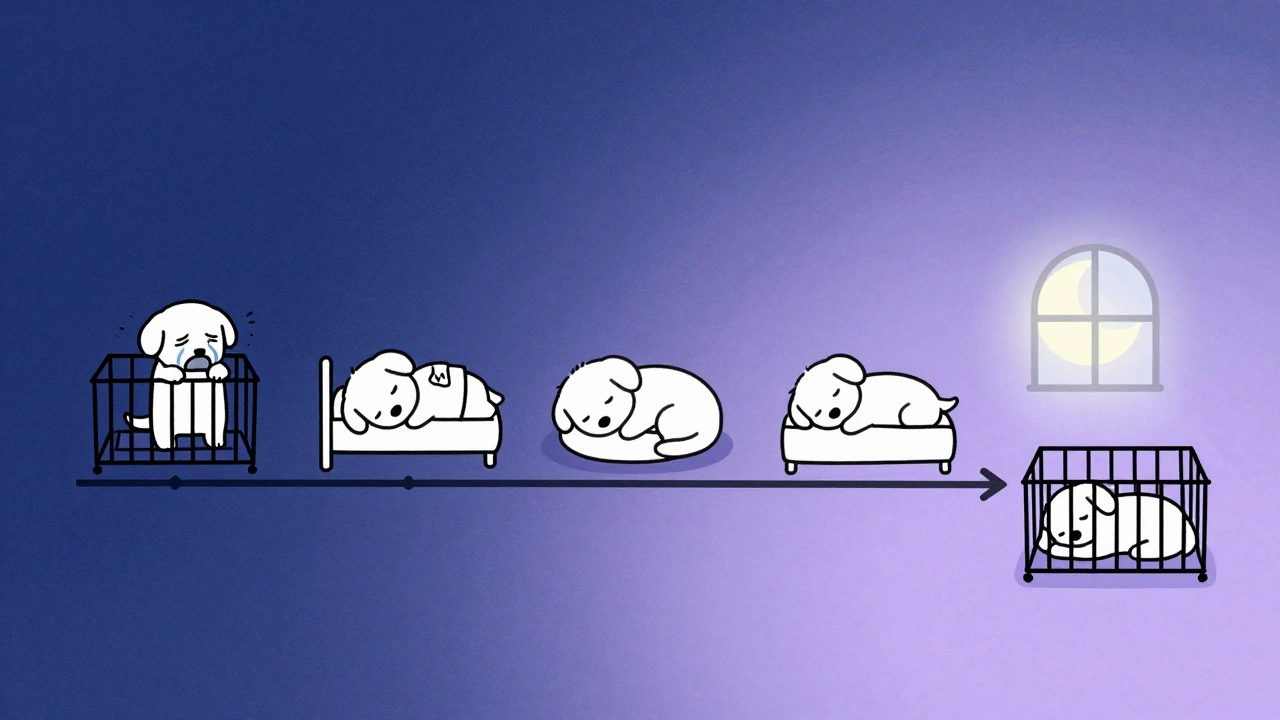
- Gradually move the crate away. After a few nights, move the crate a foot further from your bed. Then another foot. In a week or two, they’ll be sleeping fine in another room-because they learned they’re safe, not because they were left to scream.
When to Worry
Not all crying is normal. If your puppy is crying for more than 30 minutes straight, panting heavily, shaking, or vomiting, it’s not anxiety-it’s a medical issue. Puppies can get sick fast. A sudden change in behavior, especially with crying, could mean a blockage, an infection, or even a parasite.Take them to the vet if:
- The crying started suddenly after a change in diet or environment
- They’re not eating or drinking
- They’re whining while lying down, as if in pain
- They’re lethargic or have diarrhea
These aren’t training issues. They’re health emergencies.
The Myth of “Tough Love”
The idea that you need to be “tough” to raise a good dog is outdated-and dangerous. Dogs aren’t wolves. They don’t need dominance. They need connection. Puppies raised with consistent, calm, responsive care grow up more confident, less reactive, and easier to train.Think of it like this: if your baby cried at night, would you leave them to scream until they passed out? Of course not. You’d check on them, soothe them, make sure they were safe. You’d do it every night for months. Why? Because love isn’t weakness. It’s the foundation of trust.
Same goes for your puppy. You’re not spoiling them by helping them feel safe. You’re teaching them the world is a place where they can relax. Where someone will show up. Where they’re not alone.
How Long Does This Last?
Most puppies improve within 3 to 7 nights if you follow a calm, consistent routine. By 10 to 12 weeks, many are sleeping through the night without a peep. Some take longer-especially if they’re small breeds or came from a shelter. That’s okay. Progress isn’t linear.Don’t compare your puppy to someone else’s. Every dog is different. One might cry for 2 nights. Another might take 3 weeks. That doesn’t mean you’re doing it wrong. It means you’re doing it right-you’re paying attention to their needs, not just the noise.
What Not to Do
Avoid these common mistakes:- Don’t yell. Shouting “shh!” or “stop!” just scares them more.
- Don’t use a shock collar or spray bottle. These create fear, not learning.
- Don’t let them sleep in your bed unless you’re ready for it to become permanent. It’s fine for a few nights, but if you don’t want them there at 6 months, don’t start now.
- Don’t rush the process. If you pick them up every time they whimper, they’ll learn crying = attention. But if you wait, check, and respond calmly, they learn crying = safety.
Final Thought: You’re Not Failing
It’s hard. It’s messy. You’re tired. You feel guilty. You feel like you’re failing. But you’re not. You’re learning. Your puppy is learning. And every time you show up-not with frustration, but with patience-you’re building something stronger than silence.That quiet night, when your puppy finally sleeps without a sound? That’s not because you ignored them. It’s because you loved them well enough to help them feel safe.
Should I ignore my puppy crying at night?
No, you shouldn’t ignore it completely. Puppies cry because they’re scared, lonely, or uncomfortable-not to test you. Ignoring them can increase anxiety and lead to long-term behavioral issues. Instead, check on them calmly, make sure they’re safe and comfortable, and help them learn to sleep through the night with consistency and reassurance.
How long will my puppy cry at night?
Most puppies cry for 3 to 7 nights with a calm routine. Some may take up to 2 weeks, especially if they’re small breeds or came from stressful backgrounds. If the crying lasts longer than 10 days or gets worse, check for medical issues or consult a professional trainer.
Can I let my puppy sleep in my bed?
You can for the first few nights to help them adjust, but if you don’t want them there permanently, avoid making it a habit. Sleeping in your bed can make it harder to transition them to their own space later. Use a crate or bed next to your bed instead-it’s close enough to comfort them but keeps boundaries clear.
Is my puppy crying because of separation anxiety?
It might be. Puppies under 12 weeks often show signs of separation distress when first brought home. This isn’t full-blown separation anxiety-that usually develops later. But if your puppy cries nonstop, destroys things, or has accidents when left alone, they’re likely overwhelmed. Start with gentle reassurance and gradual independence.
What if my puppy cries every time I leave the room?
This is normal for young puppies. They haven’t learned that you’ll come back. Practice short absences during the day-step out of the room for 30 seconds, then return. Gradually increase the time. Reward calm behavior with quiet praise. Over time, they’ll learn that being alone is safe.
Should I use a puppy cry collar or sound machine?
Avoid devices that punish crying, like shock collars or ultrasonic emitters. They create fear, not confidence. Sound machines with white noise or heartbeat recordings can help some puppies feel calmer, but they’re not a fix on their own. Combine them with human presence, routine, and comfort.
Next Steps
Start tonight: set up a cozy sleeping space near your bed. Take your puppy out one last time before bed. Keep the lights low. Speak softly. Be calm. Don’t expect perfection. Just show up.In a week, you’ll notice a difference. In two weeks, they’ll be sleeping. And in a month, you’ll look back and realize-you didn’t just teach them to be quiet. You taught them they’re loved.