

Prong collars look like something out of a dystopian movie: metal prongs that dig into a dog’s neck, connected by links, often worn by trainers who say they’re "just a tool." But if you walk into any dog park or scroll through dog owner forums, you’ll find a flood of anger, fear, and frustration directed at these collars. Why? It’s not just about how they look. It’s about what they do, how they work, and the lasting damage they can cause-even when used "correctly." Prong collars are designed to deliver pain as a correction. When a dog pulls, the prongs pinch the skin around the neck, mimicking the bite of a mother dog’s mouth. The idea is that the discomfort teaches the dog not to pull. But dogs don’t learn from pain the way humans think they do. They learn to fear the sensation, the person holding the leash, or the environment where it happens. That’s not training. That’s conditioning. A 2020 study from the University of Lincoln analyzed over 1,000 dog behavior cases and found that dogs trained with prong collars showed significantly higher levels of stress behaviors-like lip licking, yawning, avoiding eye contact, and cowering-than dogs trained with harnesses or flat collars. Even when owners claimed the collar was "used gently," the dogs still showed physiological signs of stress, including elevated cortisol levels. This isn’t a matter of opinion. It’s measurable. People who defend prong collars often say, "My dog responds better with it." But better doesn’t mean healthier. A dog that stops pulling because they’re afraid of being choked or pinched isn’t learning to walk nicely. They’re learning to freeze, shut down, or become reactive. Many owners don’t realize their dog’s sudden aggression around other dogs or strangers started after they began using a prong collar. The dog isn’t "bad." They’re scared. The collar’s design is inherently flawed. It’s meant to work on pressure points, but the neck is one of the most sensitive areas on a dog’s body. It’s packed with nerves, blood vessels, and the trachea. A single sharp tug can bruise tissue, damage the thyroid gland, or even cause nerve damage that leads to long-term numbness or pain. There are documented cases of dogs developing chronic neck pain, reduced mobility, and even vocal changes after prolonged prong collar use. And yet, some trainers still recommend them-especially for strong, large breeds like German Shepherds, Rottweilers, or Huskies. That’s where the myth gets its power: "It’s the only thing that works for my dog." But that’s like saying, "I need a whip to ride my horse." There are better ways. Positive reinforcement trainers use head halters, front-clip harnesses, and consistent leash techniques that teach dogs to walk calmly without pain. Dogs trained this way don’t just stop pulling-they start enjoying walks. They look back at their owners. They make eye contact. They learn to trust. One owner I spoke with, Lisa from Portland, switched from a prong collar to a front-clip harness after her 70-pound Border Collie started growling at other dogs during walks. She thought the prong was keeping him under control. But after three weeks of positive training, he stopped pulling, stopped reacting, and even started greeting other dogs politely. "I didn’t realize how much he was terrified," she said. "I thought he was being stubborn. He was just scared." The emotional toll on owners is real too. Many feel guilty after learning how prong collars work. They feel like they’ve been lied to by trainers who called them "necessary" or "professional." They feel ashamed for using something they now see as cruel. And they’re right to feel that way. You shouldn’t have to choose between control and compassion. Some argue that prong collars are no worse than choke chains. But that’s not the point. Neither should be used. Both rely on pain. Both create fear. Both damage the bond between dog and human. The fact that they’ve been around for decades doesn’t make them right. It just means the industry was slow to catch up with modern behavior science. Today, veterinary associations like the American Veterinary Society of Animal Behavior (AVSAB) and the British Veterinary Association (BVA) explicitly oppose the use of prong collars, citing the risk of physical injury and psychological harm. The American Kennel Club (AKC) no longer endorses them for obedience training. Even military and police dog units have moved away from aversive tools, opting for reward-based methods that build focus and reliability without fear. If you’re using a prong collar because your dog pulls, you’re not failing. You’ve just been given bad advice. There are effective, humane alternatives:
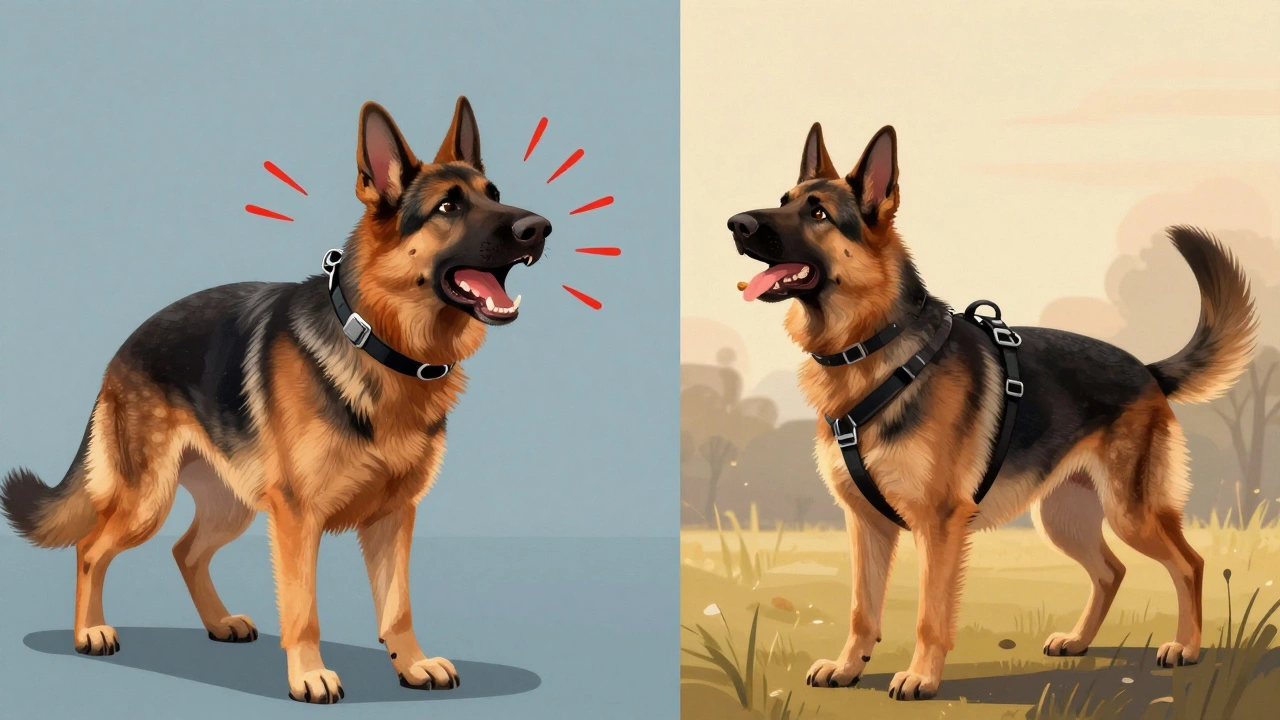
- Front-clip harnesses redirect a dog’s movement naturally when they pull, without pressure on the neck.
- Head halters gently guide the dog’s head, making it easier to control direction without force.
- Positive reinforcement training rewards the dog for walking calmly beside you, turning leash walking into a game.
- Professional force-free trainers can help you build skills without pain or fear.
Why Do People Still Use Prong Collars?
If they’re so harmful, why are they still sold everywhere? The answer is simple: marketing and misinformation. Many pet stores still stock prong collars because they’re cheap, easy to sell, and come with flashy labels like "Professional Grade" or "Trainer Recommended." Salespeople often don’t know the science behind them. They repeat what they’ve heard: "It works fast." Some trainers still use them because they were trained that way. Older generations of dog trainers were taught that dominance and corrections were the only way to control dogs. That mindset hasn’t disappeared-it’s just being challenged. And the people who still swear by prong collars often don’t realize how much their dog’s behavior has changed since they started using it. There’s also a myth that small dogs don’t need them, so they’re only for "strong" breeds. That’s dangerous thinking. Small dogs have more delicate necks. A prong collar on a Chihuahua can cause tracheal collapse. Large dogs aren’t immune to nerve damage or thyroid issues. Size doesn’t make you tougher. It just makes the consequences worse.What Happens When You Stop Using a Prong Collar?
Many owners worry that if they stop using the prong, their dog will go back to pulling. But that’s not what happens. What happens is the dog finally relaxes. They stop bracing against the collar. They stop anticipating pain. And then, slowly, they start listening again. One woman in Ohio switched her 90-pound Lab from a prong collar to a front-clip harness after her dog started trembling during walks. Within a week, the trembling stopped. Within a month, her dog was walking calmly beside her, even in busy areas. She didn’t need punishment. She just needed to stop hurting him. The key is consistency and patience. Training without pain takes time. But the results last longer. Dogs trained with rewards don’t just obey-they want to obey. They’re engaged. They’re happy. And that’s what every owner really wants: a dog who loves walking with them.What Are the Long-Term Effects of Prong Collars?
Long-term use can lead to:- Chronic neck pain and stiffness
- Thyroid dysfunction due to pressure on the gland
- Nerve damage causing numbness or hypersensitivity
- Increased aggression or fearfulness
- Loss of trust in the owner
- Leash reactivity that worsens over time
Are There Any Situations Where Prong Collars Are Acceptable?
No. Not according to modern animal behavior science. Even in extreme cases-like dogs that pull dangerously hard or are at risk of escaping-there are safer, more effective tools. A well-fitted harness, a head halter, and professional training can handle any pulling issue without causing pain. Some people argue that prong collars are better than electric collars. That’s like saying a slap is better than a punch. Neither should be used. The goal isn’t to pick the least harmful punishment. The goal is to eliminate punishment entirely.What Should You Do If You’ve Been Using a Prong Collar?
Stop. Now. Not tomorrow. Not after one more walk. Today. Switch to a front-clip harness or head halter. Talk to a certified force-free trainer. They’re not expensive, and most offer free consultations. Watch videos from reputable sources like the Association of Professional Dog Trainers (APDT) or the Pet Professional Guild (PPG). Read books like Don’t Shoot the Dog by Karen Pryor or The Culture Clash by Jean Donaldson. And if your dog has shown signs of fear or aggression since using the prong collar-hesitation to go outside, growling at the leash, flinching when you reach for it-get help. Don’t wait. Behavioral issues get worse with time. You didn’t do anything wrong by using it. You were told it was okay. Now you know better. And knowing better means doing better.Is There a Legal Status for Prong Collars?
Yes. In several countries, they’re banned or restricted. In the UK, Wales, and parts of Germany, prong collars are illegal for general use. In Australia, they’re prohibited in many states unless used under veterinary supervision. In Canada, several provinces have moved to restrict them. The U.S. has no federal ban, but cities like Los Angeles and Seattle have passed ordinances limiting their use. The trend is clear: the world is moving away from pain-based training. And it’s not because people are soft. It’s because we finally understand dogs better.
What’s the Alternative?
The alternative is simple: train with rewards, not punishment. Use tools that support, not restrict. Let your dog learn because they want to, not because they’re afraid not to. A dog who walks calmly beside you because they’ve learned that good things happen when they do? That’s the kind of bond no prong collar can ever create.How to Transition Away from a Prong Collar
1. Stop using the prong collar immediately. Even one more use reinforces the association between pain and walking. 2. Get a front-clip harness. Choose one that fits snugly but doesn’t restrict movement. Brands like Gentle Leader, Freedom No-Pull, and Rabbitgoo are widely recommended. 3. Start short, positive sessions. Five minutes a day, in a quiet area. Reward every step your dog takes beside you with a treat or praise. 4. Use a long line. A 10- to 20-foot leash gives your dog space to explore while keeping them safe. Let them learn that staying close is more rewarding than pulling. 5. Find a certified trainer. Look for someone with CPDT-KA or KPA-CTP credentials. Avoid trainers who use the words "dominance," "alpha," or "correction." 6. Be patient. It can take weeks to unlearn a fear response. Celebrate small wins.Why This Matters Beyond the Walk
How you walk your dog isn’t just about control. It’s about communication. It’s about trust. It’s about whether your dog feels safe in the world. A dog who walks calmly beside you isn’t just well-trained. They’re confident. They’re connected. They’re happy. And that’s worth more than any quick fix.Are prong collars ever safe if used correctly?
No. Even when used "correctly," prong collars rely on pain to suppress behavior. Pain doesn’t teach dogs what to do-it teaches them to fear. Studies show dogs using prong collars show elevated stress hormones and behavioral signs of fear, regardless of the handler’s intent. There are no safe ways to use a tool designed to inflict discomfort.
Do prong collars work better than other collars for strong dogs?
They may stop pulling faster, but they don’t teach better behavior. Strong dogs need strength in training, not strength in tools. Front-clip harnesses and head halters give you more control without pain. With consistent positive reinforcement, even the most powerful dogs learn to walk politely. The difference? They enjoy it.
Can prong collars cause permanent damage?
Yes. Repeated pressure on the neck can damage the trachea, thyroid gland, and cervical nerves. There are documented cases of dogs developing chronic pain, reduced mobility, and even vocal changes after long-term use. Behavioral damage-like fear aggression-is also often permanent without professional rehab.
Why do some trainers still recommend prong collars?
Many were trained decades ago using outdated methods that emphasized dominance and correction. Some trainers still believe these tools are necessary for "difficult" dogs. But modern animal behavior science has moved past this. Leading organizations like the AVSAB and APDT now condemn prong collars. The trainers who still use them are often not certified in force-free methods.
What’s the best alternative to a prong collar?
The best alternative is a combination of a front-clip harness and positive reinforcement training. Harnesses like the Freedom No-Pull or Gentle Leader redirect pulling without pain. Pair that with treats and praise for walking calmly, and your dog will learn to enjoy walks-not dread them.