Cat Feeding Strategy Calculator
Enter Your Cat's Details
Daily Recommendations
Feeding Breakdown
- Meals per day: --
- Calories per meal: --
--
Enter details to see if your cat should be free-fed or on a schedule.
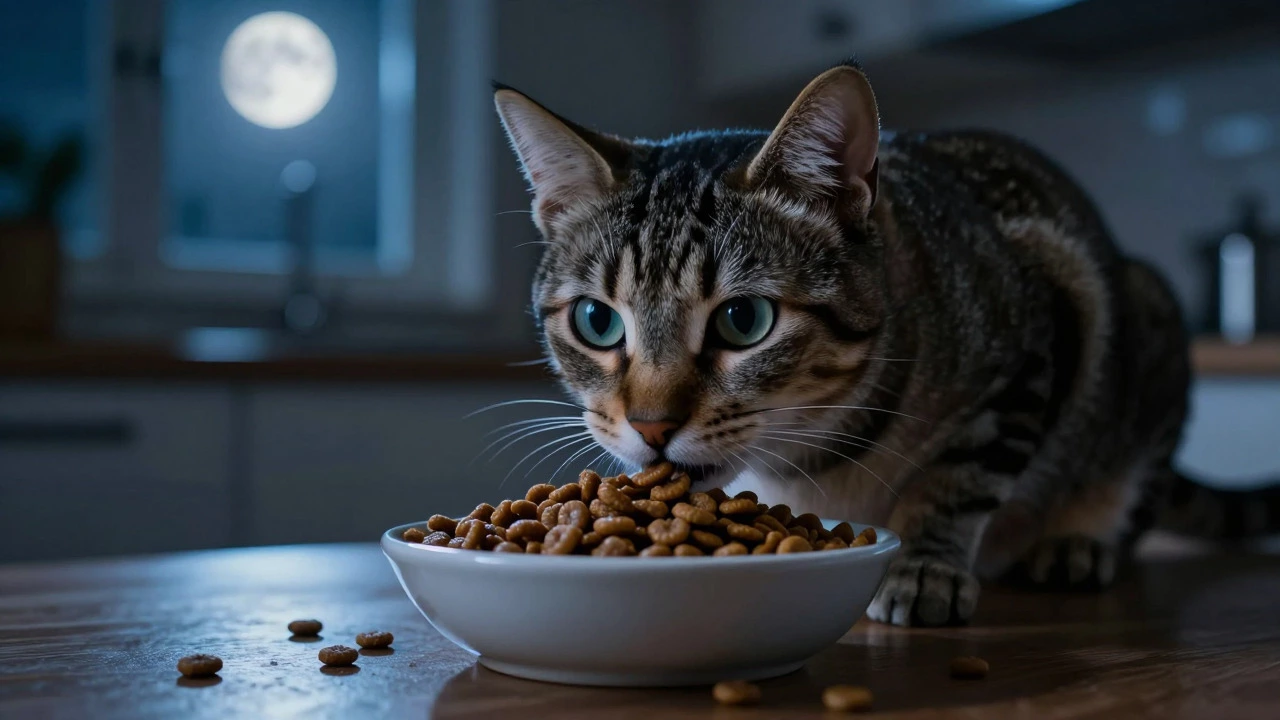
Walking into your kitchen at midnight, you hear that familiar crinkle. Your cat is raiding the bowl, eyes wide in the dark, treating your expensive kibble like an all-you-can-eat buffet. It’s a common scene for many pet owners who leave dry cat food out for their pets to eat whenever they want throughout the day and night. This practice, known as free-feeding, seems convenient. You fill the bowl once, and dinner is sorted until the bag runs out. But does this convenience come at a cost to your cat’s health?
The short answer is: it depends on your cat. For some felines, constant access to food is harmless. For others, it’s a fast track to obesity and diabetes. To decide if 24/7 access is right for your household, you need to look beyond convenience and examine how cats actually eat, what their bodies need, and the hidden dangers lurking in that always-full bowl.
The Evolutionary Mismatch: Why Cats Aren't Built for Grazing
To understand why leaving food out might be problematic, we have to look at where cats come from. Domestic cats are descended from desert-dwelling predators like the African wildcat. In the wild, these animals don’t graze on grass or nibble constantly. They hunt small prey-mice, birds, insects-and consume entire meals quickly, often several times a day. After eating, they rest and digest. They aren’t designed to stand over a bowl for hours, picking at dry pellets.
This biological reality creates a mismatch with modern free-feeding practices where food is available continuously without restriction. When food is always available, cats lose the natural cue to stop eating after a satisfying meal. Instead, they engage in "grazing," which can lead to overconsumption because the satiety signals in their brains take time to kick in. Unlike dogs, who often gorge when given the chance, cats are generally more controlled-but only if the food isn’t staring them down every second of the day.
The Obesity Epidemic in Indoor Cats
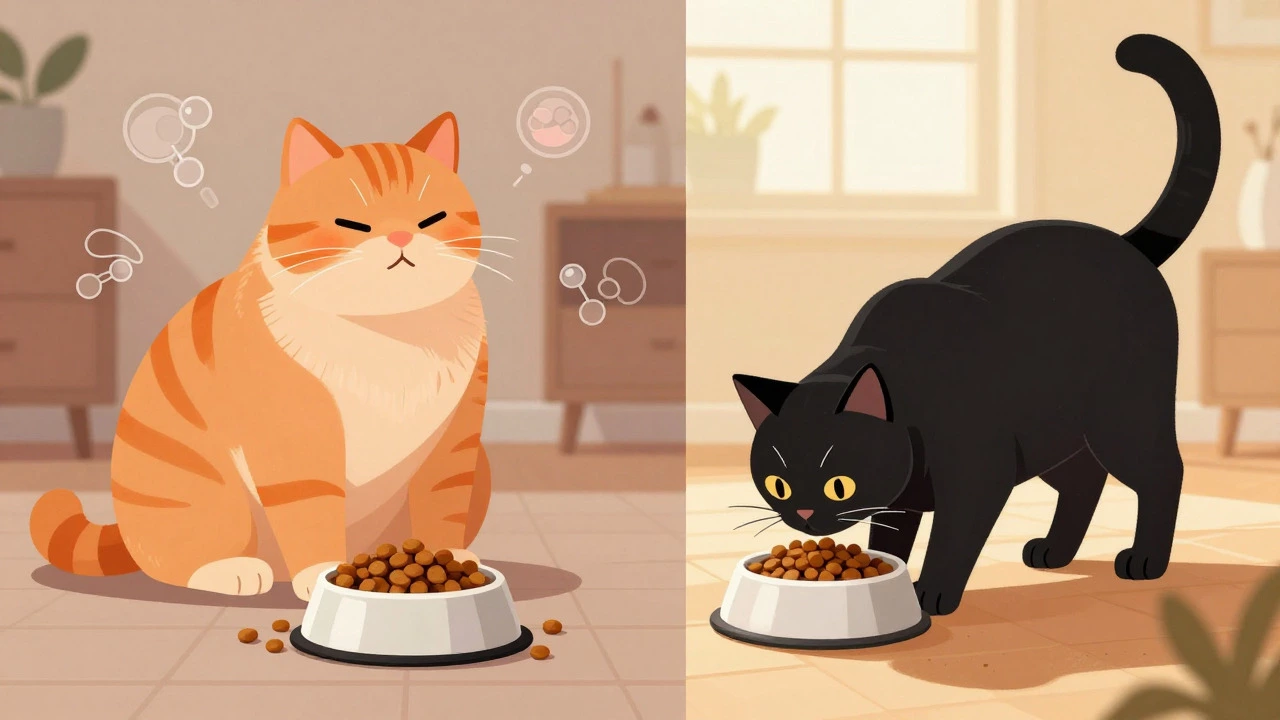
If there is one major risk associated with 24/7 access to dry food, it’s weight gain. According to recent veterinary data, nearly 60% of indoor cats in the UK and US are overweight or obese. While lack of exercise plays a role, diet management is the primary driver. Dry cat food is calorie-dense. A few extra handfuls eaten while bored or stressed can add up to thousands of excess calories per year.
Obesity isn’t just about aesthetics; it’s a serious medical condition. Excess weight puts strain on joints, leading to arthritis and reduced mobility. It also increases the risk of feline diabetes mellitus, a chronic condition where the body cannot properly use insulin to regulate blood sugar. Studies show that cats fed ad libitum (free-fed) are significantly more likely to develop insulin resistance compared to those on measured portions. Once diabetes sets in, it requires lifelong management, including potential insulin injections. Preventing it through controlled feeding is far easier than treating it.
When Free-Feeding Might Actually Work
Not every cat will turn into a diabetic couch potato if left with a full bowl. There are specific scenarios where 24/7 access is not only safe but beneficial:
- Multi-cat households with tension: If one cat bullies another during mealtimes, the victim may skip meals. Leaving food out ensures the shy cat gets enough to eat, even if it has to sneak bites later.
- Active or growing kittens: Young cats have high metabolic rates and need frequent, small meals to support growth. They rarely overeat because their bodies signal hunger accurately.
- Cats with hyperthyroidism: Older cats with this condition burn calories rapidly and often need unrestricted access to maintain weight.
- Working owners with unpredictable schedules: If you work long shifts or travel frequently, automatic feeders or free-feeding can prevent starvation.
In these cases, the benefits of ensuring adequate nutrition outweigh the risks of overeating. However, even here, monitoring weight is crucial. Just because a cat *can* eat freely doesn’t mean it *should* without oversight.
The Hidden Dangers Beyond Calories
It’s not just about weight. Leaving dry food out all day introduces other health and hygiene issues that many owners overlook.
Kibble Staleness: Dry food contains fats that can go rancid when exposed to air, heat, and humidity. Once a bag is opened, the clock starts ticking. Kibble left in a bowl for days loses its flavor and nutritional value. Cats are sensitive to smell; stale food may deter them from eating, leading to picky eating habits or, worse, urinary tract issues if they drink less water because the food tastes bad.
Bacterial Growth: Saliva from previous meals mixes with moisture in the air, creating a breeding ground for bacteria. If your cat licks the bowl repeatedly throughout the day, you’re essentially serving a culture of germs. This can lead to gastrointestinal upset, especially in older or immunocompromised cats.
Pest Attraction: An open bowl of smelly kibble is a beacon for ants, cockroaches, and even mice. Not only do pests contaminate the food, but they also introduce parasites and diseases into your home.
Scheduled Feeding: A Better Alternative?
For most adult, healthy cats, scheduled feeding involves providing specific amounts of food at set times each day. This method gives you control over exactly how much your cat eats. You measure the portion based on their ideal body weight, age, and activity level. Most veterinarians recommend two meals a day-morning and evening-as this mimics the natural hunting rhythm of multiple small meals.
Scheduled feeding offers several advantages:
- Weight Management: You know precisely how many calories enter your cat’s system daily.
- Health Monitoring: If your cat leaves food untouched, you notice immediately. This can be an early warning sign of illness, dental pain, or stress.
- Bonding Opportunity: Mealtime becomes an interaction point. You can check for lumps, bumps, or changes in behavior while they eat.
- Freshness: Food is served fresh and removed after 30 minutes, ensuring optimal taste and hygiene.
Transitioning from free-feeding to scheduled meals can be tricky. Some cats will protest, crying loudly or hiding food. Consistency is key. Stick to the schedule, ignore the begging (which is learned behavior), and gradually reduce the amount of food left out until it disappears within 15-20 minutes.
| Factor | Free-Feeding (24/7) | Scheduled Feeding |
|---|---|---|
| Convenience | High (set and forget) | Medium (requires routine) |
| Weight Control | Low (risk of overeating) | High (precise portion control) |
| Food Freshness | Low (kibble goes stale) | High (freshly served) |
| Hygiene | Low (bacterial buildup) | High (bowls cleaned regularly) |
| Illness Detection | Difficult (changes go unnoticed) | Easy (appetite loss is obvious) |
How to Transition Your Cat Safely
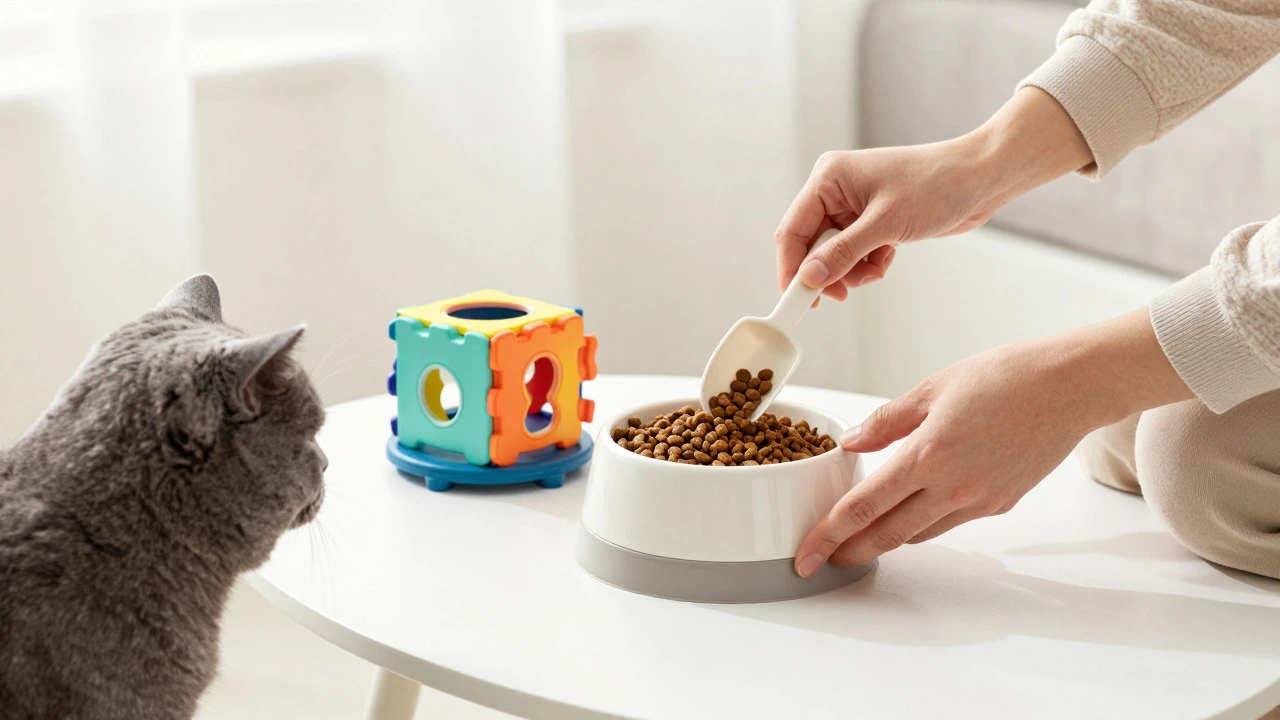
If you’ve been free-feeding and want to switch to scheduled meals, don’t do it overnight. Sudden changes can cause stress. Start by setting a timer. Remove the bowl after 30 minutes. If your cat hasn’t finished, wait until the next scheduled meal before offering more. Repeat this process daily. Within a week, most cats adjust to the new routine. Use puzzle feeders or slow-feed bowls during the transition to make eating more engaging and slower, helping them feel fuller with less food.
Special Considerations for Senior Cats
As cats age, their metabolism slows, but their appetite may remain strong. Senior cats are particularly prone to obesity-related issues like joint pain and kidney disease. For seniors, scheduled feeding allows you to tailor portions to their lower energy needs. Additionally, wet food is often recommended for older cats due to higher moisture content, which supports kidney function. Mixing wet food into a scheduled routine ensures they get hydration without the dry-food staleness issue.
Final Thoughts on Feeding Strategies
There is no one-size-fits-all answer to whether cats should have 24/7 access to dry food. For active, lean cats in multi-pet homes, it might work. For the average indoor cat, however, the risks of obesity, diabetes, and poor hygiene outweigh the convenience. By switching to scheduled feeding, you gain control over your cat’s health, detect problems earlier, and ensure every bite is fresh and nutritious. Your cat’s long-term well-being is worth the extra effort of measuring portions and sticking to a routine.
Is it bad to leave dry cat food out all day?
Leaving dry cat food out all day can lead to overeating, obesity, and stale food. While not inherently "bad" for every cat, it poses significant health risks for indoor cats prone to weight gain. It also reduces hygiene as bacteria can grow in the bowl. Scheduled feeding is generally safer for maintaining a healthy weight and detecting appetite changes.
How many times a day should I feed my cat?
Most adult cats thrive on two meals a day, typically in the morning and evening. Kittens require three to four smaller meals daily due to their rapid growth and high energy needs. Senior cats may also benefit from smaller, more frequent meals if they have digestive issues.
Why does my cat cry for food if the bowl is full?
Cats often cry for food out of boredom, habit, or desire for attention rather than hunger. If the bowl is full, they may be seeking interaction. Ignoring the cries and sticking to a schedule helps break this learned behavior. Ensure they are getting enough playtime to burn off energy.
Can free-feeding cause diabetes in cats?
Yes, free-feeding contributes to obesity, which is a major risk factor for feline diabetes mellitus. Excess weight leads to insulin resistance. Studies show that cats with controlled diets have a significantly lower incidence of diabetes compared to those allowed to eat freely.
How long does dry cat food stay fresh in a bowl?
Dry cat food begins to lose freshness and flavor within 24 to 48 hours when left exposed to air. Fats can oxidize, making the food less palatable and potentially harmful. For best quality, serve fresh portions daily and remove uneaten food after 30 minutes.