Dog Grooming Time Estimator
Not sure how long to block out for your next appointment? Use this tool to get a realistic estimate based on standard industry timelines.
Estimated Appointment Duration
Total estimated time at salon
Time Breakdown
You drop your pup off at the groomer with a quick wave and a promise of biscuits, expecting them back in an hour. But when you return, they’re still on the table, looking exhausted and slightly confused. Or maybe they come home after just 45 minutes, and you wonder if they actually got washed or if the groomer just gave them a quick rinse and a haircut. The truth is, there’s no single answer to "how long should a full groom take?" because it depends entirely on your dog.
For most average-sized dogs with manageable coats, a standard full groom-bath, dry, trim, nails, ears, and paws-takes between 2 to 3 hours. However, this window can shrink to 90 minutes for a low-maintenance breed or stretch to 4+ hours for a large, matted, or anxious dog. Understanding why these times vary helps you book smarter appointments and keeps your dog less stressed.
The Standard Timeline: What Actually Happens During a Groom?
To understand the clock, you need to know what’s happening behind the scenes. A "full groom" isn't just one thing; it's a sequence of tasks, each requiring specific tools and patience. If a groomer tells you it will take two hours, they aren't guessing. They are calculating based on the physical work required.
Here is a realistic breakdown of the steps involved in a standard full service:
- Assessment (5-10 mins): Checking skin condition, matting levels, and temperament.
- Bathing (15-20 mins): Wetting, shampooing, conditioning, and thorough rinsing. Double-coated breeds need more time here.
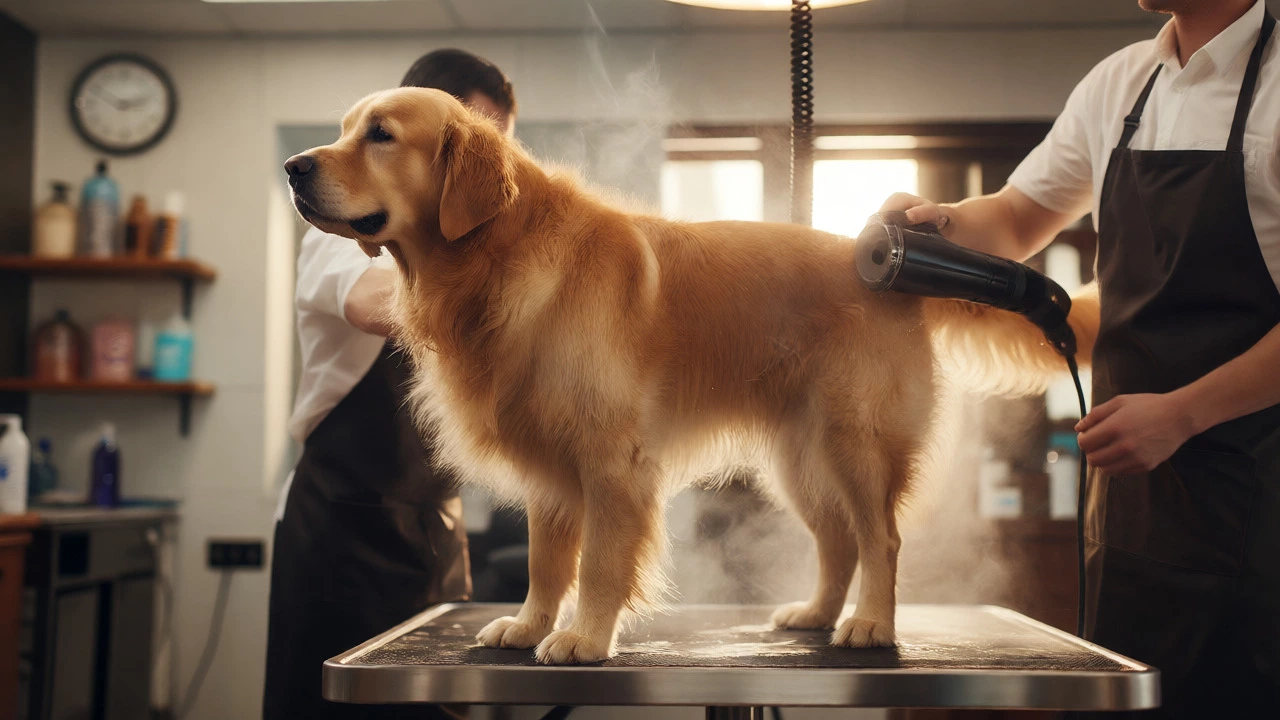
- Drying (20-40 mins): This is often the biggest variable. Using high-velocity dryers on thick fur takes time to get water out without burning the skin.
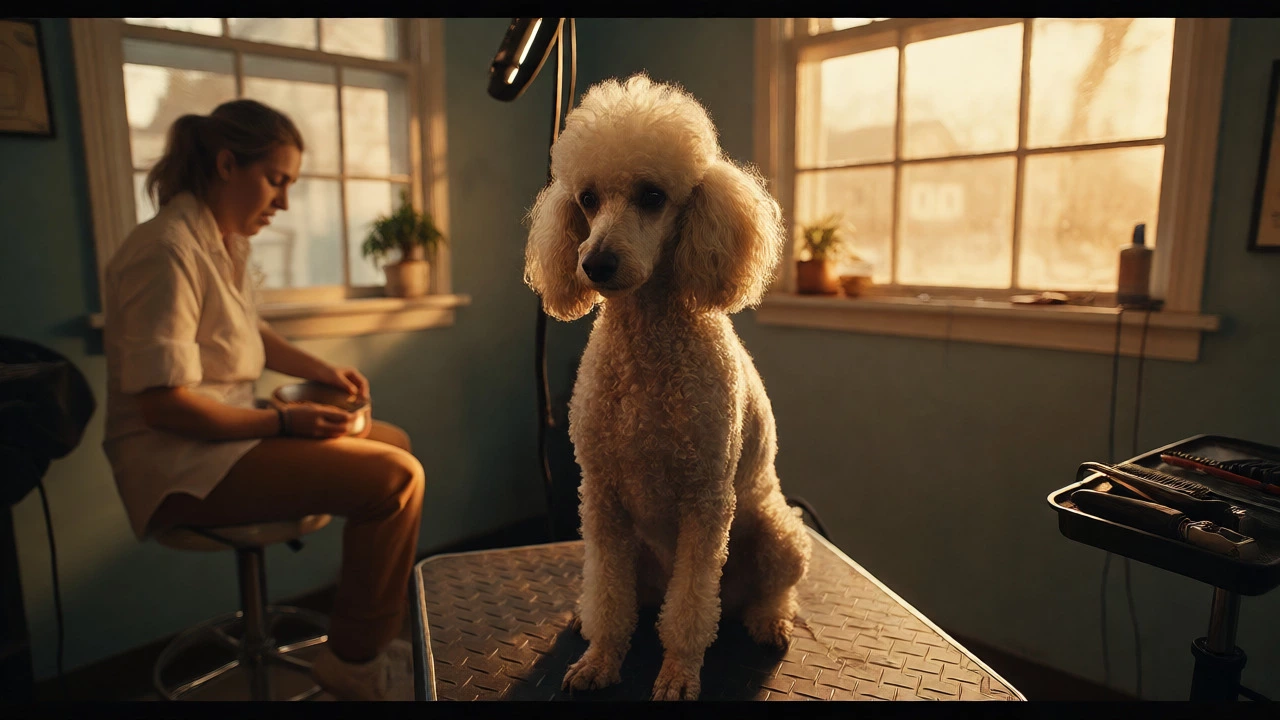
- Cutting/Trimming (30-60 mins): Scissoring or clippers. Poodle cuts take longer than teddy bear trims.
- Finishing Touches (15-20 mins): Nails, ear cleaning, sanitary areas, and final tidy-up.
If you add up the minimums, you're already at nearly two hours. Add any delays, and that time balloons quickly.
Why Coat Type Is the Biggest Time Thief
If you want to predict your dog's appointment length, look at their fur. Not all hair grows the same way, and not all hair dries the same way. The structure of the coat dictates how much labor is involved.
| Coat Type | Examples | Estimated Time | Key Challenge |
|---|---|---|---|
| Short/Smooth | Labrador, Boxer, Pug | 1 - 1.5 Hours | Shedding control and nail care |
| Medium/Single Coat | Maltese, Shih Tzu, Yorkie | 2 - 2.5 Hours | Tangling and precise trimming |
| Double Coat | Husky, Golden Retriever, Corgi | 2.5 - 3.5 Hours | Undercoat removal and drying speed |
| Curl/Wire | Poodle, Schnauzer, Terrier | 3 - 4+ Hours | Matting prevention and styling |
Double-coated breeds like Huskies or German Shepherds have a dense undercoat that traps water. Getting that wet fur dry enough so it doesn't smell musty requires powerful blowers and constant brushing during the process. You can't rush it, or you risk skin issues. Curly coats, like those on Poodles, act like sponges. They hold water, tangle easily when wet, and require meticulous scissoring to maintain shape. That's why a Poodle groom almost always hits the three-hour mark.
The Mating Factor: When 2 Hours Becomes 4
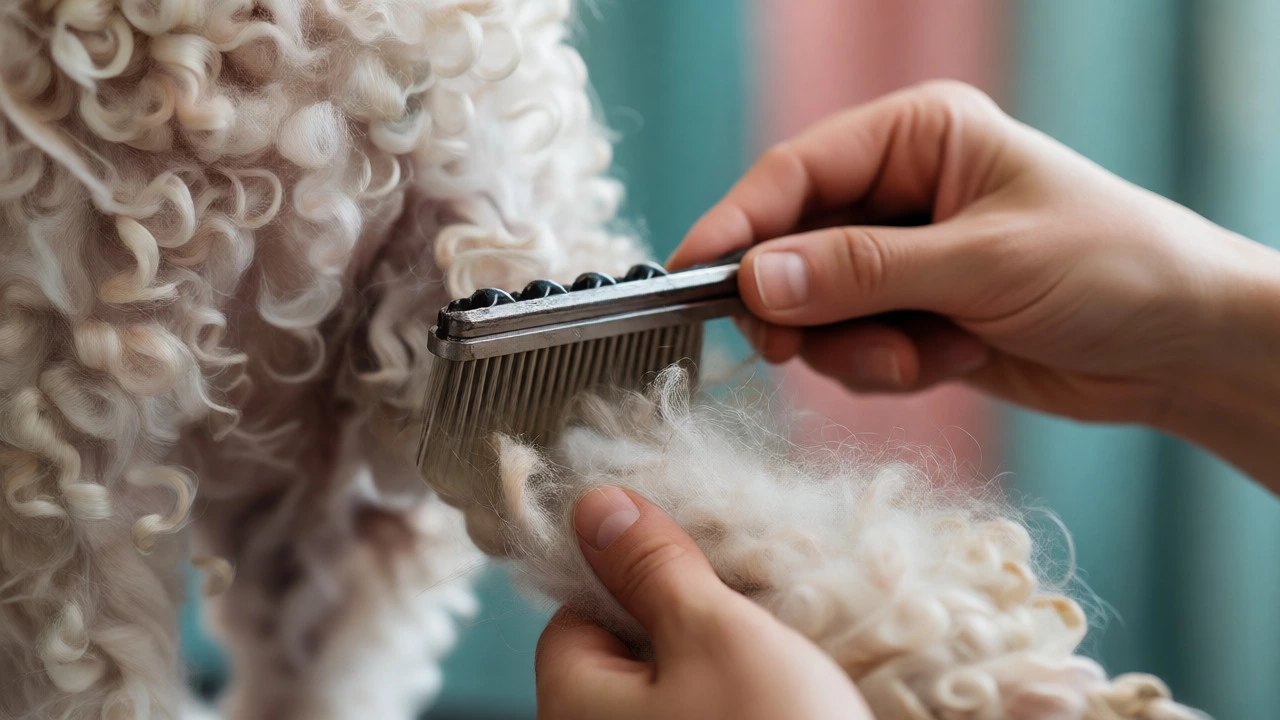
Nothing kills a grooming schedule faster than mats. If your dog has knots, especially tight ones close to the skin, the groomer cannot simply run clippers over them. Doing so pulls the skin and hurts the dog. Instead, they have to use a technique called "line brushing," where they tease apart small sections of fur with a slicker brush and comb.
This is painstaking work. For a small dog with moderate matting, this alone can add 30-45 minutes. For a large dog with severe matting, it can add hours. In some cases, if the mats are too tight, the groomer may recommend a "shave down." While this saves time compared to de-matting, it still requires careful handling to avoid nicking the skin under tangled fur.
Pro Tip: If you let your dog go past 8 weeks between grooms, expect extra charges and extra time. Regular maintenance is cheaper and faster than rescue missions.
Temperament and Behavior: The Hidden Variable
We tend to think of grooming as a mechanical task, but it's also a behavioral one. A dog that stands still while being brushed allows the groomer to work efficiently. A dog that squirms, bites at the air, or tries to jump off the table slows everything down.
Anxious dogs require breaks. A professional groomer won't force a terrified dog through a bath if they are shaking uncontrollably. They might pause, offer treats, and try again later. These pauses accumulate. If your dog is reactive around other animals, the groomer might need to keep them isolated, which can limit workflow efficiency if the salon is busy.
Older dogs or puppies present different challenges. Seniors may tire quickly and need shorter sessions or multiple visits. Puppies are learning to tolerate handling, so the first few grooms are slower as they build trust. Never punish a slow groom caused by fear; it's a sign of good welfare practices.
Size Matters: Small vs. Large Dogs
It seems obvious, but size impacts time linearly. A Chihuahua has less surface area to wash, dry, and cut than a Great Dane. However, small dogs are often more fidgety, which can offset their smaller size. Large dogs require more product, more water, and more physical effort from the groomer.
A Great Dane bath might take 20 minutes just to rinse properly. Drying a giant breed can take upwards of 45 minutes. Meanwhile, a tiny Yorkie might be done in 90 minutes if their coat is kept short. So, don't assume big dogs always take longer than small, scruffy ones. It's about volume of hair versus behavior.
What Adds Extra Minutes to Your Appointment?
Beyond the basics, several common requests add time to the slot. If you plan to ask for these, book a longer appointment or check if the salon offers add-on services.
- Teeth Brushing: Adding 5-10 minutes for a proper dental scrub.
- Flea/Tick Treatment: Applying topical treatments takes 5 minutes plus drying time.
- Express Deshedding: Specialized shampoos and deep-conditioning masks add 15-20 minutes.
- Sanitary Trim: While usually included, a detailed sanitary clean-up on a hairy dog adds 5-10 minutes.
- Medicated Baths: If your dog has skin allergies, medicated shampoos need to sit on the coat for 10-15 minutes before rinsing.
Also, consider the logistics. Drop-off and pick-up times aren't always instant. If the salon is fully booked, you might wait 10 minutes for the previous dog to finish. Always factor in 15 minutes of buffer time around the actual grooming window.
How to Prepare Your Dog for a Faster, Calmer Groom
You can influence the timeline. A well-prepared dog moves through the process smoother. Here’s how to help your groomer work efficiently:
- Brush at Home: Spend 5 minutes brushing your dog daily. This prevents mats from forming, which is the #1 cause of extended appointments.
- Exercise Beforehand: A tired dog is a calm dog. Walk your pup thoroughly before the appointment so they are less likely to bounce off the walls.
- Handle Their Paws: Practice touching their paws and ears at home. Get them used to having their feet held. This speeds up nail trimming significantly.
- Be Honest About History: Tell the groomer if your dog hates baths or bites when touched near the tail. Knowing this lets them approach differently, saving time on corrections.
If you skip home brushing, you are essentially paying for the groomer to undo your neglect. It’s worth the investment in time and money to keep the coat maintained between visits.
Is Longer Always Better?
Sometimes, yes. If a groomer spends only 45 minutes on a double-coated Spaniel, ask yourself: Did they really dry the undercoat? Did they check for skin lumps? Rushed grooms often lead to damp fur underneath, which causes hot spots and bad odors within days.
Conversely, extremely long times (over 4 hours) can stress a dog. If a groomer says it will take 5 hours, ask why. Is it matting? Behavior? If it's behavior, ask if they can break it into two shorter sessions. Some salons offer "split grooms" where the dog comes back the next day for finishing touches. This is often better for the dog's mental health.
Frequently Asked Questions
How long does a basic bath and brush take?
A basic bath and brush, without a haircut, typically takes 60 to 90 minutes depending on the dog's size and coat density. This includes bathing, drying, brushing out loose hair, and nail trimming.
Why did my dog's groom take 4 hours?
Long durations are usually due to heavy matting, difficult temperament (anxiety or resistance), or complex styling requirements like a show cut. Severe matting requires careful de-tangling rather than clipping, which is time-intensive.
Can I stay with my dog during the groom?
Most groomers prefer owners to leave, as dogs often behave better without their humans present. Staying can sometimes increase anxiety or excitement, prolonging the session. However, some salons offer "in-salon" grooming for nervous pets.
Does grooming time change with age?
Yes. Puppies require slower, patient introductions to equipment, extending time. Senior dogs may fatigue quickly, requiring breaks or split appointments. Older dogs may also have thinner skin, requiring gentler handling.
How often should I book a full groom?
Every 4 to 8 weeks is standard for most breeds. Waiting longer increases the risk of matting, which significantly increases the duration and cost of the next appointment. Short-haired breeds may only need grooming every 3 months.