Dog Human Food Portion Calculator
Safe Human Food Guide
Only safe foods are included. Foods marked as unsafe are excluded from calculations.
Human food should never exceed 10% of your dog's daily calories.
Safe Foods
- ✔ Cooked chicken/turkey (no skin, no seasoning)
- ✔ Carrots (raw or steamed)
- ✔ Green beans
- ✔ Bananas (in moderation)
- ✔ Plain pumpkin
- ✔ Plain yogurt
- ✔ Blueberries
Dangerous Foods
- ✘ Chocolate
- ✘ Onions and garlic
- ✘ Grapes and raisins
- ✘ Xylitol
- ✘ Alcohol
- ✘ Avocado
- ✘ Cooked bones
Calculate Safe Portion
Safe Portion Size
Maximum Daily Portion
Daily Calories
You look at your dog’s bowl and wonder-why are they eating dry kibble when you’re enjoying a juicy steak or a plate of roasted vegetables? It’s natural to want to share your food with your dog. They stare at you with those big eyes, tail wagging, like they’re begging for a taste. But can you actually feed your dog human food instead of dog food? The short answer: sometimes, but not as a replacement. And doing it wrong can hurt them.
Why Dog Food Exists
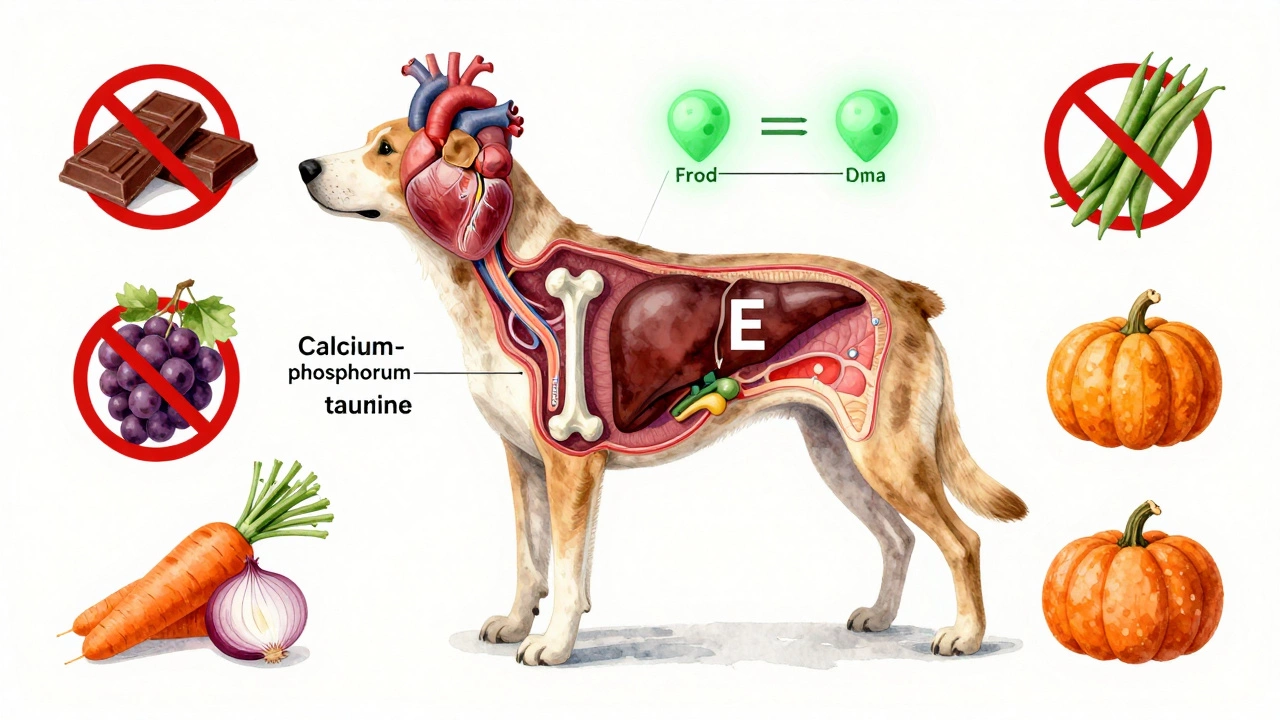
Dog food isn’t just convenient-it’s science. Commercial dog food is formulated to meet the nutritional standards set by the Association of American Feed Control Officials (AAFCO). That means every bag of complete and balanced dog food contains the right mix of proteins, fats, vitamins, and minerals your dog needs to thrive. A typical adult dog needs about 18-25% protein, 8-12% fat, and specific levels of calcium, phosphorus, taurine, and omega-3s. Most human meals don’t hit these numbers.
For example, a bowl of chicken and rice might seem healthy, but it’s missing key nutrients like zinc, vitamin E, and the right calcium-to-phosphorus ratio. Over time, that imbalance can lead to bone problems, skin issues, or even heart disease. A 2023 study from the University of Edinburgh followed 500 dogs fed mostly human food and found that 37% developed nutritional deficiencies within two years-even if their owners thought they were feeding them "healthy" meals.
What Human Foods Are Safe for Dogs?
Not all human food is dangerous. Many common foods are perfectly safe in small amounts and can even be great treats. Here’s what you can give your dog without worry:
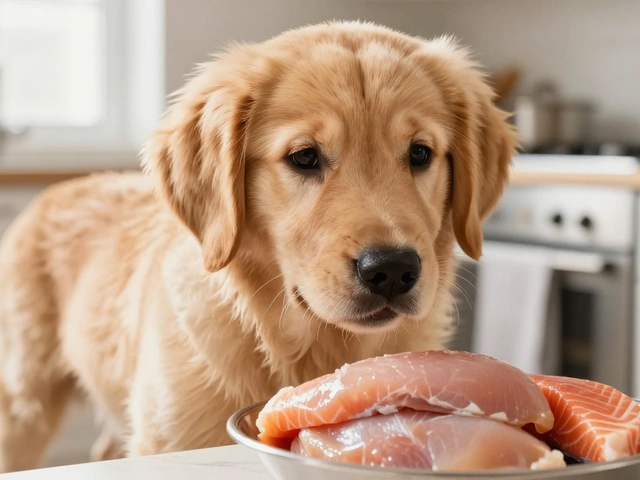
- Cooked chicken or turkey (no skin, no seasoning)
- Carrots (raw or steamed-great for dental health)
- Green beans (low-calorie and packed with fiber)
- Bananas (in moderation-high in sugar)
- Pumpkin (plain, canned, not pie filling-helps with digestion)
- Plain yogurt (no artificial sweeteners, especially xylitol)
- Blueberries (antioxidants and vitamins)
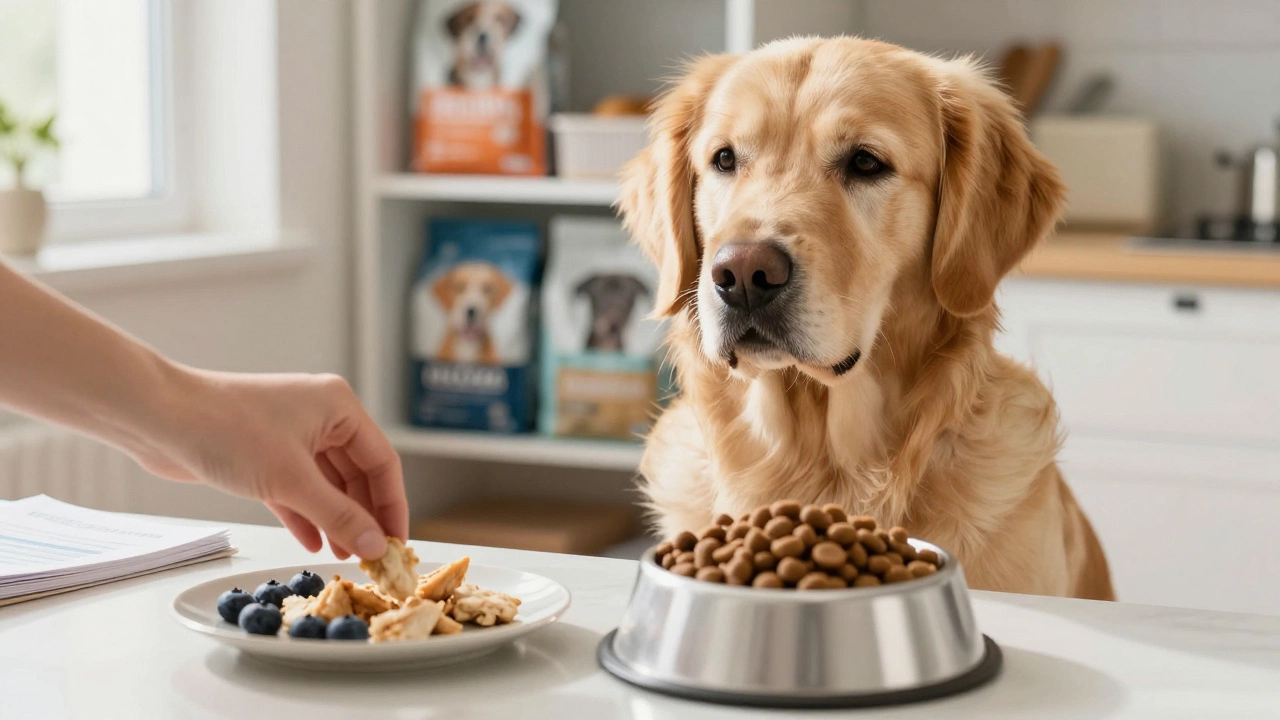
These foods can be mixed into your dog’s regular food as a topper or used as training treats. But they should never make up more than 10% of your dog’s daily calories. That’s about a tablespoon of chicken or a couple of blueberries for a medium-sized dog.
What Human Foods Are Dangerous?
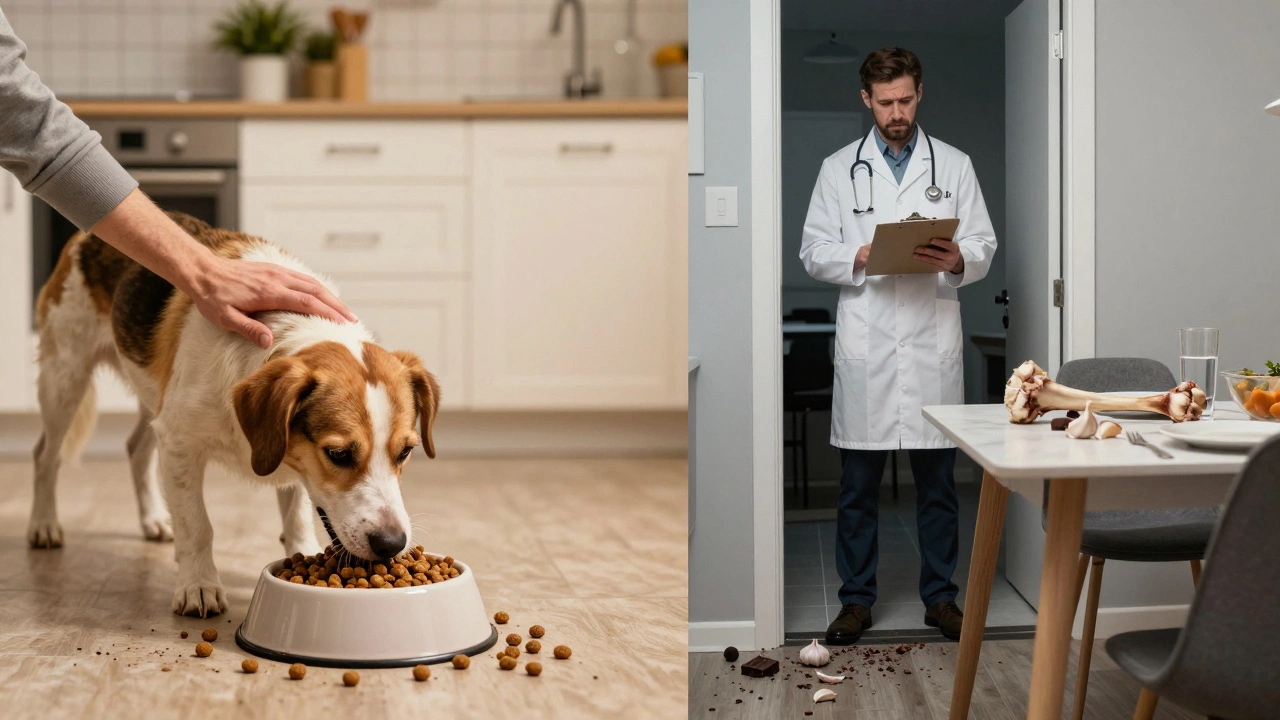
Some human foods are toxic-even in tiny amounts. Never feed your dog these:
- Chocolate (contains theobromine-can cause seizures or death)
- Onions and garlic (damage red blood cells, leading to anemia)
- Grapes and raisins (can cause sudden kidney failure)
- Xylitol (found in sugar-free gum and peanut butter-triggers deadly insulin spikes)
- Alcohol (even a sip can poison a small dog)
- Avocado (contains persin, which can cause vomiting and diarrhea)
- Cooked bones (splinter and puncture intestines)
These aren’t just "bad for dogs"-they’re medical emergencies. If your dog eats any of these, call your vet immediately. Don’t wait for symptoms. Xylitol poisoning can kill a dog in under 30 minutes.
Why Homemade Diets Are Risky
Some owners switch to homemade dog food because they want to control ingredients or believe it’s more "natural." But most homemade diets are dangerously unbalanced. A 2022 study in the Journal of the American Veterinary Medical Association analyzed 200 homemade dog food recipes from the internet. Only 5% met basic nutritional standards. The rest were missing critical nutrients or had too much of others.
Even if you follow a recipe from a blog or YouTube video, it’s not guaranteed to be safe. Dogs have different needs than humans. They can’t get all their nutrients from the same sources. For example, dogs need vitamin D from animal fat, not sunlight. They need taurine from meat, not supplements you buy at the store. Without proper formulation, you’re risking your dog’s long-term health.
When Human Food Might Be Okay
There are times when human food can help. If your dog is sick, recovering from surgery, or has a sensitive stomach, your vet might recommend a bland diet of boiled chicken and rice for a few days. That’s temporary support, not a long-term solution.
Older dogs with dental issues might benefit from soft, cooked foods mixed with their kibble. Dogs with allergies might need a limited-ingredient diet, which can sometimes be made from human-grade ingredients-but only under veterinary supervision. In these cases, a vet or veterinary nutritionist should create a custom plan. Don’t guess.
What to Do Instead
If you want to give your dog more variety, here are better options:
- Try different brands of high-quality dog food. Look for ones with real meat as the first ingredient.
- Use freeze-dried raw toppers-they’re just meat, no fillers, and they’re safe.
- Offer dog-safe vegetables as snacks instead of biscuits.
- Rotate protein sources (chicken, beef, fish) within your dog’s regular food to keep things interesting.
There’s no need to replace dog food to make your dog happy. Most dogs don’t care if their food is kibble or wet. They just care that you’re there, feeding them, and giving them attention.
How to Transition Safely
If you’re thinking of adding human food to your dog’s diet, do it slowly. Start with a teaspoon of cooked sweet potato or a few green beans mixed into their meal. Watch for any changes in stool, energy, or skin condition over the next 48 hours. If nothing changes, you can slowly increase the amount-but never over 10%.
Always check with your vet before making big changes, especially if your dog has health issues like diabetes, kidney disease, or pancreatitis. What’s safe for one dog might be dangerous for another.
Bottom Line
You can feed your dog some human food-but not instead of dog food. Dog food is designed to keep them alive and healthy for 12 to 15 years. Human food is designed for you. Mixing them up is tempting, but risky. Stick to dog food as the main source of nutrition. Use human food as an occasional treat, not a replacement. Your dog will thank you with more energy, a shinier coat, and fewer vet bills.
Can I feed my dog rice and chicken every day?
No. While rice and chicken are safe and often used for upset stomachs, they don’t provide complete nutrition. Over time, this diet can lead to deficiencies in calcium, zinc, and essential fatty acids. Use it only as a short-term solution under veterinary guidance.
Is homemade dog food better than commercial dog food?
Not unless it’s formulated by a veterinary nutritionist. Most homemade diets lack key nutrients. Commercial dog food, especially from reputable brands, is tested and balanced. Homemade diets are only better if they’re carefully planned and monitored.
What’s the healthiest human food for dogs?
Plain, cooked lean meats like chicken or turkey, along with vegetables like carrots, green beans, and pumpkin, are among the healthiest options. They’re low in fat, high in fiber, and packed with vitamins. Always serve them plain-no salt, butter, or spices.
Can I give my dog table scraps?
Avoid it. Table scraps often include fatty, salty, or seasoned foods that can upset your dog’s stomach or lead to pancreatitis. Even small amounts of grease or bones can be dangerous. If you want to share, give a small portion of plain, unseasoned food instead.
How do I know if my dog is getting enough nutrients?
Signs of poor nutrition include dull coat, flaky skin, lethargy, weight loss, or frequent diarrhea. If you’re feeding mostly human food, schedule a blood test with your vet. They can check for deficiencies in vitamins, minerals, and proteins. Regular checkups are the best way to catch problems early.