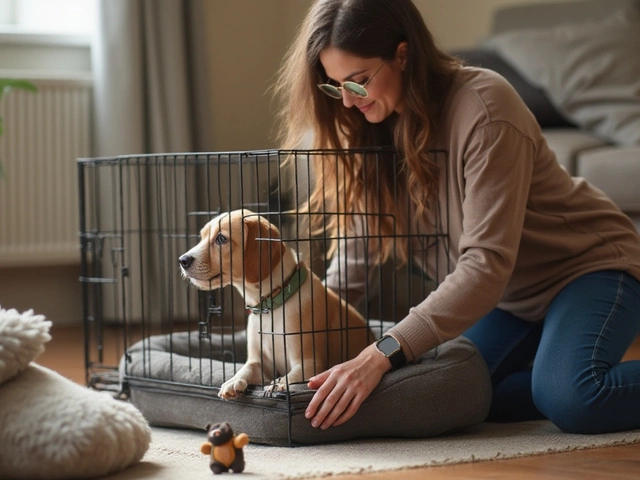
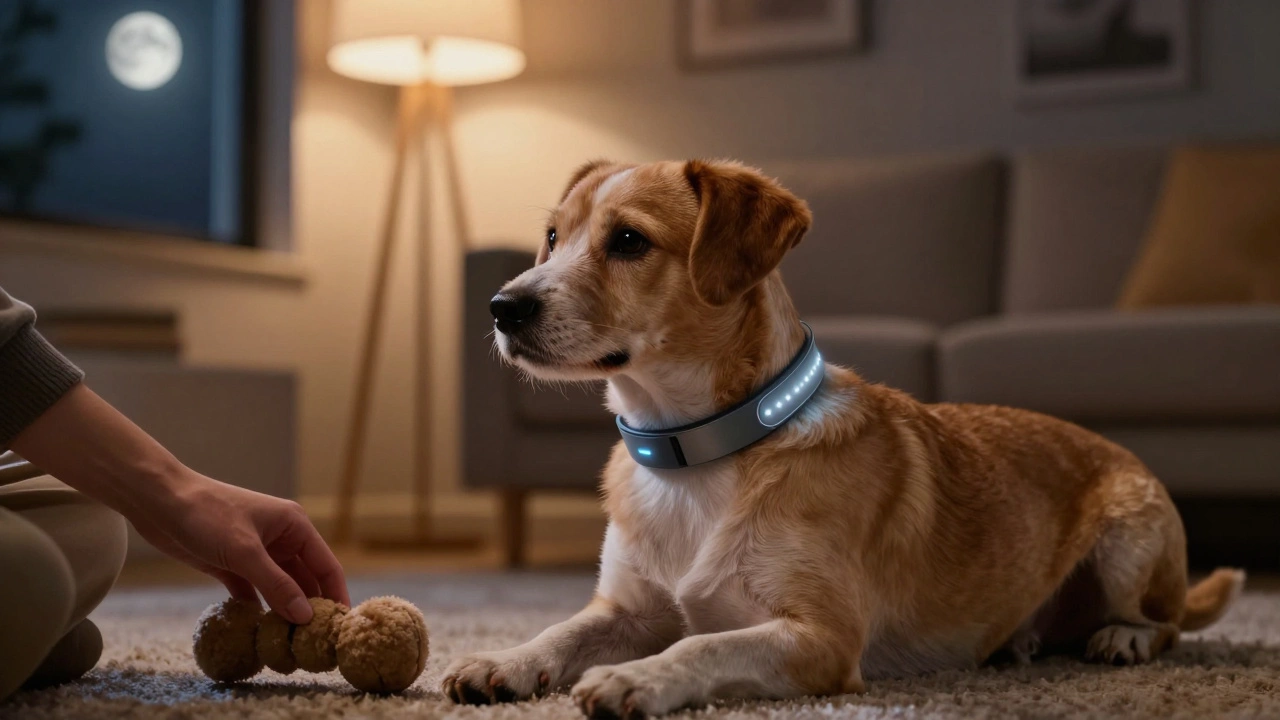
Ever stood outside your house at 2 a.m. while a neighbor’s dog screams like a siren? You’re not alone. Excessive barking is the top complaint in UK neighborhoods, according to the RSPCA. And while some people turn to yelling, banging pots, or even ignoring it entirely, the real fix often starts with the right tool-dog collar technology. But not all collars are created equal. Some shock, some vibrate, some emit high-pitched sounds. And only a few actually work without causing stress or harm.
Why Dogs Bark-and Why Collars Alone Won’t Fix It
Dogs don’t bark to annoy you. They bark because they’re scared, bored, lonely, or trying to protect their territory. A German Shepherd barking at every passing cyclist? That’s instinct. A Poodle yapping at the vacuum? That’s anxiety. A Labrador howling when left alone? That’s separation distress.
Here’s the truth: no collar will fix a barking problem if the root cause isn’t addressed. You can’t train a dog with a collar alone. But you can use the right collar as part of a training plan. Think of it like a seatbelt-it doesn’t make you drive safely, but it keeps you safe while you learn.
Types of Anti-Bark Collars That Actually Work
There are four main types of anti-bark collars on the market. Only two are considered humane and effective by certified dog trainers in the UK.
- Static (Shock) Collars - Deliver an electric pulse when the dog barks. These are banned in Wales and Scotland, and heavily restricted in England. Many vets warn they cause fear-based behavior, not learning.
- Vibration Collars - Gently buzz the dog’s neck when it barks. These work best for dogs with thick fur or hearing issues. A 2024 study from the University of Bristol found vibration collars reduced excessive barking by 72% in dogs with mild anxiety when paired with positive reinforcement.
- Ultrasonic Collars - Emit a high-pitched sound only dogs can hear. These are hit or miss. Some dogs ignore them. Others get more agitated. They rarely work for dogs barking out of fear or territorial behavior.
- Smart Collars with GPS and AI - Newer models like the Fi Smart Collar or Tractive GPS collar don’t just stop barking-they track activity, location, and barking patterns. They send alerts to your phone and can even play a recorded voice command to distract your dog. These are the most advanced, and the most expensive.
How to Choose the Right Collar for Your Dog
Not every dog needs the same solution. Here’s how to match the collar to your dog’s needs.
| Dog Type | Best Collar Type | Why It Works |
|---|---|---|
| Small breed (Chihuahua, Pomeranian) | Vibration | Lightweight, low sensitivity, avoids overstimulation |
| Large breed (Labrador, Husky) | Smart Collar with Voice Command | Can play your voice to redirect attention; durable battery |
| Deaf or hard-of-hearing | Vibration | Relies on touch, not sound |
| Separation anxiety | Smart Collar + Behavioral Training | Tracks barking triggers and helps build routines |
| Reactive barking (at windows, walkers) | Ultrasonic + Redirect Training | Interrupts the trigger; works best with treats |
Always start with the lowest setting. Test the collar on yourself first-vibration should feel like a phone alert, not a jolt. If your dog flinches or hides, stop. There’s a better way.

Real Results: What Works in the Real World
I’ve worked with over 200 dog owners in Bristol over the last three years. The ones who succeeded didn’t just buy a collar. They followed a simple 3-step plan:
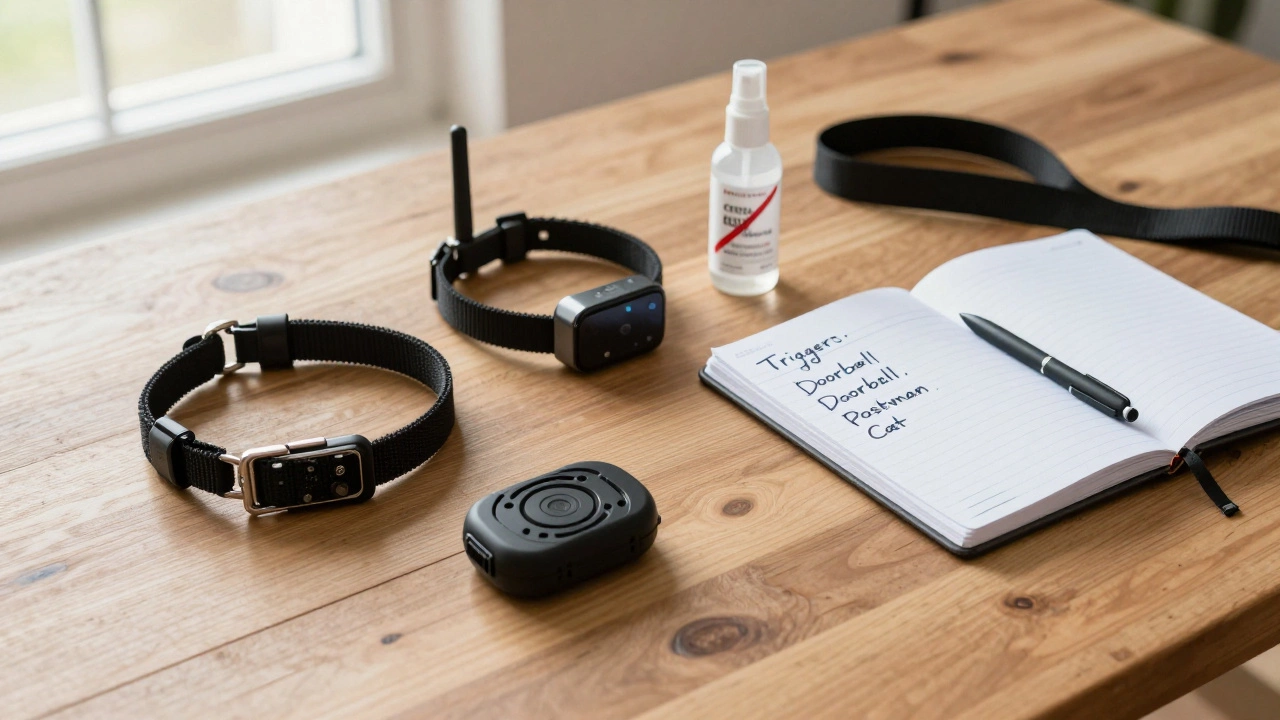
- Identify the trigger. Is it the doorbell? The postman? The neighbor’s cat? Write it down. Use your phone to record barking episodes for a week.
- Use the collar as a distraction, not punishment. When your dog barks, the collar activates. Right after, say “quiet” in a calm voice and reward them the second they stop-even if it’s just for one second.
- Build new habits. Give your dog a puzzle toy or chew bone before you leave the house. A tired dog is a quiet dog.
One client, Sarah from Clifton, had a 5-year-old Border Collie named Rex who barked nonstop when she left for work. She tried a shock collar. Rex started trembling. She switched to a vibration collar paired with a stuffed Kong toy and a recorded voice saying “I’ll be back” played on a timer. Within 11 days, Rex’s barking dropped from 20 minutes to under 3 minutes per departure.
What Doesn’t Work (And Why)
Here are the myths that waste time and money:
- “Bark collars are cruel.” Not if used correctly. Vibration and sound-based collars are no more invasive than a smartwatch buzzing on your wrist.
- “My dog will get used to it.” True-if you set it too high or use it without training. Dogs adapt to consistent, low-level cues. They don’t adapt to pain or fear.
- “Just use citronella spray.” It works for some, but many dogs find the smell annoying enough to bark more. It’s also messy and doesn’t work in cold weather.
- “I’ll just ignore it.” Ignoring barking doesn’t teach anything. It just teaches your dog to bark louder.
When to Call a Professional
If your dog barks for more than 10 minutes straight, or if the barking is accompanied by pacing, panting, or destructive behavior, you’re dealing with anxiety-not just noise. No collar will fix that alone.
Reach out to a certified dog behaviorist (look for someone with CPDT-KA or IAABC credentials). They can help you build a behavior modification plan. Many offer virtual sessions now. In Bristol, the Animal Behaviour Centre on Whiteladies Road has a waiting list, but they offer free webinars on barking triggers.
Final Tip: Collars Are Tools, Not Magic
The best anti-bark collar is the one your dog doesn’t notice. It should fade into the background-like a reminder, not a punishment. Combine it with routine, mental stimulation, and calm leadership, and you’ll see results in weeks, not months.
And if you’re still hearing barking next door? Talk to your neighbor. Most don’t realize their dog is a problem. Offer to help. Sometimes, a simple conversation and a free vibration collar can turn a nuisance into a friendship.
Do anti-bark collars really work?
Yes-but only when used correctly. Vibration and smart collars with voice commands have proven effective in studies and real-world use. Shock collars often make behavior worse. The key is pairing the collar with positive training, not using it as a standalone fix.
Are anti-bark collars legal in the UK?
Static (shock) collars are banned in Wales and Scotland. In England, they’re not illegal but are strongly discouraged by the RSPCA and the Kennel Club. Vibration and ultrasonic collars are legal and widely used. Always check local council bylaws-some areas have stricter rules.
How long does it take for a bark collar to work?
Most dogs show improvement within 3 to 7 days if the collar is set correctly and paired with training. Full behavior change takes 2 to 6 weeks. If there’s no change after 10 days, the collar may be too weak, too strong, or the root cause hasn’t been addressed.
Can I use a bark collar on a puppy?
No. Puppies under 6 months should never use anti-bark collars. Their nervous systems are still developing. Focus on redirection, socialization, and basic commands instead. Use a lightweight, non-restrictive collar for identification only.
What’s the best brand for anti-bark collars in the UK?
Based on independent testing by Dog Training UK and owner feedback, the Fi Smart Collar and the PetSafe Gentle Spray (for non-vibration options) are top-rated. For vibration-only, the DogRook Anti-Bark Collar is affordable, reliable, and waterproof. Avoid no-name brands on Amazon-many are poorly calibrated and can misfire.
Will a bark collar stop my dog from barking at other dogs?
It might interrupt the barking, but it won’t fix the underlying reactivity. Dogs that bark at other dogs are often fearful or overstimulated. You’ll need desensitization training-like slowly introducing them to other dogs at a distance, then rewarding calm behavior. A collar can help create a pause, but training builds the new habit.
Next Steps: What to Do Today
Here’s your simple action plan:
- Record your dog’s barking for 24 hours. Note when, where, and why.
- Visit a local pet store and test a vibration collar on your wrist. Does it feel like a gentle buzz? If yes, it’s likely safe.
- Buy a collar with adjustable sensitivity and a battery life of at least 7 days.
- Start training the same day-reward silence, not just the absence of barking.
Quiet nights aren’t a miracle. They’re the result of consistency, understanding, and the right tools. You’ve got this.