Dog Egg Portion Calculator
Calculate Safe Egg Portions
Why This Matters
Raw eggs pose risks like salmonella and biotin deficiency. Always feed cooked eggs in moderation.
Your Dog's Egg Portion Recommendation
Based on your dog's weight and the article guidelines:
Once or twice weekly max
Important Safety Notes
Always cook eggs - raw eggs contain salmonella risk and avidin (blocks biotin).
Remove shells - sharp fragments can cause injury.
Monitor reactions - watch for diarrhea, vomiting, or itching.
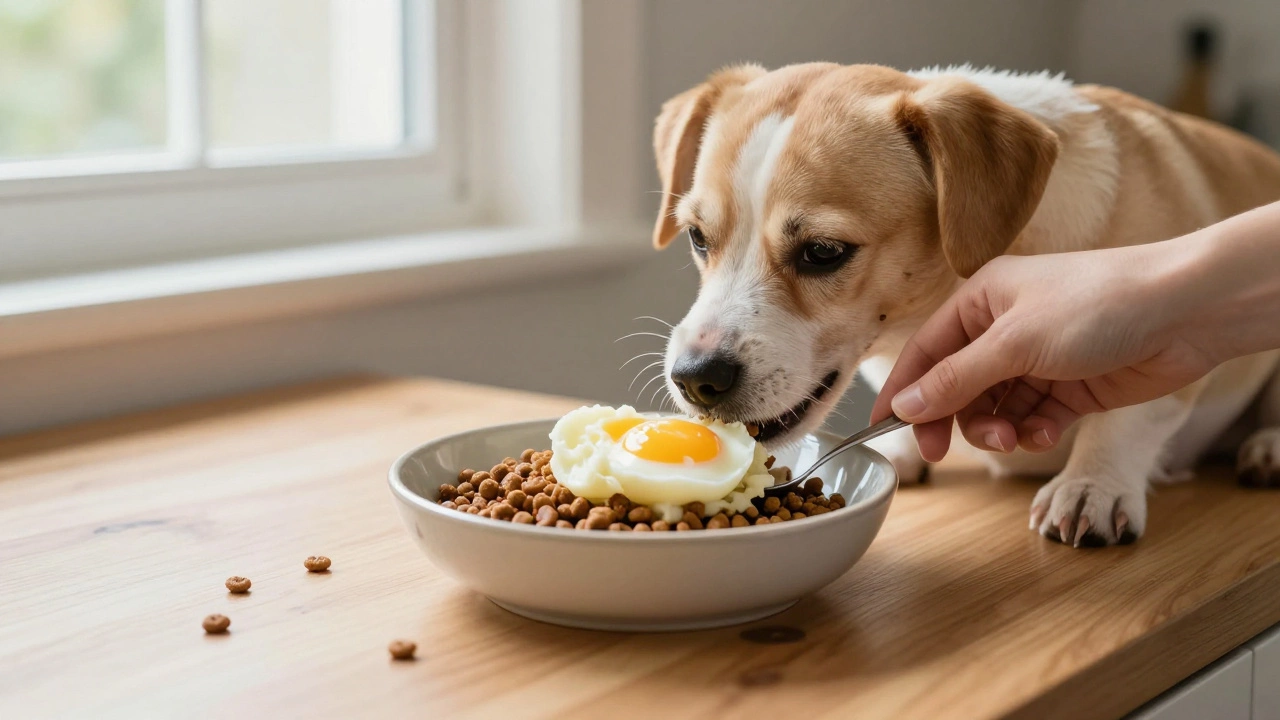
You’ve probably seen it online-a dog happily eating its kibble, then someone cracks a fresh egg right on top. It looks natural. It looks wholesome. But is it safe? Can you really crack an egg on your dog’s food without risking their health?
Why People Add Eggs to Dog Food
Eggs get a lot of attention as a superfood for humans, and that idea carries over to pets. People think eggs are packed with protein, healthy fats, and nutrients like biotin and vitamin A. Some dog owners swear by adding eggs to improve coat shine, boost energy, or even help with itchy skin. It’s easy to assume that if it’s good for you, it’s good for your dog. But dogs aren’t tiny humans. Their digestive systems, nutritional needs, and risk factors are different. Adding eggs without knowing the right way can backfire.Raw Eggs: The Hidden Danger
Cracking a raw egg onto your dog’s food sounds simple. But raw eggs come with risks most owners don’t consider. First, there’s salmonella. While dogs have tougher stomachs than people, they can still get sick. Symptoms like vomiting, diarrhea, fever, and lethargy are common. Worse, they can pass the bacteria to humans through saliva or feces. That’s a real concern if you have kids, elderly family members, or anyone with a weakened immune system. Then there’s avidin, a protein in raw egg whites. It blocks biotin absorption-a B vitamin critical for skin, coat, and metabolism. Long-term feeding of raw eggs can lead to a biotin deficiency. You might notice dry, flaky skin, hair loss, or even brittle nails. It doesn’t happen overnight, but it adds up. And don’t forget the eggshell. If it falls in, sharp fragments can irritate your dog’s throat or digestive tract. Even if you remove most of it, tiny pieces can slip through.Cooked Eggs: The Safe Alternative
Here’s the good news: cooked eggs are generally safe and even beneficial. Boiled, poached, or scrambled without oil, salt, butter, or seasoning are fine in moderation. Cooking destroys avidin and kills harmful bacteria like salmonella. That means your dog gets all the protein and nutrients without the risks. A single egg contains about 6 grams of high-quality protein, plus essential amino acids, selenium, and riboflavin-all things dogs need. Veterinarians often recommend cooked eggs as a protein boost for dogs recovering from illness, seniors needing extra nutrition, or active dogs with high energy demands. One egg, two or three times a week, is plenty for most dogs. Too much can lead to weight gain or upset stomachs.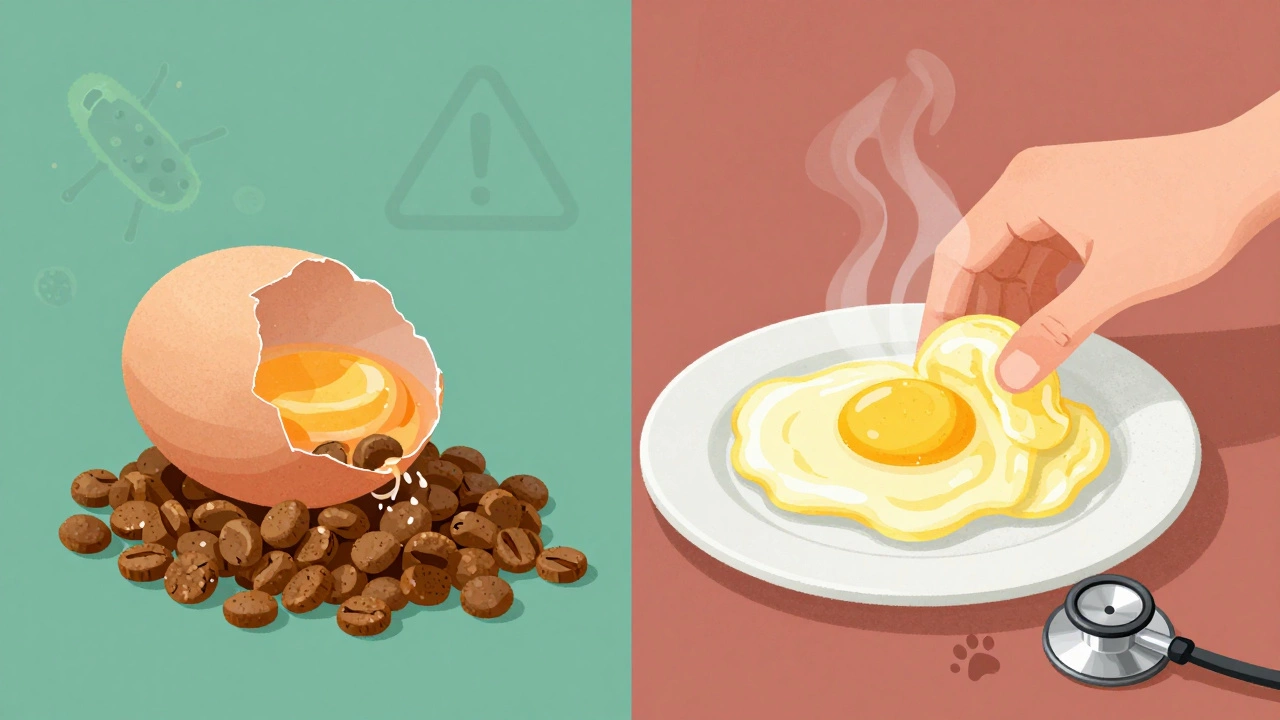
How Much Egg Is Too Much?
Size matters. A small Chihuahua doesn’t need the same amount as a Great Dane. As a rough rule:- Small dogs (under 10 lbs): 1/4 egg, once or twice a week
- Medium dogs (10-50 lbs): 1/2 to 1 whole egg, twice a week
- Large dogs (over 50 lbs): 1 whole egg, up to three times a week
What About Eggshells?
Some people grind up eggshells and sprinkle them on food for extra calcium. It sounds smart, but it’s risky. Eggshells aren’t sterile. They can carry bacteria. Even if you boil them first, grinding them finely enough to avoid sharp edges is hard. Most home grinders leave jagged bits. Those can cut your dog’s mouth, throat, or intestines. If your dog needs calcium supplementation, talk to your vet. There are safer, controlled forms-like calcium carbonate tablets or bone meal supplements designed for pets. Don’t improvise with eggshells unless you’re following a vet-approved plan.
Signs Your Dog Doesn’t Handle Eggs Well
Not all dogs tolerate eggs. Watch for:- Loose stools or diarrhea within 24 hours
- Vomiting after eating
- Excessive gas or bloating
- Itchy skin or ear infections (possible allergy)
- Loss of appetite
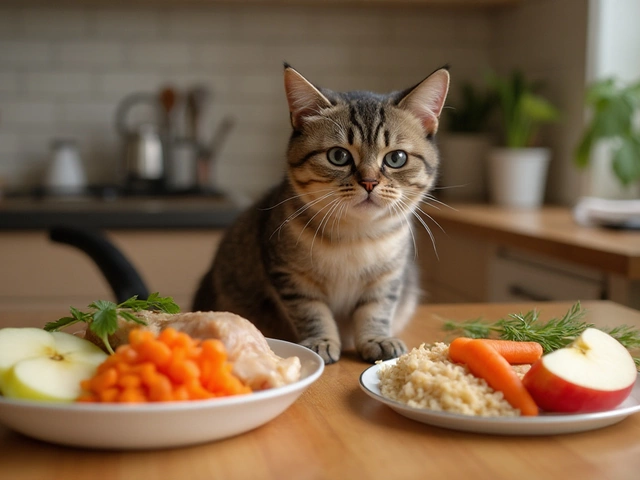
Alternatives to Eggs for Dog Nutrition
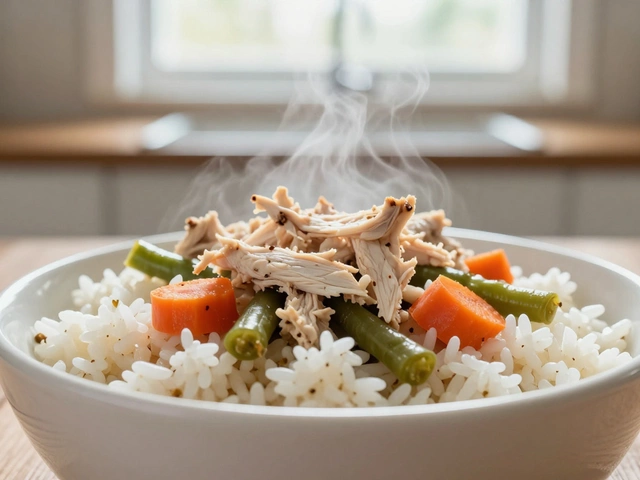
If you’re worried about eggs, there are other ways to boost your dog’s diet:- Plain cooked chicken - lean, easy to digest, and rich in protein
- Plain pumpkin - great for digestion and fiber
- Plain Greek yogurt - probiotics for gut health (check for xylitol-free!)
- Salmon oil - omega-3s for coat and joint health
- Commercial toppers - vet-formulated freeze-dried meats or nutrient blends
Final Verdict: Yes, But Only If You Do It Right
Can you crack an egg on your dog’s food? Technically, yes. But only if it’s cooked, plain, and given in moderation. Raw eggs? Skip them. Eggshells? Avoid unless your vet says otherwise. The best approach? Cook the egg, let it cool, then gently mash it into their meal. Start with a small amount. Watch how they react. If they love it and stay healthy, keep it occasional. If they get sick or show signs of discomfort, stop. Remember: your dog’s food should be balanced first. Eggs are a treat-not a cure-all.Can I give my dog a raw egg every day?
No. Feeding raw eggs daily increases the risk of salmonella poisoning and biotin deficiency. Even if your dog seems fine, long-term feeding can lead to health problems like dull coat, skin issues, and digestive upset. Stick to cooked eggs, and limit them to 2-3 times a week max.
Do eggs help with dog shedding?
Cooked eggs can improve coat quality over time because of their high-quality protein and biotin content. But they won’t stop shedding. Shedding is mostly genetic and seasonal. Eggs may make the coat shinier and healthier, but they won’t reduce the amount your dog sheds. Regular brushing and a balanced diet are more effective.
Can puppies eat eggs?
Yes, but only cooked and in small amounts. Puppies have sensitive digestive systems. Start with a quarter of a cooked egg once a week. Watch for any signs of upset stomach. Always introduce new foods slowly, especially in young dogs. Consult your vet if you’re unsure.
Are scrambled eggs okay for dogs?
Scrambled eggs are fine if you cook them plain-no butter, oil, salt, garlic, or onions. Even a little butter can cause pancreatitis in dogs. Stick to water or a non-stick pan. Let the eggs cool before serving. Plain scrambled eggs are just as safe as boiled ones.
Can dogs eat egg yolks only?
Yes. Egg yolks are rich in fat, vitamins, and choline, and they don’t contain avidin, so they’re safer than raw whites. But they’re also high in calories. One yolk equals about 55 calories-roughly the same as a small treat. Feed yolks in moderation, especially for overweight or less active dogs.
If you’re still unsure, talk to your vet. Every dog is different. What works for one might not work for another. When in doubt, keep it simple: cooked, plain, and occasional.