Dog Poisoning Risk Calculator
How dangerous is this food for your dog?
Enter details to see the risk level and recommended actions
Risk Assessment
Every dog owner wants to keep their pup healthy, but it’s easy to accidentally feed them something deadly. You might think a bite of chocolate or a scrap of bacon is harmless-especially if your dog gives you those big, pleading eyes. But some human foods are just as dangerous to dogs as poison is to humans. And the worst part? You don’t need to be a bad pet parent to make this mistake. It happens all the time-because the foods that are most tempting to share are often the most toxic.
Chocolate: The Silent Killer
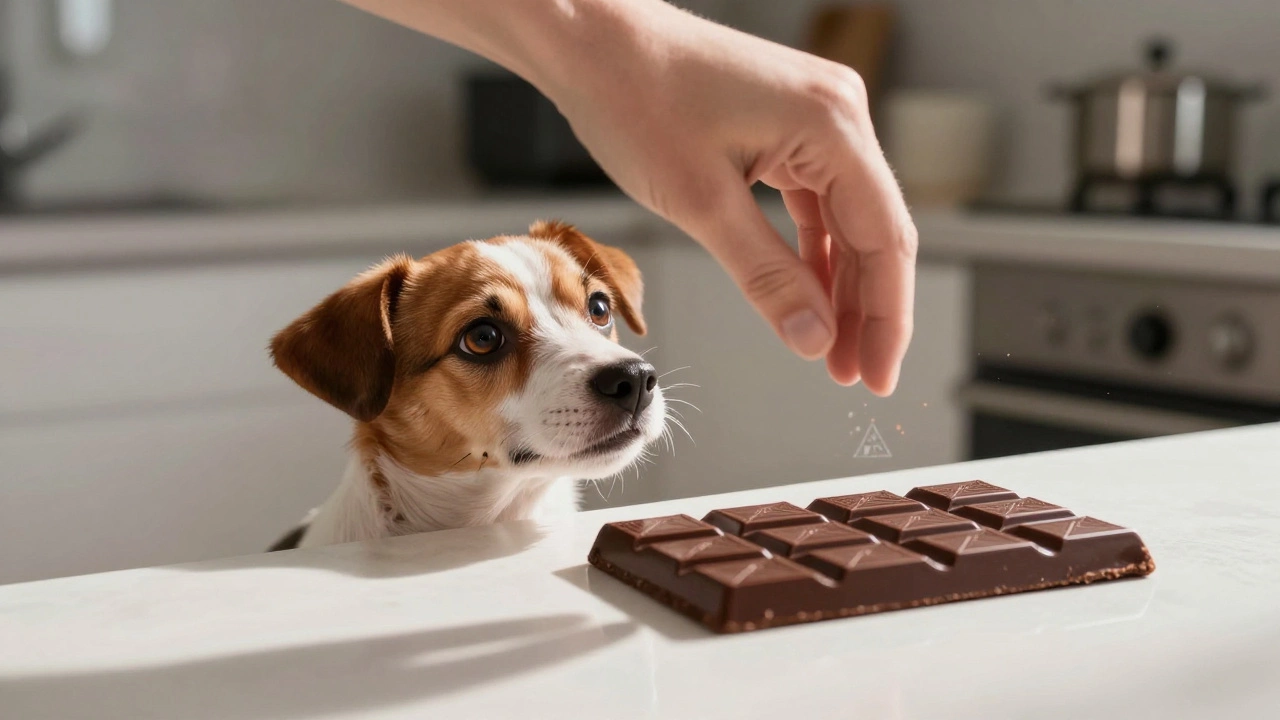
Chocolate is the most common cause of dog poisoning in the UK. It’s not just about how much your dog eats-it’s about what kind. Dark chocolate and baking chocolate contain high levels of theobromine, a compound dogs can’t break down. Even a small piece of dark chocolate can cause vomiting, rapid breathing, seizures, or heart failure. A 10kg dog can get seriously sick from just 25g of dark chocolate. That’s less than a standard chocolate bar. Milk chocolate is less dangerous, but still risky. If your dog swallows any chocolate, don’t wait for symptoms. Call your vet immediately. Time is critical.
Onions, Garlic, and Chives: Invisible Threats
These smell strong to us, but to dogs, they’re silent killers. Onions, garlic, leeks, and chives-all members of the Allium family-destroy red blood cells in dogs, leading to anaemia. It doesn’t take much. A single onion ring, a teaspoon of garlic powder in homemade dog food, or even a few bites of leftover pasta with garlic butter can cause damage. Symptoms don’t show up right away. They can take days to appear: weakness, pale gums, panting, dark urine. Many owners don’t realise their dog’s lethargy is linked to a meal they shared. Always check labels on dog treats and human foods. Garlic is often hidden in seasoning blends, broths, and baby food.
Grapes and Raisins: The Mystery Toxin
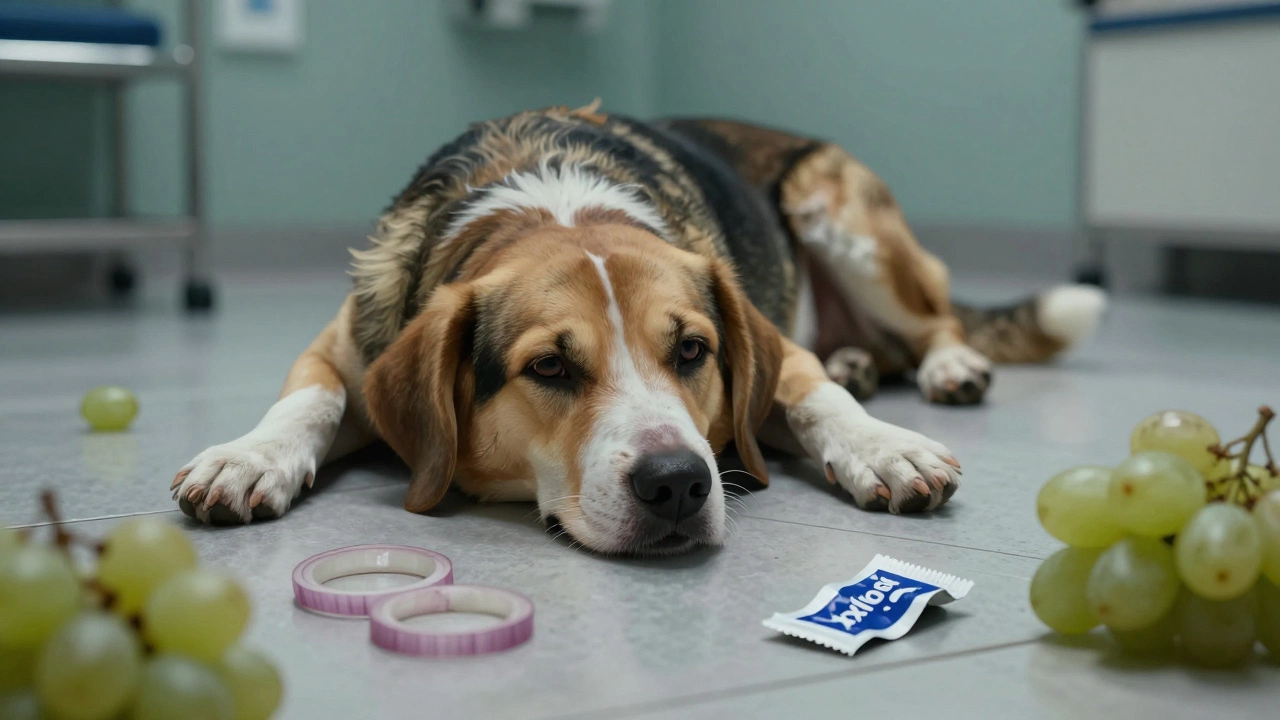
There’s no safe amount. No one knows exactly why grapes and raisins are toxic to dogs, but the effect is deadly. One grape can make a small dog sick. A handful of raisins can kill a medium-sized dog. Some dogs eat them with no problem. Others go into kidney failure after just one. It’s unpredictable, so the only safe choice is zero tolerance. Keep grapes and raisins locked away. Don’t leave them on counters. Don’t assume your dog won’t steal them-many do. If your dog eats even one, get to the vet. Early treatment can save their life.
Xylitol: The Sweet Death Trap
Xylitol is a sugar substitute found in sugar-free gum, toothpaste, peanut butter, and even some baked goods. To humans, it’s harmless. To dogs, it’s a fast-acting poison. It triggers a massive insulin release, dropping blood sugar to dangerous levels within 10 to 30 minutes. Symptoms include vomiting, collapse, seizures, and liver failure. A single stick of sugar-free gum can be fatal for a 10kg dog. Many pet owners don’t even know xylitol is in their peanut butter. Always check the label. If it says “sugar-free,” assume it contains xylitol until proven otherwise. Keep all sugar-free products out of reach. If you suspect ingestion, go to the vet immediately-don’t wait.
Avocado: Not Just the Pit
Avocado is healthy for us, but not for dogs. The flesh contains persin, a fungicidal toxin that can cause vomiting, diarrhoea, and breathing trouble in dogs. The bigger danger? The pit. It’s a choking hazard and can block the digestive tract. Even if your dog doesn’t swallow it whole, the pit can cause internal damage if it gets stuck. Some dogs tolerate small amounts of avocado flesh, but the risk isn’t worth it. There’s no safe dose, and no reliable way to predict how your dog will react. Skip it. There are plenty of safe fruits like apples (without seeds) or blueberries that are far better choices.
What About Other Foods?
There are more dangerous foods, but these five are the most common and deadly. Alcohol, raw yeast dough, caffeine, macadamia nuts, and fatty scraps like bacon rind can also harm dogs. Alcohol causes poisoning just like in humans-slurred movement, coma, death. Raw dough expands in the stomach, causing bloating and alcohol poisoning from fermentation. Macadamia nuts cause weakness, tremors, and hyperthermia. Fatty foods trigger pancreatitis, a painful, life-threatening inflammation of the pancreas. Dogs don’t digest fat well. A few bites of greasy roast chicken or pizza crust can land them in the vet’s office with a $2,000 bill.
What Should You Do If Your Dog Eats Something Toxic?
Don’t panic. Don’t try to make them vomit unless a vet tells you to. Some poisons cause more damage when vomited back up. Call your vet or the Animal Poison Control Centre immediately. Have the product packaging ready-ingredients matter. Note the time, amount eaten, and your dog’s weight. Vets need this info fast. If you’re unsure whether something is dangerous, assume it is. Better safe than sorry.
How to Prevent Accidents
- Keep all human food off counters and tables. Dogs are experts at stealing.
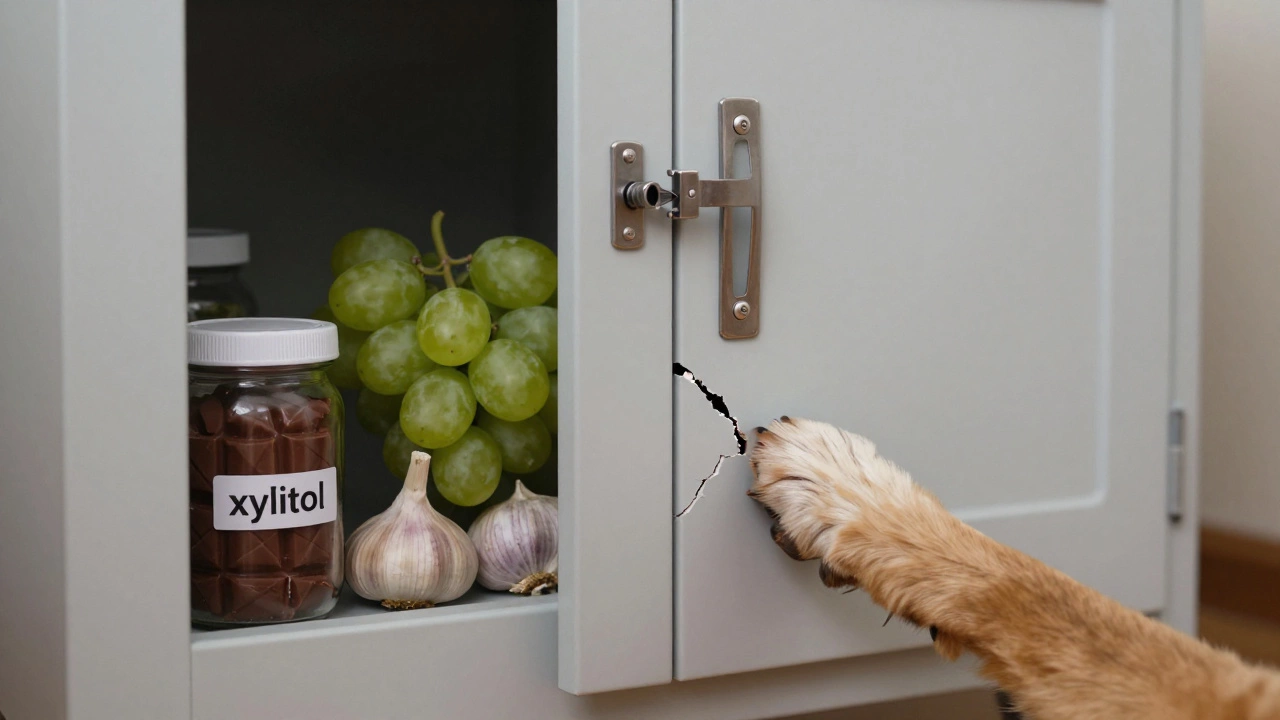
- Store chocolate, grapes, xylitol products, and garlic in sealed cabinets.
- Read labels on peanut butter, dog treats, and human snacks. Xylitol hides in plain sight.
- Train your dog to leave food alone using the “leave it” command.
- When guests come over, ask them not to feed your dog. Many don’t realise how dangerous table scraps are.
There’s no such thing as a “safe treat” if it’s not made for dogs. Your dog doesn’t need human food. They don’t crave it. They’re just trying to please you. But their health depends on you being the one who says no.
Is a little bit of chocolate really dangerous for dogs?
Yes. Even a small amount of dark or baking chocolate can be life-threatening. Theobromine affects dogs differently than humans-they metabolise it slowly, so it builds up in their system. A 5kg dog can get seriously ill from just 10g of dark chocolate. There’s no safe threshold. Always treat chocolate like poison.
Can dogs eat peanut butter?
Only if it’s 100% natural and contains no xylitol. Many store-bought peanut butters use xylitol as a sweetener-even those labeled “natural” or “organic.” Always check the ingredients. If sugar is listed as the first ingredient, it’s probably safe. If you see “xylitol,” “sugar-free,” or “low sugar,” avoid it. Homemade peanut butter with just peanuts is the safest option.
Are cooked bones safe for dogs?
No. Cooked bones become brittle and can splinter, cutting your dog’s mouth, throat, or intestines. Raw bones are sometimes given by vets as part of a balanced diet, but even then, they must be chosen carefully. Never give chicken, turkey, or pork bones-cooked or raw. Stick to commercial chew toys designed for safety.
Why do dogs eat things that are bad for them?
Dogs don’t know what’s safe. Their sense of smell drives them to investigate anything that smells interesting-even if it’s spoiled, salty, or sweet. They’re opportunistic eaters. What looks like a treat to them is often a health risk. That’s why prevention and supervision are more important than training alone.
Can dogs develop a taste for toxic foods over time?
No. Eating toxic food doesn’t build tolerance-it builds risk. A dog that eats a grape once and seems fine might die the next time. There’s no safe exposure level. Repeated exposure doesn’t make them immune-it increases the chance of organ damage or sudden failure. Always assume every bite is potentially deadly.