Puppy Nighttime Water Calculator
Recommended Method:
Enter your puppy's details to see if they need water in their crate tonight.
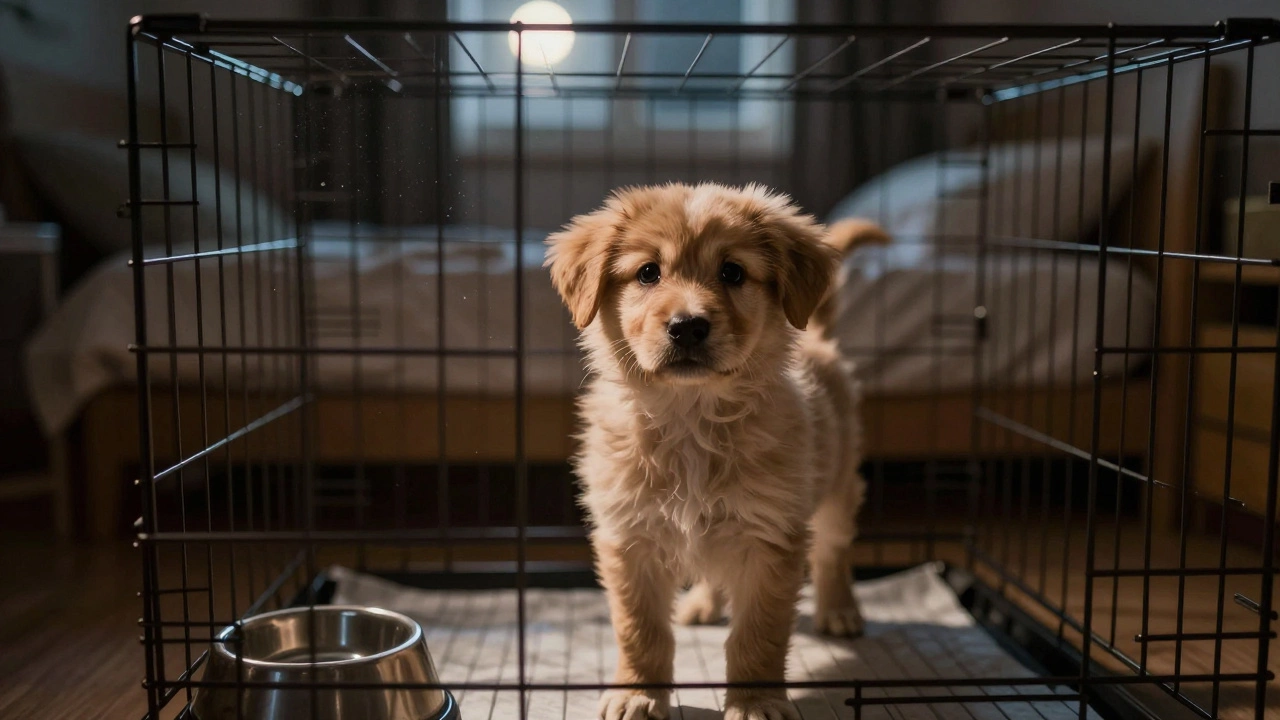
It is 2 AM. Your puppy is whining softly from the other room. You rush over, heart pounding, only to find them standing by their crate door, staring at you with big, innocent eyes. They are not crying because they are lonely. They are crying because they need to go outside. But wait-did you leave water in there? If you did, that might be exactly why they woke up.
The question of whether to put a water bowl in your puppy’s crate at night is one of the most debated topics among new dog owners. On one hand, we know puppies need hydration. On the other, we want them to sleep through the night without accidents. The answer isn't a simple yes or no; it depends on your puppy's age, health, and how far along they are in their housebreaking process.
The Core Conflict: Hydration vs. Potty Training
To understand why this decision matters, you have to look at how a puppy’s body works. A young puppy, especially one under four months old, has very little bladder control. Their kidneys are still developing, and their ability to hold urine is directly tied to their age. A general rule of thumb is that a puppy can hold their bladder for roughly one hour for every month of age, plus one. So, an eight-week-old (two-month) puppy can realistically hold it for about three hours max.
If you fill a standard water bowl in their crate before bed, two things usually happen:
- They drink too much: Puppies are curious and often lap up water out of boredom or habit. If they consume a large volume right before sleep, their small bladder fills up quickly.
- They wake up to pee: Because the bladder fills fast, the puppy wakes up with an urgent need to eliminate. Instead of holding it until morning, they signal you-or worse, they just go in the corner of the crate.
This creates a cycle that undermines potty training. If the puppy learns that drinking at night leads to peeing in the crate, they may start avoiding using the crate altogether, leading to anxiety and accidents.
When You Should NOT Put Water in the Crate
For the vast majority of healthy puppies between 8 weeks and 6 months old, the best practice is to remove the water bowl before bedtime. This doesn't mean they go thirsty all night. It means you manage their intake during the evening.
Here is how to handle hydration without leaving a bowl in the crate:
- Set a cutoff time: Remove the water bowl about two hours before your own bedtime. For example, if you go to bed at 10 PM, take the water away at 8 PM.
- Allow free access earlier: Ensure the puppy has had plenty of opportunities to drink throughout the afternoon and early evening.
- Pre-bed potty break: Take the puppy out for a final bathroom trip immediately before putting them in the crate. Walk them around, let them sniff, and praise them when they go. This empties the bladder completely.
By doing this, you minimize the amount of fluid in their system overnight. Most healthy puppies can easily go 8-10 hours without water. Their bodies are designed to conserve moisture during sleep. As long as they are hydrated during the day, skipping nighttime water will not harm them.
Exceptions: When Water IS Necessary
There are specific scenarios where withholding water is unsafe or impractical. In these cases, you must provide water, but you need to do it safely to avoid messes and accidents.
1. Hot Weather or High Activity
If you live in a region with high temperatures, or if your puppy has been exercising heavily late in the day, they may genuinely need water to prevent dehydration. Dehydration in puppies can set in quickly and become dangerous. If the room temperature is above 75°F (24°C), consider leaving a small amount of water available.
2. Medical Conditions
Some puppies have health issues that require constant access to water. Conditions like kidney disease, diabetes, or infections can cause excessive thirst (polydipsia). If your vet has advised you to keep water available 24/7, follow that instruction. However, discuss a strategy with your vet to manage nighttime accidents, such as using absorbent pads.
3. Older Puppies (6+ Months)
As puppies approach six months, their bladder capacity increases significantly. Many owners find that after the six-month mark, they can leave a light, spill-proof water source in the crate without triggering nighttime accidents. If your puppy is consistently sleeping through the night and staying dry, try leaving a small bowl in for a few nights to see if they manage well.
Safe Ways to Provide Water in the Crate
If you decide that your puppy needs water in the crate at night, the type of container you use is critical. A standard ceramic or plastic bowl is a recipe for disaster. Puppies love to paw at objects, and a tipped-over bowl can soak the crate floor, creating a cold, wet, and unsanitary environment. This dampness can also lead to skin irritations or bacterial growth.
Instead, use one of these safer alternatives:
| Method | Pros | Cons | Best For |
|---|---|---|---|
| Bottle Attached to Bars | No spills; gravity-fed; easy to clean | Puppies may struggle to learn how to lick the spout initially | Most puppies; travel; crates |
| Spill-Proof Bowl | Familiar shape; easy to fill | Can still be tipped if puppy is rough; requires monitoring | Older puppies who don't chew bowls |
| Ice Cube Method | Slowly melts; provides cool water; less volume at once | Water runs out eventually; can be messy if melted too fast | Hot weather; short naps |
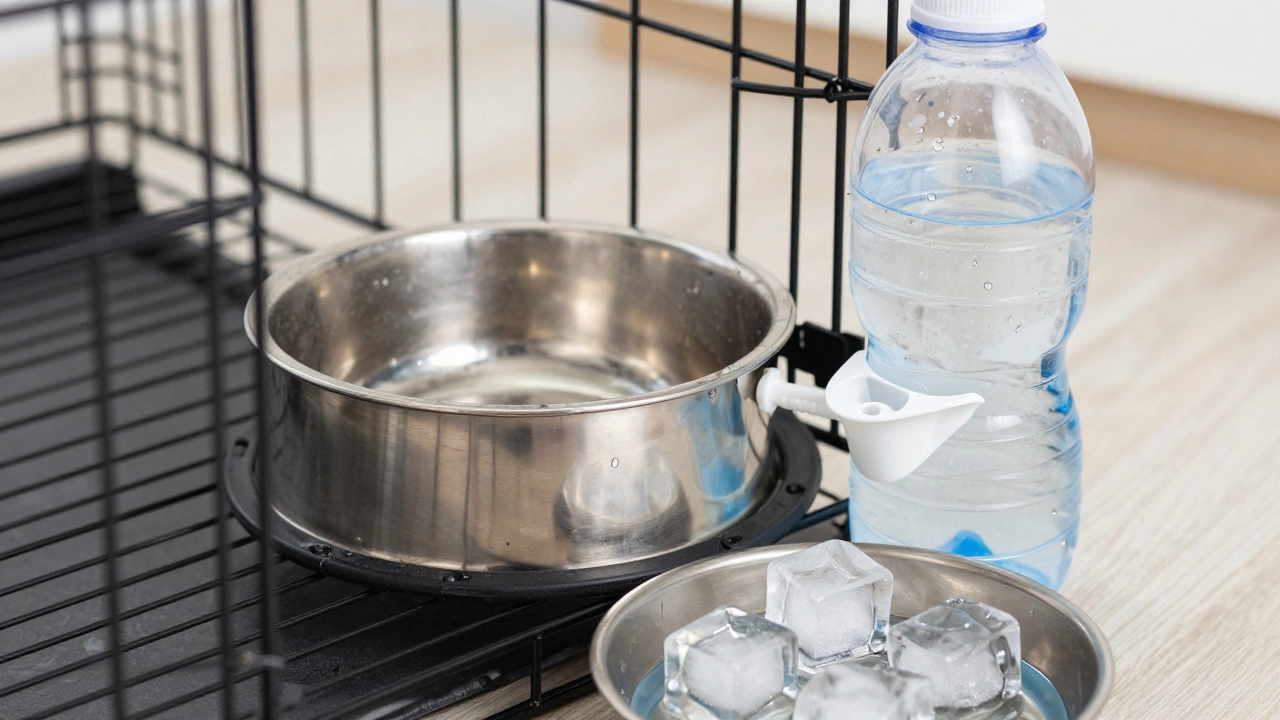
The Bottle Attachment: These are plastic bottles with a metal spout that clip onto the wire bars of the crate. They are the gold standard for crate water. They prevent tipping entirely. The downside is that some puppies are confused by the mechanism. You may need to spend a few evenings showing your puppy how to lick the spout to get water flowing. Use a drop of honey or chicken broth on the spout to encourage them.
The Ice Cube Trick: If you are worried about your puppy drinking too much, place a couple of ice cubes in a shallow, secure dish. As the ice melts, it provides a slow, steady trickle of water. This prevents the "gulping" behavior that fills the bladder too fast. It’s particularly useful in summer months.
Reading Your Puppy's Signals
Every puppy is different. Some are heavy drinkers; others are cautious. Pay attention to your individual dog. Here are signs that your current setup isn't working:
- Whining specifically at the water bowl: If your puppy cries only when looking at the empty spot where the bowl used to be, they might be thirsty. Try offering a small sip before bed and see if they settle.
- Accidents in the crate: If your puppy is peeing in the crate despite being taken out before bed, they may be drinking too much earlier in the evening, or they may have a medical issue like a urinary tract infection (UTI). Consult your vet if accidents persist.
- Lethargy or dry gums: Check your puppy’s gums in the morning. They should be moist and pink. If they are sticky or dry, your puppy is dehydrated, and you need to adjust their daytime hydration or provide nighttime water.
Creating a Nighttime Routine
Consistency is key to successful crate training and potty management. Establish a predictable evening routine that signals to your puppy that sleep time is approaching.
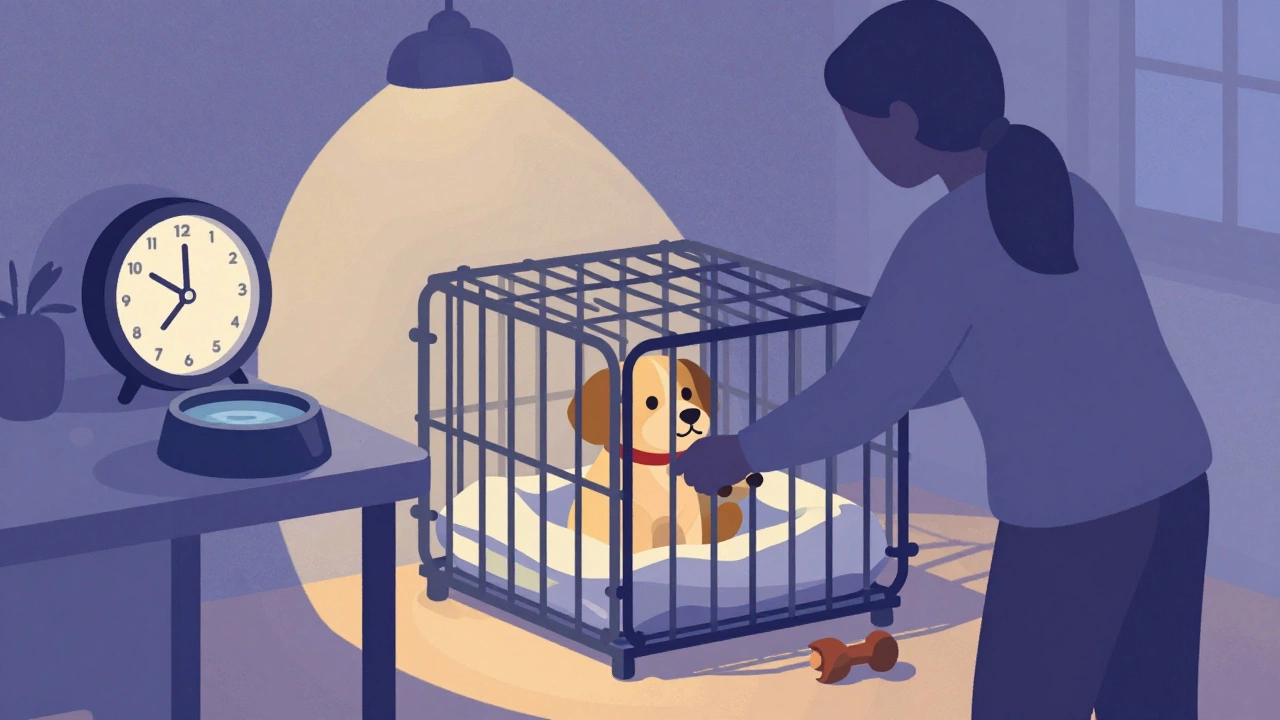
- 6:00 PM - Last Meal: Feed your puppy their last meal of the day. Avoid feeding within three hours of bedtime.
- 7:30 PM - Last Water Removal: Take away the water bowl. Offer a final play session or calm cuddle time.
- 9:30 PM - Final Potty Break: Take your puppy outside. Keep this boring-no play, just business. Praise them calmly when they finish.
- 10:00 PM - Crate Time: Place your puppy in the crate with a comfortable bed and a safe chew toy. Dim the lights. Ignore minor whining unless you suspect a bathroom emergency.
This routine helps regulate your puppy’s internal clock. Over time, their body will learn to expect sleep during these hours, reducing the urge to drink or pee.
Troubleshooting Common Issues
My puppy drinks the water bottle instantly.
This is common. They see water and gulp it down. To slow them down, you can freeze part of the water in the bottle so it dispenses slower, or switch to the ice cube method. Alternatively, ensure they are getting enough water earlier in the evening so they aren't desperate at night.
My puppy chews the water bottle. Teething puppies love to gnaw on hard plastic. If your puppy is destroying the bottle, supervise them closely or switch to a stainless steel spill-proof bowl attached securely to the crate floor. Never leave a puppy unsupervised with a plastic bottle that could break into choking hazards.
I work full-time; my puppy is alone all day.
If your puppy is crated during the day while you are at work, they must have access to water. An adult-sized crate or a pen with a crate inside is better for daytime confinement, allowing space for a water bowl and a potty area. Nighttime rules differ because you are present to respond to needs.
FAQ
How long can a puppy go without water at night?
A healthy puppy can safely go 8 to 10 hours without water overnight. As long as they have had ample opportunity to drink during the day and early evening, removing the water bowl before bed will not cause dehydration. Their bodies are efficient at conserving moisture during sleep.
Will my puppy get dehydrated if I don't leave water in the crate?
Unlikely, provided they are hydrated during the day. Signs of dehydration include dry gums, loss of skin elasticity (the "skin tent" test), and lethargy. If you notice these signs, consult your vet. For most puppies, ensuring they drink freely from 6 PM to 8 PM is sufficient to carry them through the night.
What is the best type of water dispenser for a crate?
The safest option is a gravity-fed bottle that clips onto the wire bars of the crate. These prevent spills and messes. Spill-proof bowls are a second choice, but they can still be tipped by energetic puppies. Avoid open bowls in crates unless the puppy is older and proven to be careful.
At what age can I leave water in the crate all night?
Many puppies are ready to have water in the crate all night around 6 months of age, once they have developed sufficient bladder control and are reliably housebroken. However, this varies by breed and individual dog. Start with a small amount and monitor for accidents.
My puppy whines for water at night. What should I do?
First, determine if the whining is genuine thirst or a bid for attention. If you’ve removed water two hours before bed and taken them out recently, they likely don’t need water. If you’re unsure, offer a small cup of water (not a full bowl) and take them out immediately after. If they don’t drink or pee, return them to the crate and ignore further whining to avoid reinforcing the behavior.
Can I use ice cubes instead of liquid water?
Yes, ice cubes are an excellent alternative. They melt slowly, providing a gradual source of hydration without overwhelming the puppy’s bladder. Place 2-3 ice cubes in a secure, shallow dish. This is particularly helpful in warm weather or for puppies who tend to gulp water quickly.