Puppy Bladder Control Calculator
How Long Can Your Puppy Hold It?
Calculate your puppy's bladder control based on age. This tool uses the rule of 1 hour per month of age.
Results
Estimated Bladder Control
hours
Nighttime Sleep Progress
hours
Tip: By weeks, most puppies can sleep hours straight without needing to go.
Nighttime Behavior Guide
Not every whimper means they need to pee. Look for these signs:
- Needs to go: Circles, sniffs floor, loud whining, scratching crate door
- Not urgent: Twitching, soft barking, dreaming noises
- Try this: Wait 2 minutes after first cry before responding
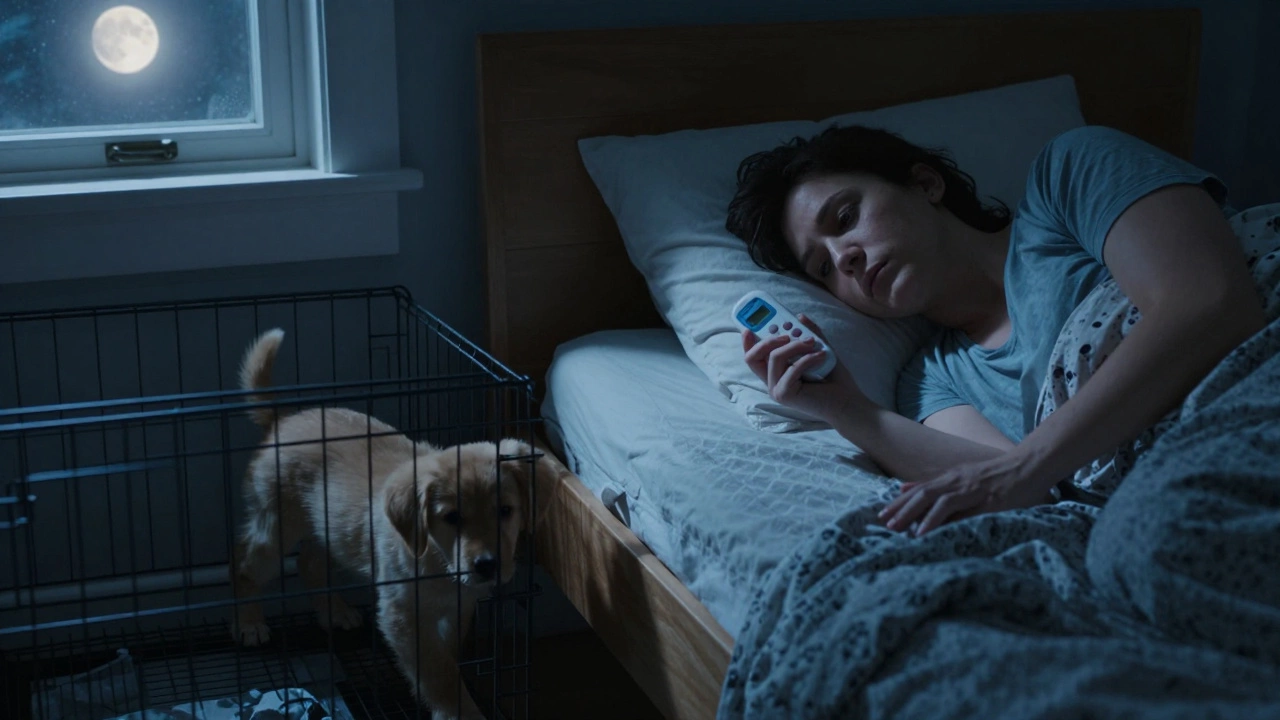
Waking up at 3 a.m. to let your puppy out isn’t just annoying-it’s exhausting. You’re tired, the house is dark, and your puppy still looks wide awake like this is a game. But here’s the truth: you don’t need to wake up every time your puppy whines at night. Most puppies under 16 weeks old can’t hold it all night, but that doesn’t mean you should be up every two hours. There’s a smarter way.
How Long Can a Puppy Really Hold Its Bladder?
A general rule of thumb: a puppy can hold its urine for about one hour per month of age. So a 10-week-old puppy (about 2.5 months) can hold it for roughly 2.5 to 3 hours. That’s not a suggestion-it’s biology. Their tiny bladders just aren’t developed yet. By 16 weeks, most puppies can sleep 6 to 8 hours straight without needing to go out. But that doesn’t mean you wait until they’re 4 months old to start training.
Some breeders and vets say small breeds like Chihuahuas or Yorkies might need more frequent breaks than a Labrador puppy. That’s true. But even then, you don’t need to be on call all night. If your puppy is sleeping soundly, leave them be. If they’re whining, pacing, or circling-that’s when you act.
What Does a Puppy’s Nighttime Behavior Really Mean?
Not every whimper means they need to pee. Puppies cry for all kinds of reasons: they’re cold, scared, lonely, or just dreaming. A puppy dreaming might twitch, bark softly, or make little noises. That’s normal. A puppy who needs to pee will be more active-sniffing the floor, circling, whining loudly, or scratching at their crate door.
Try this: wait 2 full minutes after the first cry. If they settle down, they probably didn’t need to go. If they keep going, then it’s time to take them out. This teaches them that crying doesn’t always get them attention-it only gets them outside when they really need it.
How to Reduce Nighttime Potty Breaks
You can train your puppy to sleep longer stretches without waking you up. It starts during the day.
- Stop food and water 2 hours before bedtime. This gives their system time to process everything before sleep.
- Take them out right before bed-even if they just went an hour ago. Make it a calm, boring routine: outside, sniff, pee, come back in. No play, no treats, no excitement.
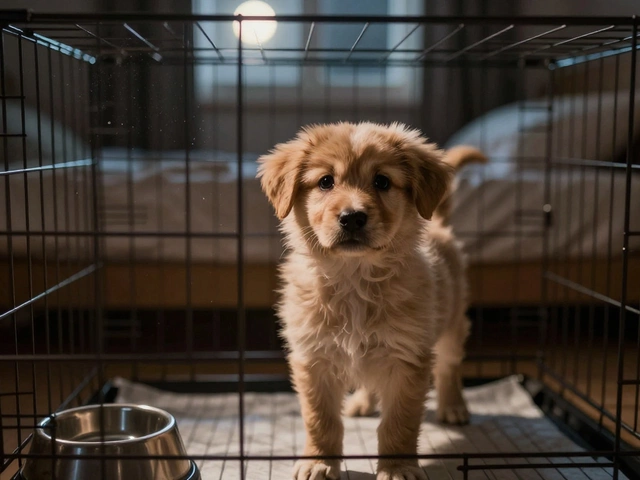
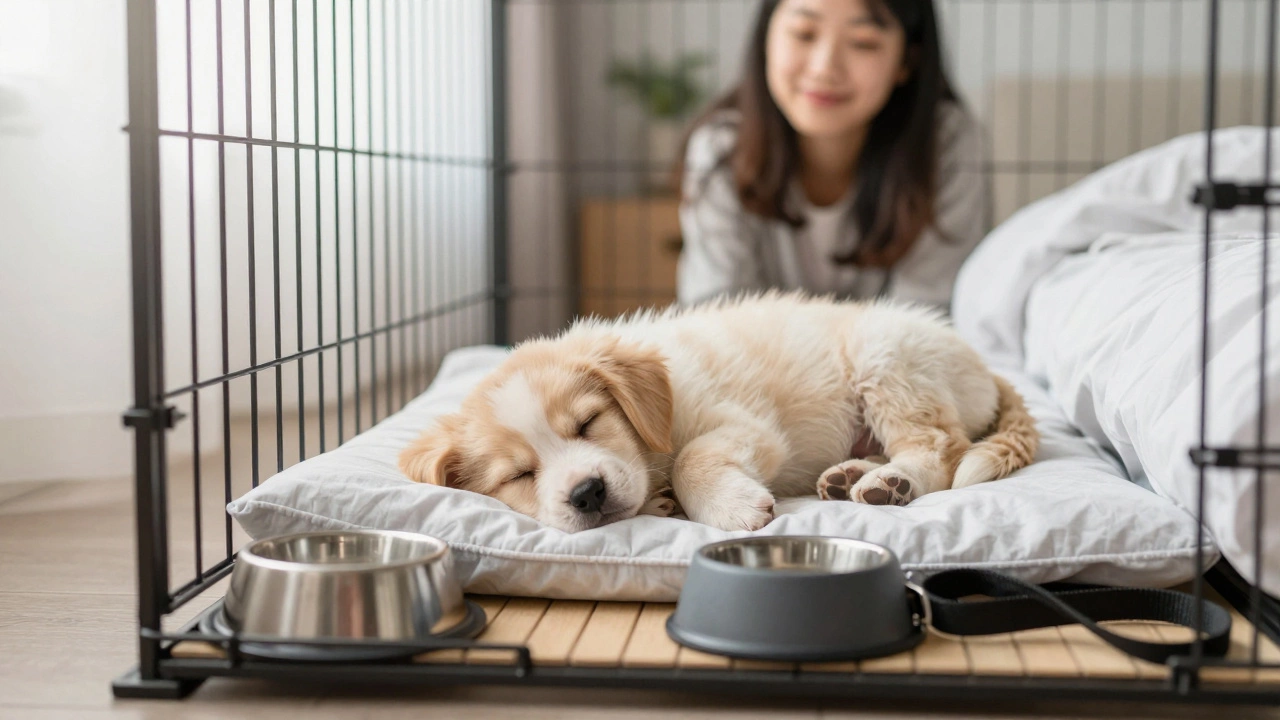
- Keep their sleeping area close to you. If they’re in a crate near your bed, you’ll hear them stir before they start crying. That gives you a heads-up.
- Use a puppy pad or outdoor potty area if you live in an apartment or have bad weather. But don’t make it a habit. The goal is for them to learn to hold it until morning.
One owner I spoke to, a nurse working night shifts, trained her 12-week-old Shih Tzu to sleep 7 hours straight by sticking to this routine. She didn’t wake up once. She just made sure her pup had a full bladder before bed and didn’t reward crying with playtime.
What If Your Puppy Has an Accident?
Accidents happen. Don’t yell. Don’t rub their nose in it. That doesn’t teach them anything-it just makes them scared of you. Clean it up with an enzymatic cleaner (not just vinegar or bleach). Regular cleaners don’t remove the odor, and your puppy will keep going back to the same spot.
Keep a journal for a few nights. Note the time they went out, when they cried, and when they had accidents. You’ll start seeing patterns. Maybe they always need to go 4 hours after dinner. Or maybe they’re waking up because they’re too cold. Data helps you adjust, not guess.
When to Be Concerned
Most nighttime peeing is normal. But if your puppy is:
- Peing every 30 minutes all night, even after you’ve taken them out
- Straining to pee or whining in pain
- Drinking way more water than usual
- Leaking urine while sleeping
Then it’s time to see a vet. These could be signs of a urinary tract infection, diabetes, or a congenital issue like an ectopic ureter. Puppies can have medical problems too. Don’t assume it’s just “puppy behavior.”
What About Sleep Training for You?
You’re not just training your puppy-you’re training yourself. Your brain is wired to respond to crying. But you can rewire it. Try this: use a white noise machine or earplugs to block out minor sounds. Put a baby monitor in the room so you can hear without getting up. Set an alarm for 4 a.m. to take them out once-then let them sleep until morning.
Most puppies will start sleeping through the night by 12 to 16 weeks. Some take longer. That’s okay. The goal isn’t perfection-it’s progress. Every night you skip a wake-up because they didn’t really need to go, you’re teaching them that nighttime is for sleeping.
Realistic Expectations
Don’t expect your 8-week-old puppy to sleep 8 hours straight. That’s not fair. But do expect them to improve every week. By 10 weeks, they might sleep 5 hours. By 12, maybe 6. By 16, 8 hours is common. You’re not failing if they still need a break at 3 a.m. at 10 weeks. You’re just halfway there.
One owner told me she cried the first week because she was so tired. Then she realized: her puppy wasn’t being stubborn. He was just a baby. She started using a timer to remind herself when to take him out-not because he cried, but because it was time. She didn’t wake up. She didn’t lose sleep. And by week three, he was sleeping through.
Final Rule: Don’t Reward Crying, Reward Quiet
Every time you rush to the door the second your puppy makes a sound, you’re teaching them that crying = attention = outside. That’s not training. That’s reinforcement.
Instead, wait. Observe. Act only when you’re sure. And when your puppy goes potty quietly and comes back in without a fuss? Give them a quiet pat. No treats. No praise. Just calm approval. That’s how they learn: quiet behavior gets rewarded. Loud behavior gets ignored.
It’s not about being cruel. It’s about being smart. Your puppy doesn’t need you to be their 24/7 bathroom attendant. They need you to be their guide-helping them learn how to be a dog in a human world.