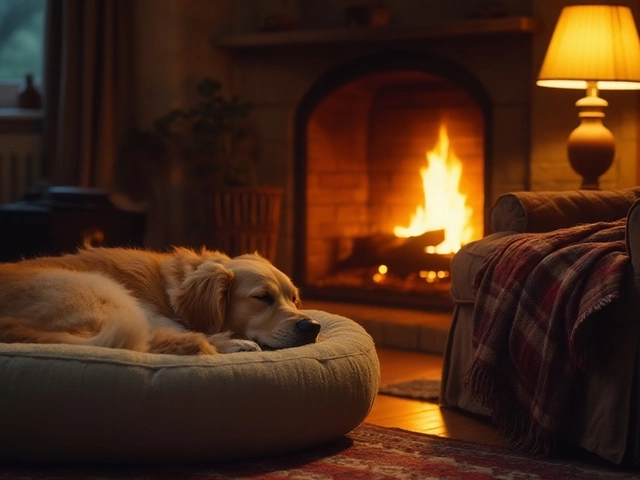
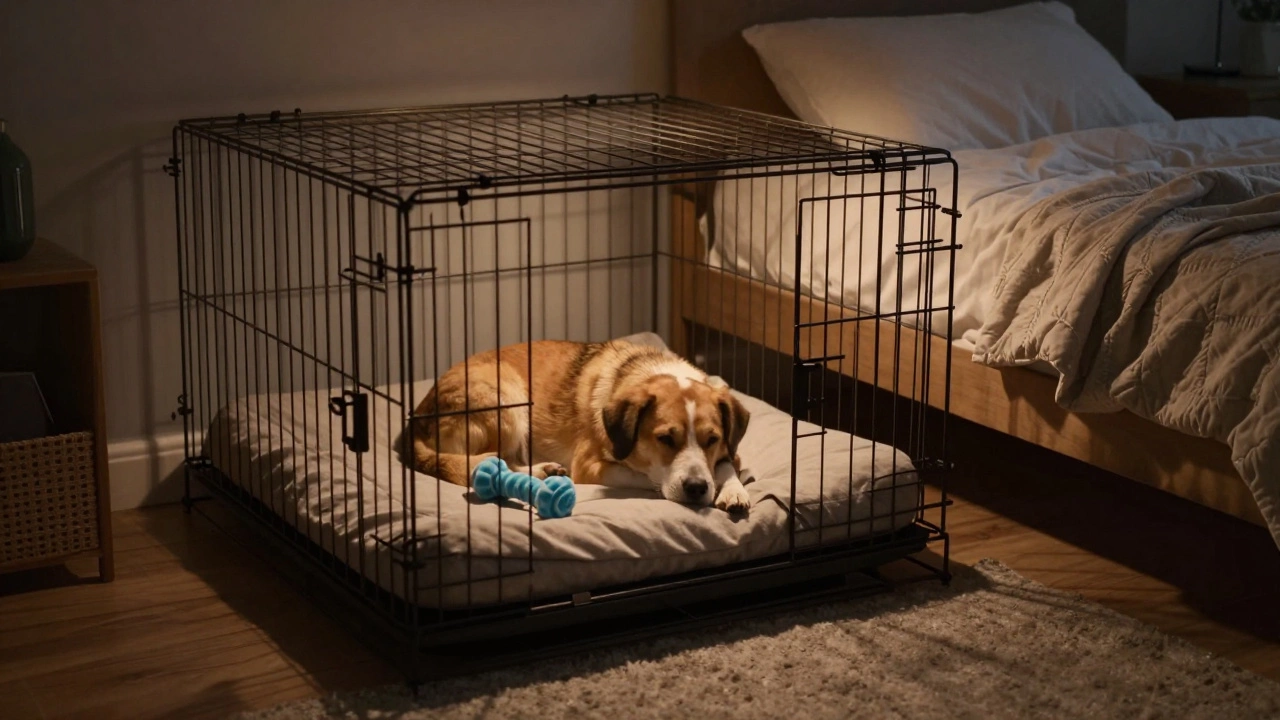
Every dog owner has asked themselves this question: Should I put my dog in a crate at night? It’s not just about convenience-it’s about safety, comfort, and your dog’s mental health. If you’re unsure, you’re not alone. Many people feel guilty, worried, or confused. Is it cruel? Is it necessary? Will it ruin your bond? Let’s cut through the noise with straight answers based on real experience, not theory.
What a Crate Actually Does for Your Dog
A crate isn’t a prison. It’s a den. Dogs are den animals by instinct. In the wild, they seek out enclosed, safe spaces to rest. A properly sized crate gives your dog that same feeling-security, quiet, and control. Think of it like a cozy bedroom with a door you can close. Not every dog loves it right away, but most learn to see it as their safe zone.
Studies show dogs in well-managed crate environments sleep longer and deeper than those left to roam unsupervised. A 2023 veterinary survey of over 1,200 dogs found that 78% of pets crated overnight showed fewer signs of anxiety, better sleep patterns, and less destructive behavior the next day. That’s not because they’re trapped-it’s because they feel protected.
When Crating at Night Makes Sense
- Your dog is still learning house rules. Puppies and young dogs under 18 months often can’t hold their bladder through the night. A crate helps prevent accidents and teaches them to wait.
- You live in a small home or apartment. If your dog roams freely, they might chew shoes, dig up rugs, or knock over lamps while you sleep. A crate keeps them-and your stuff-safe.
- Your dog has separation anxiety. Counterintuitive, right? But for many anxious dogs, a crate gives them a predictable, calm space. It’s not the crate causing the anxiety-it’s the lack of boundaries.
- You’ve had accidents or destructive behavior. Crating overnight is a temporary reset. It doesn’t punish your dog. It gives you both a clean slate.
When You Should Avoid Nighttime Crating
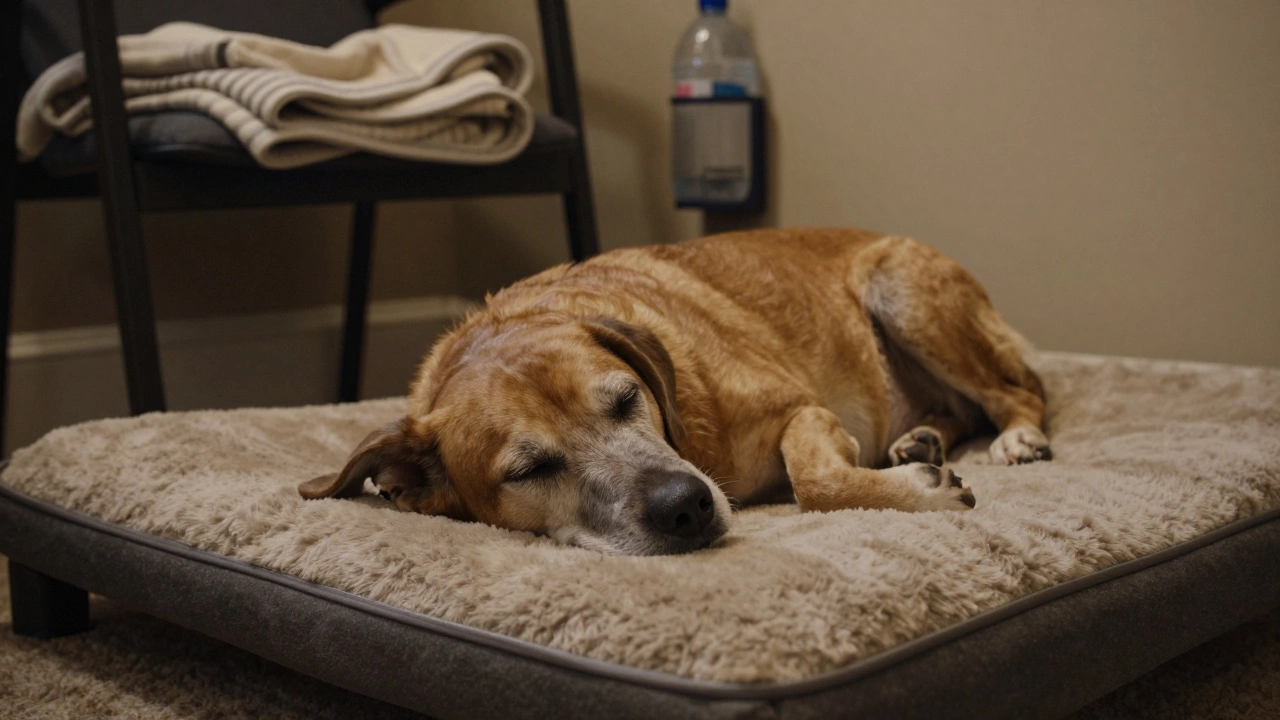
- Your dog is older than 8 years and has mobility issues. Arthritis, hip dysplasia, or incontinence can make crating painful or uncomfortable. A soft bed on the floor is better.
- Your dog shows panic in the crate. If they scream, scratch, or try to break out for hours, forcing them into it makes things worse. This isn’t training-it’s trauma. Talk to a vet or certified trainer.
- You’re using the crate as punishment. Never shut your dog in for misbehaving. That turns the crate into a scary place. It should be the opposite: a place they choose to go.
- Your dog is sick or recovering. After surgery, during illness, or if they’re vomiting, they need space to move, lie down, or rest in different positions.
How to Make the Crate Comfortable
A bare crate is a prison. A cozy one is a sanctuary. Here’s what works:
- Size matters. Your dog should be able to stand up, turn around, and lie down fully stretched. Too big? They’ll use one end as a bathroom. Too small? They’ll feel trapped. Go for a crate that fits their adult size, even if they’re still a pup.
- Use a washable bed or blanket. Avoid fluffy pillows-they can be chewed or swallowed. A flat, firm pad is safest.
- Keep it dark and quiet. Cover the crate with a light blanket if your dog prefers dim light. Don’t leave a lamp on or TV blaring.
- Leave a safe chew toy. A frozen Kong with peanut butter or a rubber chew keeps them occupied and calm.
- Place it near you. If you’re in the bedroom, put the crate beside your bed. If you’re in another room, keep it in a quiet corner. Dogs are social-they want to feel close.
How Long Can a Dog Stay in a Crate Overnight?
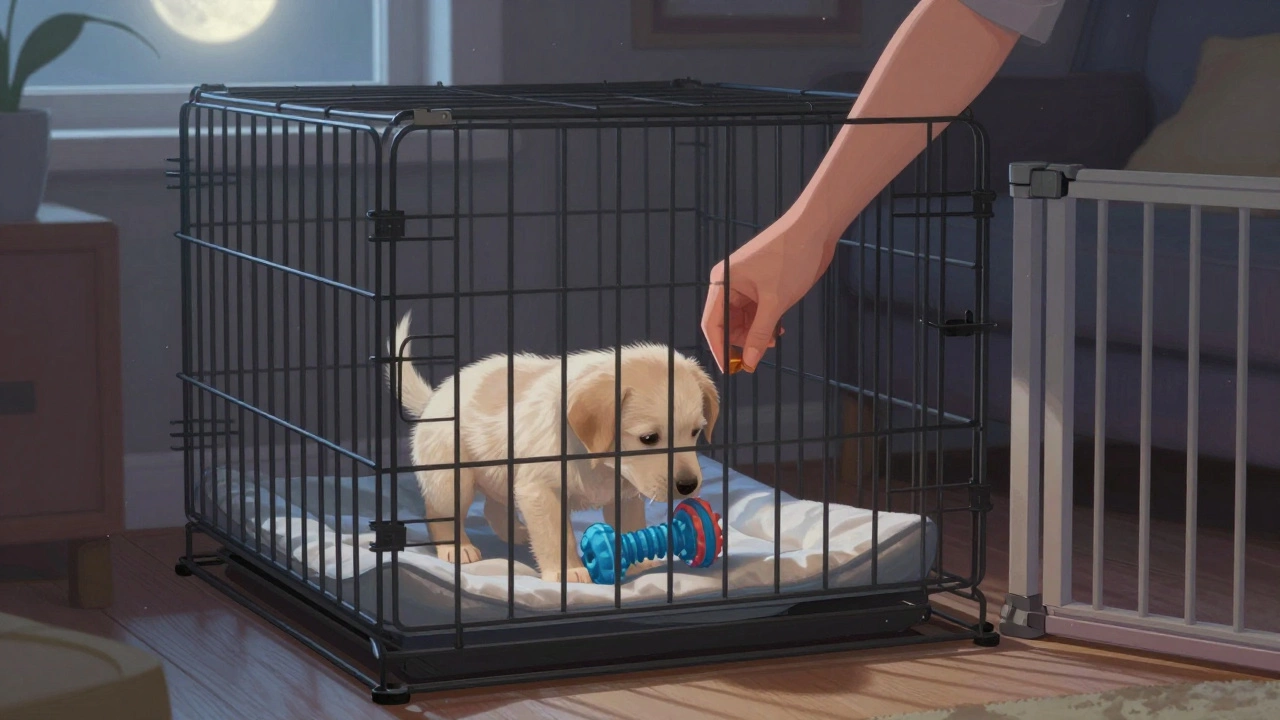
Adult dogs (1 year and older) can safely stay in a crate for 7-8 hours, which covers most people’s sleep. Puppies need shorter stretches: 1 hour per month of age. So a 4-month-old pup can handle about 4 hours. That means you might need to take them out once in the middle of the night-yes, it’s a hassle, but it’s temporary.
Never crate a dog for more than 10 hours unless it’s a medical emergency. Even then, it’s a last resort. Dogs need movement, stretching, and mental stimulation. Overnight is fine. All-day confinement isn’t.
What If My Dog Screams or Whines?
This is the #1 concern. If your dog cries when you put them in, don’t rush to let them out. That teaches them crying = freedom. Instead:
- Wait 5-10 minutes. Sometimes they’re just testing boundaries.
- Check if they need to go outside. If yes, take them quietly, no play, no talking. Go straight back to bed.
- If they’re still whining after a bathroom break, ignore it. Don’t yell, don’t open the crate. Calm silence is what they need.
- After a few nights, the whining drops. Most dogs settle in by night 3-5.
Some dogs never cry. Others need a few weeks. Patience beats punishment every time.
Alternatives to Crating
If crating doesn’t work for your dog, here are better options:
- Use a baby gate to section off a safe room. A kitchen or laundry room with no rugs, cords, or shoes can be a great overnight zone.
- Install a dog door to a secure, enclosed yard. Only if you live in a quiet, safe area and your dog is trained not to wander.
- Set up a dog bed in your bedroom. Many dogs sleep peacefully beside their owner’s bed. Just make sure they don’t jump up or disturb your sleep.
But here’s the truth: if your dog is destructive, urinates indoors, or seems anxious when left alone, crating is still the most effective tool. Alternatives work only if your dog is already reliable.
My Dog Hates the Crate-What Now?
If your dog sees the crate as a threat, you didn’t do anything wrong. You just need to retrain them. Start with the door open. Toss treats inside. Feed meals in there. Play with toys near it. Let them walk in and out on their own. This takes 7-14 days. No forcing. No pressure. Just positive association.
One client in Bristol had a 3-year-old rescue named Rex who panicked every time he saw a crate. We spent two weeks just placing his food bowl inside, then closing the door for 30 seconds while he ate. By week three, he walked in on his own. Now he curls up in there every night like it’s his favorite spot.
Final Answer: Yes-But Only If Done Right
Should you crate your dog at night? Yes-if your dog is healthy, not fearful, and the crate is used as a safe space, not a punishment. It’s one of the most effective tools for house training, preventing damage, and giving your dog peace of mind.
But if your dog has anxiety, mobility issues, or a history of trauma, skip the crate. Find another way. There’s no one-size-fits-all in dog care. What matters is your dog’s comfort, not your convenience.
Test it for a week. Watch your dog’s behavior. Talk to your vet. Adjust as needed. Your dog won’t remember the first night. But they’ll remember how you made them feel.
Is it cruel to crate a dog at night?
No, it’s not cruel if the crate is the right size, clean, comfortable, and used correctly. Dogs naturally seek enclosed spaces for rest. A crate becomes a safe den, not a punishment. Cruelty happens when the crate is too small, used for long hours, or paired with fear or isolation. Used properly, it’s one of the kindest things you can do for your dog’s well-being.
How long can a dog stay in a crate overnight?
Adult dogs can stay in a crate for 7 to 8 hours, which covers most nighttime sleep. Puppies under 6 months should not be crated for more than 4-5 hours at a time. Always take them out to go to the bathroom before bed and, if needed, once during the night. Never exceed 10 hours total in a 24-hour period.
Should I leave water in the crate at night?
Generally, no. Water bowls can spill, soak bedding, or cause accidents. Most dogs don’t need water overnight if they’ve had plenty during the day. Puppies or dogs with medical conditions may need access-but even then, use a spill-proof bottle attached to the crate door instead of a bowl.
What if my dog poops or pees in the crate?
This usually means the crate is too big, or your dog is still learning bladder control. A crate should be just big enough for them to stand, turn, and lie down. If they have extra space, they may use one corner as a bathroom. Clean it thoroughly with an enzymatic cleaner, reduce the size if needed, and stick to a consistent bathroom schedule. Never punish them-just reset the routine.
Can I use a crate for a senior dog at night?
Only if they’re comfortable. Senior dogs with arthritis, incontinence, or mobility issues often find crates restrictive. A soft bed on the floor, near your bed or in a quiet corner, is usually better. If you do use a crate, make sure it’s easy to step into, has a non-slip mat, and is large enough for them to stretch out fully. Always prioritize comfort over control.
What to Do Next
Try crating for three nights. Observe your dog’s behavior. Do they settle? Do they seem calmer in the morning? If yes, keep going. If they’re panicked or sick, stop. Talk to your vet. There’s no shame in adjusting. Dogs aren’t robots. They’re individuals. Your job isn’t to follow rules-it’s to read your dog.
And if you’re still unsure? Watch them sleep. If they’re curled up, relaxed, and breathing slowly-they’re happy. That’s all that matters.