Dog Feeding Schedule Calculator
Personalized Feeding Schedule
Why This Matters
Proper feeding frequency prevents health issues like bloat, hypoglycemia, and obesity. Consistent meal times support digestion and energy levels.
Recommended Feeding Schedule
Feeding your dog the right amount at the right times isn’t just about filling a bowl-it’s about keeping them healthy, energetic, and happy. But how many times a day should a dog eat? The answer isn’t one-size-fits-all. It changes based on age, size, health, and even breed. Let’s cut through the noise and give you clear, practical advice backed by real-world experience and veterinary guidelines.
Adult Dogs: Once or Twice a Day?
Most adult dogs do perfectly fine with two meals a day. This is the sweet spot for digestion, energy levels, and preventing hunger pangs. Feeding once a day might seem convenient, but it can lead to stomach discomfort, low energy in the afternoon, and even vomiting from an empty, over-stretched stomach. Dogs aren’t wolves-they’ve evolved to eat smaller, more frequent meals thanks to thousands of years living alongside humans.
Some owners worry that feeding twice a day makes dogs beg more. But begging isn’t caused by meal frequency-it’s caused by human behavior. If you give treats at the dinner table or let your dog sit beside you while you eat, they’ll learn to ask. Switching to two meals doesn’t create begging; it just gives you a better chance to control it.
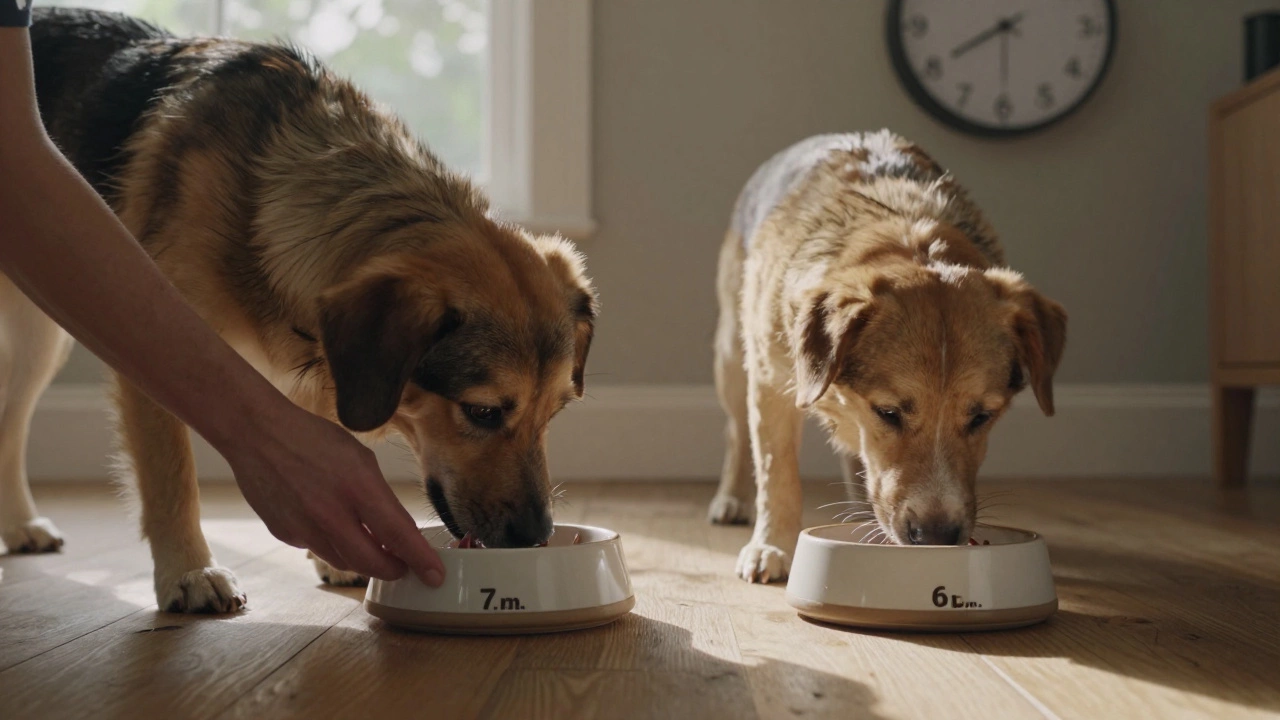
Split the daily food amount evenly between morning and evening. For example, if your dog eats 2 cups of kibble per day, give 1 cup at 7 a.m. and 1 cup at 6 p.m. This rhythm matches most human schedules and helps avoid midnight snack raids.
Puppies: More Frequent Meals Are a Must
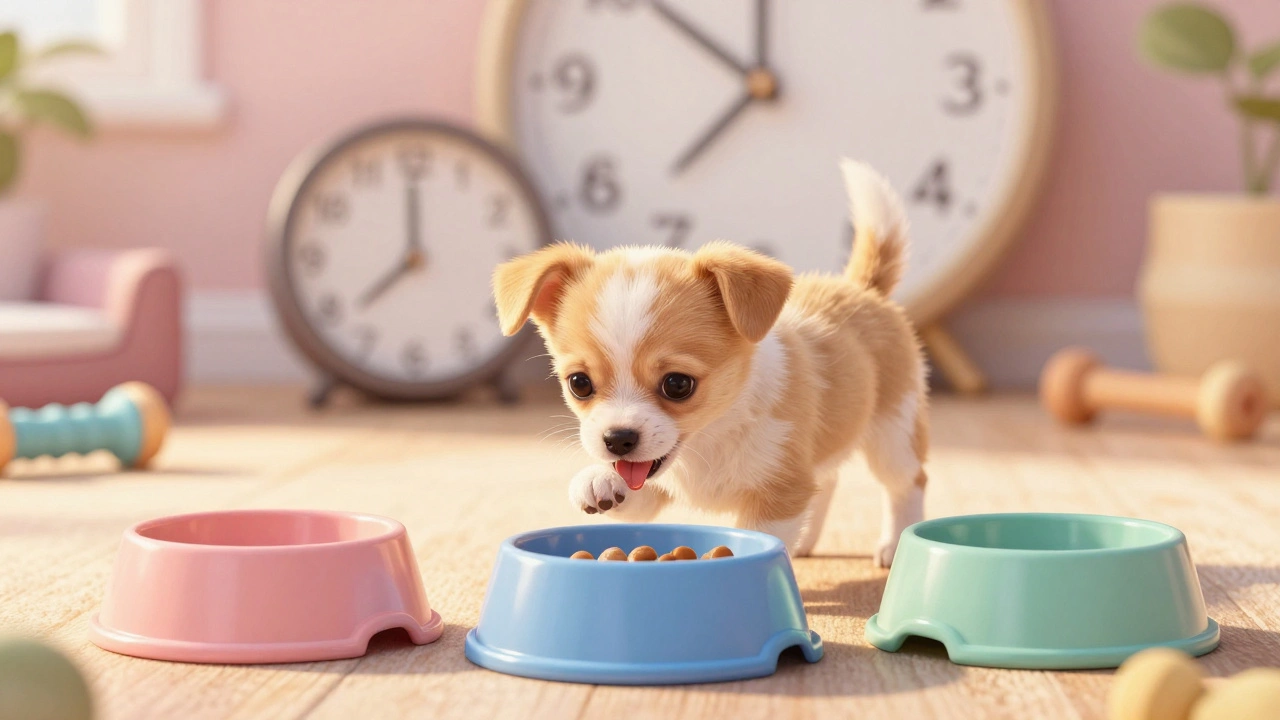
Puppies have tiny stomachs and fast metabolisms. They burn energy quickly and can’t go long without food. Going more than 4-5 hours without eating can lead to low blood sugar, especially in small breeds like Chihuahuas or Yorkshire Terriers. That’s why puppies need three to four meals a day until they’re about six months old.
Here’s a simple breakdown:
- 8 to 12 weeks old: Four meals a day (every 4-5 hours)
- 3 to 6 months old: Three meals a day (morning, afternoon, evening)
- 6 to 12 months old: Two meals a day (transitioning out of puppy feeding)
Always follow the feeding guidelines on your puppy food bag-but adjust based on your pup’s body condition. If their ribs are hard to feel under their fur, they’re getting too much. If they look bony or seem lethargic between meals, they might need more.
Senior Dogs: Adjust for Slower Metabolism
As dogs age, their activity levels drop, and their digestion slows. Many senior dogs (7+ years) do well with two smaller meals a day. Some vets even recommend one meal if the dog has trouble chewing or has dental issues. But don’t assume less food means less energy.
Watch for signs your senior dog isn’t getting enough:
- Weight loss despite eating the same amount
- Increased thirst or urination
- Stool changes (too hard, too soft, or less frequent)
- Lethargy or confusion after meals
If you notice any of these, talk to your vet. Senior dogs often need specially formulated food with added joint support, easier-to-digest proteins, and fewer calories. Don’t just feed them what they ate at age five.
Breed and Size Matter Too
Small dogs (under 20 lbs) burn energy faster than large dogs. They often need three meals a day even as adults to avoid hypoglycemia. Think breeds like Pomeranians, Shih Tzus, or Miniature Schnauzers. They can go from full to shaky in a few hours.
Large and giant breeds (like Great Danes, Saint Bernards, or Mastiffs) are at higher risk for bloat-a life-threatening condition where the stomach twists. Feeding them two smaller meals instead of one big one reduces this risk. Also, avoid elevated feeders unless your vet recommends them. Some studies suggest they might increase bloat risk in deep-chested dogs.
Working dogs, like Border Collies or Siberian Huskies used for hiking or herding, may need more calories and slightly more frequent meals. But don’t just add food-choose high-energy formulas designed for active dogs.
What About Free-Feeding? Leaving Food Out All Day
Some owners leave food out all day, thinking it’s stress-free. But free-feeding rarely works. Dogs don’t self-regulate like humans. They’ll eat until the bowl is empty-even if they’re not hungry. This leads to obesity, which affects over 50% of dogs in the UK.
Plus, it makes it hard to notice if your dog stops eating. A sudden loss of appetite can be the first sign of kidney disease, pancreatitis, or even cancer. If you leave food out, you miss that early warning.
Free-feeding might be okay for a few rare cases-like underweight rescue dogs under vet supervision-but even then, it’s temporary. For most dogs, scheduled meals are safer, healthier, and give you more control.
Signs You’re Feeding the Wrong Amount
How do you know if your dog’s meal schedule is working? Look at their body and behavior.
- Healthy weight: You should feel their ribs easily with light pressure, see a waist when looking from above, and notice a tuck in their belly when viewed from the side.
- Consistent energy: They’re playful and alert after meals-not sluggish or overly hyper.
- Regular digestion: One or two solid, well-formed stools per day. Loose stools or constipation can mean the food timing or type is off.
- No begging: If they’re calm around food and don’t beg constantly, they’re likely getting enough.
If your dog is gaining weight despite sticking to the right schedule, check the food’s calorie content. Some “premium” brands pack more calories per cup than you think. Always measure with a cup-never eyeball it.
When to Talk to a Vet
Some changes in eating habits aren’t normal. Contact your vet if your dog:
- Suddenly stops eating for more than 24 hours
- Starts eating way more than usual (could signal diabetes or thyroid issues)
- Throws up food right after eating (not just hairballs or grass)
- Has diarrhea or blood in stool for more than a day
- Is drinking way more water than before
These aren’t just “off days.” They’re signals. Dogs can’t tell us they feel sick-but their eating habits can.
Final Rule: Consistency Is Key
Whether your dog is a 12-week-old pup or a 12-year-old senior, stick to a routine. Feed at the same times every day. Dogs thrive on predictability. Their bodies learn when to expect food, when to digest, and when to rest.
Change the schedule only if your vet advises it, or if your dog’s life changes-like moving houses, starting a new job, or adopting another pet. Even then, make the shift slowly over several days.
There’s no magic number. Two meals a day works for most. Puppies need three or four. Seniors might need two smaller ones. The goal isn’t perfection-it’s balance. Feed them right, and they’ll thank you with wagging tails and years of healthy companionship.