Canine Communication Decoder
What is your dog doing?
Select a paw action and accompanying behavior to decode the message!
Quick Takeaways: Why the Pawing Happens
- Affection: A simple way of saying "I'm here and I love you."
- Attention: The canine equivalent of tapping you on the shoulder.
- Anxiety: A way to seek reassurance when they feel insecure.
- Needs: A signal that it's time for a walk, a meal, or a bathroom break.
- Possessiveness: Marking you as "their" human.
The "I Need Something" Tap
Most of the time, a paw on the arm is a request. Think of it as a biological doorbell. If your dog waits until you're distracted by your phone and then places a paw on your knee, they are likely trying to trigger a specific response. This is a learned behavior; they've realized that you are more likely to look at them if they physically touch you.
For example, if you always give a treat after they paw you, you've essentially trained them to "button-mash" for snacks. In these cases, the pawing is a tool. You'll often notice other signs accompanying this: a tilted head, a wagging tail, or a gaze fixed on the treat jar. If the pawing becomes too insistent, it might be worth teaching a "sit" or "stay" command to replace the poking.
The Purely Affectionate Touch
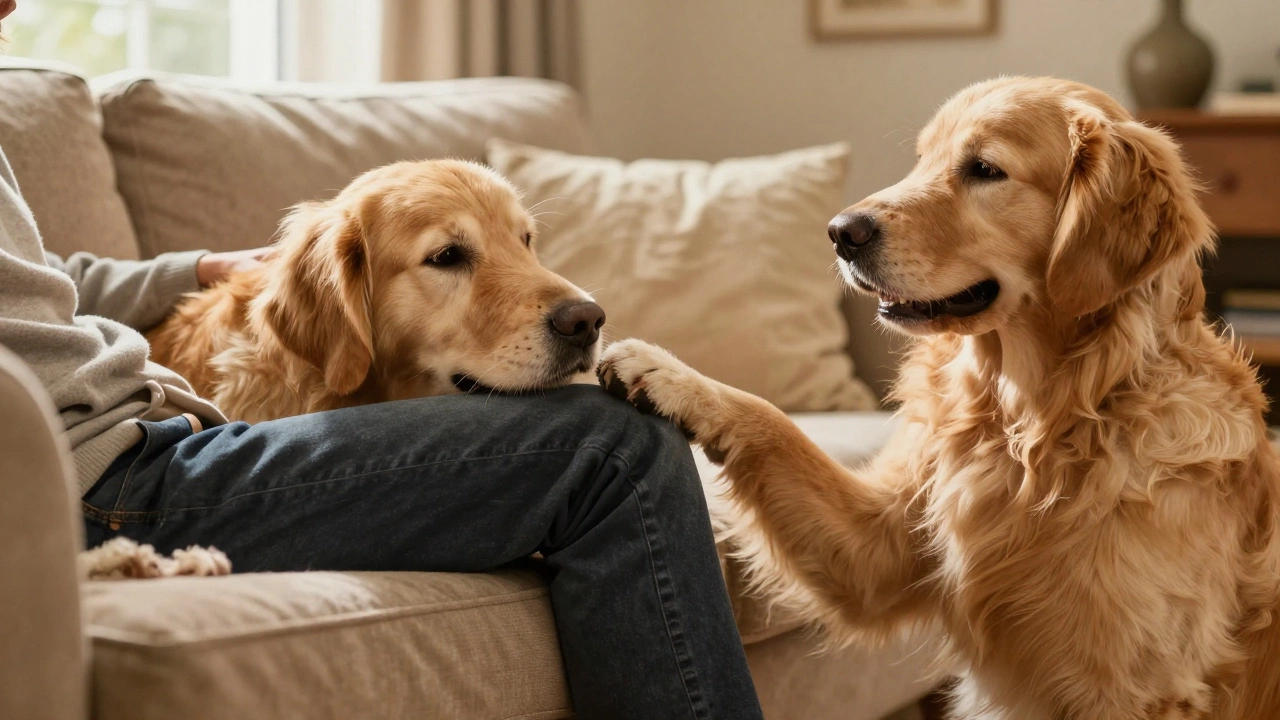
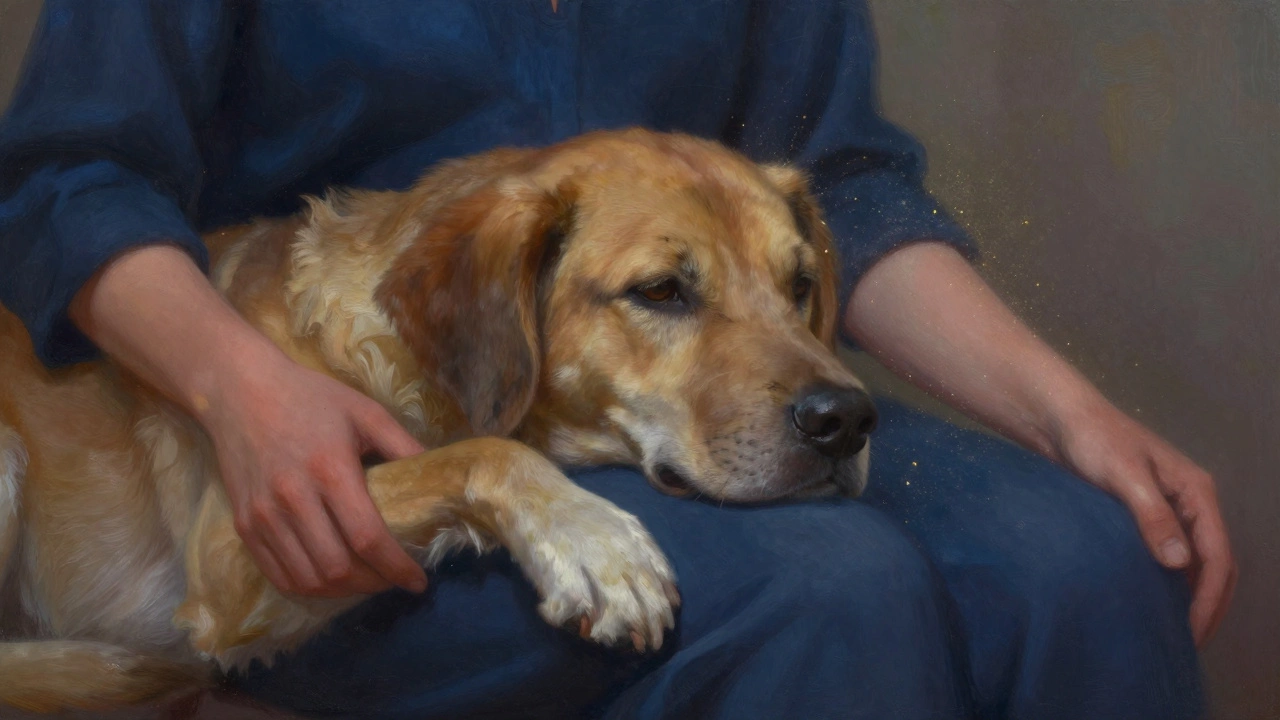
Not every paw is a demand. Sometimes, it's just about bonding. When a dog puts their paw on you while they're resting their head on your lap, it's a sign of trust and intimacy. They are physically connecting with you to feel secure and to let you know they feel safe in your presence.
This is closely linked to the release of Oxytocin, a hormone often called the 'love hormone' that facilitates social bonding between mammals. When you pet your dog back after they paw you, both of your brains release this chemical, strengthening the emotional tie between you. It's a quiet, sweet moment of mutual understanding.
Seeking Comfort and Safety
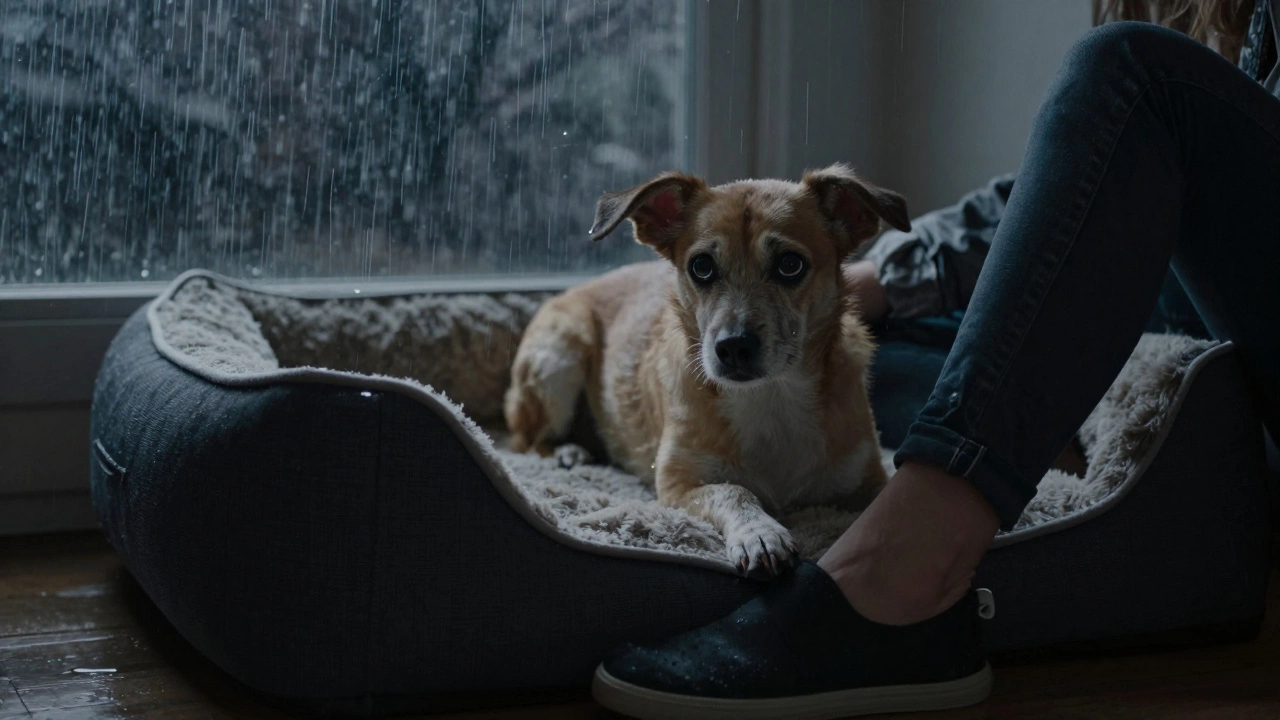
Dogs are social animals that rely on a "pack" for security. When a dog is scared-perhaps during a thunderstorm or when a loud truck passes by-they might reach out with a paw. This is a reach for stability. By touching you, they are confirming that their protector is still there and that everything is okay.
You can tell the difference between an "I want a treat" paw and a "I'm scared" paw by looking at the rest of the body. An anxious dog will have pinned-back ears, wide eyes (often showing the whites), and might be trembling. In these moments, the paw isn't asking for a toy; it's asking for a hug or a calming word. Providing a safe space, like a high-quality dog bed, can help them feel more secure when they aren't with you.
Marking Their Territory
While we think of scent marking (like peeing on a fire hydrant) as the main way dogs claim territory, physical touch plays a role too. Scent glands in a dog's paws release pheromones. When they put their paw on you, they are effectively leaving a "chemical signature" that tells other dogs, "This human belongs to me."
This isn't usually aggressive, but it is a way of establishing a social bond. It's a sign that they view you as part of their immediate family. It's the canine version of holding hands or putting an arm around a friend.
| Physical Cue | Accompanying Behavior | Likely Meaning |
|---|---|---|
| Quick tap | Looking at the door or bowl | Request/Need |
| Slow, resting paw | Deep sighs, closed eyes | Affection/Bonding |
| Repeated poking | High energy, bouncing | Boredom/Play request |
| Tense paw touch | Tucked tail, shivering | Fear/Anxiety |
When Does Pawing Become a Problem?
While mostly sweet, pawing can become an issue if it turns into a habit of jumping or scratching. If your dog paws at you to get attention and then accidentally scratches your skin or ruins your clothes, it's time to set some boundaries. The key is to ignore the pawing and reward the calm behavior.
Wait for the paw to hit the floor, and *then* give the treat or the pet. This teaches them that "four paws on the floor" is the only way to get what they want. If you reward the pawing, you're just telling them that poking you is the most effective way to communicate, which might be annoying when you're trying to cook dinner or hold a baby.
Creating a Comfortable Environment for Your Dog
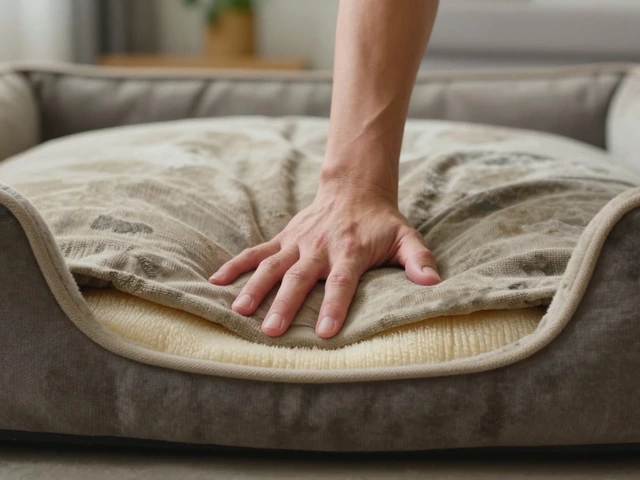
Since pawing is often about seeking comfort or attention, giving your dog a dedicated space can help balance their need for proximity with their need for rest. A good orthopedic dog bed is a great example. These beds use high-density foam to support joints, which is essential as dogs age. When a dog has a place where they feel completely secure, they are less likely to be "clingy" or anxiously paw at you for reassurance.
Think of it this way: if your dog has a cozy, supportive spot to crash in, they can transition from "attention mode" (pawing you) to "rest mode" more easily. This creates a healthier boundary where they know they can always come to you for a cuddle, but they also have a sanctuary of their own.
Connecting the Dots with Other Behaviors
To really master your dog's language, look at the pawing in combination with other movements. For instance, if a dog paws you and then does a play bow (lowering the front half of the body), they aren't asking for food-they want to wrestle. If they paw you and then lick your hand, it's a double-dose of affection.
Understanding these clusters of behavior is what turns a pet owner into a "dog whisperer." It's all about context. A paw at 6:00 AM is probably a request for breakfast. A paw at 11:00 PM while you're watching a movie is a request for love. The action is the same, but the meaning changes based on the clock and the mood.
Is it bad if my dog constantly paws at me?
Not necessarily, but it can become an annoying habit. If the pawing is gentle and infrequent, it's just communication. However, if they are scratching you or jumping up, it's a sign they need more training on boundaries. Use positive reinforcement to reward them when all four paws are on the ground.
Why does my dog paw at me only when I'm busy?
Dogs are experts at observing human patterns. They notice when your attention is shifted elsewhere-like to a computer or phone-and they use pawing as a physical interrupt. Since it has likely worked in the past, they keep doing it to get your focus back on them.
Does pawing mean my dog is stressed?
It can be. If the pawing is accompanied by panting, pacing, or avoiding eye contact, your dog is likely seeking comfort. In these cases, providing a calm environment and a soft place to lay down can help them settle their nerves.
Can I stop my dog from pawing without being mean?
Absolutely. The best way is to simply ignore the behavior. Turn your head away and don't speak to them while they are pawing. The moment they stop and sit calmly, give them a lot of praise and a treat. They will quickly learn that calm behavior is the "key" to getting your attention.
Do all dog breeds paw the same way?
While the meaning is generally the same across breeds, some breeds-like Golden Retrievers or Labradors-tend to be more "touchy" and physical with their affection. Working breeds might use pawing more as a specific signal to get a job done, while smaller breeds might use it to feel more visible to their owners.
Next Steps for a Happier Pup
If you've realized your dog paws you because they're bored, try introducing more mental stimulation. Puzzle toys or a longer walk can tire them out, making those paw-taps less frequent. If they do it for comfort, spend a few minutes of dedicated "quality time" with them every day so they don't feel the need to beg for it.
Finally, ensure their sleeping arrangements are top-notch. A dog that gets a full night's sleep on a supportive bed is generally a calmer dog during the day. When they do finally put that paw on your arm, you'll know exactly what they're trying to tell you.