
Dog Supplement Finder & Guide
Select the symptom your dog is experiencing to find the right nutritional support.
Please select a symptom on the left to see recommendations.
Remember: Always consult your vet before starting new supplements.The First Step: Stop Guessing and Start Observing
Before you spend a penny, ask yourself: why am I doing this? Adding supplements without a clear goal is a quick way to waste money and potentially upset your dog's stomach. If you're seeing specific signs, you have a starting point. Does your golden retriever struggle to get up from the rug in the morning? That points toward joint support. Is your spaniel constantly itching and rubbing their face? You're likely looking at skin and coat health. It's a mistake to treat supplements like vitamins for humans where you just take a multivitamin "to be safe." Dogs have different metabolic needs. Overloading them with certain minerals, like calcium, can actually cause bone deformities in large-breed puppies. Your first move should always be a quick chat with your vet or a blood test. This confirms whether there's a real deficiency or if the symptom is caused by something else entirely, like an allergy or an underlying infection.Decoding Common Supplement Types
Once you know what you're targeting, you'll find that most dog health supplements fall into a few main buckets. Understanding these helps you filter out the marketing fluff.- Omega-3 Fatty Acids: These are essential fats, usually found in fish oil or algae oil. They are the gold standard for reducing inflammation and keeping skin supple.
- Glucosamine and Chondroitin: These are building blocks for cartilage. They are most effective for dogs with osteoarthritis or those who are high-impact athletes.
- Probiotics: These are beneficial live bacteria that balance the gut microbiome. They're a lifesaver for dogs with chronic diarrhea or sensitive stomachs.
- CBD Oil: Derived from Hemp, it's often used for anxiety or chronic pain management, though regulations vary by region.
Analyzing the Ingredient Label Like a Pro
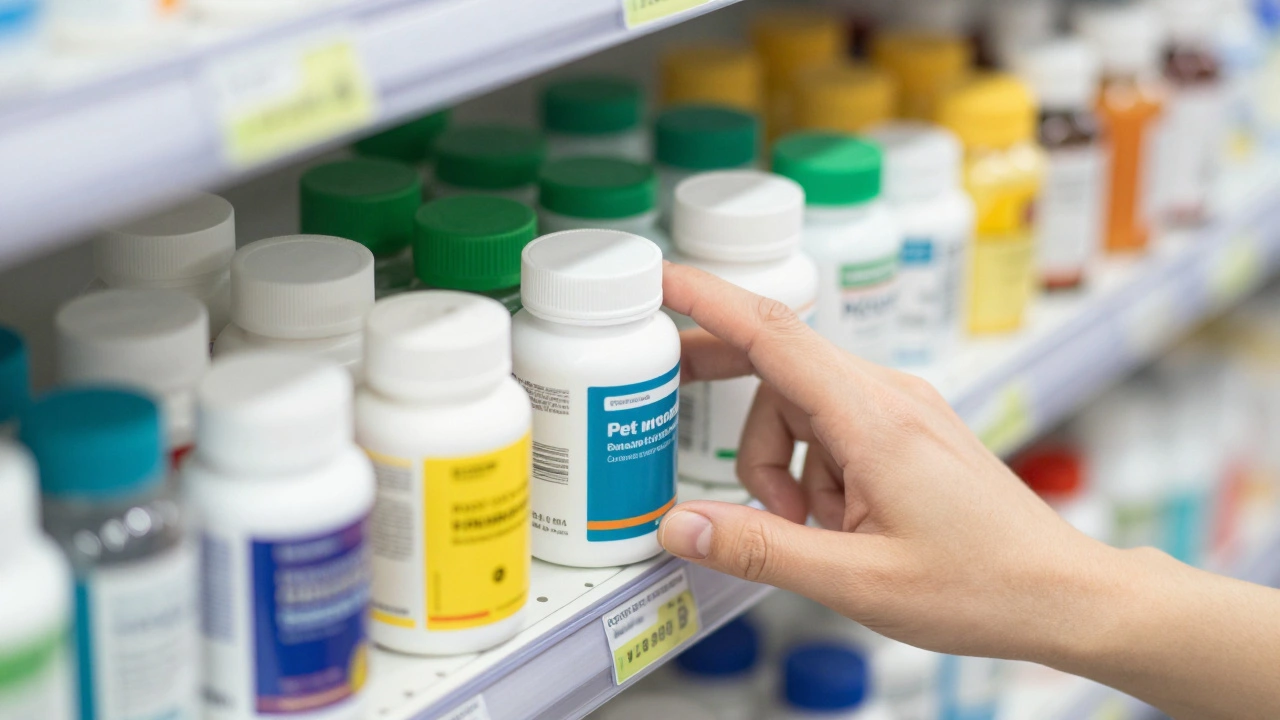
When you pick up a bottle, ignore the front cover. The marketing claims like "Maximum Strength" or "Doctor Recommended" mean nothing. Flip it over and look at the guaranteed analysis. First, check for "filler" ingredients. If the first three ingredients are corn meal, soy, or artificial colors, you're paying for a filler, not a supplement. Look for active ingredients listed in milligrams (mg) or international units (IU). For instance, if you're buying a joint supplement, you want to see a specific amount of glucosamine, not just a "proprietary blend." A proprietary blend is a red flag because the company doesn't have to tell you exactly how much of each active ingredient is inside. Second, look for the source. Fish oil sourced from wild-caught sustainable salmon is generally better than generic "fish oil," which could be a mix of low-quality scraps. If you're looking at probiotics, check if the strains are specific (like *Lactobacillus acidophilus*) rather than just saying "beneficial bacteria."| Health Goal | Look For These Ingredients | Avoid These | Typical Form |
|---|---|---|---|
| Joint Mobility | Glucosamine, MSM, Methylsulfonylmethane | Excessive salt, artificial dyes | Chews, Tablets |
| Skin & Coat | EPA/DHA (Omega-3), Biotin, Zinc | Corn syrup, sugar | Pump oils, Soft chews |
| Digestion | Saccharomyces boulardii, Inulin | Heavy preservatives | Powders, Liquids |
| Calming | L-Theanine, Colostrum, Valerian root | Xylitol (Toxic!) | Soft chews, Drops |
The Delivery Method: Pills, Powders, or Chews?
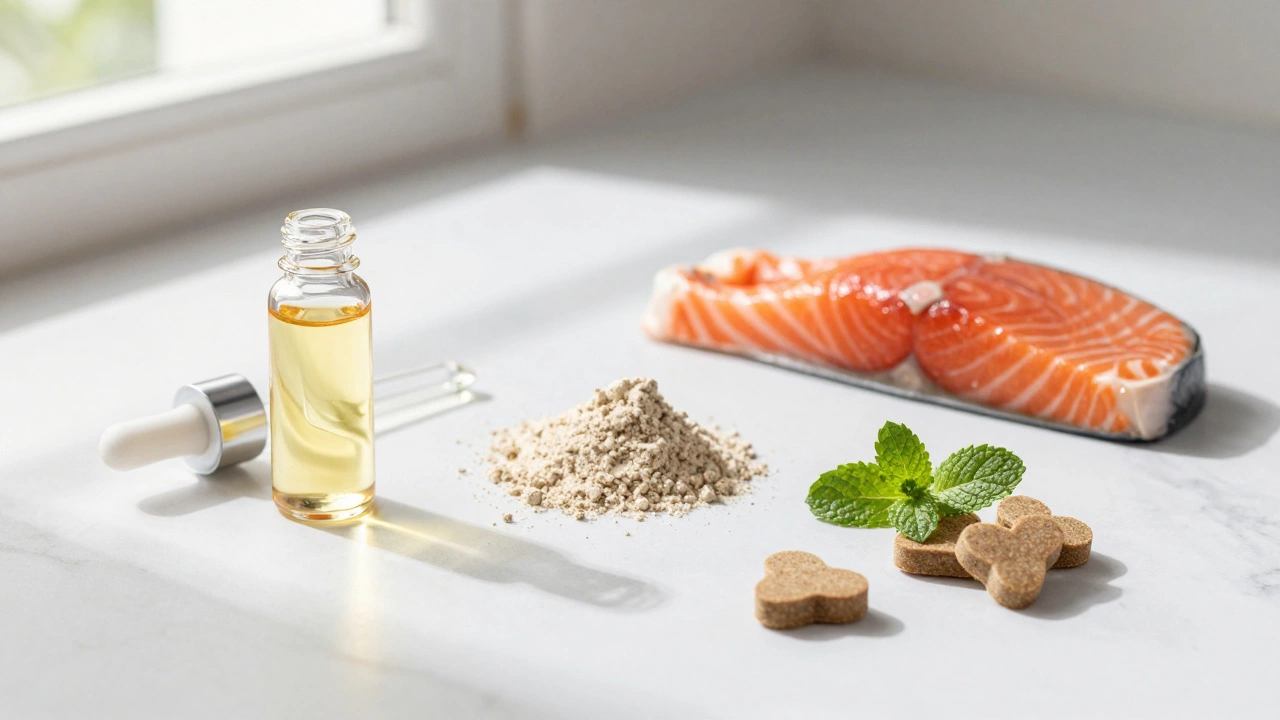
There is no point in buying the best supplement in the world if your dog treats it like a piece of poison. The delivery method is where most owners fail. Soft chews are the most popular because they taste like treats. They're great for most dogs, but be careful-they often contain more calories and sugar than pills. If your dog is overweight or diabetic, a chew might actually do more harm than good. Powders are ideal for picky eaters. You can sprinkle them directly onto wet food, and they usually blend in without changing the texture much. However, powders can be messy and are harder to dose precisely unless they come with a measured scoop. Liquid supplements, like oils, are incredibly potent and absorb quickly. The downside? They can be oily and messy, and some dogs hate the strong smell of fish. If you go this route, start with a very small dose. Too much fish oil too quickly can lead to "slick-stomach," which is a polite way of saying your dog will have loose stools for three days.Common Pitfalls and Safety Warnings
Not all supplements are safe. Some "natural" ingredients are actually dangerous for dogs. The biggest danger is Xylitol, a sweetener found in some human-grade supplements and low-calorie treats. Even a small amount can cause liver failure in dogs. Always check the label for any form of birch sugar or Xylitol. Another common mistake is the "stacking" error. This happens when you give your dog a high-quality commercial dog food (which is already fortified with vitamins) and then add a generic multivitamin on top. This can lead to Vitamin D or Calcium toxicity. If your food is "complete and balanced," you only need supplements for specific deficiencies or medical needs, not a general health boost. Lastly, be wary of supplements sold exclusively on social media through influencer ads. These often lack third-party testing. Look for brands that use the NASC (National Animal Supplement Council) seal. While not a government guarantee, it means the company adheres to strict quality control and labeling standards.
Measuring Success: Is It Actually Working?
Supplements aren't like painkillers; they don't work in twenty minutes. Most take two to six weeks of consistent use before you notice a difference. To know if it's working, you need a baseline. If you're treating joint pain, film your dog walking or climbing stairs on day one. Then, film them again after thirty days. You'll notice the subtle changes in their gait that you might miss in real-time. For skin and coat supplements, look for a reduction in "doggy dandruff" or a visible shine in the fur after a month. If you've used a supplement for six weeks and see zero change, don't just increase the dose. Stop and talk to your vet. It might mean the delivery method isn't absorbing correctly, or the dosage is too low for your dog's weight. Some dogs simply don't respond to certain ingredients-for example, some dogs do better with green-lipped mussel than they do with standard glucosamine.Can I give my dog human vitamins?
Generally, no. Human vitamins are formulated for human metabolism and often contain dosages that are toxic to dogs. More importantly, many human supplements contain Xylitol or grape/raisin extracts, which are poisonous to canines. Always use products specifically formulated for dogs.
How long does it take to see results from joint supplements?
Most joint supports take about 4 to 8 weeks of daily administration before you notice an improvement in mobility. This is because they work by supporting cartilage repair and reducing inflammation over time, rather than providing an instant fix.
Should I give supplements to a puppy?
Be very careful here. Puppies are in a critical growth phase, and adding extra calcium or phosphorus can lead to skeletal deformities, especially in large breeds. Unless your vet identifies a specific deficiency, a high-quality puppy food is usually all they need.
What is the best way to give a pill to a dog that refuses it?
The "pill pocket" method is usually most effective. Wrap the pill in a small piece of plain cooked meat, a piece of cheese, or a commercial pill-wrapping treat. If they are still too smart, try mixing it into a small dollop of peanut butter (ensure it's Xylitol-free).
Are all Omega-3 supplements the same?
No. The key is the ratio of EPA to DHA. EPA is generally better for inflammation and joint pain, while DHA is more critical for brain and eye development. Check the label to ensure you're getting a high concentration of these specific acids rather than just "total fat."