
Cat Hydration Calculator
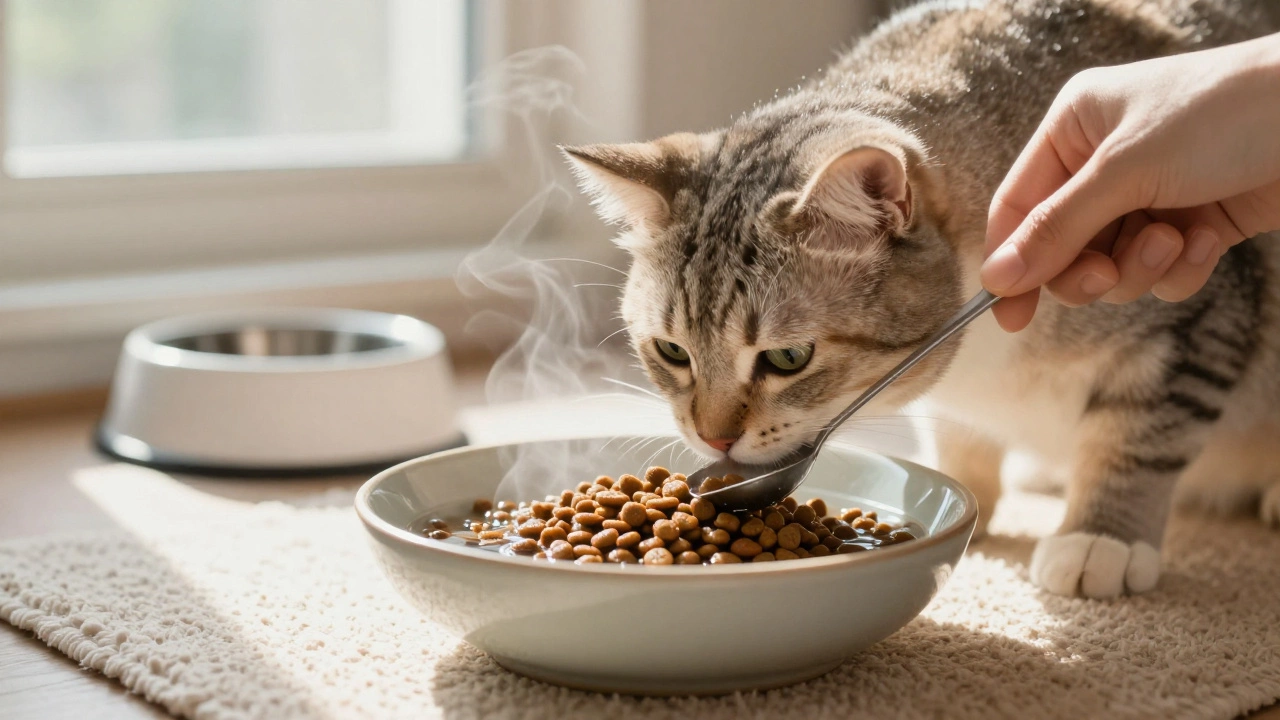
Calculate Water for Dry Cat Food
Recommended Water
Why this matters: Adding water improves hydration and digestion, reducing risk of urinary issues and kidney problems.
Tip: Use warm (not hot) water and let sit for 5-10 minutes before serving.
Most cat owners know dry food is convenient. It’s easy to store, mess-free, and lasts for weeks. But if your cat isn’t drinking enough water, that same dry food could be silently harming their health. Adding water to dry cat food isn’t a fancy trend-it’s a practical, vet-backed move that can make a real difference in your cat’s daily well-being.
Why cats don’t drink enough water
Cats are descended from desert-dwelling ancestors. Their bodies evolved to get most of their moisture from prey. That means a wild cat eats mice or birds-animals that are over 70% water. But dry cat food? It’s usually only 8-10% water. That’s a massive drop from what their bodies expect.Most domestic cats don’t drink enough from their water bowls. Studies show many cats consume less than 60 milliliters of water per day, even though they need about 200-250 ml. Why? Because cats are picky. They don’t like stagnant water. They don’t like bowls that are too deep or too close to their food. And they often don’t notice when their bowl is empty.
If your cat’s only water source is a bowl that’s been sitting for hours, they’re probably not getting enough. That’s where adding water to their dry food comes in.
What happens when cats are dehydrated
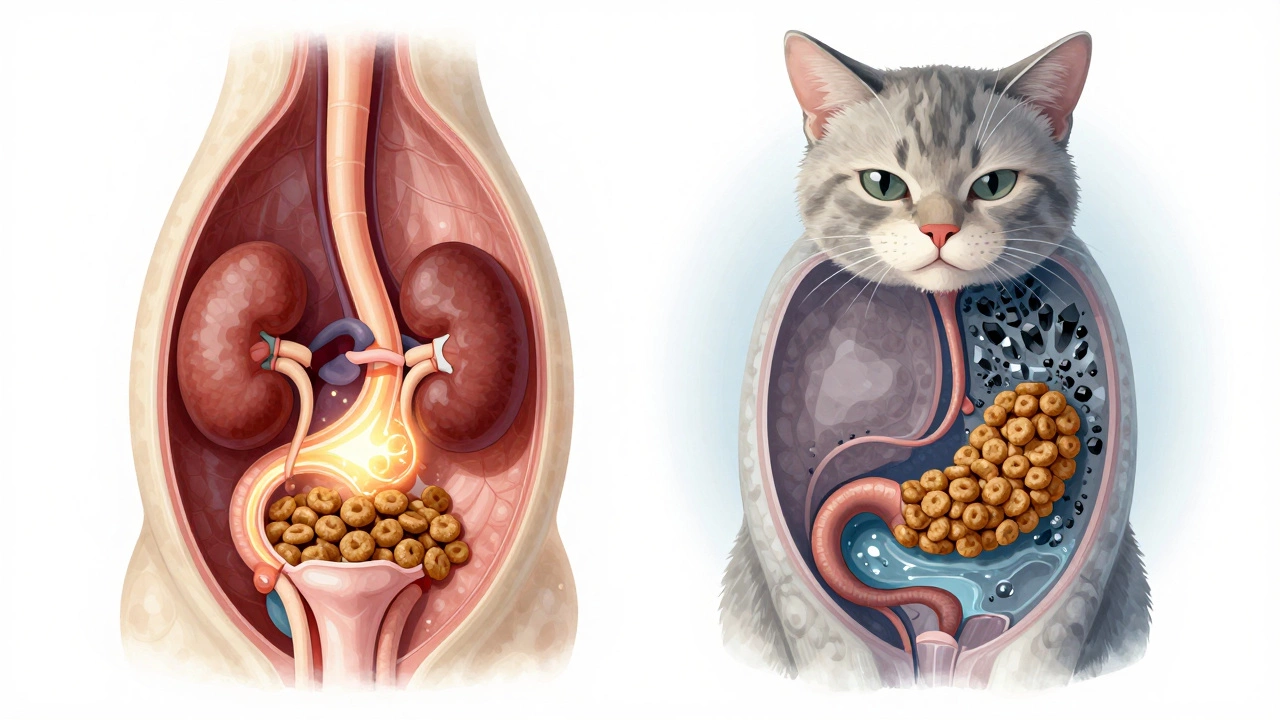
Chronic low water intake doesn’t just make your cat thirsty-it stresses their kidneys. Feline kidneys are designed to concentrate urine, but they need enough fluid to do it properly. Without enough water, waste builds up, crystals form, and urinary tract issues become more likely.One in three cats will develop some kind of urinary problem in their lifetime. Many of these cases are tied to dehydration. Signs to watch for: frequent trips to the litter box with little output, straining, licking the genital area more than usual, or urinating outside the box. These aren’t just "annoyances"-they’re red flags.
Dehydration also affects digestion. Dry food can swell in the stomach when it absorbs water from the gut. That can cause bloating, slow digestion, and even vomiting. Add water upfront, and your cat’s system doesn’t have to scramble to find moisture.
How to add water to dry cat food
It’s simpler than you think. You don’t need special tools. Just follow these steps:- Take your cat’s normal daily portion of dry food.
- Add 2-4 tablespoons of warm (not hot) water per cup of kibble.
- Stir gently until the kibble is moistened but not soggy.
- Let it sit for 5-10 minutes so the water soaks in.
- Offer it immediately-cats prefer food that’s fresh and not left out too long.
You can use plain water, or if your cat likes it, try low-sodium chicken or fish broth (no onions or garlic). Some owners freeze broth into ice cubes and mix them in for a slow-melting treat.
Start small. If your cat is used to dry food, they might ignore the wet version at first. Mix in just a teaspoon of water and increase slowly over a few days. Watch how they react. Some cats love it right away. Others need time.
Benefits you’ll notice
After a week or two of adding water, you might see:- More consistent litter box habits-fewer trips, less straining
- Brighter eyes and shinier coat
- Less vomiting or hairball issues
- More energy and playful behavior
One 2023 study from the University of Edinburgh followed 120 cats on dry food diets. Half had water added to their meals. After six weeks, the group with moistened food had 40% fewer urinary tract incidents and drank 35% more total water overall.
It’s not magic. It’s just matching their biology.
What about wet food?
Some people say, "Just feed wet food instead." And yes, wet food is excellent. It’s typically 75-80% water. But not every cat likes it. Some refuse it outright. Others eat it only occasionally. And wet food can be expensive, messy, and spoil quickly.Adding water to dry food gives you the convenience of kibble with the hydration benefits of wet food. It’s a middle ground that works for many households. You can even mix it-half dry with water, half wet-until your cat adjusts.
Myths about moistening dry food
There are a few myths floating around:- "It makes the food go bad faster." True, if left out for hours. But cats usually eat within 20-30 minutes. If they don’t, throw it away. Same as wet food.
- "It ruins the crunch." So what? Your cat doesn’t need crunch. Their teeth aren’t built for chewing kibble like humans do. They swallow it mostly whole.
- "It causes diarrhea." Only if you add too much water too fast. Start slow, and your cat’s gut will adapt.
The truth? Moistening dry food doesn’t change the nutrition. It just makes it safer and more digestible.
When not to add water
There are rare cases where you should avoid this:- If your vet has prescribed a special urinary diet with strict moisture limits (very uncommon)
- If your cat has a diagnosed condition like severe kidney disease that requires precise fluid control (always follow vet advice here)
- If your cat refuses to eat it at all-forcing it can cause stress
In most cases, though, adding water is safe, cheap, and effective. Even if your cat seems fine now, prevention matters. Kidney disease is silent until it’s advanced. By the time symptoms show, the damage is often irreversible.
Final tip: Make it part of your routine
Pick a time. Morning. Before work. After dinner. Stick with it. Use the same measuring spoon. Keep a small bowl of water next to the food dish. Over time, your cat will come to expect it. Some even start nudging the bowl when they want their meal moistened.Hydration isn’t about giving your cat a drink. It’s about giving them food that matches how their body was built to work. A little water can go a long way.