Dirty Dog Syndrome Risk Calculator
How's Your Puppy's Behavior?
Answer these quick questions to calculate your puppy's dirty dog syndrome risk level.
Your Puppy's Risk Level
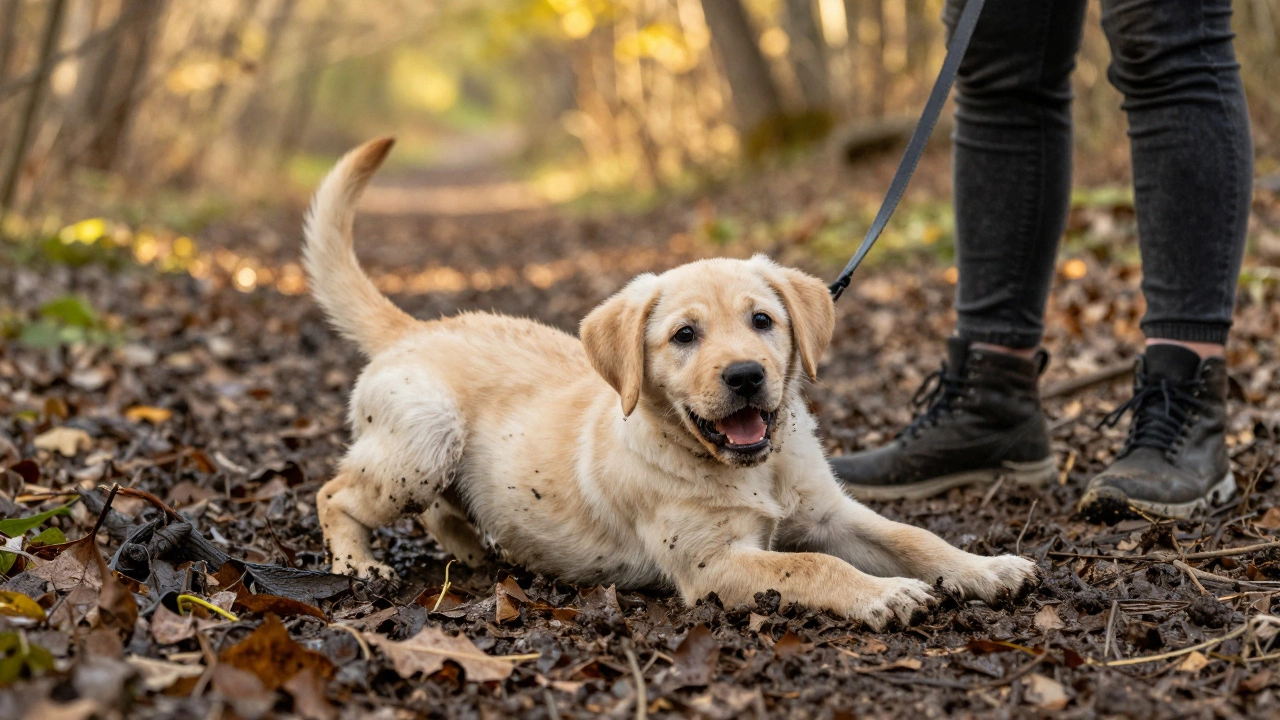
Ever picked up your puppy after a walk and thought, ‘How did they get so dirty so fast?’ Then you notice they roll in mud, sniff every patch of grass like it’s a treasure map, and somehow still manage to smell like a wet sock left in a gym bag. You’re not alone. Many new puppy owners are shocked when their fluffy little bundle turns into a walking mud pit-and then acts like it’s perfectly normal. This isn’t just messiness. It’s dirty dog syndrome.
What Exactly Is Dirty Dog Syndrome?
Dirty dog syndrome isn’t a medical diagnosis. It’s a behavioral pattern where a puppy or dog actively seeks out dirt, filth, or unpleasant substances-and seems to take pride in it. They’ll roll in dead animals, dig through garbage, chase after muddy puddles, and then come back to you with a grin like they just won a prize. It’s not about being dirty for fun. It’s about instinct, lack of training, and sometimes, a lack of boundaries.
Unlike a dog who gets dirty accidentally during play, a puppy with dirty dog syndrome will go out of their way to get messy. They’ll ignore your calls, ignore the smell, and ignore your frustration. And here’s the kicker: if you don’t address it early, it becomes a habit that sticks into adulthood.
Why Do Puppies Do This?
It’s not spite. It’s not rebellion. It’s biology.
Dogs are scent-driven animals. Their noses have up to 300 million scent receptors-compared to our 5 million. To them, rolling in something smelly isn’t gross. It’s communication. In the wild, wolves roll in strong-smelling substances to mask their own scent from prey or to bring back a scent signal to their pack. Your puppy isn’t trying to annoy you. They’re trying to say, ‘Hey, I found something interesting!’
But there’s more. Puppies also learn by doing. If they get attention-even negative attention-after getting dirty, they learn that messiness = interaction. You yell? They get your focus. You chase them? It’s a game. You give them a bath? That’s a ritual they now associate with excitement.
And let’s not forget: puppies are still learning what’s acceptable. They don’t know that your carpet isn’t a mud pit. They don’t know that your clean sofa isn’t a scratch pad. They’re exploring the world with their whole body-and that includes their belly.
Signs Your Puppy Has Dirty Dog Syndrome
It’s easy to brush off a muddy paw or a smelly coat after a walk. But here’s how to tell if it’s more than that:
- They consistently seek out foul-smelling spots (rotting leaves, animal droppings, wet trash)
- They ignore your commands to stop rolling or sniffing
- They get dirty even when you’ve just bathed them
- They act excited or proud after getting dirty
- They resist baths or try to escape after being cleaned
If you see two or more of these signs regularly, you’re dealing with dirty dog syndrome-not just a messy pup.
How to Fix It (Without Yelling or Guilt)
You can’t shame a puppy out of this. You can’t bathe them every day and expect results. You need a plan.
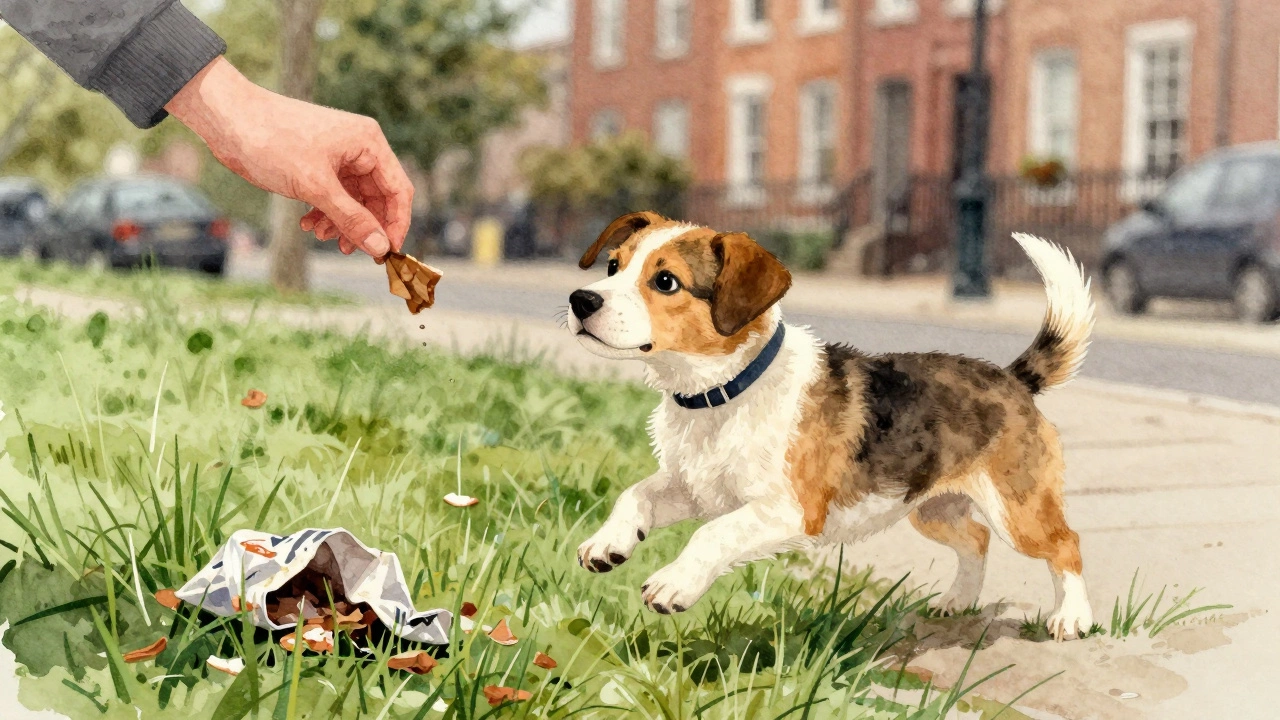
- Manage the environment. Don’t give them access to trouble zones. Keep trash bins covered. Avoid walks near dumpsters, farms, or areas with dead animals. Use a leash during walks until they’re trained to respond to ‘leave it’.
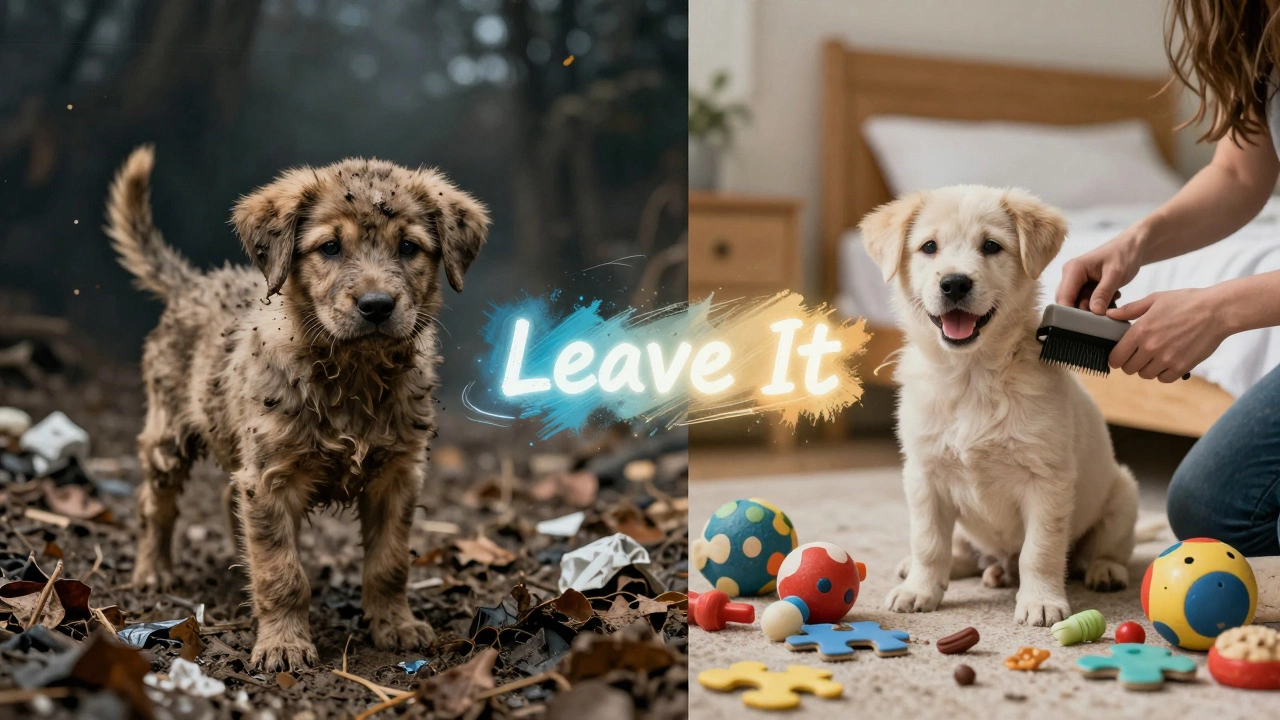
- Teach ‘leave it’ like it’s your job. Start indoors with a treat in your closed hand. When they stop sniffing and look at you, say ‘leave it’ and reward them with a better treat from your other hand. Practice daily. Then move to outdoor distractions. This command is your best tool.
- Redirect, don’t punish. If they start to roll, interrupt with a high-value toy or treat. Say ‘come’ in a cheerful voice and reward them for leaving the spot. Never yell or chase them-that turns it into a game.
- Make cleaning positive. Turn bath time into a treat fest. Give them a special chew toy after the bath. Brush them with a soft brush while offering praise. If they associate cleaning with good things, they’ll stop seeing it as punishment.
- Increase mental stimulation. A bored puppy is a messy puppy. Use puzzle feeders, scent games, and short training sessions to tire them out mentally. A tired dog is less likely to seek out chaos.
What Not to Do
There are a lot of bad habits people fall into when dealing with a dirty pup:
- Don’t bathe them daily. It dries out their skin and makes them smell worse long-term.
- Don’t use harsh sprays or human shampoo. Their skin is sensitive. Use dog-specific, oatmeal-based cleaners.
- Don’t ignore the smell. If your puppy smells like rotting eggs or has a persistent odor, it could be an ear infection, anal gland issues, or skin fungus. A vet check is needed.
- Don’t wait until they’re older. This behavior gets harder to break after 8 months.
When to See a Vet
Dirty dog syndrome is mostly behavioral-but sometimes, it’s a sign of something else.
If your puppy:
- Smells like yeast or has oily, flaky skin
- Scratches constantly or licks their paws nonstop
- Has red, swollen ears or a foul odor from their rear end
…then it’s not just dirt. It’s a health issue. Skin allergies, yeast infections, and impacted anal glands can make dogs seek out dirt to relieve itching. A vet can rule this out in under 15 minutes.
Real-Life Example: Bella’s Turnaround
Bella, a 5-month-old Labrador mix from Bristol, used to come home smelling like a compost heap. Her owner, Sarah, tried everything-yelling, scrubbing, even buying ‘odor-neutralizing’ sprays. Nothing worked.
She started with ‘leave it’ training during walks. She carried high-value chicken treats. Every time Bella looked away from a dead leaf pile, she got a treat. Within two weeks, Bella started checking in with Sarah before rolling. By week six, she’d stop at the edge of a muddy patch and look back-waiting for the treat. Sarah didn’t stop the walks. She just changed the rules.
Now, Bella still gets dirty sometimes. But she doesn’t seek it out. And when she does, she comes right back to Sarah. That’s progress.
Long-Term Prevention
Dirty dog syndrome isn’t something you fix once. It’s something you manage daily.
Keep a routine:
- Wipe paws after every walk with a damp cloth
- Brush your puppy 2-3 times a week to remove debris and distribute natural oils
- Keep their bedding clean-dirty bedding encourages dirt-loving habits
- Rotate toys to keep them mentally engaged
- Always carry treats on walks
And remember: consistency beats intensity. Five minutes of training every day beats one hour of yelling once a week.
Final Thought: It’s Not About Perfection
Some dogs will always love mud. That’s okay. You don’t need a show dog. You need a happy, healthy pup who knows how to listen.
Dirty dog syndrome isn’t a life sentence. It’s a training gap. And gaps can be filled-with patience, consistency, and a few chicken treats.
Is dirty dog syndrome a medical condition?
No, dirty dog syndrome is not a medical condition. It’s a behavioral pattern where a puppy or dog actively seeks out dirt and unpleasant smells. However, persistent foul odors, skin irritation, or excessive scratching could signal an underlying health issue like a yeast infection or allergies, so a vet check is recommended if these signs appear.
Can adult dogs develop dirty dog syndrome?
Yes, though it’s less common. Adult dogs usually develop this behavior if they’ve never been trained to avoid dirt, or if they’ve been rewarded for it (like getting attention after rolling in something smelly). It’s harder to change in adults, but not impossible-with consistent training and environmental management.
How often should I bathe my puppy if they get dirty often?
Bathe your puppy no more than once every 4-6 weeks, even if they’re dirty. Frequent bathing strips natural oils from their skin and can cause dryness or irritation. Instead, wipe their paws and belly after walks, and use dog-safe dry shampoo between baths if needed.
Why does my puppy roll in poop on purpose?
Puppies roll in poop because of instinct. In the wild, dogs mask their scent to sneak up on prey or communicate with their pack. Domesticated dogs still carry this drive. It’s not about being ‘bad’-it’s about their nose telling them it’s important. Training and redirection are the only reliable fixes.
Will my puppy grow out of this on its own?
Sometimes, but don’t count on it. Without training, the behavior often gets worse as the dog gets stronger and more confident. Puppies that aren’t taught boundaries by 6-8 months are more likely to keep the habit into adulthood. Early intervention is key.