Dog Collar Safety & Comfort Checker
Answer the questions below to get a personalized recommendation on whether your dog should keep their collar on while sleeping or when unsupervised indoors.
Why this matters
Continuous wear can trap moisture and cause dermatitis, but ID tags provide immediate identification if your dog escapes. This tool balances comfort against safety risks.
Recommendation
...Key Factors Detected
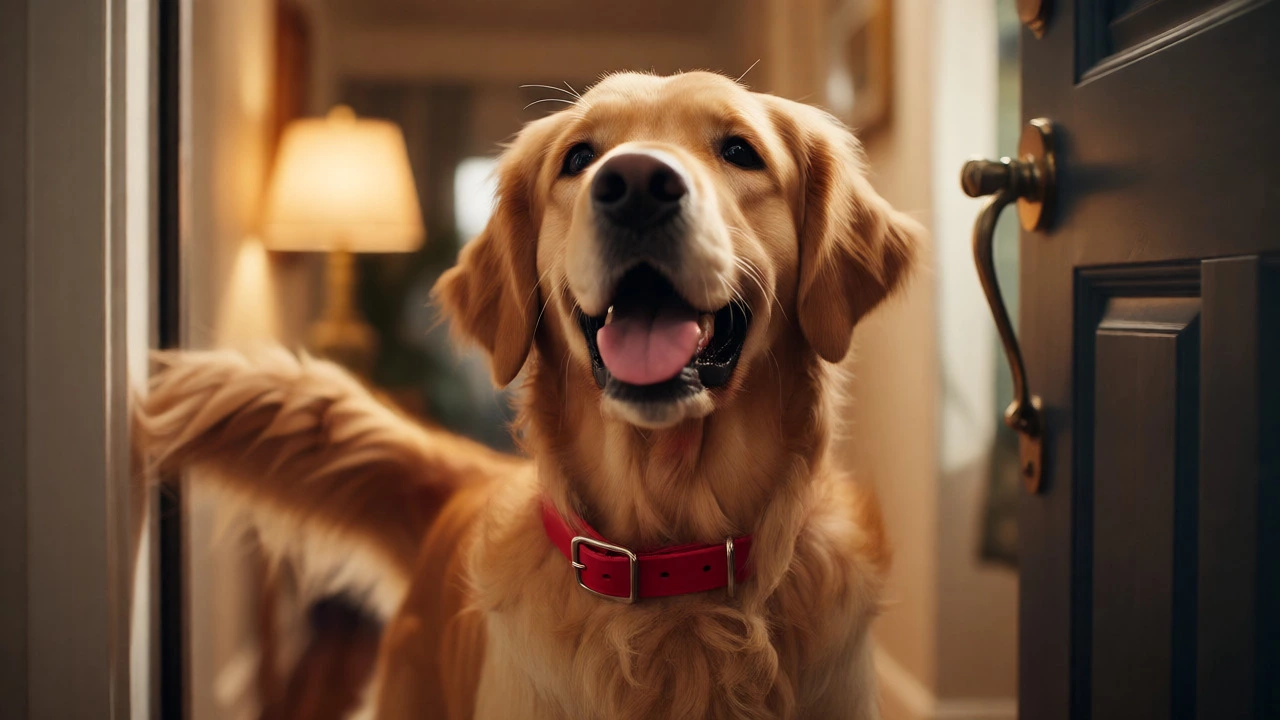
You come home from a long day at work, your tail-wagging greeter runs to the door, and you notice a red mark around their neck. It’s that moment when guilt hits: should dog collars be left on all the time? It’s a debate that splits dog owners down the middle. Some say it’s essential for ID tags in case of escape; others argue it’s like wearing a tie to bed-unnecessary and potentially harmful. The truth isn’t black and white, but it leans heavily toward giving your dog a break.
If you’re wondering whether your pup is suffering from "collar fatigue" or if they’ll wander off into traffic because you took their bandana off, you’re in the right place. We’ve broken down the risks, the benefits, and the practical rules of thumb so you can make the best call for your specific dog. Spoiler alert: most vets agree that taking the collar off at night is a good idea, but there are exceptions you need to know about.
The Case For Removing The Collar At Night
Think about how you feel after wearing a tight shirt for twelve hours straight. Your skin gets irritated, maybe even chafed. Dogs experience the same thing. When a dog collar is worn continuously, moisture, dirt, and natural oils get trapped against the skin. This creates a perfect breeding ground for bacteria and yeast, leading to hot spots or dermatitis.
Taking the collar off allows the skin to breathe. It lets air circulation do its job, drying out any dampness from rain, sweat, or just general humidity. In Bristol, where the weather can be persistently damp, this is crucial. A wet collar left on overnight doesn’t just smell bad-it causes skin maceration, which is fancy talk for skin breaking down due to prolonged moisture exposure.
There’s also the issue of comfort and sleep quality. Dogs spend roughly 12 to 14 hours a day sleeping. If they wake up with an itchy neck or a stiff feeling from a strap digging in, their rest suffers. Poor sleep leads to irritability and lower energy levels during the day. By removing the collar, you’re essentially letting them decompress physically as well as mentally.
Safety Risks Of Leaving Collars On Unsupervised
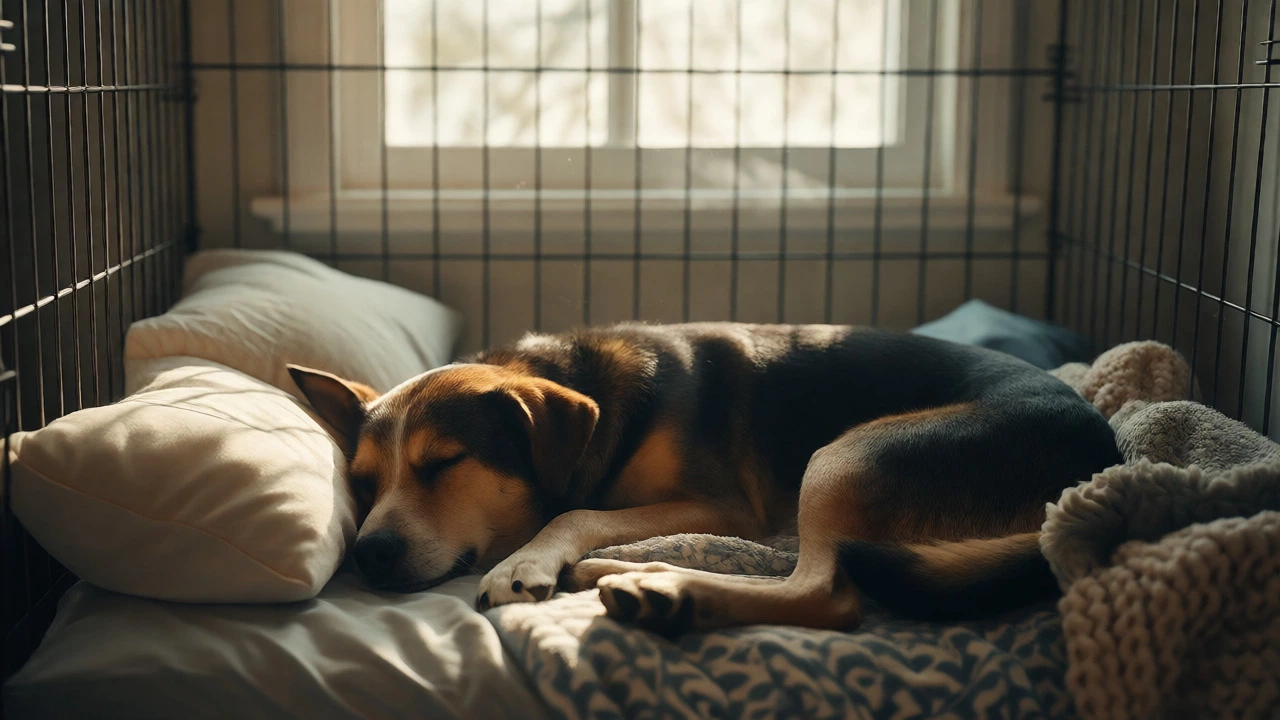
Beyond skin health, there’s a genuine physical danger to leaving collars on when no one is watching. This is especially true if your dog shares a crate, plays with other dogs, or sleeps in a bed with lots of blankets and pillows. The risk is entanglement. A loose tag or a frayed strap can catch on a crate wire, a bed frame, or another dog’s teeth.
When a dog panics because they’re stuck, they thrash. This can lead to severe injuries, including:
- Cervical spine damage: Jerking against a fixed point can strain or injure the neck vertebrae.
- Dental fractures: Chewing on a caught collar can crack teeth.
- Skin lacerations: Tight pulling can tear the skin.
- Strangulation: In worst-case scenarios, a dog can hang themselves if the loop tightens incorrectly.
This is why many trainers recommend removing flat collars during play sessions too. If your dog likes to wrestle, grabbing each other by the scruff or neck area is common. A metal buckle or D-ring can become a weapon in roughhousing. If you have multiple dogs, watch them closely. What looks like play can turn into a snag-and-pull situation in seconds.
When You Should Keep The Collar On
So, should you always take it off? Not necessarily. There are valid reasons to keep the collar on, primarily related to identification and medical needs.
The biggest argument for keeping it on is ID tags. If your dog slips their harness or escapes through a gate, a collar with an address and phone number is often the only way a stranger can contact you quickly. Microchips are great, but they require a scanner and a vet visit. A visible tag is immediate. If you live near busy roads or open fields, this safety net might outweigh the minor discomfort of wearing a collar at night.
Another reason is medical management. Does your dog wear a flea and tick collar? These usually need to stay on for weeks to release active ingredients effectively. Taking them off disrupts the dosage schedule. Similarly, if your dog has an Elizabethan collar (the cone) or a surgical e-collar, that obviously stays on until the vet says otherwise.
Also, consider training phases. If you’re house-training a puppy or working on recall, having the collar accessible means you can grab it instantly for a walk or correction without fumbling around. However, even here, you don’t need to leave it on while they’re sleeping in their crate.
How To Choose The Right Collar For Continuous Wear
If you decide to leave the collar on for safety reasons, not all collars are created equal. A thick leather collar might look stylish, but it’s heavy and absorbs water. For all-day wear, you want something lightweight and breathable.
| Collar Type | Best For | Risk Factor | Maintenance |
|---|---|---|---|
| Nylon Webbing | General daily use, durability | Absorbs odors/moisture | Washable, replace every 1-2 years |
| Leather | Style, formal events | Heavy, cracks if wet | Condition regularly, avoid rain |
| Breakaway | Cats, small dogs, high-risk areas | Can break accidentally | Check clasp integrity weekly |
| Biological/Silk | Sensitive skin, allergies | Less durable, expensive | Gentle cleaning required |
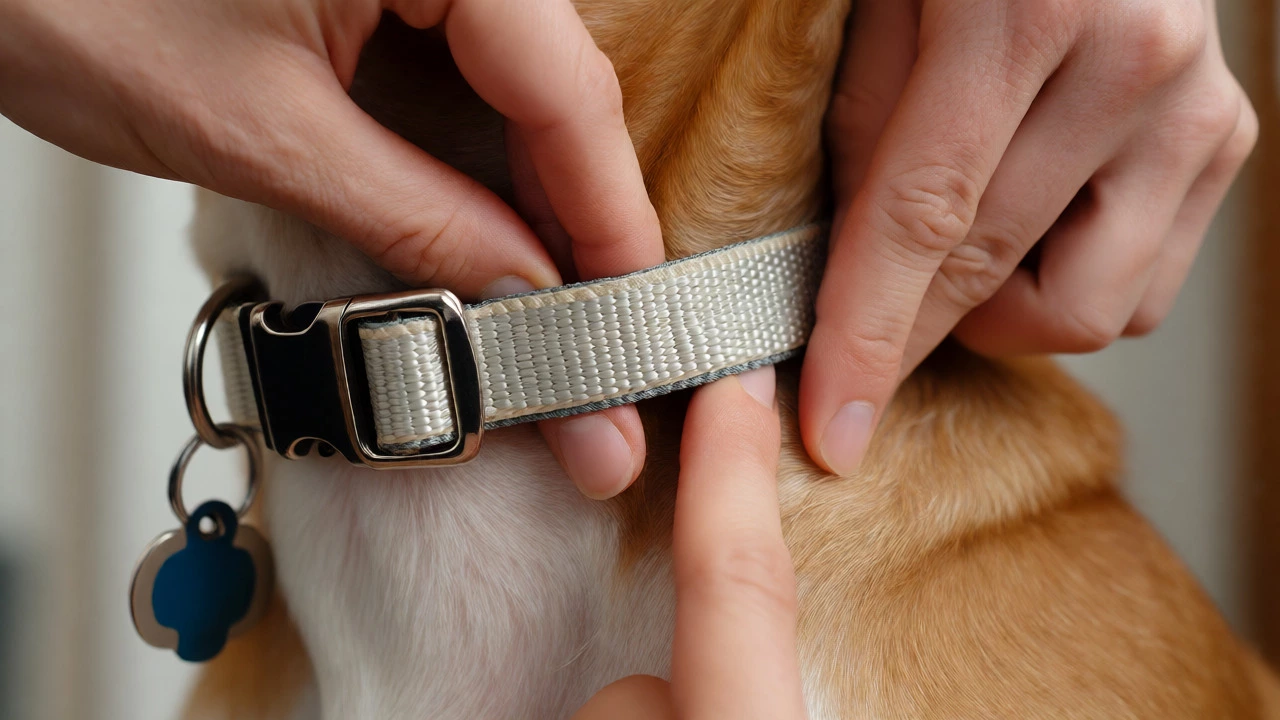
For sensitive skin, look for hypoallergenic materials. Some dogs react to nickel in buckles or dyes in nylon. A simple cotton or silk-lined collar can prevent these reactions. Also, check the fit. The "two-finger rule" is standard: you should be able to slide two fingers comfortably between the collar and your dog’s neck. If you can only fit one finger, it’s too tight. If you can fit four, it’s too loose and prone to snagging.
Signs Your Dog Needs A Break From Their Collar
Your dog will tell you if the collar is bothering them, though they won’t use words. Watch for these behavioral and physical cues:
- Pawing at the neck: Constant scratching or rubbing against furniture.
- Hair loss: Bald patches directly under the collar line.
- Redness or rash: Visible irritation, bumps, or scabs.
- Reluctance to go for walks: They might associate the sound of the buckle with pain or discomfort.
- Head shaking: Trying to dislodge something irritating.
If you see hair thinning along the neck, it’s often called "collar rub." This friction wears down the fur over time. Switching to a wider collar distributes pressure better, or simply removing the collar when indoors helps the hair grow back. If the skin is broken, clean it gently with warm water and let it air dry completely before putting anything back on.
Practical Solutions For The Best Of Both Worlds
You don’t have to choose between total freedom and constant security. Here are some strategies used by experienced owners and vets alike:
The Two-Collar System: Keep a dedicated "ID collar" that is lightweight and soft. Only put this on when going outside or when you cannot supervise. Use a different, sturdier collar for leash attachment during walks. This keeps the ID collar clean and reduces wear on the heavier gear.
Microchip Backup: Ensure your dog’s microchip details are up to date. Register with a major database like Petlog or Anibase in the UK. Check the chip annually at your vet. If you trust the microchip system, you might feel more comfortable removing the collar at night, knowing that if they escape, a shelter can identify them.
Indoor Harnesses: Some owners use a soft, fleece-lined harness indoors instead of a collar. It spreads weight across the chest rather than the neck. Just ensure it doesn’t have dangling straps that could catch.
Regular Checks: If you must leave the collar on, inspect it twice a day. Look for fraying, rust on metal parts, or tightness due to swelling. Puppies grow fast; a collar that fits today might choke them next week.
Frequently Asked Questions
Is it safe to leave a flea collar on my dog at night?
Yes, typically. Flea and tick collars are designed for continuous wear to maintain consistent protection. Removing them frequently can reduce their effectiveness. However, check the manufacturer's instructions, as some newer formulations may have different guidelines. Always monitor for skin reactions.
Will my dog run away if I take their collar off inside the house?
If your doors and gates are secure, the risk is minimal. Many owners remove collars inside to prevent snags and improve comfort. If you have an escape artist who pushes open doors, consider using baby gates or keeping them in a supervised room without the collar. Outside, always use a secure leash or fenced area.
What kind of collar is best for sensitive skin?
Look for collars made from natural fibers like cotton, hemp, or silk, or those with a soft lining. Avoid cheap synthetic materials that trap heat and moisture. Hypoallergenic buckles, such as plastic or coated metal, can also help if your dog reacts to nickel.
How tight should a dog collar be?
Follow the two-finger rule. You should be able to slide two fingers comfortably between the collar and your dog’s neck. If it’s tighter, it can restrict breathing or cause injury. If it’s looser, it can slip off or get caught on objects.
Do puppies need collars earlier than adult dogs?
Puppies can start wearing a light collar around 8 to 10 weeks old to get used to the sensation. However, it should be very lightweight and removed during sleep and unsupervised play. Their necks are fragile, so prioritize comfort and proper fit over style.
Next Steps And Troubleshooting
If you’re still unsure, try a one-week experiment. Take the collar off whenever your dog is indoors and supervised. Observe their skin and behavior. Do they seem more relaxed? Is the itching gone? If yes, stick with it. If you notice red marks returning immediately upon reapplication, switch to a softer material or consult your vet about potential allergies.
Remember, the goal is a happy, healthy dog. A collar is a tool, not a permanent accessory. Treat it like a shoe: useful when needed, but unnecessary and uncomfortable when it’s time to relax. Give your dog the gift of a bare neck tonight-they’ll thank you with extra cuddles tomorrow morning.