
Puppy Bedtime Calculator
Recommended Schedule
--:-- PM
Total Daily Sleep Needed: -- hours
Why this time?
Enter your puppy's details to see their perfect sleep schedule.
You’re sitting on the sofa, finally enjoying a quiet moment with a cup of tea, and you look down to see your puppy a young domestic dog under one year old fast asleep. It’s only 8:00 PM. You feel a pang of guilt. Is it too early? Are you robbing them of their evening playtime? Or worse, will they wake up at 4 AM demanding breakfast because they’ve had "too much" sleep?
Here is the truth that might surprise you: 8 PM is often the perfect bedtime for most puppies. In fact, if you wait until 10 or 11 PM, you are likely setting yourself up for sleepless nights and potty accidents. Puppies operate on biological clocks that are vastly different from adult humans. Understanding how their bodies work is the key to raising a well-rested, house-trained dog.
The Biology of Puppy Sleep
To understand why 8 PM works, you have to look at what is happening inside your puppy’s body. Unlike adult dogs who need about 12-14 hours of sleep, puppies require between 18 and 20 hours of rest per day. This isn’t laziness; it’s growth. During deep sleep, their brains process new experiences, their muscles repair themselves, and their immune systems strengthen.
If you keep a puppy up past their natural fatigue window, they don’t just get tired-they get overtired. An overtired puppy releases cortisol and adrenaline, which makes them hyperactive, nippy, and difficult to settle. This is often called the "zoomies," but in reality, it’s a stress response. By putting them to bed at 8 PM, you catch them before this stress hormone spike occurs.
Consider the age of your puppy. A 10-week-old puppy has a bladder capacity roughly equal to their age in months plus one hour. So, a two-month-old puppy can hold their bladder for about three hours. If you put them to bed at midnight, they physically cannot hold it through the night without an accident or a desperate wake-up call. An 8 PM bedtime aligns with their physiological limits.
Calculating Your Puppy’s Ideal Bedtime
There is no single magic number for every dog, but there is a formula. You need to work backward from when you want to wake up. Most owners want to rise around 7:00 AM. To give your puppy a full night’s rest (which includes time to digest dinner), you should aim for lights out between 8:00 PM and 9:00 PM.
However, breed size plays a role here. Small breeds like Chihuahuas or Yorkshire Terriers tend to mature faster and may have smaller bladders relative to their metabolism, meaning they might need earlier bedtimes or more frequent nighttime trips. Large breeds like Labradors or German Shepherds grow rapidly and consume massive amounts of energy. They often crash hard and early. If you notice your large-breed puppy yawning repeatedly by 7:30 PM, pushing them to 9 PM is fighting biology.
| Puppy Age | Total Sleep Needed | Suggested Bedtime | Nighttime Potty Breaks |
|---|---|---|---|
| 8-10 Weeks | 19-20 Hours | 7:30 - 8:00 PM | Every 3-4 hours |
| 3-6 Months | 18-19 Hours | 8:00 - 9:00 PM | Once (around 2 AM) |
| 6-12 Months | 16-18 Hours | 9:00 - 10:00 PM | Usually none |

The Pre-Bedtime Routine: Why Timing Matters More Than the Clock
Putting a puppy in their crate or bed at 8 PM doesn’t mean turning off the TV and walking away. The hour leading up to bedtime is critical. If you engage in roughhousing or high-energy fetch right before bed, their heart rate stays elevated, and they won’t settle. You need a wind-down period.
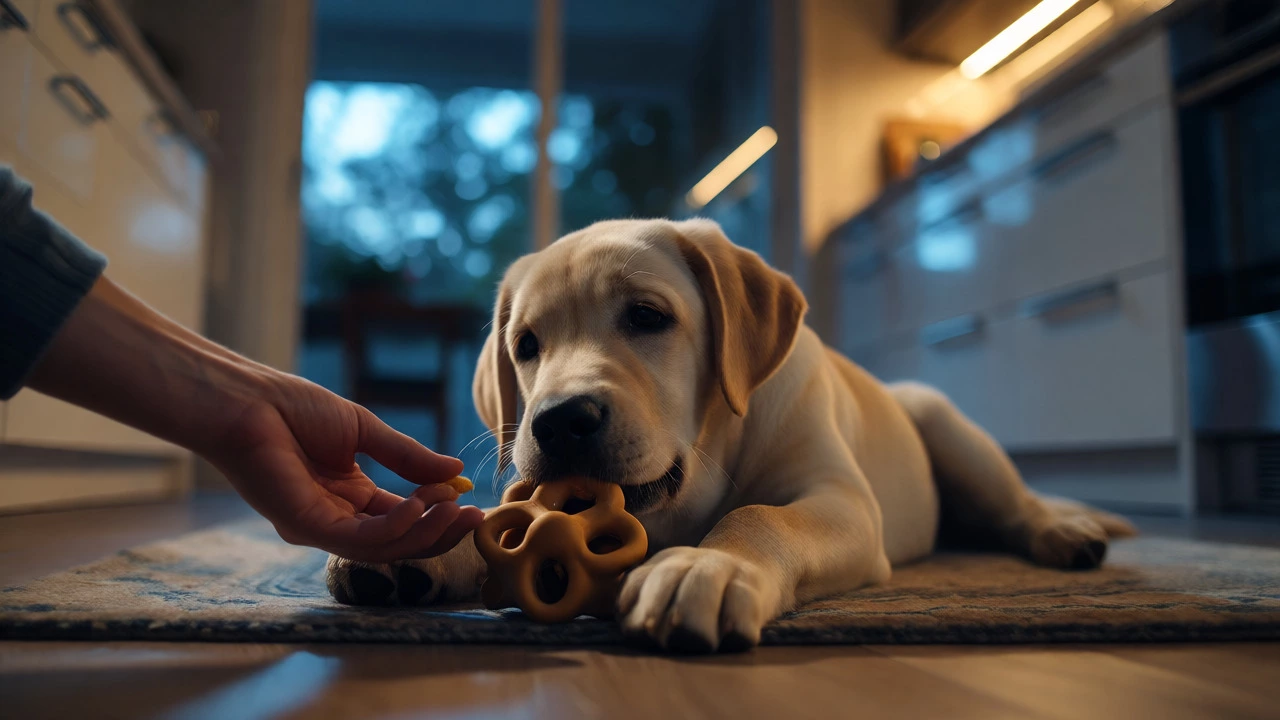
Start your routine at 7:00 PM. Offer a final potty break immediately after dinner. Remember, digestion takes time. Feeding at 5:30 PM gives them enough time to eliminate waste before sleeping. Then, switch to low-energy activities. Chew toys are excellent for this stage because chewing releases endorphins that calm the nervous system. Avoid squeaky toys or tug-of-war during this window.
Many owners make the mistake of thinking a tired dog equals a sleeping dog. But mental exhaustion is far more effective than physical exhaustion for inducing sleep. A ten-minute session of scent games-hiding treats in a snuffle mat-can tire a puppy out more effectively than an hour of walking. When they are mentally satisfied, they drift into sleep faster and stay asleep longer.
Addressing the "Too Early" Myth
Why do so many people think 8 PM is too early? It comes down to human social norms. We eat dinner at 7 PM, watch movies until 10 PM, and go to bed late. We project this schedule onto our pets. But dogs are crepuscular animals, meaning they are naturally most active at dawn and dusk. However, domesticated puppies adapt quickly to household rhythms.
If you consistently put your puppy to bed at 8 PM, they will learn that quiet time starts then. Their internal clock adjusts. Within two weeks, you will likely find that your puppy begins to yawn and head toward their bed on their own at 7:45 PM. This self-regulation is a sign of good training, not deprivation. They aren’t missing out; they are recharging.
What about the argument that they’ll be bored? Puppies do not experience boredom the way humans do. They live in the present. If they are asleep, they are content. They don’t lie awake wondering what they missed on Instagram. As long as they had adequate exercise and mental stimulation during the day, an early bedtime is a gift, not a punishment.
Troubleshooting Nighttime Wake-Ups
Even with a perfect 8 PM bedtime, some puppies will wake up. Here is how to distinguish between a genuine need and a behavioral issue.
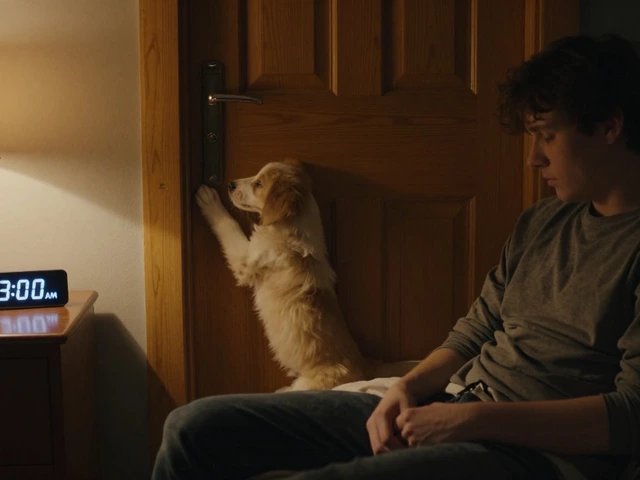
- The Potty Urgency: If your puppy whines and scratches at the door, take them out immediately. Keep the lights dim and interaction boring. No playing. Once they pee, straight back to bed. This teaches them that nighttime is for sleeping, not partying.
- Hunger: Young puppies burn calories fast. If they wake up hungry, consider splitting their food into three meals instead of two, moving the last meal slightly later (e.g., 6:30 PM) rather than adding a midnight snack, which disrupts digestion.
- Loneliness: If your puppy cries because they are alone, check your setup. Are they in a crate next to your bed? Can they hear you? Sometimes, leaving a radio on low volume or using a pheromone diffuser like Adaptil can soothe separation anxiety without resetting their sleep cycle.
If your puppy wakes up energetic and ready to play at 10 PM, you likely put them to bed too early *for their specific energy level*. Try shifting bedtime to 9 PM for a week. Monitor their behavior. If they are still waking up at 4 AM, the issue isn’t bedtime; it’s lack of daytime stimulation.
Transitioning to Adult Schedules
As your puppy approaches six months, their bladder control improves significantly. You can gradually shift bedtime later, perhaps to 9:30 or 10 PM, to match your adult life more closely. However, maintain consistency. Dogs thrive on predictability. Changing bedtime by 30 minutes every few weeks is easier on their system than a sudden jump from 8 PM to 11 PM.
By the time they reach adulthood, most dogs will sleep through the night regardless of whether you go to bed at 10 PM or 11 PM, provided they had sufficient exercise. The early start you established as a puppy builds the foundation for a lifetime of good sleep habits. You aren’t being strict; you’re being smart.
Is 8pm too early for a 3-month-old puppy?
No, 8 PM is actually an ideal bedtime for a 3-month-old puppy. At this age, they typically need 18-19 hours of sleep per day. Putting them to bed at 8 PM ensures they get enough rest for growth and allows for a manageable overnight potty break schedule. Waiting too long often leads to overtiredness and accidents.
Will my puppy wake me up too early if I put them to bed at 8 PM?
Not necessarily. While it seems logical that earlier bedtime means earlier wake-up, puppies usually sleep in cycles. If they are well-exercised and mentally stimulated during the day, they will sleep deeply. Most puppies will wake up around 6:30 AM or 7:00 AM regardless of whether they went to bed at 8 PM or 10 PM, due to natural circadian rhythms and daylight.
How many hours should a puppy sleep at night?
Puppies generally sleep 6-8 hours continuously at night once they are over 12 weeks old, though younger puppies may need one or two breaks. Total daily sleep should be 18-20 hours. The nighttime block is crucial for physical recovery, while daytime naps support brain development.
Should I feed my puppy before or after bedtime?
It is best to feed your puppy at least 2-3 hours before bedtime. This allows time for digestion and elimination. Feeding immediately before bed increases the likelihood of needing to urinate or defecate during the night, disrupting both your sleep and theirs.
What if my puppy refuses to go to bed at 8 PM?
If your puppy resists bedtime, they may be overtired or under-stimulated. Ensure they have had adequate exercise and mental enrichment earlier in the day. Create a calming pre-bed routine with low-energy activities like chewing. If they are hyperactive, try putting them in their crate or bed area quietly; they will eventually settle if they know it is sleep time.