Puppy Toy Starter Kit Builder
1. Profile Your Puppy
Select your puppy's profile and click "Build My Starter Kit" to see recommendations.
Safety & Rotation Tips
You just brought home a bundle of fur and chaos. The first thing you want to do is spoil them. You head to the pet store, eyes wide, ready to buy every squeaky hedgehog and rope knot in sight. But then you pause. How many puppy toys are actually necessary for a young dog starting their life with you? Is five enough? Do you need fifty? Or will one stuffed bear suffice until they grow up?
Here is the truth: more is not better. In fact, overwhelming a new puppy with too many options can hinder their learning process. Puppies have short attention spans and limited capacity to understand what belongs to them versus what belongs to the furniture. If everything is a toy, nothing is a toy. The sweet spot isn't about volume; it's about variety and rotation. You don't need a warehouse. You need a curated starter kit that covers specific developmental needs.
The Magic Number: Why Five Is Enough
If you had to pick a number to write on your shopping list, make it five. This might sound low, especially when you see those massive bundles online claiming to have twenty pieces. But let's look at why five works. A puppy’s mouth is changing constantly. Their teeth are coming in, their gums are sore, and their brain is trying to figure out how to interact with the world. Too many identical items create clutter, both visually and mentally.
Think of it like a child’s playroom. If a toddler has access to two hundred toys at once, they rarely play deeply with any of them. They bounce from object to object, never mastering one. Puppies are similar. By limiting the accessible toys to five distinct types, you encourage deeper engagement. You also make cleanup manageable. When you only have five toys out, you can easily inspect them for damage daily. A torn stuffing toy left unnoticed can become a choking hazard within hours.
This approach also saves money. High-quality durable chew toys designed to withstand strong jaws aren't cheap. Buying ten cheap ones that break in a week costs more than buying three high-quality ones that last months. Quality over quantity is the golden rule here.
The Essential Five: Categories That Matter
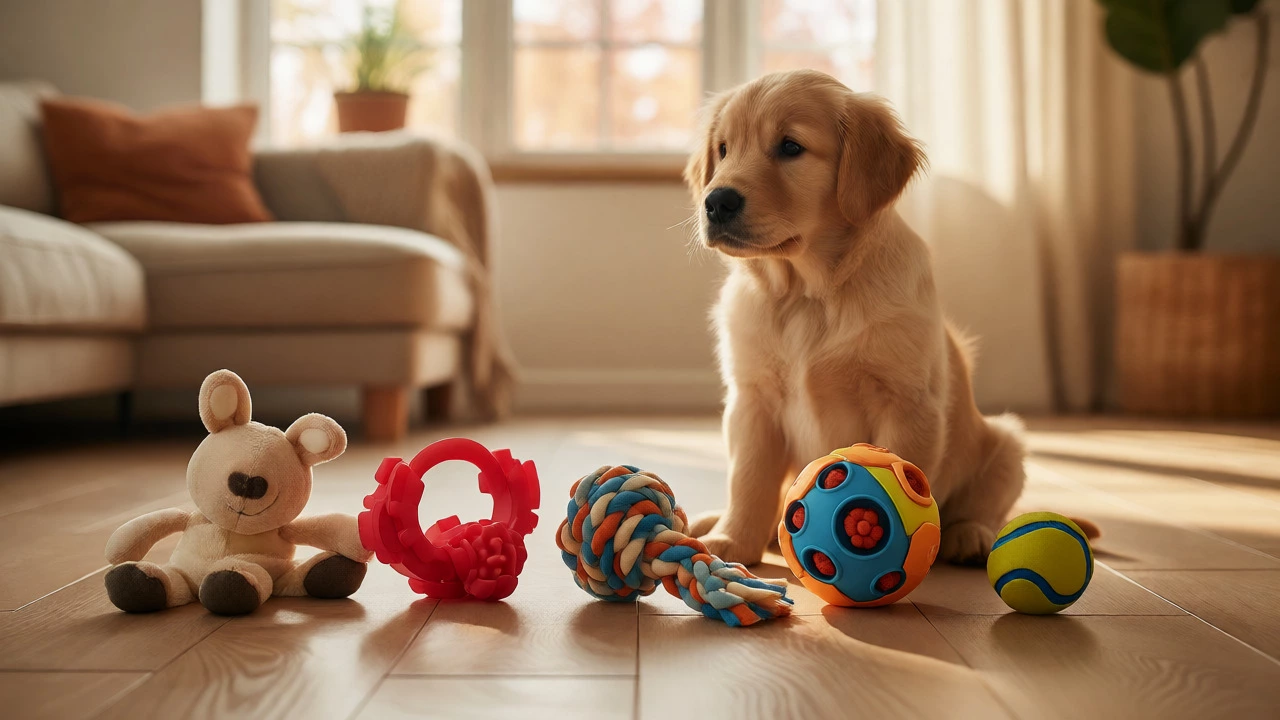
Not all toys are created equal. Each serves a different biological or behavioral purpose. Your starter kit should cover these five bases. If you miss one category, you risk leaving a need unmet, which often leads to destructive chewing on shoes or table legs.
- 1. The Comfort Toy: This is usually soft, plush, or fleece. It provides security, especially during the first few nights away from mom and littermates. Look for something washable. Hygiene matters when a puppy is drooling and sleeping on it.
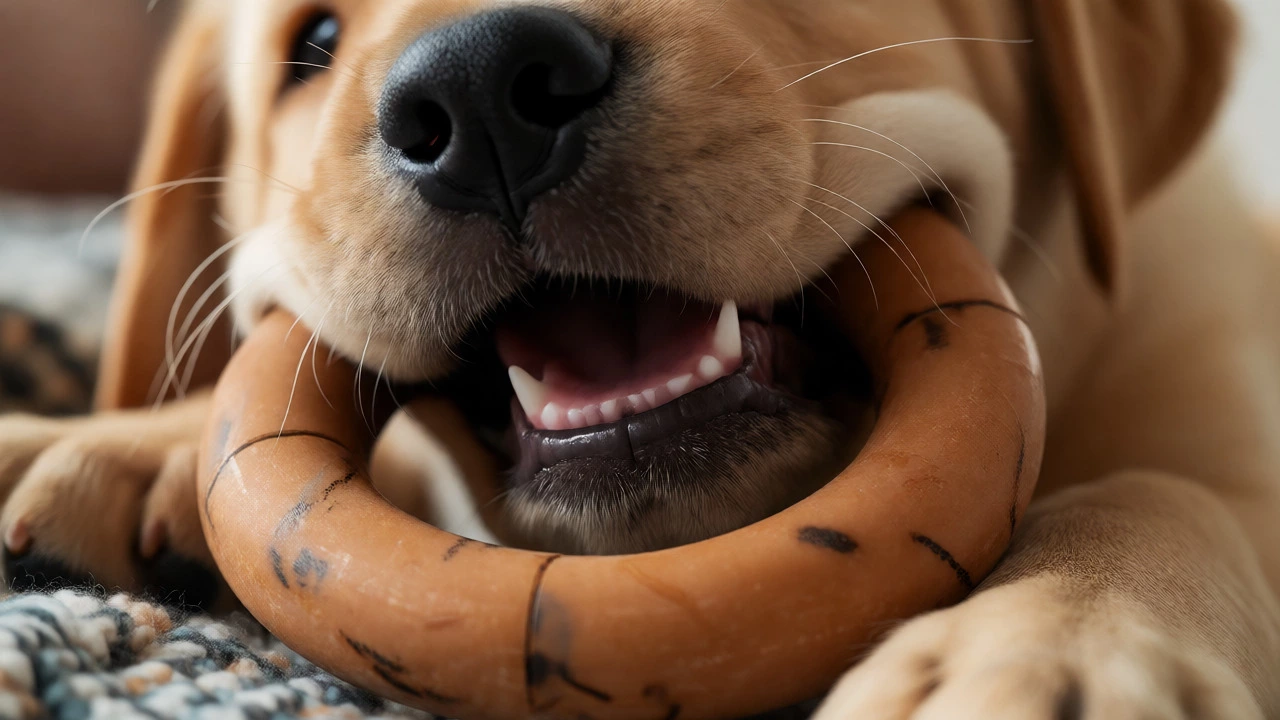
- 2. The Teething Chew: Around 3 to 6 months, adult teeth push through. This hurts. You need a rubbery or nylon-based chew that soothes gums. Avoid hard antlers or bones at this stage; they can crack baby teeth.
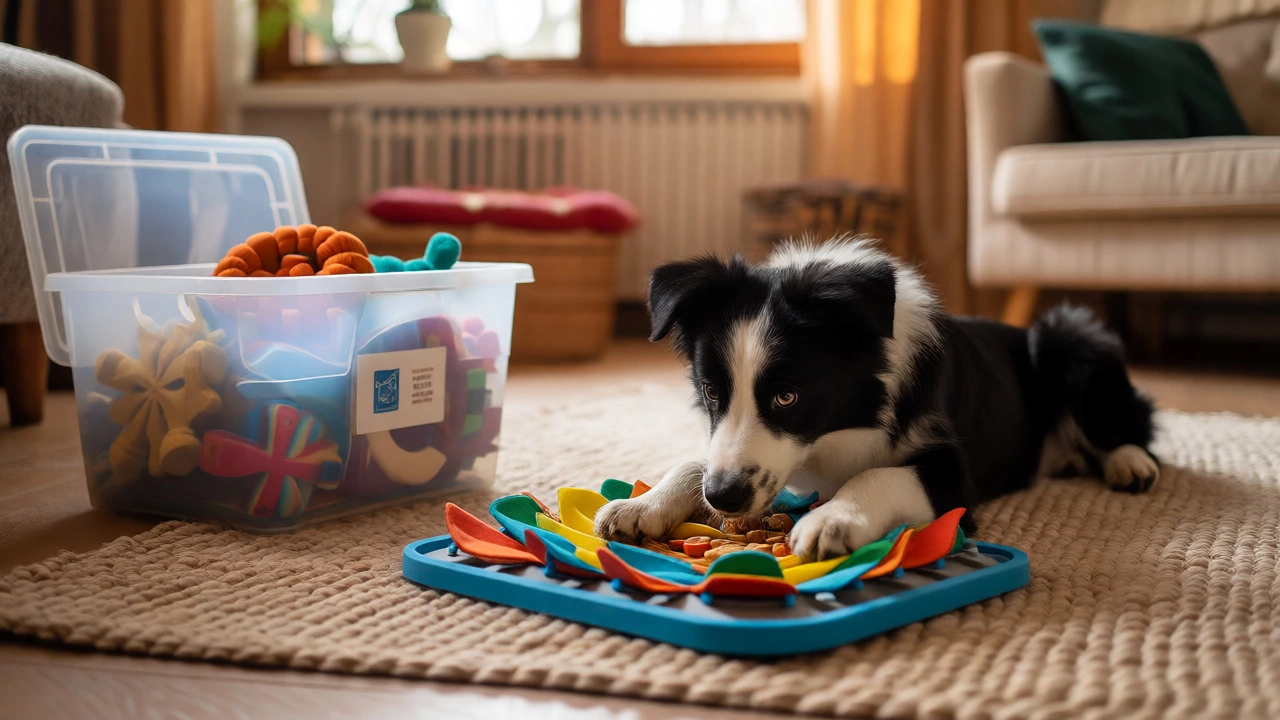
- 3. The Interactive Puzzle: Mental stimulation tires a puppy faster than physical exercise. A simple treat-dispensing ball or a snuffle mat engages their nose and brain. This helps prevent boredom-induced mischief.
- 4. The Tug Rope: Dogs have an innate drive to pull and shake. A sturdy cotton rope satisfies this instinct. It’s also great for bonding because you use it together. Just ensure it’s thick enough not to fray into strings quickly.
- 5. The Fetch Object: Even if you live in an apartment, throwing a small ball or frisbee builds coordination and burns energy. Choose something easy to grab but large enough not to be swallowed whole.
Notice there are no "novelty" toys here. No light-up balls or electronic buzzing gadgets yet. Those are distractions. Stick to the basics that build fundamental skills.
The Power of Rotation
Here is where most owners go wrong. They leave all five toys on the floor permanently. Within a week, the puppy ignores them. The solution is rotation. Keep two or three toys out at a time. Put the other two in a bin or closet. Every three to four days, swap them. Hide the old ones and bring out the "new" ones.
To a puppy, a toy they haven’t seen in a week feels brand new again. This keeps interest high without buying anything extra. It also allows you to monitor wear and tear. When you rotate a toy back in, check it. Are the seams splitting? Is the squeaker exposed? If yes, it goes in the trash, not back on the floor.
| Day Range | Active Toys | Stored Toys | Purpose |
|---|---|---|---|
| Days 1-4 | Comfort Plush, Rubber Chew | Rope, Puzzle, Ball | Soothing teething pain and providing comfort |
| Days 5-8 | Tug Rope, Puzzle Toy | Plush, Chew, Ball | Engaging mental energy and bonding |
| Days 9-12 | Fetch Ball, Durable Chew | Plush, Rope, Puzzle | Physical exercise and independent play |
Safety First: What to Avoid
Before you buy, inspect. Puppies explore the world with their mouths, and they don't know the difference between plastic and poison. Some materials are dangerous. Cheap vinyl toys can contain phthalates or BPA. If a toy smells strongly of chemicals right out of the package, skip it. Natural rubber or food-grade silicone is safer.
Size matters critically. A common mistake is buying a "small dog" toy for a large breed puppy. A Labrador puppy looks big, but their jaw strength is still developing. However, their swallowing reflex is powerful. If a toy fits entirely inside their mouth, it’s a choking hazard. The general rule: the toy should be larger than the space between their canine teeth. If they can fit the whole thing in their maw, take it away.
Also, watch out for parts. Eyes, noses, and buttons glued onto plush toys are notorious for being ripped off and eaten. These small plastic bits can cause intestinal blockages requiring surgery. Look for embroidered features instead of plastic ones. It’s less cute, but far safer.
Reading Your Puppy’s Play Style
Every puppy is different. Some are destroyers. Others are gentle nibblers. Observe yours for the first week. Do they try to rip things apart? Then prioritize durability. Look for toys labeled "indestructible," though keep in mind that no toy is truly indestructible. KONG Classic toys or Goughnuts rings are popular choices for heavy chewers because they offer a lifetime guarantee against destruction.
Do they carry things around gently? Then plushies are fine. Do they chase moving objects? Focus on balls and flirt poles. Tailoring your five toys to their personality prevents frustration. If you give a destroyer a delicate squeaky mouse, they’ll shred it in minutes and feel defeated. Give them a tough rubber ring, and they’ll engage happily.
Consider the environment too. If you live in a city apartment with concrete floors, avoid hard plastic balls that skitter loudly and hurt paws. Soft rubber or felt-covered balls work better indoors. If you have a garden, durable outdoor toys that survive mud and rain are worth the investment.
When to Add More
So, you started with five. When do you get more? Not based on time, but on loss. When a toy breaks beyond repair, replace it. Don’t accumulate extras. If your puppy loses interest in a specific type-say, they hate tug ropes-swap it for a different interactive game rather than adding another rope.
As they mature into adults (around 12-18 months), you might expand slightly. Adult dogs may enjoy more complex puzzles or specialized training tools. But even adult dogs thrive on simplicity. A dog with twenty toys scattered across the living room is often less stimulated than a dog with three carefully selected, rotated favorites.
Remember, the goal isn't to entertain them every second of the day. Puppies need rest. Overstimulation leads to hyperactivity and poor sleep. Toys are tools for enrichment, not pacifiers. Use them during active play sessions or quiet chew times, then put them away. This structure teaches impulse control-a valuable skill for house training and manners.
Is it bad to leave all my puppy's toys out at once?
Yes, generally it is counterproductive. Leaving all toys out reduces novelty and makes it harder for the puppy to focus. It also increases the risk of accidental ingestion of small parts because supervision becomes difficult with so many items on the floor. Rotating 2-3 toys at a time keeps interest high and safety manageable.
What material is safest for a teething puppy?
Natural rubber and food-grade silicone are excellent choices. They are flexible enough to soothe sore gums without cracking teeth, unlike hard nylon or antlers. Ensure the material is non-toxic and free from BPA, PVC, and phthalates. Always supervise initial use to ensure they aren't shredding and swallowing chunks.
How often should I replace my puppy's toys?
There is no fixed schedule. Replace toys immediately upon signs of wear such as fraying, splitting seams, or exposed stuffing/squeakers. For heavy chewers, this might be weekly. For gentle players, it could be monthly. Regular inspection during rotation is key to catching hazards early.
Can I give my puppy human household items as toys?
Proceed with caution. Items like socks or slippers can be confusing because they smell like you and resemble forbidden chew targets (shoes). If used, designate specific "old" items clearly distinct from your footwear. Better yet, stick to dedicated dog toys to avoid mixed signals during training.
Do expensive toys last longer than cheap ones?
Often, yes. Premium brands typically use higher-density rubber or reinforced stitching. While the upfront cost is higher, they resist destruction better, reducing waste and replacement frequency. However, always match the toy to your puppy's chewing style; an expensive plush toy will still fail if given to a power chewer.