Dog Flight Ear Pain Risk Calculator
Flight Details
Enter details to see risk assessment.
You’ve booked the flight. The carrier is ready. Your dog is excited-or maybe terrified-but you’re worried about one specific thing: their ears. It’s a nagging thought that keeps many pet owners up at night. Do dogs’ ears actually hurt when flying? The short answer is yes, they can. But it’s not because planes are inherently cruel to canine anatomy. It’s because of physics, specifically rapid changes in air pressure.
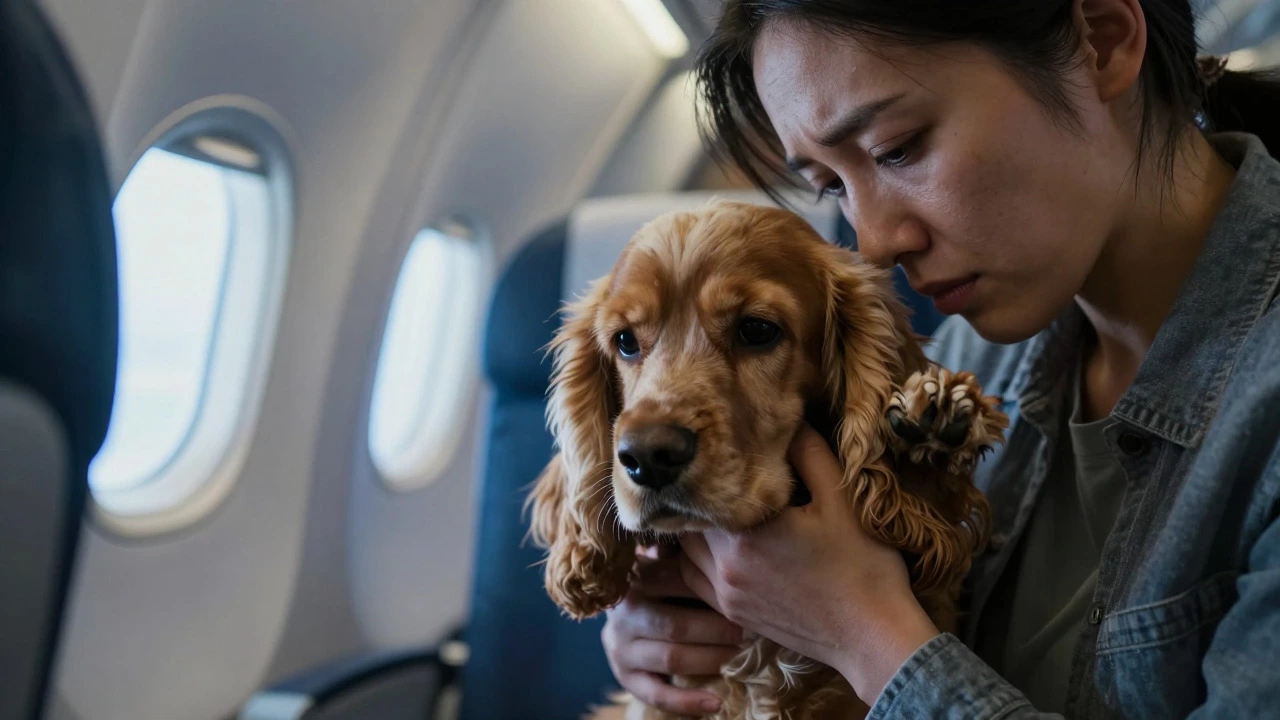
If you’ve ever felt your own ears pop during takeoff or landing, you know the sensation. For dogs, this process is similar but often more uncomfortable because they can’t tell you what’s wrong. They just whine, paw at their heads, or look distressed. Understanding why this happens and how to prevent it turns a potentially painful experience into a manageable one.
Why Airplane Pressure Affects Dogs
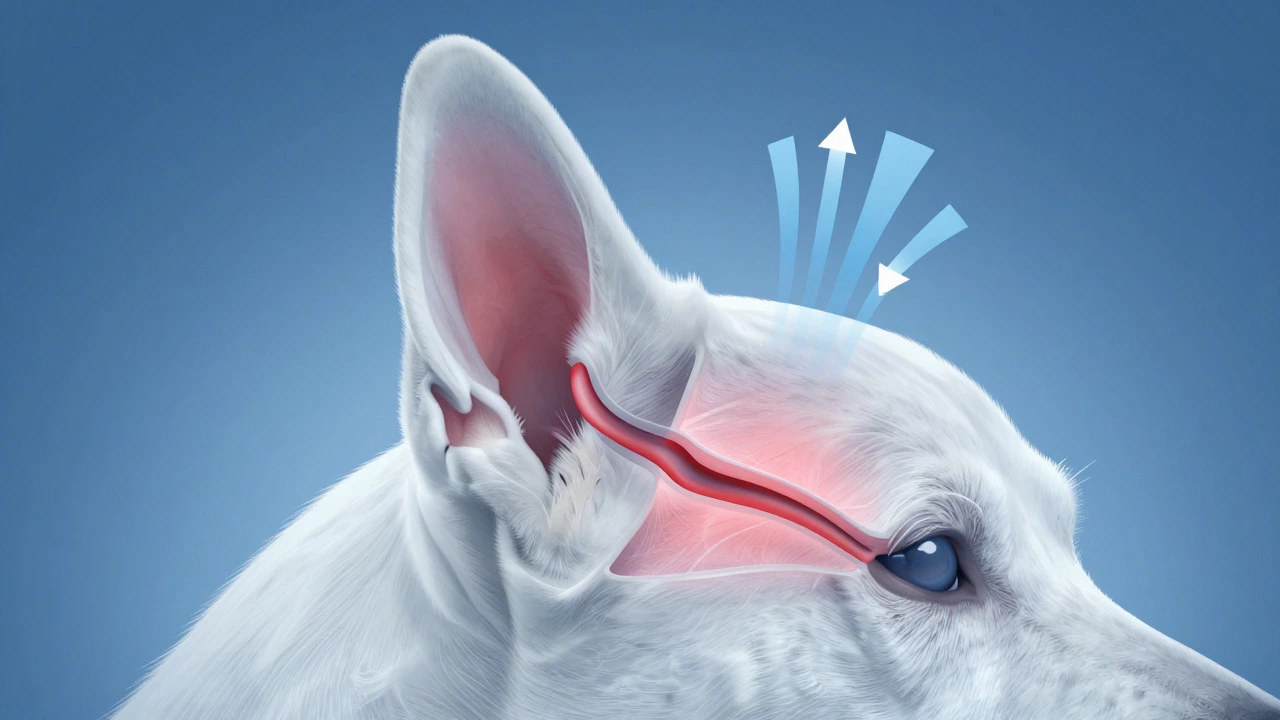
To understand why your dog might be in pain, we need to look at how hearing works. Both humans and dogs have an Eustachian tube, which is a narrow channel that connects the middle ear to the back of the throat. This tube acts like a pressure release valve. Its job is to equalize the air pressure inside the middle ear with the pressure outside the body.
When a plane climbs, the cabin pressure drops. When it descends, the pressure increases rapidly. If the Eustachian tube doesn’t open frequently enough to let air in or out, a vacuum or buildup occurs behind the eardrum. This stretches the eardrum, causing pain, muffled hearing, and sometimes even fluid leakage or bleeding in severe cases.
Dogs are particularly susceptible for a few reasons:
- Anatomy: Some breeds, especially those with long, floppy ears like Spaniels or Cocker Spaniels, may have slightly different angles in their Eustachian tubes compared to upright-eared breeds like German Shepherds.
- Silence: Dogs don’t swallow as frequently as humans do when they are stressed or sleeping. Swallowing is the primary mechanism that opens the Eustachian tube.
- Stress: Anxiety causes muscle tension, including in the jaw and throat, which can make it harder for the tube to open naturally.
Signs Your Dog Is Experiencing Ear Pain
Since your dog can’t say "My ears are popping," you have to read their body language. Recognizing these signs early allows you to intervene before the discomfort becomes severe pain.
During ascent (takeoff), symptoms are usually mild because pressure equalization is easier as the air thins. However, during descent (landing), the pressure builds up quickly, and this is where most problems occur. Watch for:
- Head shaking: Rapid, repetitive shaking of the head is a classic sign of inner ear imbalance or pressure pain.
- Pawing at the ears: If your dog is scratching or rubbing their ears against the side of the carrier, they are trying to relieve internal pressure.
- Whining or vocalizing: Sudden crying during the final approach phase is often a direct response to ear pain.
- Balancing issues: In extreme cases, pressure damage can affect the vestibular system, causing your dog to tilt their head or stumble when they stand up.
- Refusal to eat treats: Chewing and swallowing help pop ears. If a dog refuses food due to stress, they lose a natural tool for relief.
Cabin vs. Cargo: Does It Matter?
Where your dog sits on the plane plays a huge role in ear comfort. There is a significant difference between traveling in the cabin and the cargo hold.
| Feature | In-Cabin Travel | Cargo Hold (Pressurized) |
|---|---|---|
| Pressure Control | Same as passengers; gradual changes | Pressurized, but temperature fluctuations can cause condensation and discomfort |
| Owner Access | You can offer treats and water immediately | No access until arrival; dog must self-regulate |
| Stress Levels | Lower if owner is present | Higher due to isolation, noise, and handling |
| Ear Pain Risk | Moderate (manageable by owner) | High (no intervention possible during flight) |
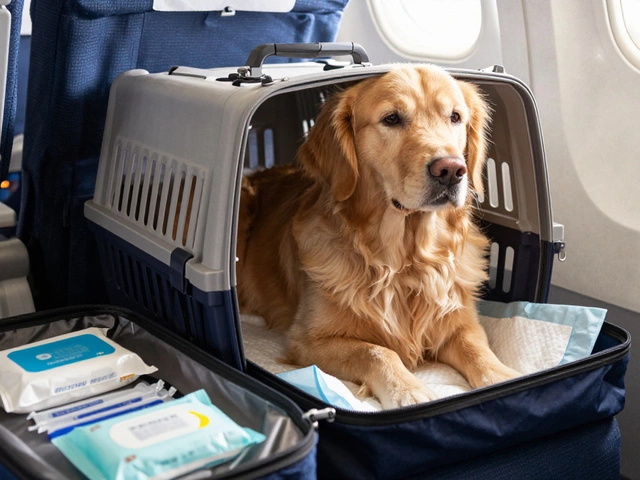
If your dog is small enough to fit under the seat, always choose in-cabin travel. You can actively help them equalize pressure. If they must go in cargo, ensure the airline uses modern, pressurized holds. Older aircraft or non-pressurized sections can lead to severe barotrauma (pressure injury). Always check the airline’s specific policies regarding breed restrictions and temperature guarantees.
How to Prevent Ear Pain Before Takeoff
Preparation starts days before the flight. You want your dog’s Eustachian tubes to be as flexible and responsive as possible. Here are proven strategies to reduce risk.
1. Veterinary Check-Up
Before booking, visit your vet. An existing ear infection makes pressure changes agonizing. Even a mild inflammation can swell the Eustachian tube shut. Ask your vet to check for wax buildup, yeast, or bacteria. If your dog has a history of ear issues, discuss preventative anti-inflammatory medication.
2. Train the "Pop" Reflex
You can train your dog to associate eating with ear popping. Start practicing at home. Give high-value treats and ask them to chew slowly. Over time, they will learn that swallowing helps clear their ears. This conditioning is invaluable during the flight.
3. Choose the Right Timing
Avoid feeding a full meal right before boarding to prevent motion sickness, but don’t leave them hungry either. A light snack two hours before departure ensures they have something to chew on during the critical pressure change phases.
Active Relief Strategies During the Flight
The goal during takeoff and landing is to force your dog to swallow, yawn, or chew. These actions mechanically open the Eustachian tubes. Here is how to execute this effectively.
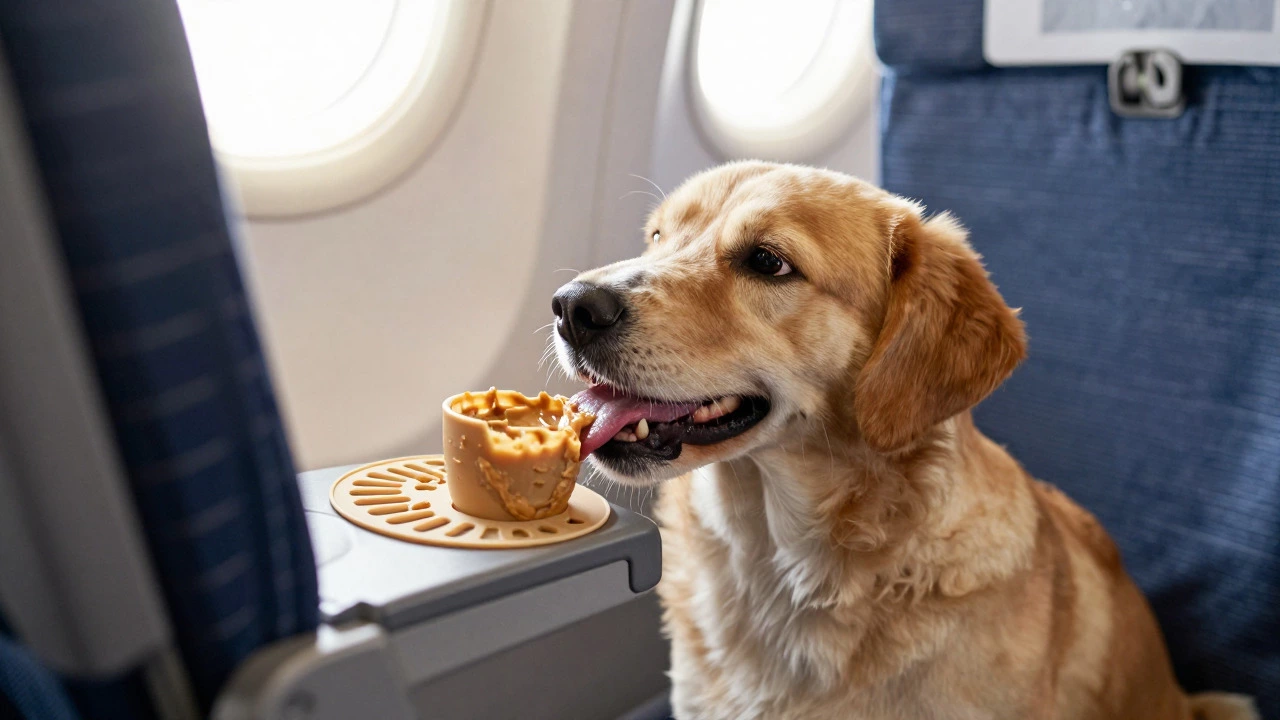
- Use High-Value Treats: Bring soft, smelly treats like peanut butter (xylitol-free), cheese, or commercial training rewards. Offer them frequently during the first 20 minutes of ascent and the last 30 minutes of descent.
- Lick Mats: Spread peanut butter or yogurt on a lick mat and attach it to the side of the carrier. Licking triggers a continuous swallowing reflex, which is far more effective than occasional chewing.
- Chew Toys: If your dog isn’t interested in food due to anxiety, offer a durable rubber toy filled with paste. The act of gnawing moves the jaw and helps equalize pressure.
- Stay Calm: Dogs mirror their owner’s energy. If you are anxious, they become tense, tightening the muscles around their throat. Speak in a low, soothing voice and stroke their head gently.
For cargo travelers, pack a Kong-style toy stuffed with frozen peanut butter. As the treat melts, your dog will keep licking, providing continuous pressure relief without your assistance.
What About Medication?
Many owners wonder if they should give their dog human decongestants or antihistamines. The answer is generally no, unless prescribed by a vet. Human medications can have dangerous side effects in dogs, ranging from sedation to toxicity.
However, some vets recommend Benadryl (Diphenhydramine) for its mild sedative effect, which can reduce anxiety-induced muscle tension. Always calculate the correct dosage based on your dog’s weight and consult your veterinarian first. Note that Benadryl dries out mucous membranes, which can sometimes make Eustachian tube function *worse* by thickening secretions. It’s a trade-off: less anxiety versus potentially thicker ear fluids.
Natural alternatives include L-Theanine or calming chews designed for pets. These help lower overall stress levels without affecting physical ear mechanics negatively.
After the Flight: Monitoring for Issues
Once you land, keep an eye on your dog for 24 to 48 hours. Most pressure discomfort resolves quickly once the environment stabilizes. However, watch for lingering signs of trouble:
- Continued head tilting
- Blood or pus draining from the ears
- Loss of balance or circling
- Extreme sensitivity to touch around the ears
If any of these persist, see a vet immediately. Severe barotrauma can rupture the eardrum, leading to secondary infections that require antibiotics or ear cleaning solutions.
Frequently Asked Questions
Do all dogs feel ear pain when flying?
Not necessarily. Some dogs have very efficient Eustachian tubes and equalize pressure effortlessly. Others, particularly brachycephalic breeds (like Bulldogs) or dogs with pre-existing ear conditions, are much more prone to pain. Every dog reacts differently, so observing your specific pet's behavior is key.
Is it better for dogs to fly during the day or night?
Daytime flights are generally recommended. Cargo holds are less likely to experience extreme temperature fluctuations during the day, and staff are more alert. Additionally, if your dog is in the cabin, daylight helps reduce their disorientation and anxiety.
Can I use human earplugs for my dog?
No. Human earplugs block sound but do not equalize pressure. In fact, blocking the ear canal can trap pressure changes inside, making the pain worse. Specialized aviation ear protection exists for pilots, but it is rarely practical or safe for dogs. Focus on swallowing techniques instead.
How long does ear pain last after landing?
In most healthy dogs, ear discomfort subsides within 30 minutes to an hour after landing as the pressure equalizes completely. If your dog continues to shake their head or seem unbalanced after several hours, consult a veterinarian to rule out a ruptured eardrum or infection.
Are certain dog breeds more at risk for ear injuries?
Yes. Brachycephalic breeds (Pugs, French Bulldogs) have narrower airways and Eustachian tubes, making pressure equalization difficult. Long-eared breeds (Cocker Spaniels, Basset Hounds) are prone to ear infections, which exacerbate pressure pain. Upright-eared breeds typically handle pressure changes better.