
Cat Food Label Analyzer
Paste your food ingredients to see if they meet biological needs
Analysis Results
The Truth About What Your Cat Actually Needs
Ever wondered if your cat actually likes that expensive kibble you buy, or if they're just eating it because it's there? Most of us want the absolute best for our pets, but the "best" food isn't a one-size-fits-all brand. Your cat is an obligate carnivore. That's a fancy way of saying they physically cannot survive without meat. Unlike dogs, who can handle a bit of veg or grain, cats need specific nutrients found only in animal tissue to keep their hearts beating and their coats shiny.
The real challenge is that the pet food aisle looks like a chemistry lab. You've got grain-free, limited ingredient, organic, and prescription diets. But if you strip away the marketing, the core goal is simple: high protein, moderate fat, and almost zero carbs. If you feed them too many fillers-like corn or soy-you're basically feeding them human snacks, which leads to weight gain and sluggishness.
Quick Guide: What to Look For
- First Ingredient: Should always be a named meat (like "Chicken" or "Salmon"), not a vague "Meat By-products".
- Moisture: Cats have a low thirst drive. Water in food is a lifesaver for their kidneys.
- Taurine: This essential amino acid is non-negotiable. Without it, cats can go blind or develop heart failure.
- Low Carb: Avoid foods where the first three ingredients include corn, wheat, or rice.
Wet Food vs. Dry Food: The Great Debate
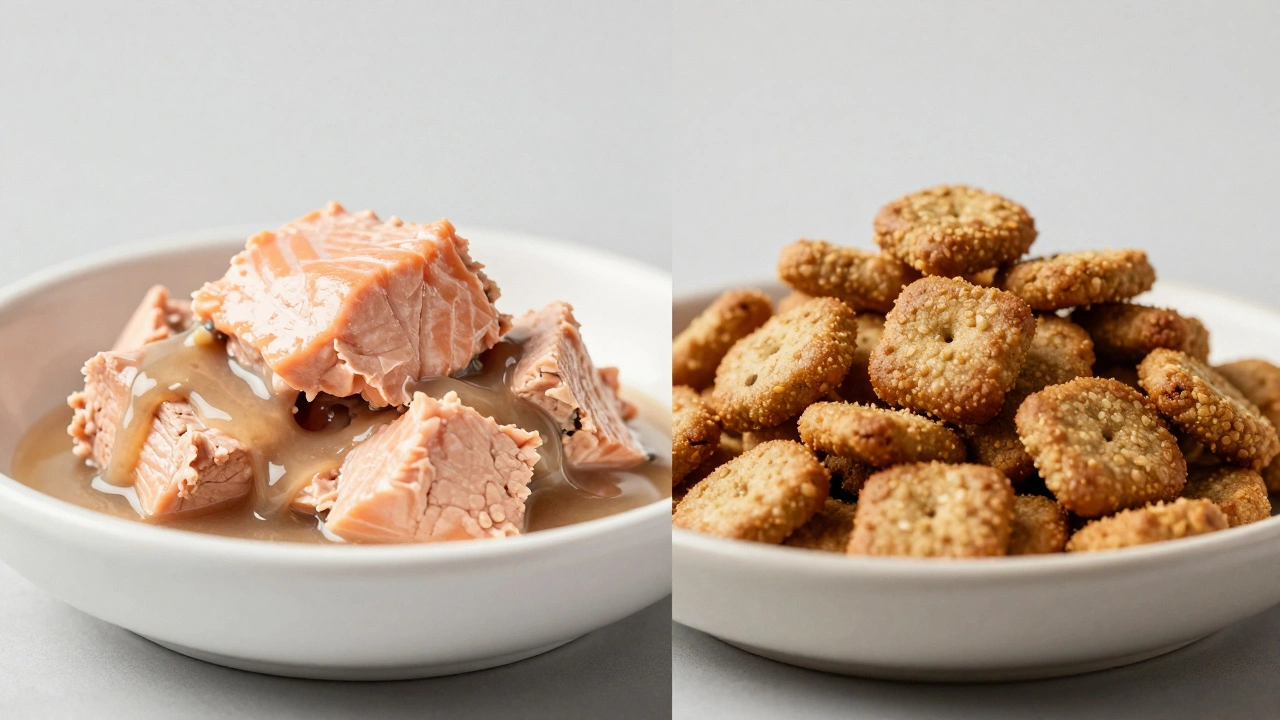
If you've spent any time in cat owner circles, you know the war between "kibble people" and "wet food purists." Here is the reality: Wet Cat Food is a moisture-rich diet usually served in cans or pouches that closely mimics a cat's natural prey. Because it's about 70-80% water, it keeps their kidneys flushed and prevents crystals from forming in the bladder.
On the other hand, Dry Cat Food, or kibble, is essentially a concentrated biscuit. While it's convenient and can help keep teeth cleaner by scraping off some plaque, it's often dangerously low in moisture and high in carbohydrates. Think of it like this: feeding only dry food is like a human living on crackers. You'll survive, but you'll be perpetually dehydrated.
| Feature | Wet Food | Dry Food |
|---|---|---|
| Hydration | Excellent | Poor |
| Protein Density | High | Variable (Often lower) |
| Convenience | Low (Messy/Shorter shelf life) | High (Pour and go) |
| Cost | More expensive per meal | Cheaper per pound |
Matching Food to Your Cat's Life Stage
A tiny kitten has completely different needs than a 12-year-old cat with kidney issues. If you feed a kitten "adult's food," they might miss out on the calories and fats needed for brain and bone development. Kitten Food is specifically formulated with higher calorie counts and extra DHA (an omega-3 fatty acid) to support cognitive growth.
Once they hit adulthood, the goal shifts to weight maintenance. Many adult cats become "couch potatoes," and those calorie-dense kitten meals quickly turn into a belly that drags on the floor. This is where you focus on best cat food options that prioritize lean protein over fats.
For seniors, the conversation changes again. Older cats often struggle to absorb proteins or have sensitive kidneys. You'll want to look for foods that are easier to digest and perhaps lower in phosphorus to protect their renal function. If your old cat stops eating, it might not be pickiness-they might actually have lost some sense of smell, meaning you need a "stinkier," more aromatic wet food to entice them.
Understanding the Label: Avoiding the Marketing Traps
Companies love to use words like "Natural" or "Holistic." Here is a secret: these words have almost no legal meaning in the pet food industry. They are designed to make you feel good about the purchase, not to tell you what's in the bag. To find the real value, you have to look at the ingredient list, which is listed by weight.
If you see "Corn Gluten Meal" or "Wheat Flour" in the top five ingredients, put it back. Your cat doesn't need it. Instead, look for Animal Protein, which should be the star of the show. Whether it's chicken, turkey, beef, or whitefish, the protein should be recognizable. If it says "Meat Meal," it's usually a concentrated powder of various animal parts. It's not the worst thing in the world, but it's not as high-quality as a whole fillet or breast of meat.
Watch out for "artificial preservatives" like BHA or BHT. These are used to keep the fats in dry food from going rancid, but some veterinary studies suggest they can be harmful over long-term use. Look for natural preservatives like Vitamin E (tocopherols) instead.
The Dangers of "Home-Made" Diets
It's tempting to just boil some chicken and rice for your cat. It seems healthier and more "pure" than a can of processed food. However, this is where many owners make a dangerous mistake. Meat alone is not a complete diet. If you feed a cat only chicken, they will eventually develop a deficiency in taurine and calcium.
A homemade diet must be balanced with a precise mix of vitamins and minerals. This is why Commercial Cat Food, when formulated by veterinary nutritionists, is safer. It ensures that every single bite contains the exact micro-nutrients required for a cat to thrive. If you are dead-set on raw or homemade, you absolutely must work with a veterinary nutritionist to create a supplement mix, otherwise, you're risking long-term health crises.
Practical Feeding Tips for Every Day
How you feed is almost as important as what you feed. Many of us dump a giant bowl of kibble and leave it there all day. This leads to overeating and can actually make your cat lose interest in their food because it's always available and potentially stale.
Try a "mixed feeding" approach. Give them a small amount of high-quality dry food for crunch and convenience, but provide at least one or two meals of wet food per day. This ensures they get the hydration they need while satisfying their instinct to chew. If your cat is prone to "scarfing" their food and then throwing it back up, consider a slow-feeder bowl or a puzzle toy. It slows them down and gives them a mental challenge, mimicking the hunt.
Also, don't forget the water. A dripping water fountain is often more attractive to cats than a stagnant bowl of water. They are instinctively drawn to running water, which encourages them to drink more and further protects their urinary tract.
Can cats be vegetarians?
No. Cats are obligate carnivores. They require nutrients like taurine, arachidonic acid, and vitamin A that are only found in animal tissues. Attempting to feed a cat a vegetarian or vegan diet can lead to severe health issues, including blindness and heart failure.
Is grain-free food actually better for cats?
Since cats don't naturally eat grains, grain-free options often align better with their biology. However, the "grain-free" label is sometimes used to hide cheap legume substitutes (like peas or lentils) that aren't necessarily better. Focus on the total carbohydrate count rather than just the absence of grain.
How often should I change my cat's food brand?
Avoid sudden changes. Switching food overnight can cause severe stomach upset or diarrhea. Always transition slowly over 7-10 days by mixing the old food with the new food, gradually increasing the percentage of the new food each day.
Why does my cat refuse to eat certain wet foods?
Cats are extremely sensitive to texture and smell. Some prefer "pâté" while others want "chunks in gravy." Additionally, some cats are sensitive to certain proteins (like fish) or the smell of specific preservatives. Experimenting with a few different textures usually solves this.
Do I need to feed my indoor cat different food than an outdoor cat?
Yes, generally. Indoor cats are typically less active and more prone to obesity. "Indoor' formulas often have slightly fewer calories and more fiber to help them feel full without gaining excess weight.
Next Steps for Your Cat's Diet
If you're not sure where to start, start by reading the back of your current bag. If the first ingredient isn't meat, it's time for a change. If you have a cat with a specific medical condition, like diabetes or chronic kidney disease, skip the general store shelves and ask your vet for a prescription diet. Those are formulated to treat a condition, not just provide calories.
For a healthy adult cat, the best move is to introduce more wet food into their routine. Start with one teaspoon of wet food mixed into their kibble and slowly increase it. You'll likely see an improvement in their coat quality and energy levels within a few weeks. Just keep an eye on their weight-if they start getting too chunky, trim the kibble, not the wet food.