Puppy Alone-Time Calculator
Enter Details
Results
Enter details to see if your schedule works.
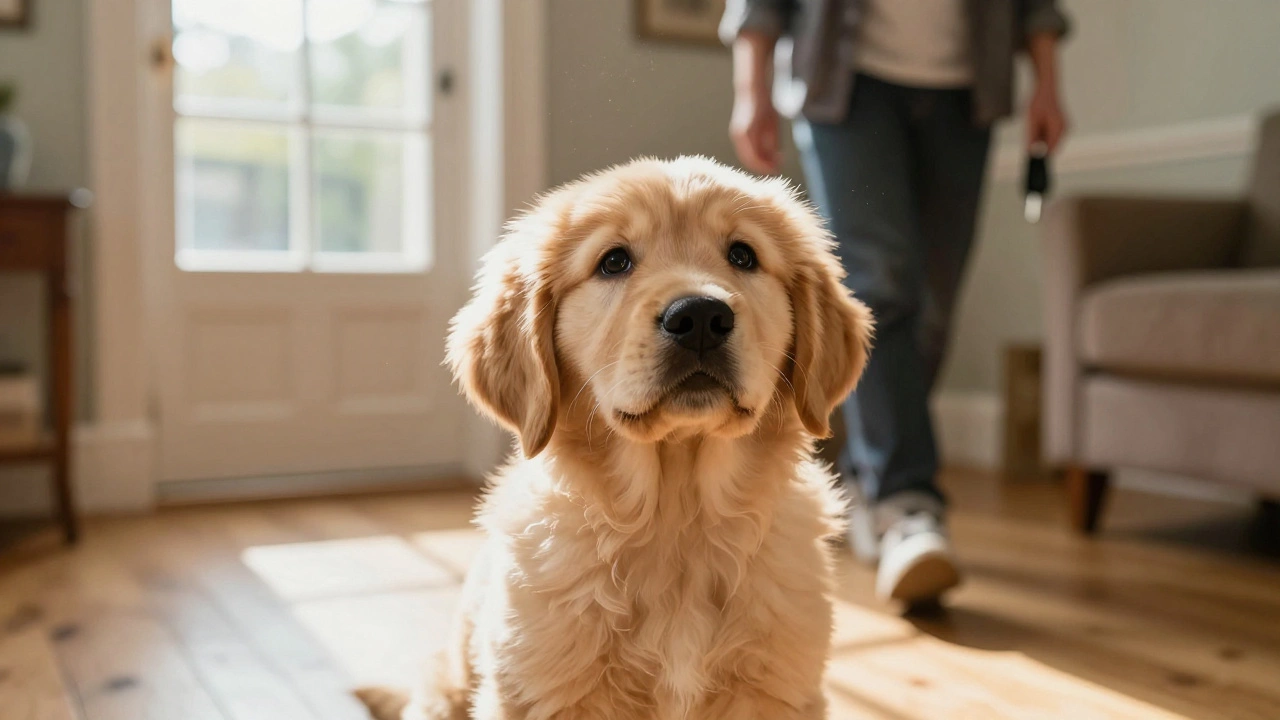
It is 6:30 AM. You have just finished your morning coffee, checked your emails, and prepared for a full day at the office. Your new puppy, a bundle of energy with eyes too big for its face, looks up at you as you grab your keys. The question hits you hard: can I leave a puppy alone for 8 hours? It is a scenario that haunts almost every new dog owner who works a standard nine-to-five job. The short answer is no. Leaving a young puppy alone for eight hours is not just difficult; it is often cruel and physically harmful to the animal.
Puppies are not miniature adults. They are biological work-in-progresses with tiny bladders, developing social skills, and an intense need for connection. If you leave a six-month-old or younger pup alone for a full workday, you are setting them up for failure. This isn't about being a perfect owner; it is about understanding canine biology. A general rule of thumb in the veterinary community is that a puppy can hold their bladder for one hour per month of age, plus one. So, a three-month-old puppy can physically wait four hours maximum. Eight hours is double that limit. The result is usually a mess on your floor and a stressed, anxious dog.
Is it ever okay to leave a puppy alone for 8 hours?
Generally, no. Puppies under six months should not be left alone for more than 2-4 hours. Older puppies (6-12 months) might manage 4-6 hours if properly trained, but 8 hours is still excessive and risky for their physical and mental health. Adult dogs can typically handle 8 hours, but puppies cannot.
The Biological Reality: Bladder Control and Digestion
To understand why eight hours is problematic, we need to look at physiology. A puppy's digestive system is fast. Food moves through their gut quickly, meaning they need to eat and eliminate frequently. If you feed a puppy before leaving them for eight hours, they will likely need to go out within two hours. If you don't feed them, they may become hypoglycemic (low blood sugar), which is dangerous for small breeds like Chihuahuas or Yorkies.
Consider the breed factor. Large breeds like Great Danes or Golden Retrievers have larger capacities than small breeds like Pomeranians. However, even a large-breed puppy has limited control over their sphincter muscles until they are older. In Bristol, where many of us live in apartments or terraced houses, the temptation to "just let them go in the garden" might arise. But relying solely on a garden run without supervision can lead to accidents inside when the puppy gets distracted or tired. Consistency is key. You want to teach them that going outside is the only place to relieve themselves, not that the living room rug is an acceptable backup plan.
If you are considering adopting, remember that this stage is temporary but critical. It sets the foundation for your relationship. If you start with unrealistic expectations, you build resentment. If you start with realistic planning, you build trust. For those who find themselves needing specific resources while navigating life changes, such as finding companionship during busy periods, there are various directories available online, including this directory, though for your pet, you need a different kind of support system entirely.
Mental Health: Separation Anxiety Before It Starts
Physical needs are only half the battle. The mental toll of isolation on a puppy is significant. Puppies are pack animals. In the wild, being alone means vulnerability to predators. When you leave a puppy alone for eight hours, you trigger their survival instincts. This can manifest as destructive behavior-chewing baseboards, tearing apart cushions, or digging at doors. This isn't spite; it is panic.
Separation anxiety often begins in these early months. If a puppy learns that "owner leaves = extreme stress," that pattern becomes hardwired. By the time they are adults, you may be dealing with a dog that howls continuously, soils themselves out of fear, or injures themselves trying to escape. Preventing this requires gradual desensitization. Start by leaving them alone for five minutes, then ten, then thirty. Reward calm behavior when you return. Never make a huge fuss upon coming home, as this reinforces the idea that your departure and return are major emotional events.
The Role of Puppy Toys in Managing Solitude
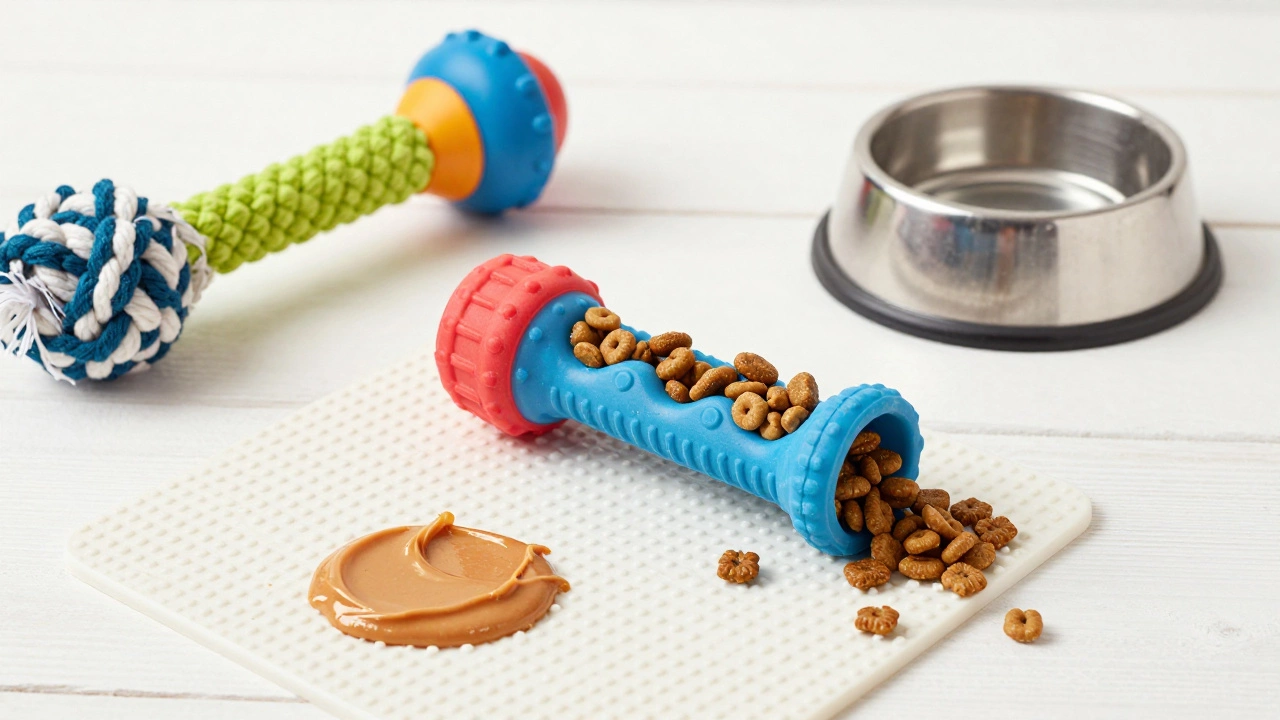
You cannot replace human interaction with toys, but the right tools can make shorter absences manageable. When discussing puppy toys that serve as essential distractions and mental stimulation devices for young dogs, quality matters more than quantity. A pile of cheap plastic balls will lose its appeal in twenty minutes. You need items that engage their brain and satisfy their chewing instincts.
- Lick Mats: Spread peanut butter (xylitol-free) or yogurt on a textured mat. Licking is calming for dogs and can keep them occupied for 15-20 minutes.
- Frozen Kongs: Stuff a rubber Kong with kibble, wet food, and broth, then freeze it. This provides a long-lasting challenge that keeps jaws busy and minds focused.
- Puzzle Feeders: These require the puppy to manipulate pieces to get treats, turning mealtime into a mental workout.
- Rope Toys: Good for gentle chewing, but always supervise as strings can be swallowed.
Rotate these toys. If you leave all of them out every day, the novelty wears off. Keep some in a drawer and swap them weekly. This keeps the environment interesting. Remember, toys are a supplement, not a substitute, for exercise and socialization. A tired puppy is a good puppy, but a mentally stimulated puppy is a happy one.
Practical Solutions for the Working Owner
If you must work eight hours, you need a plan. Relying on luck is not a strategy. Here are the most effective options for ensuring your puppy's well-being during the workday:
- Hire a Dog Walker: This is the gold standard. Have someone come mid-day to let the puppy out, play for 20 minutes, and provide social interaction. Services like Rover or local walkers in your area can fit into your schedule.
- Pet Sitter Drop-In: Similar to a walker, but they might stay for longer, providing more companionship.
- Doggy Daycare: Some facilities accept puppies as young as 16 weeks (after vaccinations). This provides socialization and exercise. However, ensure the facility is reputable and has low ratios.
- Flexible Work Arrangements: Can you start earlier and finish earlier? Can you take a mid-day break to walk the dog? Even a one-hour break makes an eight-hour block into two four-hour blocks, which is much more manageable.
- Family or Friends: Ask if someone can pop by for a quick potty break. Most people love helping with puppies, so don't hesitate to ask.
| Option | Cost | Pros | Cons |
|---|---|---|---|
| Dog Walker | Medium | Exercise, potty break, human interaction | Must schedule consistently |
| Doggy Daycare | High | Socialization, full-day care | Expensive, potential for illness spread |
| Flexible Work | Low | No extra cost, bonding time | Not all jobs allow this |
| Friend/Family | Low/Free | Trusted person, flexible | Inconvenience to others |
Crate Training: Safety vs. Confinement
Crate training is often misunderstood. A crate should be a safe den, not a prison. If you use a crate, it must be the right size. Too big, and the puppy will sleep in one corner and pee in the other. Too small, and they can't stretch out. Use a divider if necessary.
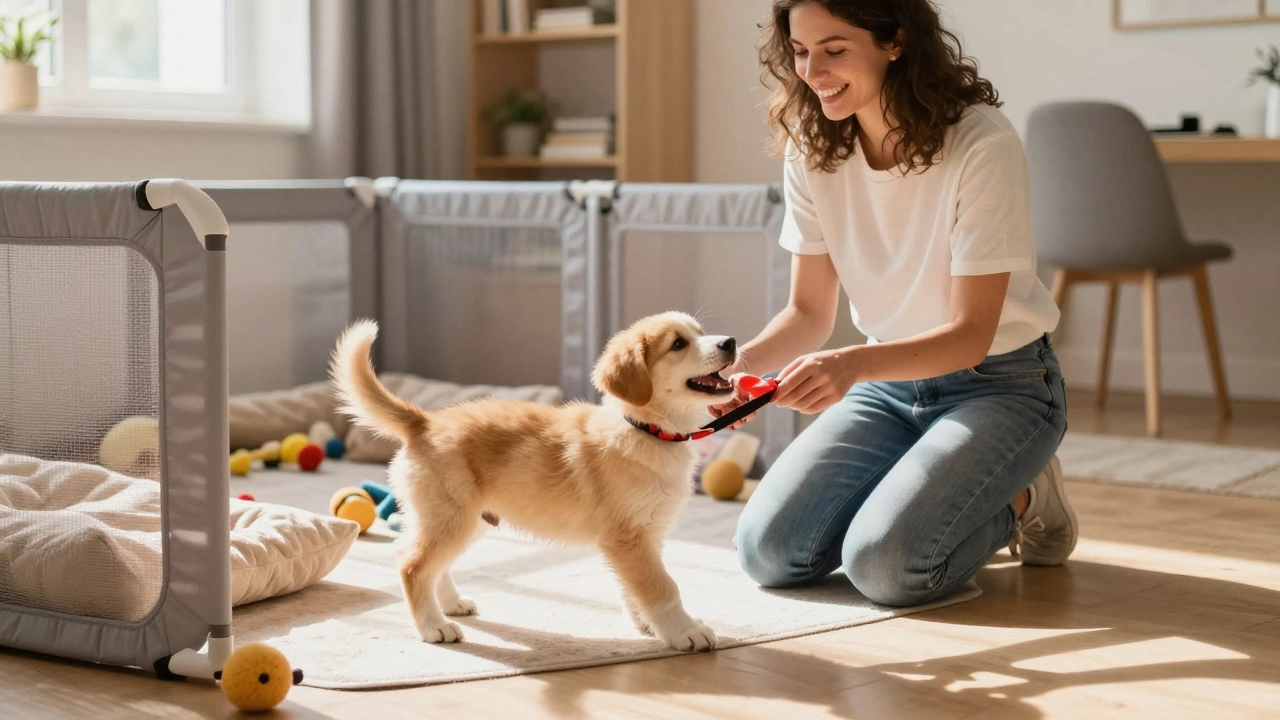
Never leave a puppy in a crate for eight hours. This restricts movement, prevents proper digestion, and causes severe distress. Crates are best used for short periods when you are home but cannot supervise directly, or for overnight sleep. During the day, if you are using a crate, combine it with a pen area that includes a bed, water, and toys. This gives them space to move around while remaining contained.
Preparing the Environment
Puppy-proofing your home is non-negotiable. Get down on your hands and knees and look around at puppy eye level. What do you see? Electrical cords? Toxic plants? Small objects they could swallow? Remove or secure everything. Use baby gates to restrict access to certain rooms. Create a "safe zone" where the puppy can roam freely without danger. This reduces your anxiety and theirs.
Provide fresh water in a spill-proof bowl. Consider a slow-feeder bowl if you leave food out, to prevent bloat. Leave the TV or radio on at a low volume to provide background noise and reduce the silence that can amplify anxiety. White noise machines are also effective.
Signs Your Puppy Is Struggling
Even with the best plans, some puppies struggle more than others. Watch for these signs:
- Excessive drooling or panting upon your return
- Destruction of property near exits (doors, windows)
- Howling or barking that starts shortly after you leave
- Soiling the house despite being house-trained
- Refusing to eat or drink when alone
If you notice these signs, reassess your strategy. You may need more frequent breaks, professional training help, or a different care arrangement. Ignoring these signals can lead to chronic behavioral issues that are expensive and emotionally draining to fix later.
Long-Term Perspective
This phase passes. As your puppy grows, their bladder capacity increases, and their confidence builds. By 12-18 months, many dogs can handle eight hours alone, provided they are exercised beforehand and have had mental stimulation. But you get there by doing the right thing now. Rushing the process creates problems that last a lifetime. Taking the time to arrange proper care during the first six months pays dividends in a calm, confident, and well-adjusted adult dog.
Remember, owning a puppy is a commitment. It is not just about feeding and walking; it is about providing structure, safety, and love. If you can't provide that during the day, find someone who can. Your puppy will thank you with wagging tails and loyal companionship for years to come.
What is the minimum age to leave a puppy alone for 8 hours?
There is no recommended minimum age for 8 hours. Most veterinarians suggest waiting until a dog is at least 12-18 months old before leaving them alone for a full workday. Even then, it depends on the individual dog's temperament and training.
Can I leave my puppy alone with just toys?
No. Toys cannot replace human interaction, exercise, or bathroom breaks. Leaving a puppy alone with only toys for extended periods leads to frustration, boredom, and potential injury if they chew inappropriate items.
How do I prevent separation anxiety in puppies?
Prevent separation anxiety by gradually increasing alone time, avoiding dramatic greetings and goodbyes, providing ample exercise, and creating positive associations with your departure (e.g., giving a special treat only when you leave).
Is it better to use a crate or a pen?
For daytime confinement, a pen or gated area is generally better than a crate because it allows the puppy to move around, lie down, and play. Crates are best for short-term containment or overnight sleep.
What should I feed my puppy before leaving them alone?
Feed your puppy a moderate meal 1-2 hours before leaving, followed by a potty break. Avoid heavy meals right before departure to prevent discomfort. Ensure fresh water is available throughout the day.