Airline Pet Carrier Size Checker
Check if your dog and carrier meet the requirements for flying in-cabin with your airline. This tool uses the latest airline policies as of 2025.
For dogs over 20 lbs, in-cabin travel is typically not allowed
Measure internal dimensions only (remove wheels/handles). Add 1 inch to your actual measurements for safety margin.
If you’ve ever tried to book a flight with your dog, you know the confusion around dog carriers. One airline says it fits under the seat. Another says it’s too big. TSA doesn’t list exact dimensions, and suddenly you’re measuring your carrier with a tape measure at 2 a.m. before your flight. The truth? TSA approved dog carrier isn’t a thing you buy off the shelf-it’s a rule you follow based on what airlines actually allow.
There’s No Single TSA Size for Dog Carriers
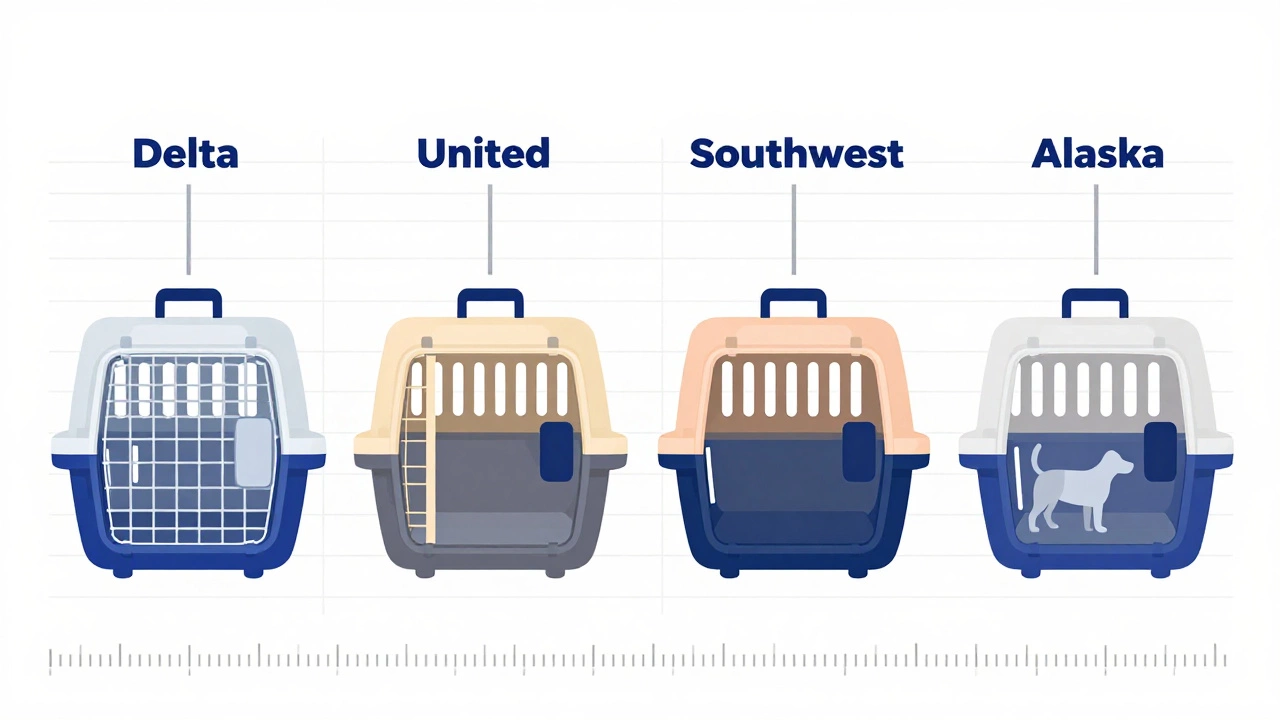
TSA doesn’t set size limits for pet carriers. They only care that your dog stays inside the carrier during security screening and that the carrier fits under the seat in front of you. The real rules come from airlines. That’s why you’ll see different answers on Reddit, Facebook groups, and even airline websites. Delta says 17 x 10 x 11 inches. United says 18 x 11 x 11 inches. Southwest allows up to 18.5 x 13.5 x 8.5 inches. None of these are TSA rules-they’re airline policies.
Think of TSA as the checkpoint guard. They don’t care if your carrier is 16 inches or 18 inches tall. They just need to see your dog inside, make sure it’s not a threat, and confirm the carrier can go through the X-ray machine. The airline is the one that decides if your dog gets on the plane at all.
What Airlines Actually Require
Here’s what the top U.S. airlines allow for in-cabin pet carriers as of 2025:
| Airline | Max Dimensions (inches) | Weight Limit | Carrier Type |
|---|---|---|---|
| Delta Air Lines | 17 x 10 x 11 | 20 lbs (dog + carrier) | Hard-sided or soft-sided |
| American Airlines | 18 x 11 x 11 | 20 lbs | Soft-sided only |
| United Airlines | 18 x 11 x 11 | 20 lbs | Soft-sided or hard-sided |
| Southwest Airlines | 18.5 x 13.5 x 8.5 | 20 lbs | Soft-sided only |
| Alaska Airlines | 17 x 10 x 10 | 20 lbs | Soft-sided only |
| JetBlue | 17 x 12 x 8 | 20 lbs | Soft-sided only |
Notice a pattern? Most airlines cap the carrier at 20 pounds total-dog plus carrier. That’s because the space under the seat is designed for a passenger’s purse or laptop bag. A 25-pound dog in a heavy carrier won’t fit, no matter how cute the dog is.
Soft-Sided vs. Hard-Sided Carriers
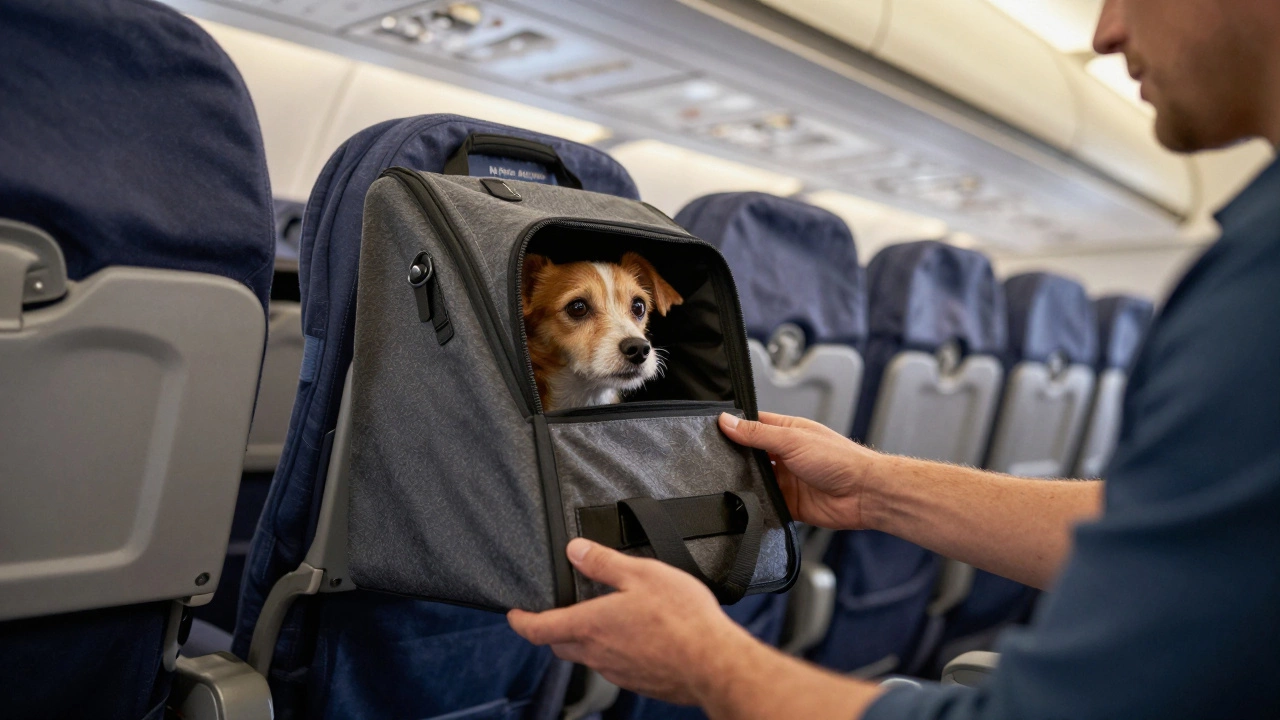
Soft-sided carriers are the default choice for most travelers. They’re lighter, more flexible, and easier to squeeze under the seat. Most airlines only allow soft-sided carriers for in-cabin pets. Why? Hard-sided carriers can’t be compressed. If your hard-sided carrier sticks out even an inch, the gate agent will make you check it-even if it’s under the size limit.
There are exceptions. Delta and United allow hard-sided carriers as long as they meet dimensions and don’t exceed weight limits. But even then, they must have a handle and fit snugly under the seat. If you’re using a hard-sided carrier, test it at home first. Place it under a dining chair and see if you can still slide your leg under the seat. If not, it’s too big.
How to Measure Your Carrier Correctly
Don’t rely on the box label. Manufacturers often list dimensions including wheels, handles, or mesh panels that stick out. Airlines measure the internal space-the actual space your dog will sit in. Here’s how to measure properly:
- Remove any detachable parts: wheels, extendable handles, extra pockets.
- Measure the length from the back of the carrier to the front, just inside the opening.
- Measure the width at the widest point, inside the fabric or shell.
- Measure the height from the floor to the top opening, not including the zipper or flap.
Now, add 1 inch to each dimension. If your carrier is 16.5 x 9.5 x 10.5 inches, it’s likely safe for airlines that allow 17 x 10 x 11. But if it’s 17.2 x 10.3 x 11.1 inches? You’re over. Even half an inch can get you turned away at the gate.
Your Dog’s Size Matters More Than You Think
Just because a carrier fits under the seat doesn’t mean your dog will be comfortable. TSA and airlines don’t enforce space rules beyond weight and dimensions, but your dog’s well-being does. The carrier should be large enough for your dog to:
- Stand up without touching the top
- Turn around in a full circle
- Lie down with legs stretched out
For reference:
- Small dogs (up to 12 lbs): Carrier size 15 x 10 x 9 inches
- Medium dogs (13-20 lbs): Carrier size 17 x 11 x 10 inches
- Large dogs (over 20 lbs): Not allowed in cabin. Must fly as checked baggage or cargo.
Brachycephalic breeds like Pugs, French Bulldogs, and Boston Terriers are especially sensitive to stress and heat. Even if your dog is under 20 pounds, many airlines restrict them from flying in cargo. Always check breed-specific policies before booking.
What TSA Actually Checks at Security
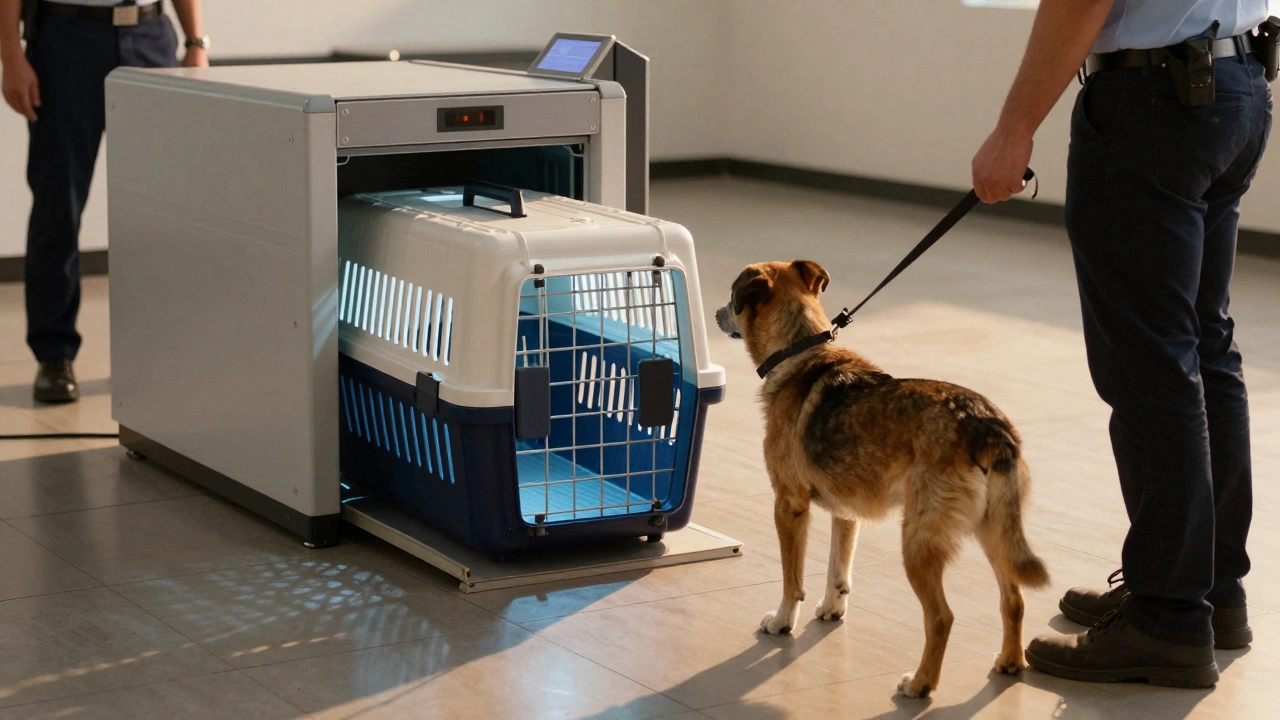
At the checkpoint, TSA agents don’t measure your carrier. They do three things:
- Ask you to remove your dog from the carrier for screening
- Run the empty carrier through the X-ray machine
- Make sure your dog is on a leash or in a harness
They don’t care about the brand, color, or whether it’s “TSA approved.” They just need to confirm your dog isn’t hiding something dangerous. Your dog can walk through the metal detector on a leash. If your dog is too nervous, you can carry them through-just inform the agent ahead of time.
Pro tip: Don’t put treats, toys, or blankets in the carrier before security. TSA will ask you to remove them. Put them in a separate bin. It speeds things up.
Common Mistakes That Get You Turned Away
Here’s what usually goes wrong at the gate:
- Carrier is too tall-sticks out under the seat
- Dog weighs 22 pounds, carrier weighs 3 pounds-total is 25
- Hard-sided carrier with wheels that won’t collapse
- Carrier has mesh panels that bulge out
- Owner didn’t reserve a pet spot in advance
Most airlines only allow 1-2 pets per flight in the cabin. If you show up without a reservation, you’re out of luck-even if your carrier fits. Always book your pet’s spot when you book your ticket.
What to Do If Your Carrier Is Too Big
If your carrier doesn’t meet airline specs, you have three options:
- Buy a new soft-sided carrier that fits. Look for ones labeled “airline-approved” and double-check the internal dimensions.
- Check your dog as baggage. Most airlines charge $125-$200 each way. Your dog travels in a climate-controlled area, but you can’t see them during the flight.
- Use a pet transport service. Companies like PetRelocation or PetAirways handle door-to-door travel for dogs over 20 pounds. Cost starts at $500+.
Don’t try to sneak a bigger carrier in. Gate agents have measuring tools. If you’re caught, you’ll be denied boarding, and your ticket may be canceled.
Final Checklist Before Your Flight
Use this before you leave for the airport:
- Carrier dimensions (internal) under airline limits?
- Total weight (dog + carrier) under 20 lbs?
- Carrier is soft-sided? (unless flying Delta or United)
- Pet reservation confirmed?
- Health certificate issued within 10 days of travel?
- Leash and harness ready?
- Water bottle attached to carrier?
- Food and treats packed in a separate bag?
If you check all these boxes, you’ll breeze through security and boarding. No stress. No surprises.
Is there a TSA-approved dog carrier brand?
No. TSA doesn’t approve or certify any brands. Any carrier labeled “TSA-approved” is just marketing. What matters is whether the carrier meets your airline’s size and weight rules. Stick to carriers from brands like Sherpa, SturdiBag, or Petmate that are designed for air travel and always check the internal dimensions.
Can I use a backpack-style carrier for my dog?
Yes, if it meets the airline’s size and weight limits. Many backpack carriers are soft-sided and designed to fit under seats. But make sure your dog can stand and turn around inside. Also, avoid carriers that let your dog hang out the top-those often get flagged at security. Always remove the straps before going through the X-ray machine.
Do I need a health certificate for my dog to fly?
Yes. Most U.S. airlines require a health certificate issued by a licensed vet within 10 days of your flight. It confirms your dog is healthy and up to date on rabies shots. Some states and countries have additional rules. Always check the destination’s pet entry requirements too.
Can my small dog sit on my lap during the flight?
No. All dogs must remain in their carriers under the seat for the entire flight. Even if your dog is tiny, it’s not allowed on your lap. This is for safety and hygiene reasons. If your dog is too big for the carrier, you’ll need to check it or choose a different flight.
What if my dog barks during security or boarding?
It happens. TSA agents and gate staff are used to nervous dogs. Keep your dog calm with a favorite blanket or toy inside the carrier. If your dog barks, don’t panic. Just apologize quietly and reassure your dog. Most airlines won’t deny boarding for barking unless it’s extreme or aggressive behavior.
Next Steps for Flying with Your Dog
Start by calling your airline’s pet department. Ask for their current pet carrier policy. Write it down. Then measure your carrier using the method above. Weigh your dog with the carrier. If you’re close to the limit, buy a lighter carrier. Don’t wait until the day before your flight.
Book your pet’s spot as soon as you book your ticket. Reserve a carrier that fits under the seat, not one that looks cute on Instagram. And always bring extra water, a leash, and a towel. You’ll thank yourself later.