Puppy Bedtime Calculator
Puppy Potty Break Calculator
Calculate when your puppy needs their next bathroom break based on bladder capacity and last potty time
How This Works
At 8 weeks old, puppies typically have a bladder capacity of 2-3 hours. This calculator helps you determine when your puppy will need to go out next based on their last potty break.
Results
Enter your puppy's last potty time and current time to see when they'll need to go out next.
Important: Don't interpret this as an exact time. Puppies may need breaks earlier due to activity, teething, or anxiety. Always take your puppy outside immediately if they show signs of needing to go.
At eight weeks old, your puppy is still a baby. They’re learning the world, figuring out where they fit in, and most of all-they’re exhausted. You might be wondering: what is a good bedtime for an 8-week-old puppy? The answer isn’t just about when you want them to sleep-it’s about what their body actually needs.
Puppies Need Way More Sleep Than You Think
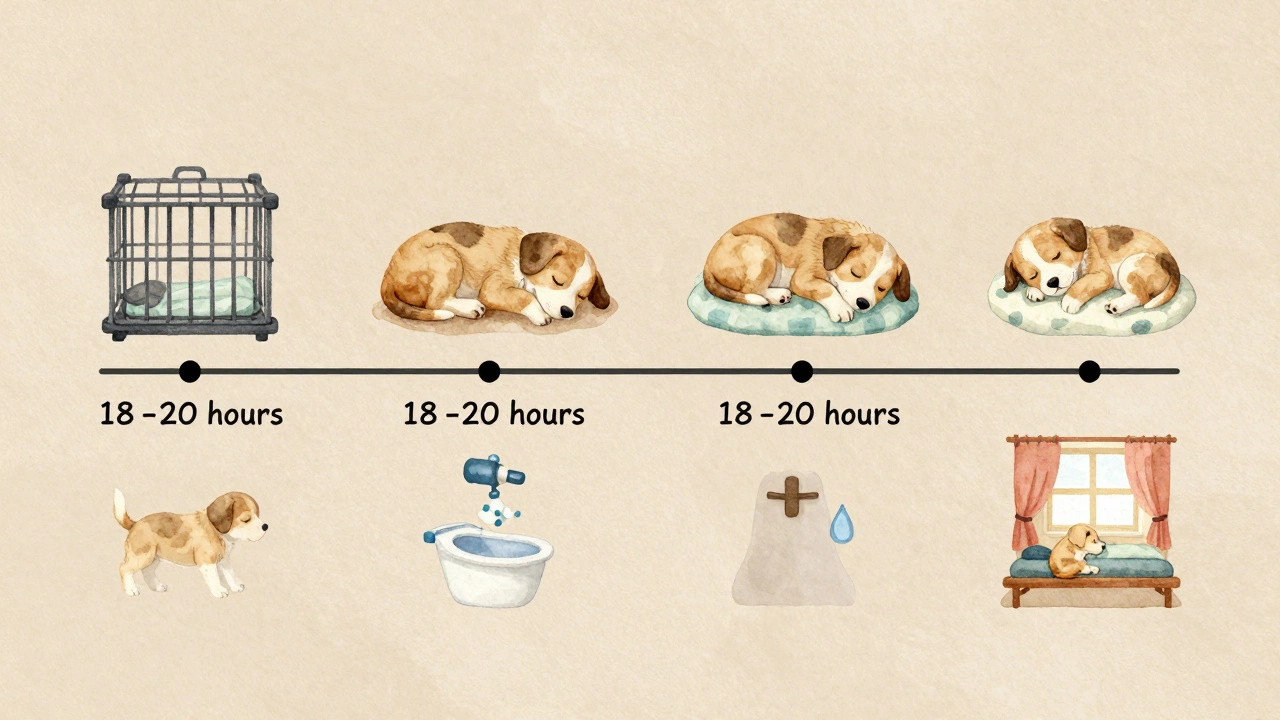
An 8-week-old puppy sleeps between 18 and 20 hours a day. That’s not laziness. That’s biology. Their brains are growing fast. Their bodies are developing muscles, bones, and immune systems. Every nap is a building block. If you’re only letting them sleep 12 hours, you’re cutting them short.
Think of it like a newborn human baby. They don’t sleep through the night, and neither should your puppy. Expect frequent wake-ups. That’s normal. Pushing them to sleep longer than they’re ready for leads to stress, accidents, and even behavioral issues down the line.
When Should You Put Your Puppy to Bed?
There’s no magic hour that works for every household, but most 8-week-old puppies do best with a bedtime between 8 p.m. and 10 p.m. Why? Because their natural rhythm follows the household’s activity level. When things quiet down, they start to wind down.
Here’s a simple trick: start the bedtime routine 30 minutes before you want them asleep. Turn off the TV. Dim the lights. Skip the rough play. This signals to their brain: it’s time to shut down.
Some owners try to put their puppy to bed at 6 p.m. because they’re tired. But if you do that, they’ll likely wake up at 2 a.m. wide awake and ready to chew your shoes. Puppies need consistency, not early bedtime shortcuts.
Bedtime Routine That Actually Works
A good bedtime routine isn’t just about putting them in a crate. It’s about setting up a calm, predictable sequence that tells them: sleep time.
- Take them outside to potty-no exceptions. Even if they just went 30 minutes ago, a final trip before bed prevents midnight emergencies.
- Keep the walk short and quiet. No chasing balls or excited zoomies. This isn’t playtime-it’s a transition.
- Give them a light snack if needed. Some puppies get hungry after a long day. A small piece of plain chicken or a spoonful of pumpkin can help.
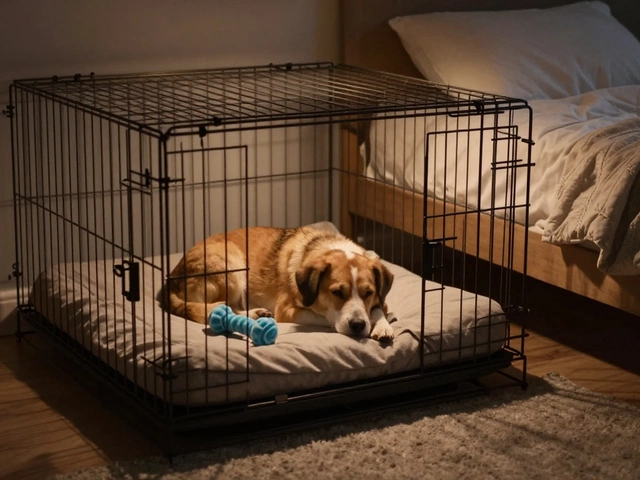
- Place them in their sleeping area. A crate with a soft bed and a stuffed toy (not one that squeaks) helps them feel safe.
- Leave the room quietly. Don’t linger, don’t say goodnight like they’re a toddler. Just walk away.
That’s it. No singing. No rocking. No extra attention. The goal is to teach them that sleep is peaceful and solitary.

Why Your Puppy Still Wakes Up at 3 a.m.
If your puppy is still waking up in the middle of the night, it’s not because they’re being stubborn. It’s because their bladder is tiny. At eight weeks, a puppy can hold their urine for about 2 to 3 hours max. That means if you put them to bed at 9 p.m., they’ll need to go again by 11 or 12.
Most new owners panic when this happens. They rush to the puppy, pick them up, cuddle them, feed them, or play with them. That’s the worst thing you can do. You’re teaching them that nighttime wake-ups = attention.
Here’s what to do instead:
- Take them straight outside on a leash. No talking. No eye contact.
- Wait quietly. Don’t encourage them to play.
- When they go, praise them quietly and take them right back to their crate.
- Go back to bed. Don’t check on them again unless they’re crying for more than 10 minutes.
Within 3 to 5 nights, most puppies learn that nighttime is for sleeping, not for fun.
What Not to Do at Bedtime
There are a few common mistakes that sabotage puppy sleep-and they’re easy to fall into.
- Don’t let them sleep in your bed. It’s tempting. They’re cute. But it creates a dependency. You’ll be up every time you move.
- Don’t use a squeaky toy in the crate. It keeps them alert. Choose a soft, quiet plush or a chew toy without noise.
- Don’t feed them right before bed. A meal within an hour of bedtime increases the chance of accidents.
- Don’t punish them for whining. They’re not being bad-they’re scared. Use a calm voice and give them time to settle.
How Long Until They Sleep Through the Night?
Most puppies start sleeping 6 to 8 hours straight by 12 to 16 weeks old. But that depends on their breed, size, and how consistent you are with the routine.
Small breeds like Chihuahuas or Yorkies often take longer because their bladders are even smaller. Large breeds like Labs or Goldens may hit the 6-hour mark sooner because they grow faster.
Don’t compare your puppy to others. Focus on progress. If they’re going from 3 wake-ups a night to 1, you’re doing great.
What to Do If Your Puppy Still Won’t Sleep
If you’ve tried everything and your puppy is still wide awake at night, check these things:
- Is the crate too big? A crate should be just big enough for them to stand, turn, and lie down. Too much space = potty zone.
- Is the room too cold or too hot? Puppies feel temperature extremes more than adults. Keep it around 68-72°F (20-22°C).
- Are they getting enough playtime during the day? A tired puppy is a good sleeper. But don’t overstimulate them right before bed.
- Are they teething? Around 8 weeks, puppies start losing baby teeth. A frozen washcloth or a safe chew toy can ease discomfort.
If none of this helps, talk to your vet. Sometimes, an underlying issue like parasites or a urinary tract infection can disrupt sleep.
Final Tip: Sleep Is a Skill, Not a Gift
Good sleep habits don’t happen overnight. They’re built slowly, day by day. Your puppy isn’t trying to drive you crazy. They’re learning how to be a dog in a human home.
Stick to the routine. Stay calm. Be patient. By 12 weeks, you’ll look back and wonder why you ever worried. They’ll be curled up beside you, breathing softly, sleeping like they’ve been doing it their whole life.
And that’s the goal-not perfection. Just progress.
Can I let my 8-week-old puppy sleep with me?
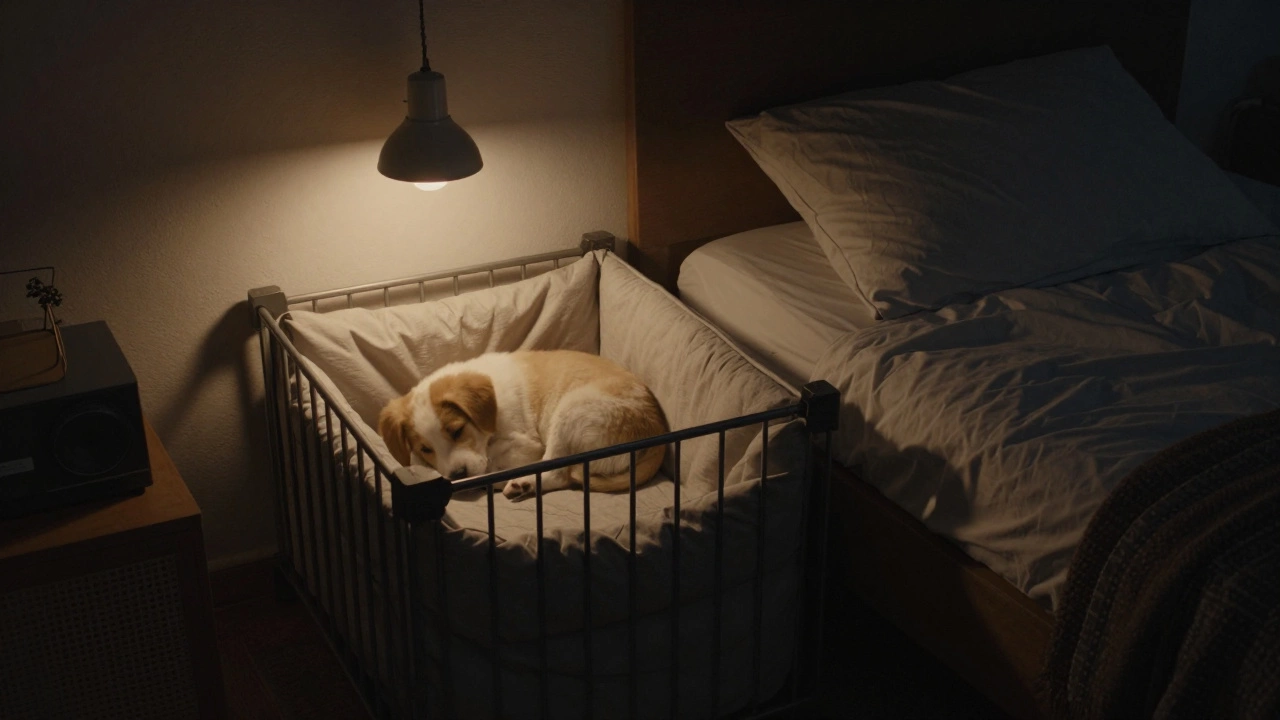
It’s not recommended. While it’s tempting, letting your puppy sleep in your bed creates dependency and makes it harder to train them to sleep alone later. It also increases the risk of accidents, disrupted sleep for you, and potential behavioral issues like separation anxiety. Stick to a crate or puppy bed in your room-it gives them security without the long-term complications.
How many times should an 8-week-old puppy wake up at night?
Most 8-week-old puppies wake up 1 to 3 times a night to go potty. This is normal. Their bladders are still developing. Don’t expect them to sleep through the night yet. With consistent potty breaks and a calm routine, most puppies reduce nighttime wake-ups to once or none by 12 to 16 weeks.
Should I use a nightlight for my puppy’s crate?
A dim nightlight is fine if your puppy seems anxious in complete darkness. But avoid bright lights-they can stimulate your puppy and make it harder to fall asleep. Use a soft, warm-colored bulb placed far from the crate so it only provides enough light to feel safe, not to play.
Is it okay to use a puppy crate at bedtime?
Yes, a crate is ideal for bedtime. It gives your puppy a den-like space that feels safe. Make sure the crate is the right size, lined with a soft bed, and has a quiet chew toy. Never use the crate as punishment. With positive associations, your puppy will learn to love their crate as their own peaceful space.
What should I do if my puppy cries at night?
Wait 5 to 10 minutes before checking on them. If they’re crying because they need to potty, take them outside quietly and return them to the crate. If they’re crying for attention, ignore them. Responding every time teaches them that crying gets results. Most puppies settle within a few nights if you stay consistent.
Next Steps
Start tonight. Write down your puppy’s bedtime and wake-up times for the next 5 days. Track how many times they go out. Notice what helps them settle. Small changes add up.
By the time your puppy is 12 weeks old, you’ll have a routine that works. And you’ll both be sleeping better than you thought possible.