
E-Collar vs. Shock Collar Decision Tool
Answer these questions to see if a modern e-collar (static correction) is the right tool for your situation, or if you should avoid it.
Verdict
Recommended Approach
Caution / Avoid
You’ve probably heard the terms "shock collar" and "e-collar" used interchangeably at the dog park or in online forums. It’s confusing, right? One person says it’s a cruel device that zaps your dog, while another swears it’s a gentle communication tool. The truth is, they are often talking about the same piece of hardware but describing completely different user experiences. The difference isn’t usually in the plastic casing; it’s in how the technology works and, more importantly, how you use it.
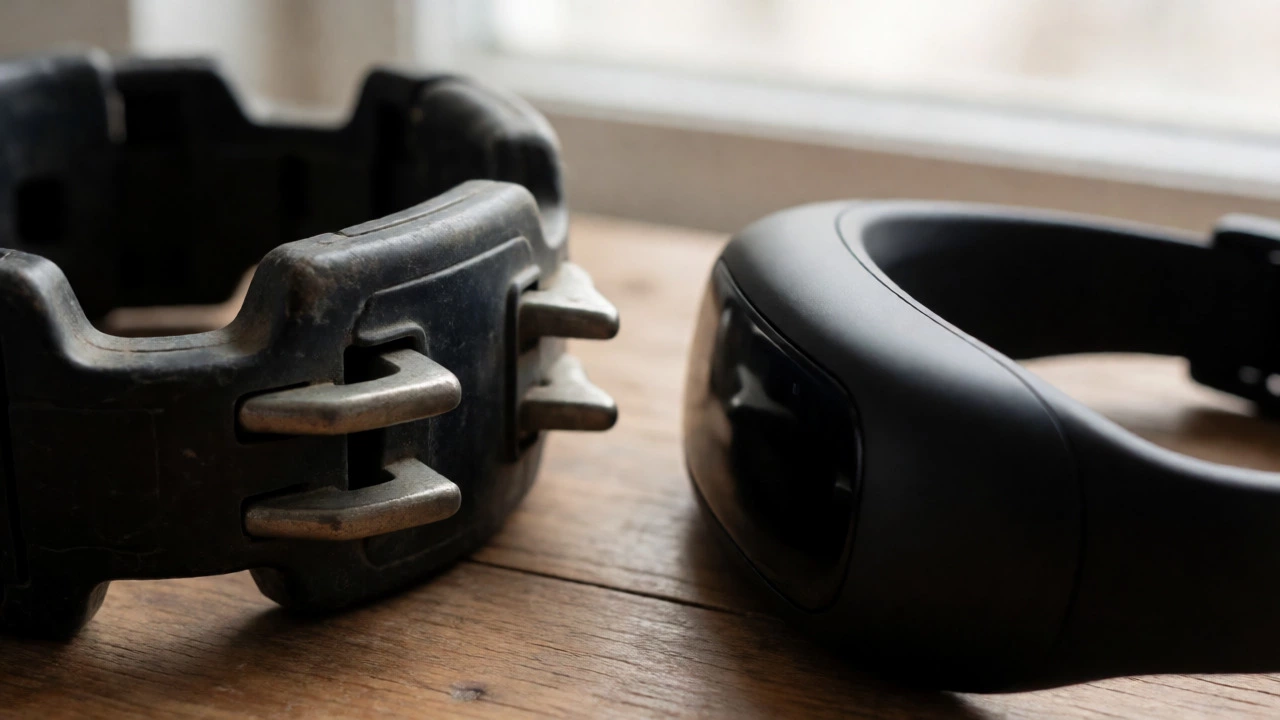
Let’s clear up the fog. An e-collar (electronic collar) is the broad category for any collar that delivers electronic stimulation to a dog. A shock collar is a specific type of e-collar, typically associated with older, fixed-level devices that deliver a sharp, startling sensation. Modern e-collars, however, offer variable levels of static correction, vibration, and tone. If you’re trying to decide which one fits your dog’s needs, understanding this distinction is step one. You aren’t just buying a gadget; you’re choosing a communication method.
The Hardware: What’s Actually Inside?
When you crack open a basic shock collar from ten years ago and compare it to a modern e-collar like those made by Garmin or Dogtra, you’ll find significant differences in engineering. Old-school shock collars often had limited settings-maybe three levels-and delivered a high-amplitude pulse meant to punish unwanted behavior immediately. They were blunt instruments.
Modern e-collars use sophisticated microprocessors. They allow for precise control over the intensity and duration of the static pulse. Many now include features like:
- Vibration Mode: Acts as an attention-getter without pain.
- Tone Mode: A beep that can be conditioned as a cue.
- Nick vs. Continuous: A short "nick" for a quick reminder versus a continuous hold for sustained guidance.
This technological leap changes everything. A shock collar feels like a slap; a well-tuned e-collar feels like a tap on the shoulder. The goal shifts from punishment to communication. If you buy a cheap, no-name brand from a gas station, you might get a true "shock" experience. But if you invest in a quality e-collar, you have the tools to dial in the exact level your sensitive Border Collie or stubborn Bulldog needs.
Understanding Static Correction vs. Shock
This is where most owners get tripped up. In the professional dog training community, we rarely use the word "shock." We say "static correction." Why? Because "shock" implies pain and distress, whereas "correction" implies information.
Think about it this way: when you touch a hot stove, you pull your hand away because of the sudden sensation. That’s a reflex. A good e-collar mimics that startle response, not the lingering pain of a burn. The sensation is designed to interrupt the dog’s focus on a distraction (like a squirrel) so they can listen to you again.
However, there is a fine line. If you set the level too high, you cross from "interruption" to "pain." This is why proper fitting is non-negotiable. The contact points must press firmly against the skin. If they hang loose, the dog gets a sharp, stinging zap rather than a dull pressure. I’ve seen countless dogs become fearful of their owners simply because the owner didn’t know how to fit the collar correctly.
Training Philosophy: Punishment vs. Communication
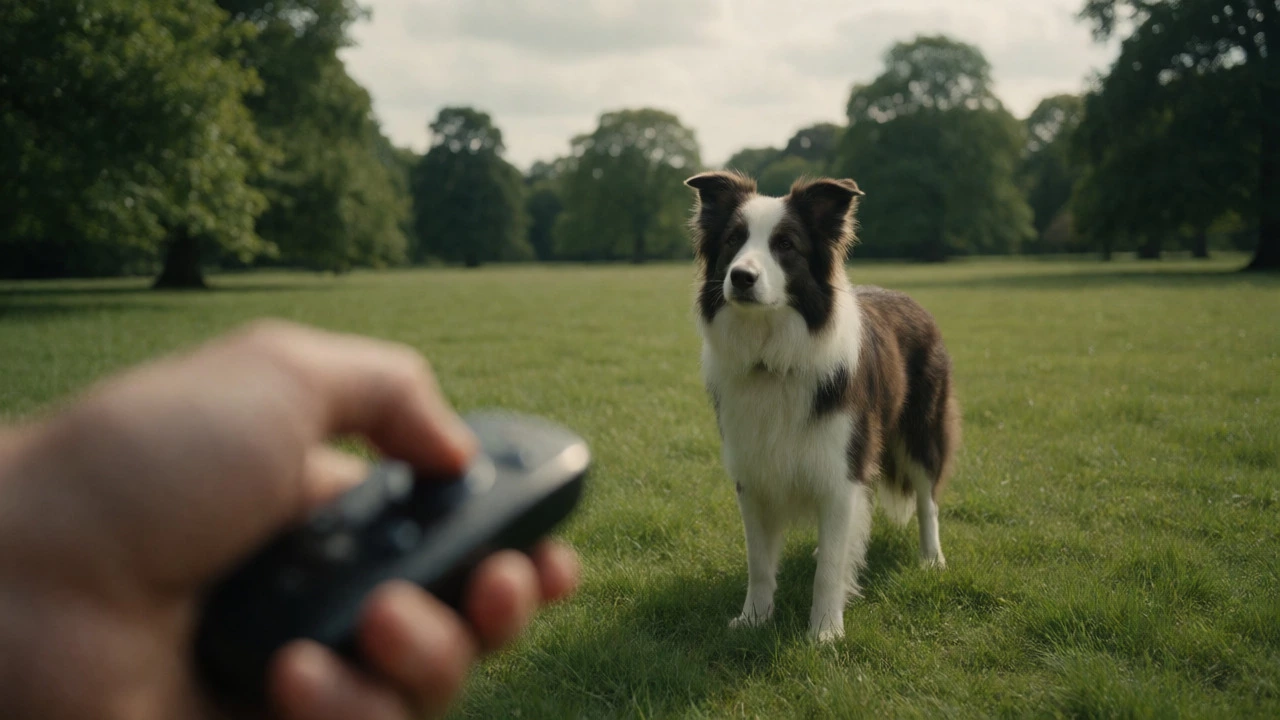
The biggest difference between a "shock collar mindset" and an "e-collar mindset" is intent. Historically, shock collars were used reactively. The dog chases the cat? Zap. The dog barks at the mailman? Zap. This is positive punishment: adding something unpleasant to decrease a behavior. While effective, it can create side effects like anxiety or aggression if the dog doesn’t understand *why* they are being corrected.
Modern e-collar training is proactive. You teach the dog what the signal means before using it in real-world scenarios. For example, you might pair the tone with a treat until the dog knows that sound equals reward. Then, you introduce the static at the lowest possible level. When the dog looks at you, the static stops. This negative reinforcement teaches the dog that making the right choice makes the uncomfortable feeling go away. They learn to choose compliance.
Here is a quick comparison of the two approaches:
| Feature | Traditional Shock Collar | Modern E-Collar |
|---|---|---|
| Stimulation Type | Fixed, high-intensity pulse | Variable, low-to-high intensity static |
| Modes Available | Shock only | Static, Vibration, Tone |
| Primary Use Case | Punishing bad behavior | Reinforcing commands & recall |
| User Control | Limited presets | Precise dial or digital screen |
| Risk of Over-correction | High | Low (if trained properly) |
When Should You Use an E-Collar?
Not every dog needs one. If you have a puppy who hasn’t learned basic cues yet, put the remote down. E-collars are for dogs who already know what "come," "sit," and "stay" mean but fail to obey when distracted. It’s a tool for proofing behaviors, not teaching them from scratch.
I recommend e-collars for:
- Recall Issues: Dogs that ignore you at the park but respond perfectly at home.
- Prey Drive: Sight hounds or terriers that bolt after rabbits.
- Safety Zones: Keeping dogs within invisible fences or away from dangerous roads.
- Deaf Dogs: Vibration mode is a game-changer for hearing-impaired pups.
Avoid them for fear-based issues. If your dog is reactive because they are terrified of other dogs, shocking them will likely make the fear worse. You need desensitization, not electricity. Always consult a certified trainer if you’re unsure whether your dog’s issue is behavioral or emotional.

Common Mistakes Owners Make
Having spent years around dogs in Bristol parks, I’ve noticed a few recurring errors. First, starting at the wrong level. Many owners turn the dial to 50% immediately. Start at 1%. Watch the dog’s neck muscles. A slight twitch is enough. If they yelp or run, it’s too high. Second, forgetting the release. If you keep the button pressed, the dog panics. Release the button the second they comply.
Another mistake is using the collar as a leash substitute. Don’t walk your dog with the collar on all day. Contact dermatitis is real. Remove the collar when you’re done training to let the skin breathe. Also, never use it on puppies under six months unless guided by a professional, as their skin is thinner and their attention span is shorter.
Frequently Asked Questions
Is an e-collar the same as a shock collar?
Technically, yes, but colloquially, no. An e-collar is the umbrella term for electronic collars. "Shock collar" usually refers to older, cheaper models that deliver a painful, fixed-level stimulus. Modern e-collars offer variable static correction, vibration, and tone, allowing for gentler, more precise communication.
Do e-collars hurt dogs?
If used correctly, no. The sensation should be a mild tingling or static surprise, similar to walking on carpet in socks. If the dog yelps, jumps, or shows signs of distress, the level is too high. Proper fitting and starting at the lowest effective level are crucial to ensure comfort.
Can I use an e-collar on a puppy?
It is generally recommended to wait until a puppy is at least six months old. Their skin is delicate, and they need to understand basic verbal commands first. Using an e-collar too early can confuse the puppy and lead to negative associations with training.
What is the difference between vibration and static modes?
Vibration mode provides a buzzing sensation that many dogs perceive as annoying but not painful. It is often used as a warning cue before applying static. Static mode delivers an electrical pulse. Some dogs respond well to vibration alone, while others require the sharper feedback of static to break through distractions.
Are e-collars safe for all breeds?
Most breeds can benefit from e-collar training, but sensitivity varies. Sensitive breeds like Greyhounds or Shetland Sheepdogs may need much lower levels than hardier breeds like Rottweilers or Huskies. Always test the collar on your specific dog to determine their threshold.