
Dog Supplement Dosage Calculator
Dog Details
Recommended Daily Dosage
Give 0 capsules/day.
This provides approx. 0 mg of EPA/DHA.
Standard maintenance dose calculated based on body weight.
Add 0 teaspoons to food daily.
(0 ml)
- Supports skin barrier moisture
- Aids digestion gently
- Adds healthy calories without overfeeding
Enter your dog's details to see personalized dosage recommendations.
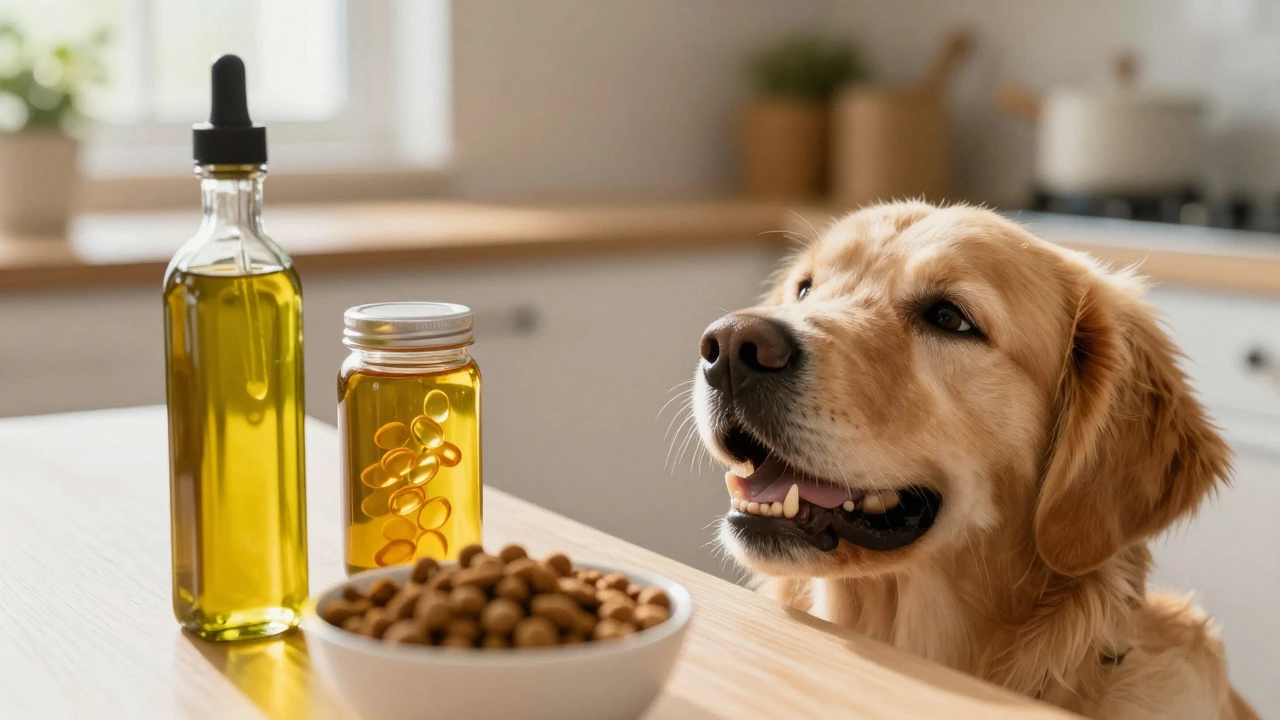
It’s a common dilemma in the kitchen. You’re about to drizzle some healthy fat over your dog’s dinner, and you pause. Should it be the bottle of extra virgin olive oil sitting on the counter, or that jar of fish oil capsules tucked away in the cupboard? Both are touted as miracle workers for shiny coats and better digestion. But they do very different things inside your dog’s body.
The short answer is that they serve different jobs. Fish oil is the heavyweight champion for reducing inflammation, supporting brain function, and easing joint pain. Olive oil is a great generalist for heart health and adding calories to picky eaters, but it lacks the specific anti-inflammatory punch of fish oil. If you have to choose just one for overall longevity and disease prevention, fish oil usually wins. However, understanding exactly why-and when to use each-will help you make the best choice for your specific dog.
The Power of Omega-3s: Why Fish Oil Leads the Pack
When veterinarians talk about essential fatty acids, they are mostly talking about two types: Omega-3 and Omega-6. Most commercial dog foods are already loaded with Omega-6s (from grains and meats). The problem is that modern diets often lack sufficient Omega-3s. This imbalance can lead to chronic low-grade inflammation, which is linked to arthritis, allergies, and even cognitive decline in older dogs.
Fish oil, specifically from cold-water fish like salmon, mackerel, and sardines, is rich in two specific Omega-3 fatty acids: EPA (eicosapentaenoic acid) and DHA (docosahexaenoic acid). These are the active ingredients that matter.
- EPA is primarily responsible for fighting inflammation. It helps calm the immune system, which is why it’s so effective for dogs with itchy skin, ear infections, or painful joints.
- DHA is crucial for brain development and eye health. Puppies need it for proper neurological growth, while senior dogs benefit from its ability to slow cognitive dysfunction.
Not all fish oils are created equal. You want a supplement that lists the exact milligram amounts of EPA and DHA on the label. If it only says "contains 1000mg of fish oil" without breaking down the active fatty acids, put it back on the shelf. Look for brands that undergo third-party testing for purity, ensuring there are no heavy metals like mercury or lead hidden in the mix.
Olive Oil: The Heart-Healthy Alternative
If fish oil is the specialist, olive oil is the general practitioner. It doesn’t contain significant amounts of EPA or DHA. Instead, it is packed with monounsaturated fats and antioxidants like oleocanthal. Oleocanthal has mild anti-inflammatory properties, similar to ibuprofen, but much weaker.
So, when should you reach for the olive oil?
- Heart Health: Monounsaturated fats can help improve cholesterol levels and support cardiovascular function, especially in older dogs.
- Skin Barrier Support: While it won’t stop allergic itching like fish oil, olive oil helps maintain the lipid barrier of the skin, keeping moisture in and irritants out.
- Calorie Boost: For underweight dogs or those recovering from illness, olive oil is an easy way to add dense calories without changing their diet drastically.
- Constipation Relief: A small amount of olive oil can act as a gentle laxative, helping food move through the digestive tract more smoothly.
One major advantage of olive oil is palatability. Many dogs hate the taste of fish oil. Olive oil blends easily into kibble or wet food without triggering a nose wrinkle. Plus, it’s less likely to cause that distinct "fishy burp" that can happen after a high dose of fish oil.
Direct Comparison: What Do They Actually Do?
To decide which one fits your needs, let’s look at how they stack up against each other in real-world scenarios.
| Feature | Fish Oil | Olive Oil |
|---|---|---|
| Primary Benefit | Anti-inflammatory & Brain Health | Heart Health & Skin Moisture |
| Key Nutrients | EPA, DHA (Omega-3) | Monounsaturated Fats, Vitamin E |
| Best For | Arthritis, Allergies, Cognitive Decline | Coat Shine, Constipation, Calorie Boost |
| Taste Profile | Fishy (some dogs dislike it) | Mild, fruity (most dogs love it) |
| Side Effects | Fishy breath, loose stools | Pancreatitis risk if overfed |
| Shelf Life | Short (oxidizes quickly) | Longer (stable at room temp) |
Notice the side effects row. Both oils are fats, and too much fat can trigger pancreatitis, a painful and dangerous inflammation of the pancreas. This is a critical point for owners of prone breeds like Miniature Schnauzers or Cocker Spaniels.

How Much Should You Give Your Dog?
More is not always better. In fact, overdosing on either oil can lead to weight gain, diarrhea, or nutrient imbalances. Here are general guidelines based on veterinary nutrition standards.
Fish Oil Dosage
The goal is to get enough EPA and DHA to make a difference. A common therapeutic dose for inflammation is around 20-55 mg of combined EPA/DHA per kilogram of body weight daily. For maintenance, a lower dose of 20-30 mg/kg is often sufficient. Always check the label for the actual EPA/DHA content, not just the total oil volume.
Olive Oil Dosage
Olive oil is calorie-dense. One tablespoon contains roughly 120 calories. For most adult dogs, a teaspoon (5 ml) per 10 pounds of body weight is a safe starting point. Never exceed this significantly without consulting your vet, as the sudden increase in fat can upset their stomach.
Can You Use Both?
Absolutely. In many cases, using both provides a broader range of benefits. You might give fish oil in the morning meal to tackle inflammation and joint pain, and a small dash of olive oil in the evening meal to moisturize the skin and aid digestion. Just remember to adjust the rest of their diet slightly to account for the extra calories, so your dog doesn’t pack on unwanted pounds.
If your dog has a specific condition, such as severe kidney disease, consult your vet before adding any supplements. High phosphorus levels in some fish oils can be problematic for kidneys, though high-quality purified oils usually mitigate this risk.
Signs You’re Using the Wrong Oil
Your dog will tell you if something isn’t right. Watch for these red flags:
- Loose Stools: If your dog develops diarrhea after starting a new oil, reduce the dose by half. If it persists, stop entirely. Fat malabsorption is common when introducing new lipids.
- Refusal to Eat: If your dog turns up their nose at the food, the flavor might be off. Rancid fish oil smells strongly of rotting fish, not fresh seafood. If it smells bad, throw it out. Oxidized oils are pro-inflammatory, doing the opposite of what you want.
- Excessive Gas: Some dogs produce more gas when their gut microbiome adjusts to new fats. This usually passes within a week. If it doesn’t, try switching brands or types of oil.
Storage Matters More Than You Think
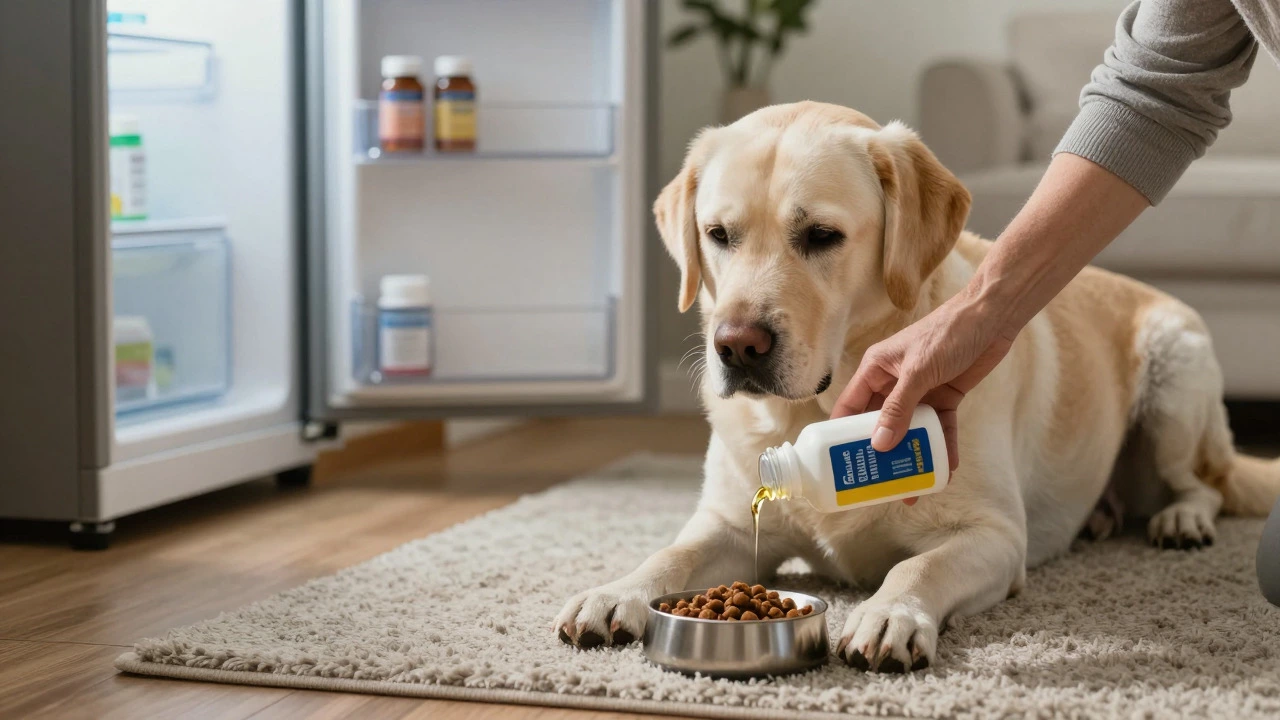
Fish oil is highly unstable. Exposure to light, heat, and air causes it to oxidize rapidly. Once oxidized, it loses its benefits and can actually harm your dog’s cells. Always store fish oil in the refrigerator, even if the bottle says otherwise. Check the expiration date regularly.
Olive oil is more stable but still benefits from cool, dark storage. Keep it away from the stove or direct sunlight. If your olive oil tastes bitter or metallic, it has gone rancid and should be discarded.
Is fish oil better than olive oil for dog allergies?
Yes, fish oil is generally superior for managing allergies. The high concentration of EPA in fish oil directly targets the inflammatory response caused by allergens, helping to reduce itching and skin redness. Olive oil may help moisturize dry skin, but it does not address the underlying inflammation.
Can I give my puppy fish oil?
Yes, fish oil is excellent for puppies due to its DHA content, which supports brain and vision development. However, you must use a puppy-appropriate dosage, typically on the lower end of the recommended range. Always consult your veterinarian before starting any supplement for a young dog.
What if my dog hates the taste of fish oil?
Try mixing it with wet food or a strong-smelling treat to mask the flavor. You can also switch to a flavored fish oil, such as chicken or beef, though these may contain fewer active ingredients. Alternatively, consider using olive oil for general health while looking for a different source of Omega-3s, like algae oil, which has no fishy taste.
Does olive oil help with dry, flaky skin?
Olive oil can help improve skin hydration by supporting the skin's natural lipid barrier. However, if the dryness is caused by allergies or nutritional deficiencies, olive oil alone may not solve the problem. In those cases, fish oil or a prescription diet might be necessary.
Are there any risks associated with giving dogs too much oil?
Yes, excessive oil intake can lead to obesity, diarrhea, and pancreatitis. Pancreatitis is a serious condition characterized by vomiting, abdominal pain, and loss of appetite. It is crucial to follow dosage guidelines and introduce oils gradually into your dog's diet.