Kibble Freshness Checker
Enter the food type and hours to see if it's safe for your dog!
Quick Guide to Kibble Freshness
- Room Temperature: 24 hours (maximum) for safety, but quality drops after 4-6 hours.
- Wet-mixed Kibble: 2-4 hours if left out; discard immediately if it smells sour.
- Kibble with Toppers: 1-2 hours depending on the freshness of the additive.
The Hidden Risks of Free-Feeding
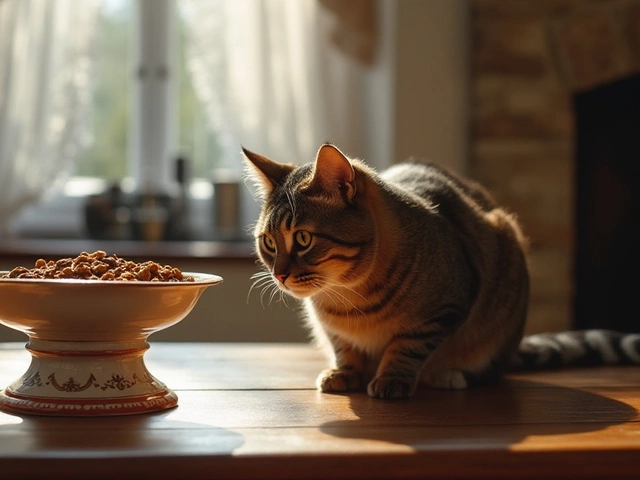
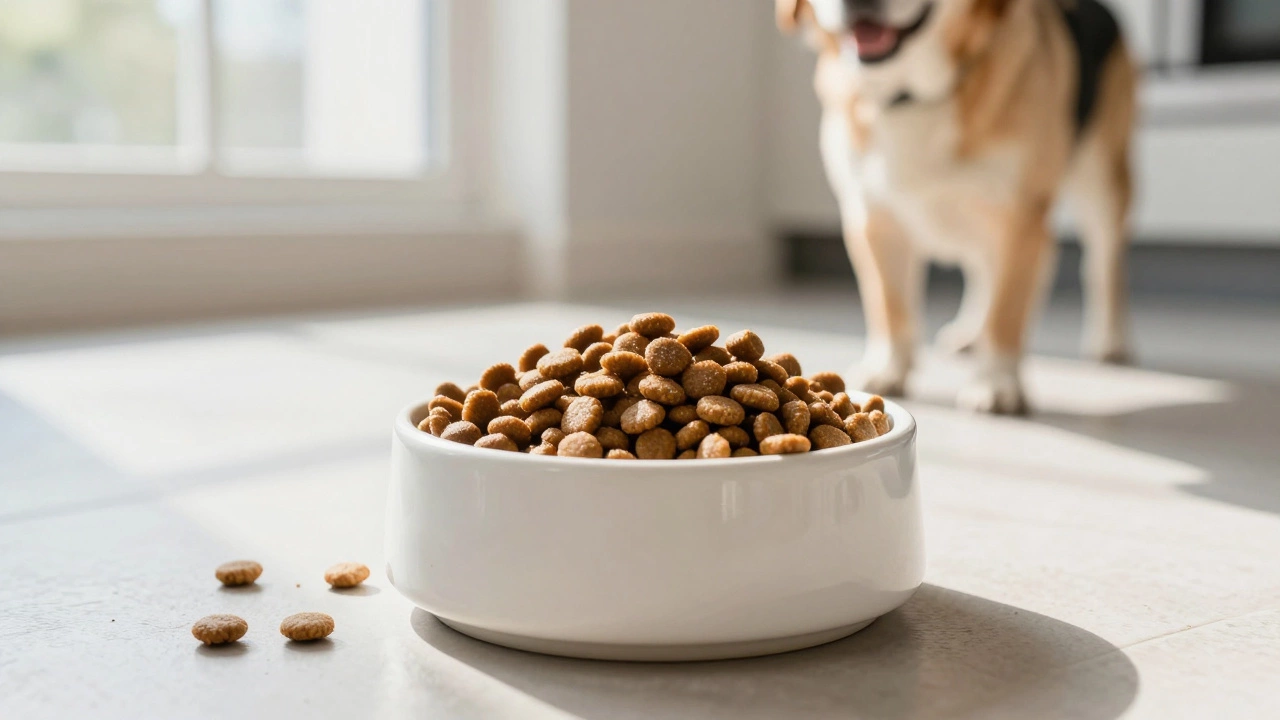
If you practice "free-feeding"-where the bowl is always full-you might be exposing your dog to more than just stale crackers. Dry Dog Food is a processed blend of proteins, fats, and vitamins designed for long-term storage in sealed bags. However, once it hits the bowl, it is exposed to the air.
The biggest culprit isn't always the food itself, but the environment. Humidity and oxygen cause the fats in the kibble to oxidize. This process, known as rancidity, doesn't just make the food taste bad; it can destroy essential fatty acids and vitamins. When fats go rancid, they can cause digestive upset or, in long-term cases, contribute to inflammation. Plus, there is the issue of Salmonella and Listeria. While rare in high-quality commercial brands, these bacteria can grow if the food becomes contaminated by moisture or pests.
Think about it: your dog's mouth is full of bacteria. Every time they take a bite and leave the rest, they are introducing saliva into the bowl. In a warm room, that moisture becomes a breeding ground for microbes. If your dog is a "grazer" who takes one piece and walks away, that bowl becomes a petri dish over a 24-hour period.
Why Freshness Matters More Than You Think
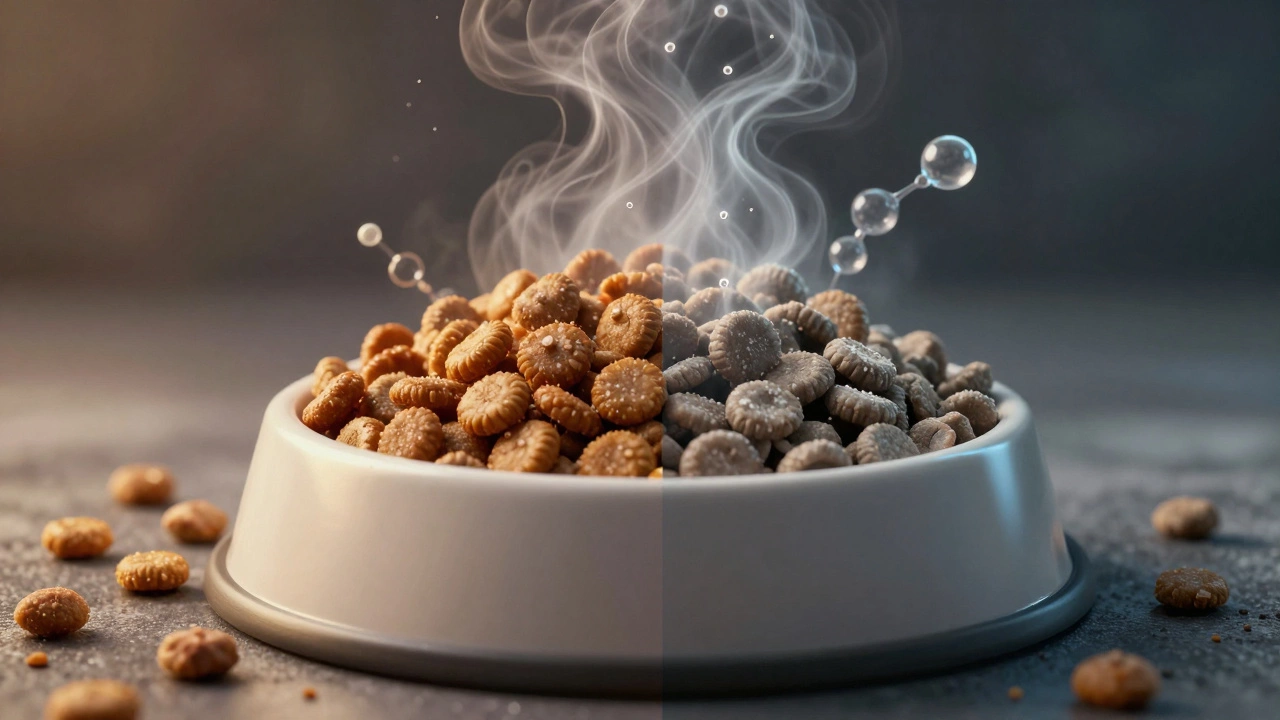
You might notice your dog doesn't seem to care if the food is a day old. Dogs have a powerful sense of smell, but they are also opportunistic scavengers. Just because they will eat it doesn't mean it's optimal for their health. When Kibble sits out, it loses its aromatic appeal. This is why some dogs suddenly become "picky eaters." They aren't suddenly hating the brand; they are reacting to the loss of volatile organic compounds that make the food smell appetizing.
Furthermore, the vitamins in dog food-especially fat-soluble ones like Vitamin A and E-can degrade when exposed to light and air. If you leave food out for days, you're essentially feeding your dog empty calories instead of a balanced diet. A dog eating stale food for months may not get sick overnight, but you might see a duller coat or lower energy levels because the nutrient density has plummeted.
The Danger of "Toppers" and Wet Mix-ins
Many of us add a splash of water, a spoonful of Wet Dog Food, or a bit of goat milk to make the meal more exciting. This changes the safety window drastically. Dry kibble is designed to be shelf-stable because it has very low water activity. Adding moisture creates the perfect environment for bacteria to bloom.
If you mix wet food into the bowl, the safe window shrinks to about 2 to 4 hours. Beyond that, the proteins begin to break down, and the risk of food poisoning increases. If you see a "slime" forming on the surface of the kibble or if it smells slightly vinegary, throw it away immediately. Your dog's stomach is more acidic than a human's, but they are not immune to food-borne pathogens.
| Food Type | Safe Duration | Main Risk | Recommended Action |
|---|---|---|---|
| Pure Dry Kibble | Up to 24 Hours | Oxidation/Staleness | Refresh daily |
| Kibble + Water | 4-6 Hours | Bacterial Growth | Discard after meal |
| Kibble + Wet Food | 2-4 Hours | Rapid Spoilage | Feed immediately |
| Kibble + Fresh Meat | 1-2 Hours | Pathogens | Strict monitoring |
Better Feeding Habits for a Healthier Dog
The best way to ensure your dog is eating safe, nutrient-dense food is to move away from the "buffet style" of feeding. Scheduled mealtimes are not just about discipline; they are about food safety and weight management. When you put food down and pick it up after 20 minutes, you control exactly what goes into their body.
If you struggle with a dog that refuses to eat their meal all at once, try these steps:
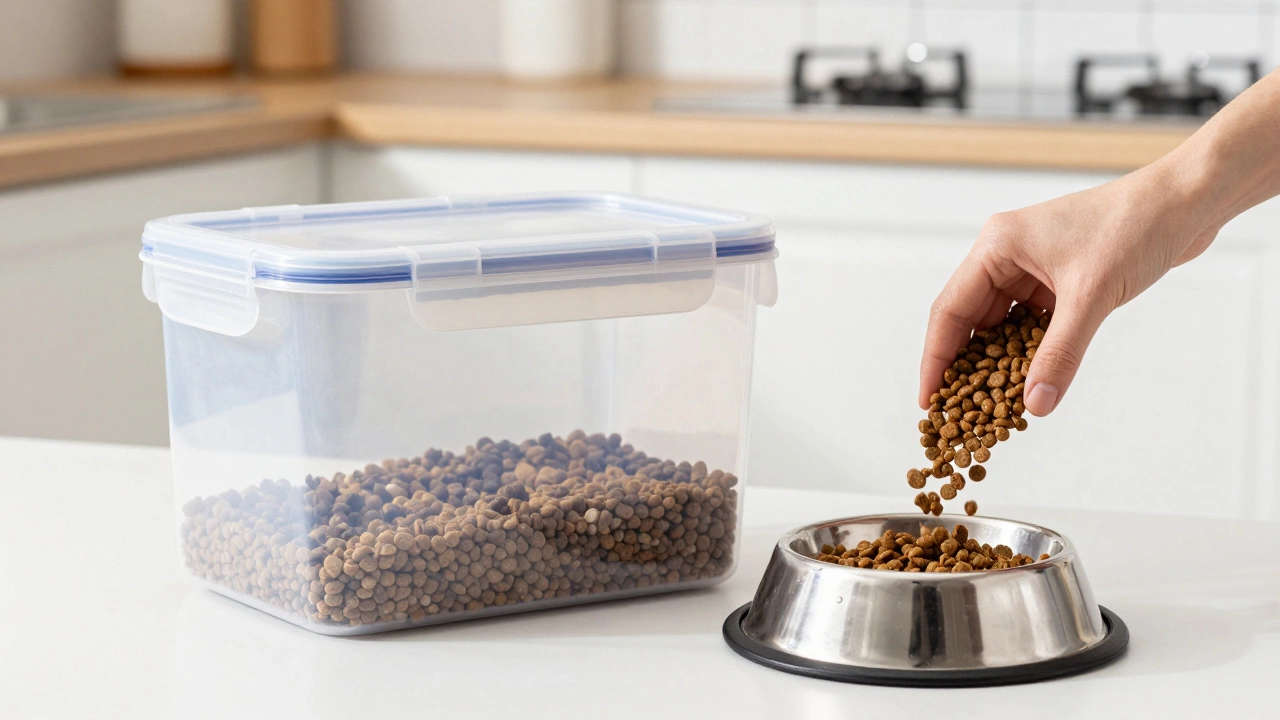
- Use an Airtight Container: Store the bulk of your food in a Airtight Bin rather than the original bag to prevent oxygen from spoiling the rest of the supply.
- The 20-Minute Rule: Put the bowl down. If they haven't finished in 20 minutes, remove it. This encourages them to eat when the food is freshest and helps you monitor their appetite.
- Small, Frequent Meals: If your dog is a grazer, try feeding three smaller meals a day instead of one giant pile. This keeps the food fresh and prevents the "feast or famine" cycle.
- Clean the Bowl Daily: This is the part most people forget. A plastic bowl with scratches in it can harbor bacteria even after you replace the food. Wash bowls with warm, soapy water every single day.
Common Signs of Spoiled Dog Food
How do you know if the food in the bowl has gone bad? Since dogs often eat things they shouldn't, you have to be the detective. First, use your nose. Rancid fats have a very specific smell-think of old crayons or a dusty attic. If the kibble doesn't smell "nutty" or "meaty" as it should, it's gone.
Look for changes in texture. If the kibble feels soft or sticky without you adding water, it has absorbed too much moisture from the air (humidity). This is a huge red flag for mold growth, even if you can't see the spores. Finally, check for pests. Ants and cockroaches are attracted to the oils in dog food; once they enter the bowl, they can introduce further contamination.
Managing Long-Term Storage
While we are talking about the bowl, it's worth mentioning the bag. If the food is already stale in the bag, it will be dangerous in the bowl. Most high-end brands use Vacuum Sealing or nitrogen flushing to keep the food fresh. Once you break that seal, the clock starts.
A good rule of thumb is to use the food within 6 weeks of opening the bag. If you buy the massive 30lb bags to save money, you might actually be losing money if the last 10lbs go rancid and need to be tossed. Consider smaller bags or a truly airtight storage system to maintain the integrity of the proteins and fats.
Can my dog get sick from eating old kibble?
Yes. While dry food is stable, it can develop mold or harbor bacteria if exposed to moisture. Rancid fats can cause stomach upset, diarrhea, and in the long run, can lead to nutrient deficiencies. If the food smells off or has been sitting for days, it's not worth the risk.
Is it okay to leave food out overnight?
Generally, pure dry kibble is safe for one night, but it begins to lose its nutritional value and flavor. However, if you've added water or wet food, you should never leave it overnight as bacteria grow rapidly at room temperature.
Why does my dog stop eating food that has been sitting out?
Dogs rely heavily on scent. When kibble sits out, the aromatic oils evaporate and the fats oxidize. The food simply doesn't smell "delicious" anymore, making it less appealing to the dog.
Do plastic bowls make food spoil faster?
Plastic bowls can develop microscopic scratches where bacteria hide and multiply. This can contaminate the food faster than stainless steel or ceramic bowls, which are smoother and easier to sanitize properly.
How do I tell if my dog food has gone rancid?
The most obvious sign is a "stale" or "chemical" smell, similar to old oil. You might also notice a change in color (fading) or a change in texture, such as the kibble feeling overly soft or tacky.
Next Steps for Pet Parents
If you've been free-feeding, don't switch to a strict schedule overnight, as some dogs may get anxious. Gradually introduce set meal times over a week. Start by picking up the bowl 30 minutes after they usually eat, then slowly shorten the window.
If your dog has a sensitive stomach, be especially careful with the "bowl time." Dogs with compromised immune systems or chronic GI issues are much more susceptible to the bacteria that grow in leftover food. When in doubt, throw it out-the cost of a handful of kibble is nothing compared to a vet visit for food poisoning.