
Dog Bed Shape Recommendation Tool
Answer these questions about your dog to get a personalized bed shape recommendation based on expert guidelines.
You’ve probably stood in a pet store aisle, staring at two nearly identical beds. One is round, like a cozy donut. The other is rectangular, like a standard mattress. Both look soft. Both promise better sleep for your dog. So, which one does your dog actually want?
It’s not just about aesthetics. The shape of a dog bed influences how your dog sleeps, how well they regulate temperature, and even their joint health. While there is no single "correct" answer for every dog, understanding the mechanics of canine sleep behavior can help you pick the right fit.
Quick Takeaway: Which Shape Wins?
Circle (Donut) beds are best for small breeds, anxious dogs, and those who curl up. They provide security and warmth. Square (Rectangular) beds are superior for large breeds, active dogs, and those who stretch out flat. They offer more surface area and better support for joints.
The Science of Canine Sleep Postures
To understand why shape matters, we first need to look at how dogs sleep. Unlike humans, who mostly lie on our backs or sides, dogs have distinct sleeping postures that signal different emotional states and physical needs.
The most common posture is the "curled up" ball. When a dog curls into a tight circle, they are conserving body heat and protecting their vital organs. This is an instinctual behavior inherited from wild ancestors who needed to stay warm and safe from predators. If your dog naturally sleeps this way, a circular dog bed with raised edges acts as an extension of their body. The rim supports their head and neck, while the enclosed space mimics the feeling of being tucked in.
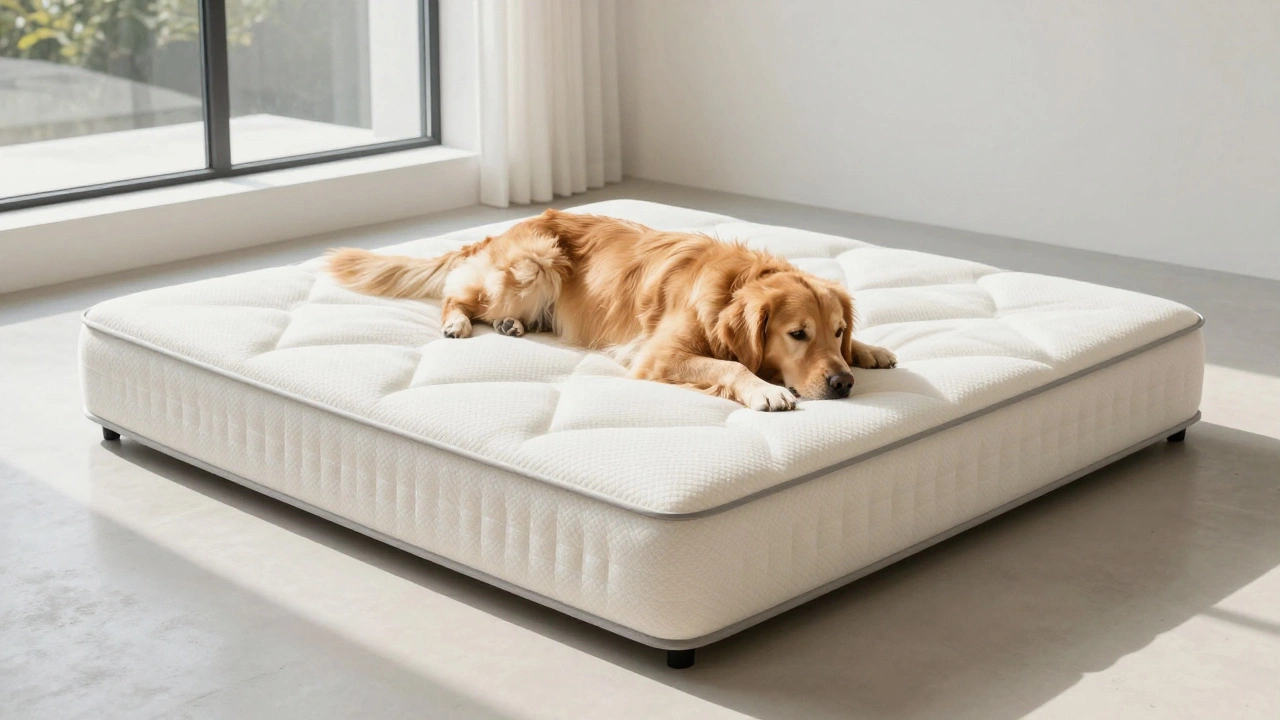
Conversely, many dogs prefer the "sploot" or the "belly-up" stretch. These positions require significant floor space. A square or rectangular bed provides the necessary length for a dog to extend their hind legs fully. For larger breeds like Golden Retrievers or German Shepherds, a circular bed often forces them to compromise their comfort, leading to restless nights where they constantly adjust their position to find room.
Circle Beds: Security and Warmth
Donut beds, also known as bolster beds, are designed with a plush, raised ring surrounding a softer center. This design serves three primary functions: thermal regulation, psychological security, and spinal alignment.
Thermal Regulation: Small dogs and short-haired breeds lose body heat quickly. The raised walls of a circle bed trap warmth, creating a microclimate that keeps the dog cozy without needing excessive bedding. In colder climates, this can be a game-changer for older dogs with poor circulation.
Psychological Security: Anxiety plays a huge role in sleep quality. Dogs with separation anxiety or noise phobias (like thunderstorms) often seek enclosed spaces. The visual barrier created by the high sides of a circle bed reduces sensory input from the rest of the room, helping the dog feel hidden and safe. It’s similar to why cats love boxes.
Who Should Avoid Circle Beds? Large breeds, heavy dogs, and those with hip dysplasia should generally avoid deep-walled circle beds. The effort required to climb over the thick bolster can strain arthritic joints. Additionally, if your dog is a "hot sleeper" (they pant frequently or seek cool surfaces), the heat-trapping nature of a plush circle bed can lead to overheating.
Square and Rectangular Beds: Space and Support
Rectangular beds come in various forms, from simple flat mats to thick orthopedic foam mattresses. Their defining feature is linear space. This shape prioritizes freedom of movement and ergonomic support over enclosure.
Orthopedic Support: Most high-quality orthopedic beds are rectangular. Memory foam or egg-crate foam needs a flat, wide surface to distribute weight evenly. A circular shape would create pressure points at the edges, defeating the purpose of joint relief. For senior dogs or breeds prone to arthritis, such as Labradors or Bulldogs, a firm, rectangular orthopedic bed is often recommended by veterinarians.
Versatility in Positioning: Dogs that change positions frequently throughout the night benefit from the open layout of a square bed. They can roll from side to side, stretch out, or curl up slightly without hitting a wall. This flexibility prevents the "restless shifting" that often leads to poor sleep quality.
Temperature Control: Flat rectangular beds, especially those made of cooling gel or breathable mesh, allow for maximum airflow. If your dog sleeps in a warm room or has a thick double coat, a low-profile square bed prevents heat buildup.
Key Factors Influencing Bed Preference
Choosing between circle and square isn’t just about guessing your dog’s personality. You should evaluate specific physical and behavioral traits.
| Factor | Circle / Donut Bed | Square / Rectangular Bed |
|---|---|---|
| Best For Breed Size | Small to Medium (under 40 lbs) | Medium to Large (40+ lbs) |
| Primary Benefit | Anxiety reduction & warmth | Joint support & stretching space |
| Sleep Style | Curling up tightly | Stretching out or splooting |
| Material Focus | d>Plush faux fur, sherpa | Memory foam, cooling gel, canvas |
| Health Considerations | Good for cold sensitivity | Essential for arthritis/hip dysplasia |
1. Age and Mobility
Puppies and young adults have the agility to navigate high bolsters. Senior dogs do not. If your dog struggles to jump onto your sofa, a high-walled circle bed might be a barrier to entry. Look for low-entry rectangular beds with non-slip bottoms for older pets.
2. Coat Type and Climate
Dogs with thick coats (Huskies, Bernese Mountain Dogs) retain heat well. In summer, a plush circle bed can cause overheating. Opt for a breathable rectangular mat. Conversely, hairless breeds (Chinese Crested) or short-haired dogs (Greyhounds) will almost always prefer the insulation of a circle bed in cooler months.
3. Behavioral Traits
Observe your dog’s current sleeping habits. Do they sleep under blankets? Do they press their face into pillows? These are signs they crave enclosure and pressure therapy, pointing toward a circle bed. Do they sprawl across the entire rug? They need space, pointing toward a square bed.
Common Mistakes When Choosing a Bed
Many owners buy the wrong bed because they focus on size rather than shape, or vice versa. Here are the most frequent errors:
- Buying Too Small: Even if your dog likes to curl up, they need enough room to flip over. Measure your dog from nose to tail while stretched out, then add 6-8 inches. A circle bed that is too small will force the dog to sleep partially outside the rim, negating the benefits.
- Ignoring Washability: Circle beds with removable covers are easier to clean than integrated plush designs. Rectangular beds with zippered covers are generally simpler to maintain. If your dog sheds heavily or has accidents, choose a bed with a machine-washable cover regardless of shape.
- Assuming All Foam Is Equal: Not all rectangular beds are supportive. Cheap polyurethane foam flattens quickly. Look for high-density memory foam (at least 2 inches thick) for true orthopedic benefits.
How to Test Your Dog’s Preference
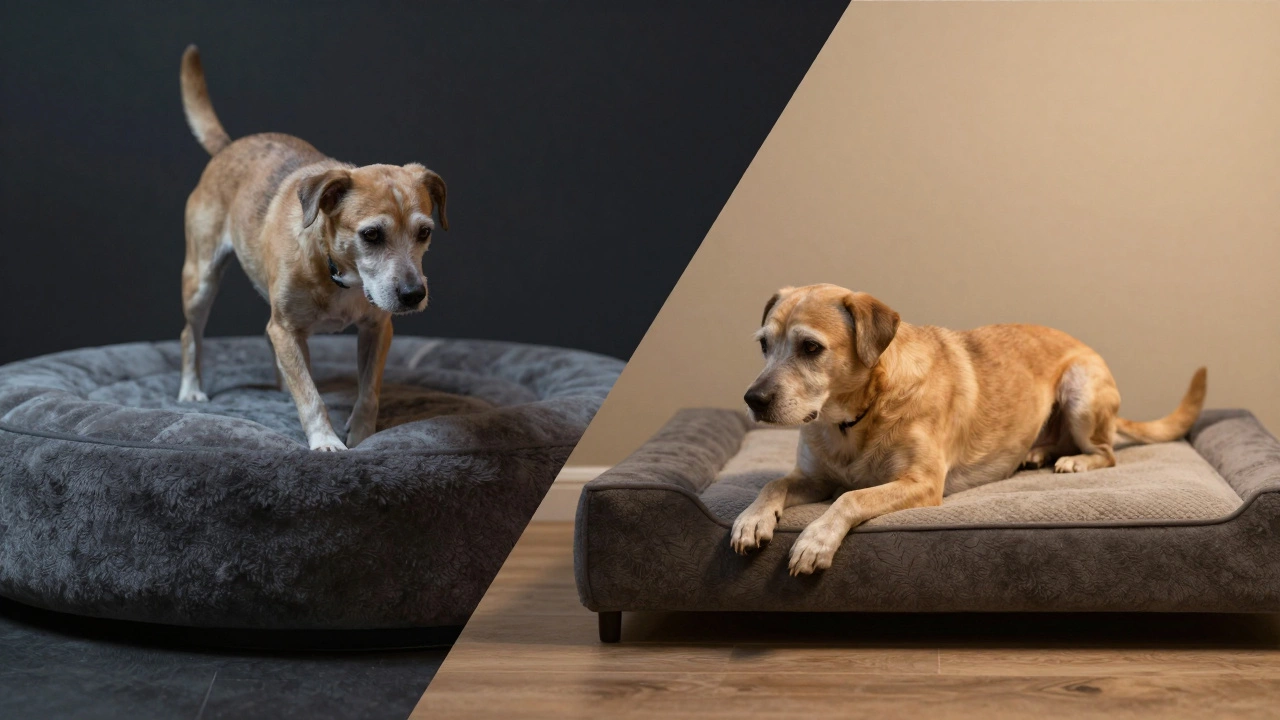
If you’re still unsure, you can run a simple test before investing in an expensive bed. Place two different types of cushions or blankets in your dog’s usual sleeping spot-one shaped loosely like a circle with a pillow around it, and one flat and rectangular. Observe which one they choose over the course of three days. Note not just which one they use, but how deeply they sleep on it. A dog that chooses a bed but remains alert may not be comfortable, whereas a dog that falls asleep quickly and stays still is likely satisfied.
Final Thoughts on Dog Bed Shapes
There is no universal winner between circle and square dog beds. The "best" bed is the one that aligns with your dog’s biology and behavior. Small, anxious, or cold-sensitive dogs thrive in the embrace of a circle bed. Large, active, or arthritic dogs require the expansive support of a rectangular bed. By observing your dog’s natural sleep posture and considering their age and health, you can make a choice that improves their rest-and yours.
Can I switch my dog from a circle bed to a square bed?
Yes, but transition slowly. Place the new square bed next to the old circle bed for a few days. Use treats and praise to encourage exploration. Some dogs may resist the lack of walls initially, so consider adding a blanket to create a sense of boundary until they adjust.
Are oval dog beds better than circle or square?
Oval beds offer a middle ground. They provide some of the enclosure of a circle bed with more length for stretching than a perfect circle. They are ideal for medium-sized dogs who like to curl up but occasionally stretch out. However, they may not provide enough support for very large breeds.
Does the material matter more than the shape?
Material and shape work together. A square bed made of thin polyester won’t help an arthritic dog, regardless of its shape. Similarly, a circle bed with hard foam won’t soothe anxiety. Prioritize high-density foam for support and plush, soft fabrics for comfort, then select the shape based on your dog’s sleep style.
Why does my dog push the stuffing out of their circle bed?
This is often a nesting instinct. Dogs dig to create a comfortable depression before lying down. If your dog destroys the bed, they may need a more durable, chew-resistant material rather than a different shape. Look for beds with reinforced stitching and tough outer fabrics like ballistic nylon.
Is a raised cot bed a good alternative?
Raised cot beds are excellent for hot climates and outdoor use. They allow air circulation underneath, keeping the dog cool. They are typically rectangular, offering good space. However, they provide less cushioning for joints, so they are not ideal for senior dogs or those with arthritis unless paired with a separate mattress.