Canine Comfort & Bedding Advisor
Is your dog ignoring the expensive plush bed in favor of the hardwood? Use this tool to analyze the physiological and environmental factors driving their choice.
Recommendation
Factor Breakdown
Select your dog's details on the left and click "Analyze Preference" to see results.
You know that look. You buy a plush, expensive dog bed is a designated resting place designed to provide comfort and insulation for pets. It’s soft, it’s warm, and it looks great in your living room. But when you set it down, your dog stares at it with mild suspicion, turns around, and lies down on the cold hardwood three feet away. Why do dogs like the floor or bed? It’s a question that frustrates many pet owners who have invested in premium gear only to watch their furry friends ignore it entirely.
The answer isn't as simple as "they prefer the floor." In fact, most dogs don't have a hard preference for one over the other in the way humans do. Instead, their choice depends on temperature, joint health, anxiety levels, and habit. Understanding these factors helps you figure out if your dog needs a new setup or if they are simply being true to their ancestral instincts.
Why Some Dogs Prefer the Cold Floor
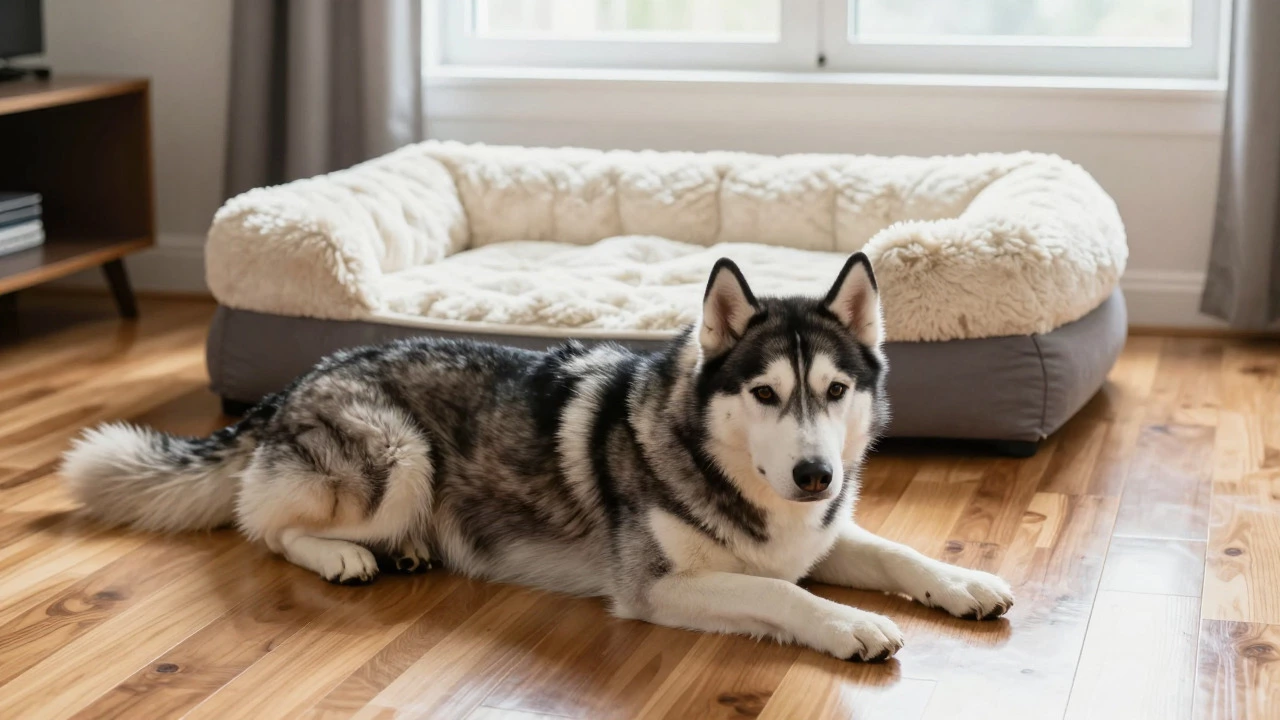
If your dog consistently chooses the tile, concrete, or wooden floor over a raised bed, it usually comes down to thermoregulation. Dogs regulate body heat through panting and blood flow to their skin. A cool surface acts as a natural radiator, helping them dissipate excess heat. This is particularly common in larger breeds or dogs with thick double coats, such as Huskies or Newfoundlands, who struggle more with warmth than smaller, short-haired breeds.
Beyond temperature, there is a sensory element. Many dogs find the firmness of a floor appealing because it provides clear tactile feedback. When a dog lies on a hard surface, they can feel the ground beneath them, which offers a sense of security and stability. For dogs that feel anxious or need to stay alert, a firm surface allows them to hear and feel vibrations from the house better than a deep, cushioned bed might.
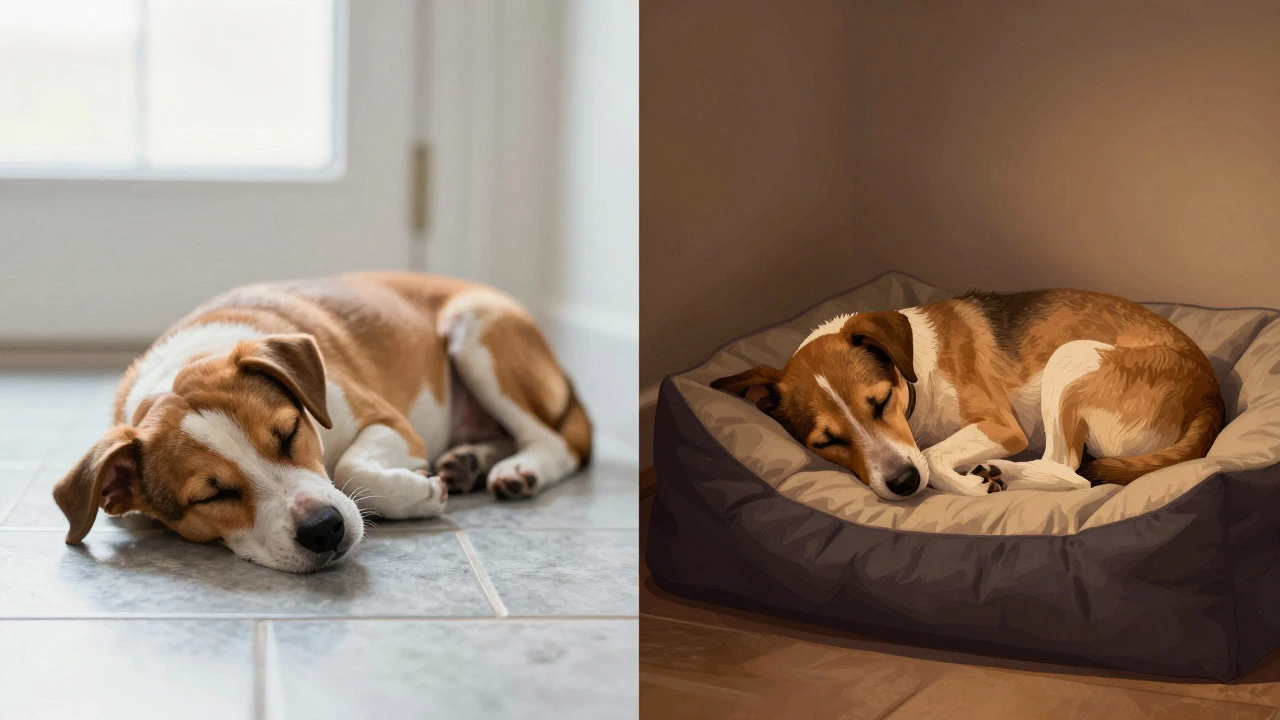
However, this preference has limits. If a dog sleeps on the floor exclusively, it could be a sign that their current bed is too soft, too hot, or poorly placed. Check if the bed is in a drafty area or under direct sunlight. Sometimes, moving the bed to a cooler corner or swapping a fluffy faux-fur cover for a breathable cotton one solves the problem without buying anything new.
The Case for Dog Beds: Support and Insulation
While the floor has its merits, a quality orthopedic dog bed is a specialized bedding product filled with high-density foam to relieve pressure points. These beds serve a critical function: protecting joints. As dogs age, arthritis becomes a prevalent issue. The lack of cushioning on a hard floor can exacerbate pain in hips, elbows, and shoulders. An orthopedic bed distributes weight evenly, reducing pressure on bony prominences and allowing muscles to relax fully during sleep.
Insulation is another major factor. In colder months, a floor can siphon heat away from a dog’s body rapidly. This is dangerous for senior dogs, small breeds, or those with thin coats. A proper bed creates a microclimate that retains body heat, ensuring the dog doesn’t burn energy staying warm throughout the night. If you notice your dog shivering slightly after waking up, or if they curl up tightly rather than stretching out, they might be losing too much heat on the floor.
Additionally, beds offer protection from debris. Hard floors can hide small splinters, dust mites, or allergens that irritate sensitive skin. A washable bed cover acts as a barrier, keeping the sleeping area hygienic and easy to clean, which is crucial for dogs with allergies or skin conditions.
How to Determine Your Dog's Preference
Instead of guessing, observe your dog’s behavior over a week. Look for specific cues that indicate comfort or discomfort. Are they shifting positions frequently? That suggests the surface isn't right. Do they sleep in multiple spots? This often indicates environmental factors like noise or temperature fluctuations rather than a dislike for the bed itself.
Try a simple test. Place two different types of bedding in the same location: a firm, low-profile mat and a deeper, cushioned bed. Leave both accessible for a few days. Most dogs will gravitate toward the option that best suits their immediate physical needs. If they choose the mat, they likely value firmness or cooling. If they pick the cushioned bed, they need support or warmth.
Also consider the size. A bed that is too large can make a dog feel exposed, while one that is too small forces awkward positioning. The ideal size allows the dog to stretch out fully but also provides enough enclosure for a sense of security. Measure your dog from nose to tail base and add a few inches for comfort.

Common Mistakes Owners Make
One frequent error is assuming that "bigger is better." While some dogs love sprawling out, many prefer compact, den-like spaces. If your dog ignores a massive round bed, try a bolster bed with raised sides. The walls mimic a burrow, triggering a calming response in many canines.
Another mistake is ignoring placement. Dogs are territorial and routine-oriented. Moving a bed from a quiet bedroom to a busy kitchen can cause rejection. Keep the bed in a consistent spot, away from high-traffic areas, until the dog feels secure using it again.
Finally, don't force the issue. If a dog refuses a bed, it rarely helps to push them onto it. Instead, use positive reinforcement. Toss treats into the bed, feed meals there, or place a favorite toy inside. Over time, the bed becomes associated with good things, and the dog will choose it voluntarily.
| Feature | Floor (Hard Surface) | Dog Bed (Cushioned) |
|---|---|---|
| Temperature Regulation | Cools the body; good for hot weather | Insulates; good for cold weather or seniors |
| Joint Support | Low; may aggravate arthritis | High; distributes weight and reduces pressure |
| Hygiene | Can accumulate dust/allergens | Easier to wash and sanitize |
| Sensory Feedback | High tactile awareness; feeling of stability | Muffled sound; softer, isolating environment |
| Best For | Young, healthy dogs in warm climates | Senior dogs, large breeds, or cold climates |
When to Worry: Signs of Discomfort
Usually, choosing the floor is harmless. However, sudden changes in sleeping habits can signal health issues. If a previously bed-loving dog suddenly moves to the floor, check for signs of pain. Limping, stiffness upon waking, or reluctance to jump onto furniture could indicate hip dysplasia or spinal issues. In these cases, the floor might be chosen because getting into a deep bed is painful, not because the floor is preferred.
Conversely, if a floor-sleeping dog starts seeking out cushions, they might be experiencing joint pain or feeling cold due to aging. Monitoring these shifts helps you intervene early with veterinary care or appropriate bedding upgrades.
Choosing the Right Setup for Your Home
Your home environment plays a huge role. In a brick-built house with stone floors, insulation is key. In a modern apartment with underfloor heating, the floor might be too warm, pushing dogs toward cooler, elevated beds. Consider your local climate. In the UK, where winters are damp and chilly, an insulated bed is often essential for year-round comfort, even for young dogs.
Material matters too. Memory foam conforms to the body but can retain heat. Gel-infused foam offers cooling properties. For dogs with allergies, hypoallergenic fabrics like bamboo or organic cotton are superior choices. Always ensure the cover is machine-washable, as accidents happen, and hygiene is non-negotiable for long-term health.
Final Thoughts on Comfort
There is no single right answer to whether dogs like the floor or the bed. It is a dynamic balance between physiology, psychology, and environment. By observing your dog closely and adjusting your setup accordingly, you can ensure they get the rest they need. Whether they end up on a plush orthopedic mattress or a cool patch of wood, the goal is the same: a comfortable, pain-free sleep that supports their overall well-being.
Is it bad for dogs to sleep on the floor?
Not necessarily. For young, healthy dogs, sleeping on a hard floor is safe and can help regulate body temperature. However, for senior dogs or those with arthritis, the lack of cushioning can lead to joint pain and muscle stiffness over time.
Why does my dog ignore their new bed?
Dogs may ignore new beds due to unfamiliar smells, incorrect sizing, or poor placement. Try placing the bed near their usual sleeping spot, adding a worn t-shirt with your scent, and rewarding them with treats for lying on it. Patience is key; most dogs adapt within a few weeks.
What type of bed is best for arthritic dogs?
An orthopedic bed made of high-density memory foam is ideal. It should be low-profile to make entry and exit easier and have a non-slip bottom to prevent sliding. Raised sides can provide back support, but avoid overly deep beds that trap heat.
Do dogs prefer cool or warm surfaces?
It depends on the individual dog and the ambient temperature. Generally, dogs seek cool surfaces when hot and warm, insulated surfaces when cold. Large breeds and thick-coated dogs often prefer cooler options, while small or short-haired breeds prefer warmth.
How often should I replace my dog's bed?
Most high-quality dog beds last 1-2 years with regular use. Replace the bed if the foam flattens out, loses its shape, or develops odors that washing cannot remove. Regularly checking the integrity of the material ensures continued support and hygiene.