
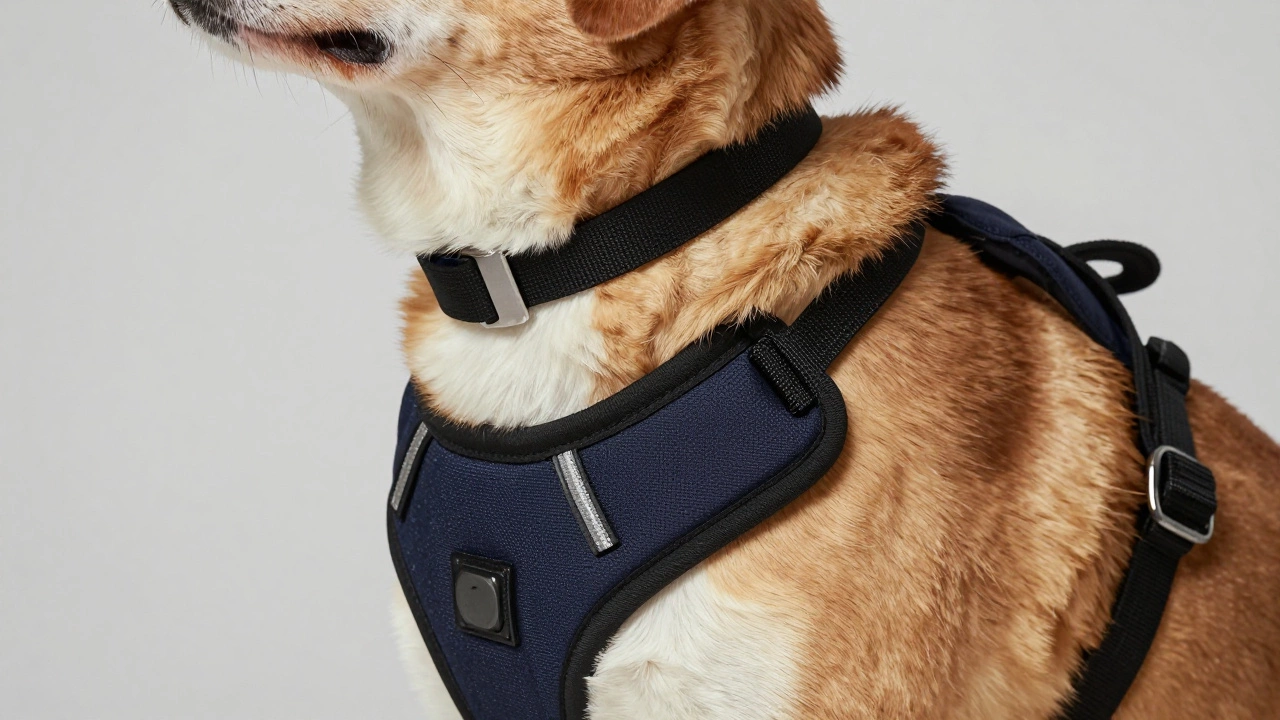
Collar vs. Harness Recommendation Tool
There is a moment every dog owner faces when the walk goes wrong. Your dog spots a squirrel, lunges forward, and suddenly you are holding onto more than just a leash-you are holding onto your sanity and their safety. The question isn't just about fashion; it is about physics and biology. When that sudden pull happens, where does the force go? To the neck or to the chest?
This debate between dog collars and dog harnesses is one of the most common dilemmas in pet care. For years, the standard was simple: put a collar on, attach a leash, and walk. But as we understand more about canine anatomy and behavior, the answer has become much more nuanced. It is not a one-size-fits-all solution. Choosing the right gear depends entirely on your dog's size, health, and walking habits.
The Anatomy of Pressure: Why Location Matters
To make the right choice, you have to look at what happens inside your dog's body when they pull. A flat collar is a band worn around the neck that distributes pressure directly to the trachea and cervical spine. When a dog pulls against a flat collar, the tension squeezes the windpipe. This can cause coughing, difficulty breathing, and long-term damage to the thyroid gland, which sits right next to the trachea.
In contrast, a step-in harness distributes pulling force across the dog's chest and shoulders rather than the neck. This design moves the pressure away from delicate organs. Instead of choking the airway, the force is absorbed by the ribcage and shoulder blades. For many dogs, especially those prone to pulling, this difference is night and day. It changes the walk from a strangled tug-of-war into a comfortable stroll.
When a Collar Is Actually the Better Choice
Despite the rise of harnesses, collars still have a place in responsible dog ownership. In fact, for some dogs, a collar is safer and more practical. Here is why you might stick with a collar:
- Identification and Safety: Even if your dog wears a harness daily, a collar with an ID tag and license is crucial. If a dog escapes through a gate, the harness might slip off, but a collar usually stays put. The collar acts as a backup identification system.
- Precise Control: For well-trained dogs who walk politely, a collar offers immediate feedback. When you give a gentle cue, the sensation is direct. Some professional trainers prefer collars for teaching loose-leash walking because the signal is clearer than the distributed pressure of a harness.
- Comfort for Small Breeds: Tiny dogs like Chihuahuas or Yorkshire Terriers often find harnesses cumbersome. They can feel trapped or restricted by straps wrapping around their torso. A lightweight martingale collar or a thin nylon collar allows them freedom of movement without bulk.
- Veterinary Access: If your dog has skin issues, allergies, or needs frequent medication injections in the neck area, a collar keeps that zone accessible. Harnesses can sometimes rub against sensitive skin or interfere with medical procedures.
The Case for the Harness: Protection and Control
Harnesses have gained popularity for good reason. They address two major problems: physical injury and behavioral reinforcement. Let’s break down why a harness might be the superior tool for your specific situation.
Preventing Tracheal Collapse: Brachycephalic breeds-dogs with short noses like Pugs, Bulldogs, and Boston Terriers-are at high risk for tracheal collapse. Their airways are already compromised. Adding pressure via a collar can be dangerous. For these dogs, a harness is not just a preference; it is a medical necessity. Similarly, older dogs with arthritis in the neck or spine benefit from the reduced strain a harness provides.
Managing Pullers: If your dog drags you down the street, a harness gives you better leverage. Front-clip harnesses attach the leash to the chest, turning the dog slightly inward when they pull. This disrupts their momentum and makes pulling less effective. Back-clip harnesses offer stability but do not discourage pulling as effectively. The key is choosing the right clip position based on your dog’s behavior.
Reducing Anxiety: Some dogs feel anxious when pressure is applied to their neck. A harness can provide a sense of security, similar to a weighted blanket for humans. It wraps around the body, offering gentle compression that calms nervous dogs during walks.
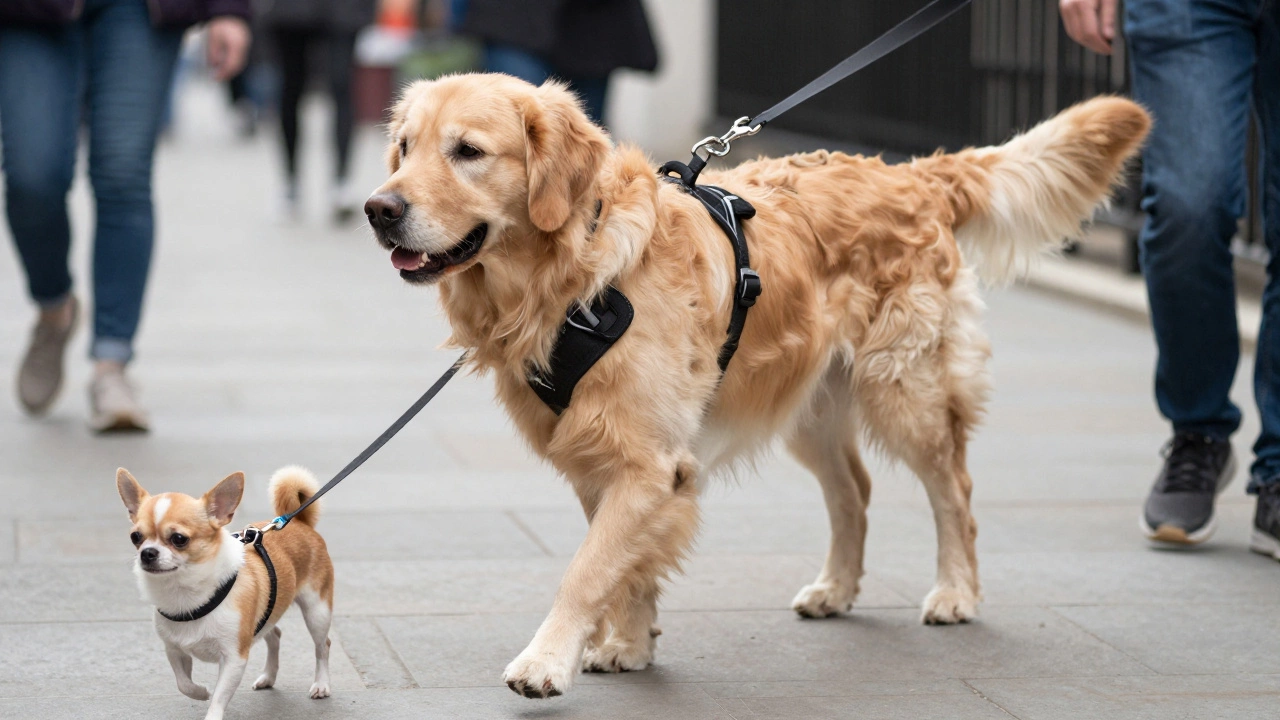
Types of Collars and Harnesses: A Quick Guide
Not all collars and harnesses are created equal. Understanding the types helps you match the gear to your dog’s needs.
| Type | Best For | Risks/Downsides |
|---|---|---|
| Flat Nylon Collar | Well-behaved dogs, ID tags | Tracheal damage if pulled |
| Martingale Collar | Dogs with narrow heads (Greyhounds) | Tightens under tension; must fit perfectly |
| Prong/Collar Shock | Avoid unless directed by pro trainer | Painful, can cause fear/aggression |
| Back-Clip Harness | Calm walkers, small breeds | Does not stop pulling |
| Front-Clip Harness | Strong pullers, training | Can twist torso if poorly fitted |
| No-Pull Y-Harness | Active dogs, running | May restrict shoulder movement |
A martingale collar tightens slightly when the dog pulls but stops before choking is excellent for sighthounds like Greyhounds, whose head shape allows them to slip out of regular collars. However, it requires precise fitting. A Y-shaped harness allows full range of motion for the shoulders while securing the chest is ideal for active dogs who need to run freely without chafing.
Fitting Mistakes That Cause Injury
You can buy the most expensive harness or collar, but if it doesn’t fit, it’s useless-or worse, harmful. Most injuries come from improper fit, not the gear itself.
The Two-Finger Rule: You should always be able to slide two fingers comfortably under any strap of a collar or harness. If it’s tighter than that, it’s too tight. If you can slide a hand underneath, it’s too loose and could slip off.
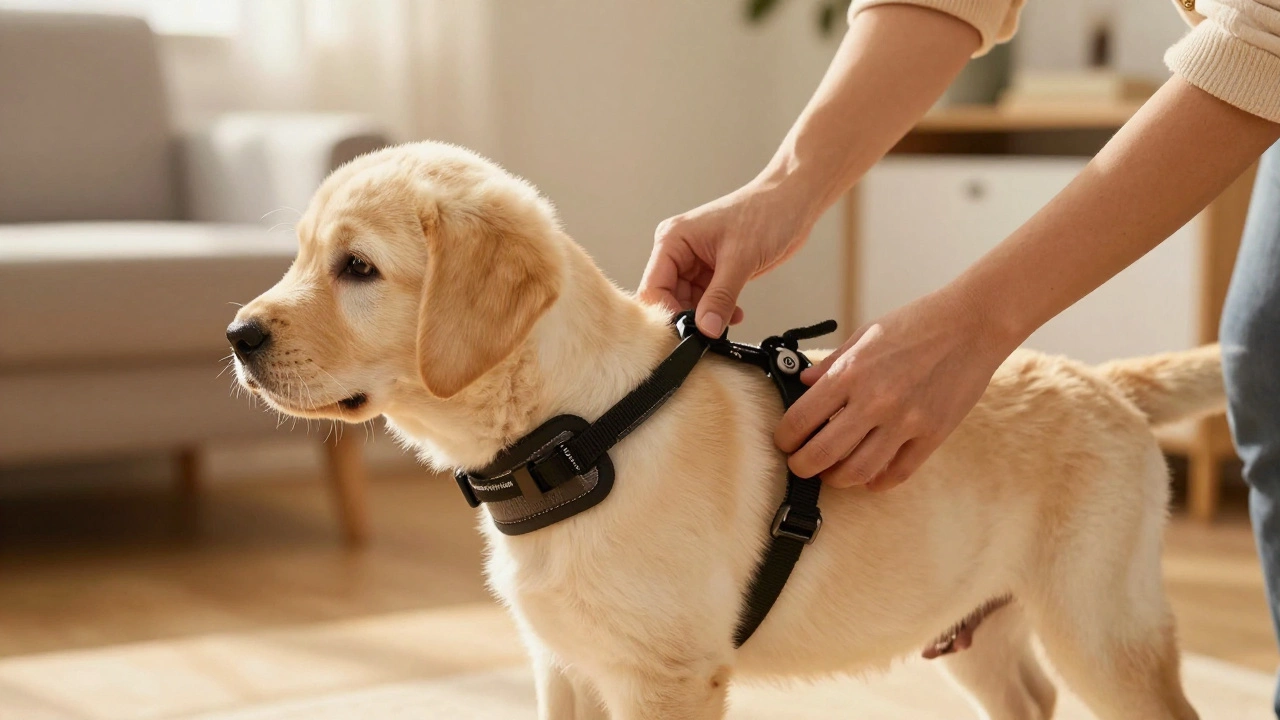
Harness Gaps: Check the girth strap (around the belly). If there is a gap between the harness and your dog’s body, they can escape. If it’s digging into their fur or skin, it will cause sores. Adjust the buckles until it sits snugly but doesn’t restrict breathing or movement.
Collar Position: Place the collar high on the neck, just behind the ears and below the jawline. If it slides down to the throat, it puts unnecessary pressure on the trachea. A properly positioned collar sits securely against the skull base.
Behavioral Considerations: What Does Your Dog Do?
Your dog’s personality plays a huge role in this decision. Ask yourself these questions:
- Do they pull? If yes, start with a front-clip harness. It discourages pulling mechanically. Pair it with positive reinforcement training to teach them to walk loosely.
- Are they reactive? Reactive dogs often lunge at triggers. A harness provides better control and prevents neck injury during sudden bursts of energy. Avoid collars that tighten further under stress.
- Do they slip out? If your dog has a smaller head than neck circumference, a martingale collar or a secure harness with multiple attachment points is essential. Never rely solely on a flat collar for escape artists.
- Are they elderly or arthritic? Older dogs may struggle with the weight or restriction of a harness. A lightweight collar might be more comfortable for short walks, provided they don’t pull.
Training Tips for Loose-Leash Walking
Gear alone won’t fix bad walking habits. Whether you use a collar or harness, training is key. Here is how to encourage polite behavior:
- Stop When They Pull: If your dog tugs, stop immediately. Stand still. Wait for them to relax and look back at you. Then resume walking. This teaches them that pulling gets them nowhere.
- Reward Loose Leash: Carry treats. Every few steps, if the leash is slack, reward them. Make walking nicely more rewarding than rushing ahead.
- Change Direction: If your dog pulls to the left, turn right. If they pull to the right, turn left. You become the leader of the pack, deciding the direction. This works best with a front-clip harness.
- Use a Long Line: For practice, use a 15-foot long line attached to a harness. This gives your dog space to explore while keeping you in control. It reduces tension compared to a short 6-foot leash.
Common Myths Debunked
Myth: Harnesses encourage pulling.
Reality: Only back-clip harnesses can inadvertently reinforce pulling if used incorrectly. Front-clip harnesses actively discourage it. The issue is training, not the harness itself.
Myth: Collars are cruel.
Reality: Flat collars are safe for well-trained dogs who don’t pull. The cruelty comes from using them on strong pullers or leaving them on unsupervised. Context matters.
Myth: One size fits all.
Reality: Every dog is unique. A Great Dane needs different support than a Dachshund. Always prioritize individual comfort and safety over trends.
Final Thoughts: Making the Right Choice
So, is it better to walk a dog on a collar or harness? The truth is, it depends. For most average-sized dogs who pull occasionally, a harness is the safer bet. It protects their neck and gives you better control. For small, calm dogs or those needing quick ID access, a collar works fine. Many owners use both: a harness for walking and a collar for identification.
Pay attention to your dog’s body language. Are they coughing after walks? Is their neck red or irritated? These are signs to switch gears. Invest in quality equipment, ensure proper fit, and pair it with consistent training. Your dog’s comfort and safety are worth the effort.
Can I use a collar and harness together?
Yes, many experts recommend wearing both. Use the harness for attaching the leash during walks to protect the neck, and keep the collar on with ID tags for identification. Just ensure the collar is loose enough to avoid choking if the dog pulls against the harness.
Is a martingale collar safe for all dogs?
Martingale collars are safest for dogs with narrow heads like Greyhounds or Whippets. They are not recommended for strong pullers or dogs with respiratory issues, as they can tighten significantly under tension. Proper fitting is critical to prevent injury.
Why does my dog hate wearing a harness?
Dogs often dislike harnesses because they feel restrictive or unfamiliar. Introduce it gradually. Let your dog sniff it, then place it on them without fastening. Reward calm behavior. Slowly fasten the straps, giving treats each step. Over time, they will associate it with positive experiences.
Which harness is best for aggressive dogs?
For aggressive or highly reactive dogs, a sturdy front-clip harness made of durable nylon or leather is best. It provides control without causing pain. Avoid prong or shock collars, which can escalate aggression. Consult a certified behaviorist for severe cases.
How do I know if my dog's collar is too tight?
You should be able to fit two fingers comfortably under the collar. If it leaves marks on the skin, causes coughing, or looks embedded in the fur, it is too tight. Regularly check the fit, especially as puppies grow or adult dogs gain/lose weight.