Puppy Potty Training Calculator
Puppy Information
Important Notes
Your Potty Schedule
At eight weeks old, your puppy is tiny, wobbly, and full of energy-but they’re also ready to start learning where to go potty. Many people think you need to wait until a puppy is older, maybe 12 or 16 weeks, before starting house training. That’s not true. An 8-week-old puppy can absolutely be potty trained. It won’t happen overnight, and accidents will happen, but the foundation you lay now makes everything easier later.
Why Start So Early?
Puppies this young have tiny bladders and can’t hold it for long. On average, they can hold their pee for about one hour per month of age. So an 8-week-old pup (about 2 months) can hold it for maybe 2 hours at best-often less. If you wait too long to start training, you’re setting them up for accidents indoors, which becomes a habit that’s harder to break.Starting early means you’re teaching them the right behavior from day one. You’re not correcting bad habits-you’re building good ones. That’s a big advantage. Studies from the University of Pennsylvania’s School of Veterinary Medicine show that puppies who begin house training before 12 weeks are significantly more likely to be fully reliable by 6 months than those who start later.
How Often Should You Take an 8-Week-Old Puppy Outside?
You need to be proactive. Don’t wait for them to squat or sniff around. By the time they show signs, it’s often too late.- Take them out first thing in the morning
- After every nap
- After every meal or snack
- After playtime or excitement
- Before bedtime
- Every 1 to 2 hours during the day
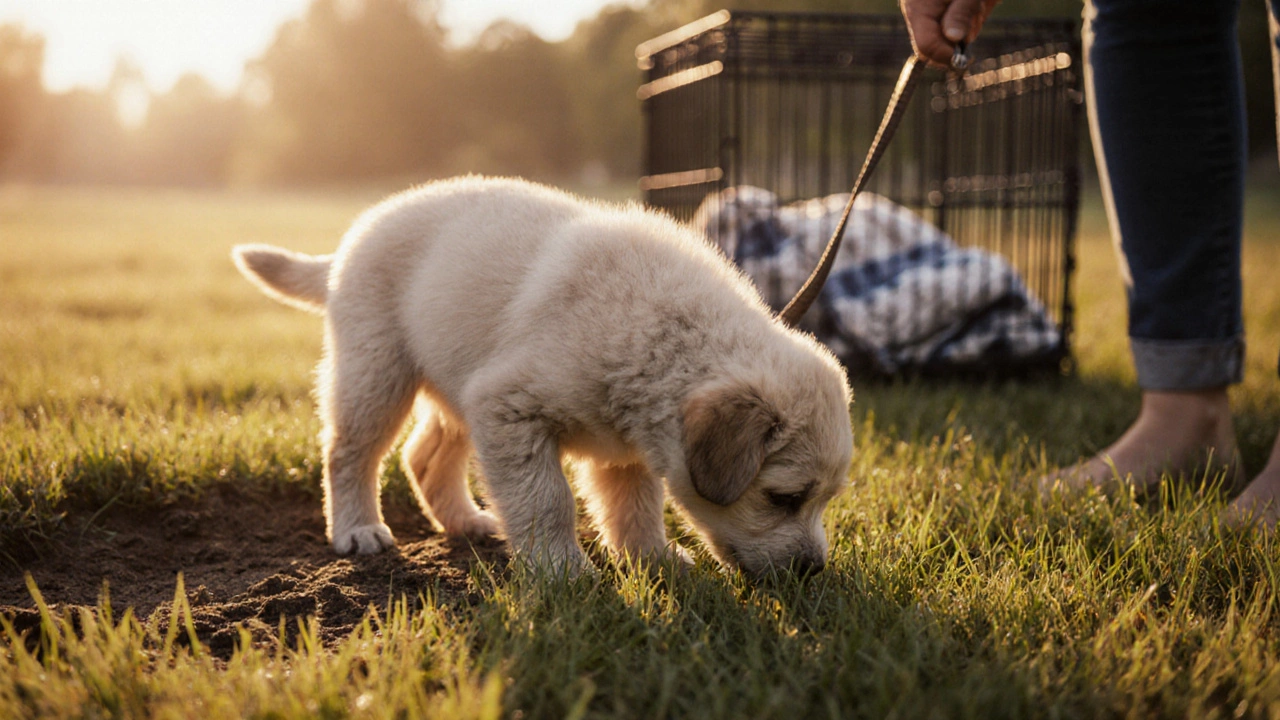
That’s about 8 to 12 trips outside daily. It sounds like a lot, but each trip only takes 5 minutes. Keep it calm and focused. No running, no chasing, no distractions. Just go to the same spot each time. Puppies learn by scent, so if they’ve gone in the same place before, they’re more likely to go again.
The Role of the Crate
A crate isn’t a punishment-it’s a tool. Dogs naturally avoid soiling their sleeping area. A properly sized crate helps you manage their access to the house and gives them a safe space.Make sure the crate is just big enough for them to stand, turn around, and lie down. If it’s too big, they might use one corner as a bathroom. Line it with a soft towel or puppy pad if needed, but avoid anything they can chew.
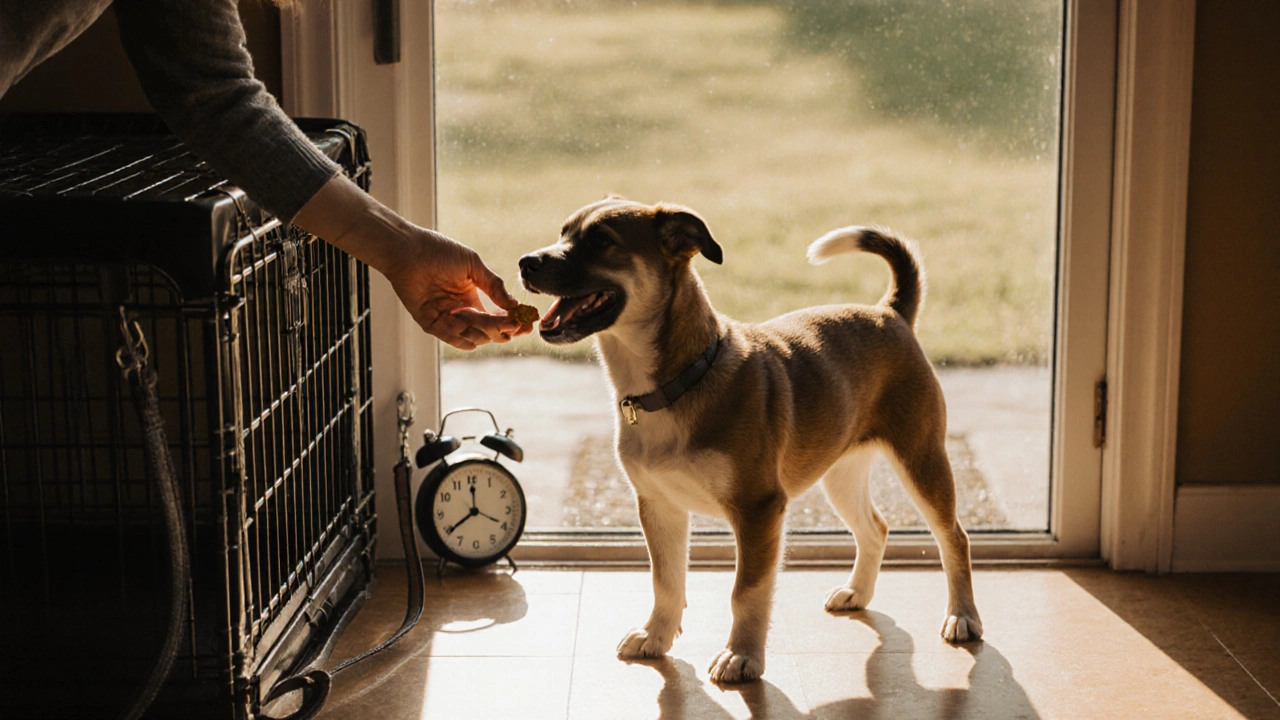
Use the crate when you can’t watch them. If you’re working, cooking, or on the phone, put them in the crate. Set a timer. Every 60 to 90 minutes, take them out to their potty spot. If they go, praise them with a quiet, happy voice and give a small treat. If they don’t, bring them back inside and try again in 30 minutes.
What to Do When Accidents Happen
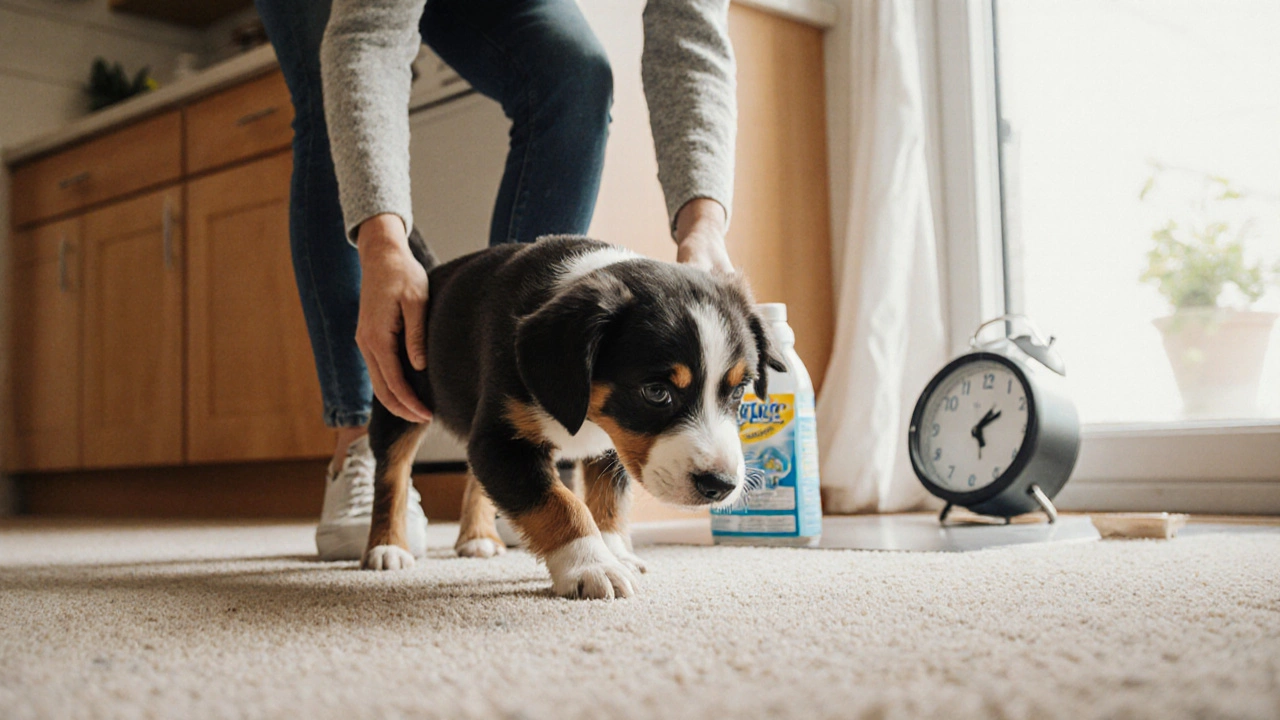
Accidents are normal. Don’t yell. Don’t rub their nose in it. Don’t punish them. They don’t understand why you’re upset. All they know is that something bad happened after they peed.Instead, clean the mess thoroughly with an enzymatic cleaner. Regular household cleaners won’t remove the odor completely, and your puppy will keep going back to the same spot. Look for cleaners labeled “for pet stains” that break down urine enzymes. Brands like Nature’s Miracle or Simple Solution work well.
Watch for signs they need to go: sniffing in circles, pacing, whining, or suddenly stopping play. If you catch them in the act, gently interrupt them with a soft “oops” and immediately take them outside. If they finish outside, reward them. If they don’t, bring them back inside and try again soon.
Positive Reinforcement Works Best
Puppies respond to rewards, not fear. The moment they finish going outside, say “good potty” in a cheerful tone and give them a tiny treat. Use something soft and smelly-like a piece of cooked chicken or a commercial training treat. Keep treats small so you’re not overfeeding.Over time, you can phase out the treats and replace them with praise, petting, or a quick game with their favorite toy. But don’t rush it. At this age, treats are the strongest motivator.
Also, avoid using pee pads indoors if you want them to go outside. It creates confusion. If your goal is outdoor potty training, make the outdoors the only place they learn to go. Pee pads teach them it’s okay to go on carpet, which you’ll have to unteach later.
What About Nighttime?
At 8 weeks, your puppy will likely need to go out at least once during the night. Their bladder is still developing. Don’t expect them to sleep through the night yet.Set an alarm for 4 to 5 hours after bedtime. When the alarm goes off, take them out quietly. Don’t turn on bright lights or play with them. Just go straight to the potty spot, wait, reward, and bring them back to bed. After a few days, they’ll start holding it longer. By 10 to 12 weeks, many puppies can sleep 6 to 7 hours without needing to go out.
Common Mistakes to Avoid
- Waiting for them to ask to go out
- Letting them roam freely unsupervised
- Using punishment or yelling
- Changing potty locations too often
- Using ammonia-based cleaners
- Assuming they’re being “bad” on purpose
Every mistake you avoid now saves you weeks of cleanup and frustration later.
When Will They Be Fully Trained?
Don’t expect perfection at 8 weeks. Full reliability usually comes between 4 and 6 months, depending on the breed and consistency of training. Small breeds often take longer because of smaller bladders. Larger breeds may catch on faster.But by 12 weeks, you should see clear progress: fewer accidents, better timing, and more awareness. By 6 months, most puppies are 90% reliable-if you’ve been consistent.
Think of potty training like teaching a toddler to use the toilet. It’s not about intelligence-it’s about routine, repetition, and patience.
What You Need to Get Started
- A properly sized crate
- Enzymatic cleaner for accidents
- Small, soft training treats
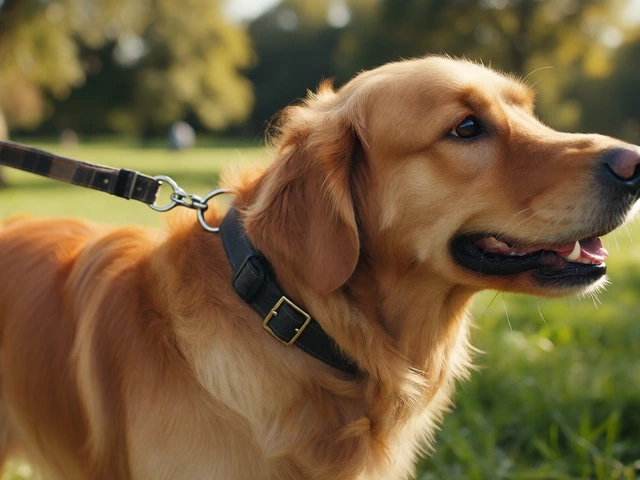
- A leash and collar (for outdoor trips)
- A consistent outdoor potty spot
- A timer or phone alarm
You don’t need expensive gear. Just consistency. A 2024 survey by the UK Kennel Club found that owners who stuck to a strict schedule for the first 8 weeks had 73% fewer indoor accidents by 16 weeks compared to those who trained sporadically.
Final Thought: It’s a Partnership
Potty training isn’t about controlling your puppy. It’s about teaching them how to live with you. They’re not being stubborn-they’re just learning. Your job is to show them the way, one trip at a time.Every time you take them out, you’re building trust. Every reward is a message: “You’re doing great.” And that’s what turns a messy, chaotic start into a calm, confident dog.
Can an 8-week-old puppy be potty trained at night?
Yes, but don’t expect them to sleep through the night yet. Most 8-week-old puppies need at least one nighttime potty break. Set an alarm for 4 to 5 hours after bedtime. Take them out quietly, reward them if they go, and bring them right back to bed. Over time, they’ll naturally hold it longer.
Should I use puppy pads or train them to go outside?
If your goal is outdoor potty training, avoid puppy pads. They teach your puppy it’s okay to go on soft surfaces, which makes outdoor training harder later. Use pads only if you live in an apartment with no yard and no access to outdoor space. Otherwise, go straight to outdoor training from day one.
How long does it take to potty train an 8-week-old puppy?
Full reliability usually takes 4 to 6 months. But you’ll see progress within weeks. By 12 weeks, most puppies have fewer accidents and start recognizing cues. Consistency matters more than speed. Puppies trained with a strict schedule are 73% more likely to be reliable by 16 weeks, according to the UK Kennel Club.
What if my puppy keeps peeing in the same spot inside?
Clean the area with an enzymatic cleaner-never ammonia-based. Regular cleaners leave behind odor that your puppy can still smell. Enzymatic cleaners break down urine proteins so the scent is gone. Then, block access to that spot if possible, and increase supervision. Take them to the same outdoor spot every time to reinforce the right behavior.
Is it normal for my puppy to have accidents even after being outside?
Yes, especially at this age. Their bladder control is still developing. They might go a little outside, then come in and go again. That’s not defiance-it’s biology. Keep taking them out frequently, watch for signs, and reward every successful outdoor trip. It gets better with time.