
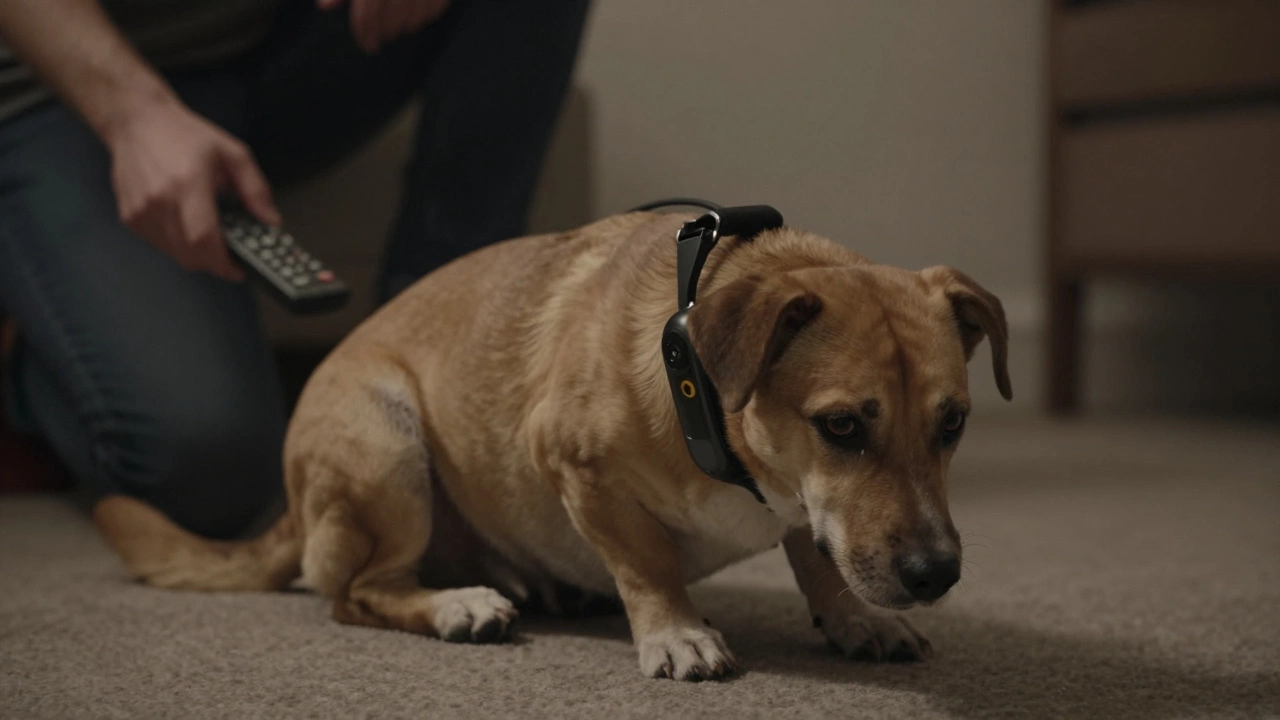
Using a shock collar on a dog isn’t just controversial-it’s a decision that can change your dog’s behavior, trust, and even their mental health. Millions of dog owners have turned to these devices thinking they’re a quick fix for barking, pulling, or not coming when called. But what happens when the zap becomes the only language your dog understands?
What Exactly Is a Shock Collar?
A shock collar, also called an electronic collar or e-collar, delivers an electric stimulus to a dog’s neck through two metal contacts. The intensity can range from a mild tingle to a painful jolt, depending on the settings. Some models also include vibration or tone modes, but the defining feature is the ability to deliver a shock remotely-often from hundreds of yards away.
These devices are marketed as training tools. Manufacturers claim they help correct unwanted behaviors fast. But the reality? The shock doesn’t teach your dog what to do-it only tells them what not to do, and often at a cost.
How Dogs Experience Shock Collars
Dogs don’t think like humans. They don’t connect a shock from 50 yards away with the fact that they chased a squirrel five seconds earlier. What they feel is sudden pain, confusion, and fear. Studies from the University of Pennsylvania and the University of Lincoln show dogs trained with shock collars display higher levels of stress hormones, tucked tails, lowered ears, and avoidance behaviors-even when the collar is off.
Imagine being yelled at every time you made a mistake at work. Now imagine someone pressing a button that zaps you every time you turn your head the wrong way. That’s what it feels like for a dog wearing one of these collars. They don’t learn to sit. They learn to freeze. Or run. Or shut down.
When Shock Collars Are Used
Most people turn to shock collars when other methods have failed. Maybe their dog won’t come back when called near traffic. Maybe they’ve tried positive reinforcement for months with no results. The desperation is real. But the solution isn’t.
Professional dog trainers who specialize in behavior modification rarely, if ever, use shock collars. Why? Because they know there are better ways. A dog who won’t come when called? That’s usually a recall training issue-not a discipline issue. A dog who pulls on leash? That’s a loose-leash walking problem. Both are solvable with consistency, timing, and rewards-not electricity.
What Science Says About Shock Collars
In 2020, a major study published in the Journal of Veterinary Behavior compared dogs trained with shock collars to those trained with positive reinforcement. The results were clear: dogs trained with shock showed more signs of anxiety, learned slower, and were less responsive to commands in new environments. The study concluded that shock collars increase the risk of long-term behavioral problems.
A 2024 survey of 1,200 dog owners in the U.S. and Canada found that 68% of those who used shock collars reported increased fearfulness in their dogs within three months. One owner wrote: “My dog used to love the park. Now he cowers at the sight of any leash. I didn’t realize the shock was making him afraid of everything.”

Legal and Ethical Standards
Shock collars are banned in over 20 countries, including the United Kingdom, Germany, Sweden, Austria, and New Zealand. In Canada, several provinces have outlawed them. In the U.S., there’s no federal ban, but states like California and Maryland are considering legislation.
The American Veterinary Society of Animal Behavior (AVSAB) states clearly: “Positive reinforcement training is the most effective and least harmful method for modifying behavior. The use of aversive techniques, including shock collars, carries significant risks and is not recommended.”
If you’re wondering whether it’s abuse, ask yourself: Is it abuse to use a tool that causes pain to control behavior when safer, more effective options exist? The answer isn’t just ethical-it’s legal in many places.
What Happens When You Stop Using a Shock Collar?
Many owners stop using shock collars after realizing their dog is terrified of them. But the damage doesn’t vanish when the collar comes off.
Some dogs become reactive-barking or lunging at other dogs or people because they associate them with the shock. Others become shut down, no longer showing joy, playfulness, or curiosity. One rescue group in Oregon reported that 40% of dogs surrendered with shock collar histories showed signs of trauma-related anxiety, even after months of rehabilitation.
Recovery is possible, but it takes time, patience, and professional help. A dog who learned to fear the world because of a shock collar doesn’t unlearn that fear overnight.
Alternatives That Actually Work
There are dozens of proven, humane methods to train a dog without pain:
- Positive reinforcement: Rewarding good behavior with treats, praise, or play. This builds trust and motivation.
- Head halters: Gentle control for pullers, without choking or pain.
- Vibration collars: Some dogs respond to a gentle buzz as a cue-no shock needed.
- Clicker training: Uses a distinct sound to mark desired behavior, paired with rewards.
- Professional behaviorists: Certified trainers who focus on root causes, not quick fixes.
One owner in Colorado trained her reactive dog to walk calmly past other dogs in just six weeks using a combination of distance management, treat rewards, and desensitization. No shock. No fear. Just progress.

Why Shock Collars Are a Trap
The biggest danger of shock collars isn’t the zap-it’s the illusion of control. They make owners feel like they’re solving the problem. But the problem isn’t the dog’s behavior. It’s the lack of communication.
When you use a shock collar, you’re not training. You’re suppressing. And suppression always comes with a price. The dog stops doing the unwanted behavior-not because they understand, but because they’re afraid.
That fear doesn’t disappear. It just hides. And when it surfaces, it often comes out as aggression, anxiety, or avoidance. That’s not training. That’s trauma.
What You Can Do Today
If you’re using a shock collar right now, you’re not a bad owner. You’re someone who wanted to help. That matters. But now you know better.
Here’s what to do:
- Remove the shock collar immediately.
- Watch your dog closely for signs of fear: cowering, lip licking, tail tucking, avoiding eye contact.
- Reach out to a certified force-free trainer (look for CPDT-KA or IAABC credentials).
- Start with short, positive sessions-5 minutes a day, no pressure.
- Replace punishment with reward. Every time your dog chooses the right behavior, celebrate it.
It won’t be instant. But it will be real. And your dog will thank you-not with a perfect sit, but with a wagging tail, a relaxed body, and the quiet joy of feeling safe again.
Final Thought
A dog’s loyalty isn’t earned through pain. It’s built through patience, consistency, and kindness. You don’t need to shock your dog to get their attention. You just need to listen to them.
Are shock collars ever safe for dogs?
No, shock collars are not considered safe by veterinary and animal behavior experts. Even at low settings, they cause stress, fear, and potential long-term behavioral damage. There is no reliable evidence that they improve training outcomes compared to positive methods, and multiple studies show they increase anxiety and aggression in dogs.
Can shock collars cause physical harm?
Yes. Prolonged or repeated use can cause skin burns, nerve damage, and increased heart rate. Some dogs develop chronic stress-related conditions like gastrointestinal issues or compulsive behaviors. The collar’s metal prongs can also irritate or cut the skin, especially if left on for long periods.
Is it legal to use a shock collar in the U.S.?
As of 2026, shock collars are still legal at the federal level in the U.S., but several states and cities have banned or restricted their use. California, New York, and Maryland are among those considering or passing legislation. Always check your local laws, as regulations are changing rapidly.
What’s the difference between a shock collar and a vibration collar?
A shock collar delivers an electric pulse that causes pain. A vibration collar delivers a gentle buzzing sensation, similar to a phone on silent. Vibration collars can be used as a cue-like a clicker-but without pain. Many dogs respond well to vibration, especially if paired with positive reinforcement.
How do I find a humane dog trainer?
Look for trainers certified by the Certification Council for Professional Dog Trainers (CPDT-KA) or the International Association of Animal Behavior Consultants (IAABC). Ask if they use only positive reinforcement methods. Avoid trainers who say things like “you need to be the alpha” or “this is the only way to get results.” Real training is built on trust, not fear.