Dog Airline Compatibility Checker
Can you fly with a 100-pound dog?
Yes, you can-but not in the cabin. If your dog weighs 100 pounds, most airlines won’t let them sit with you. They’re too big for under-seat carriers, and that’s not a suggestion-it’s a hard rule. Airlines like Delta, United, American, and British Airways all have weight limits for in-cabin pets, usually capped at 20 pounds including the carrier. So if your dog is 100 pounds, they’re going in cargo. That doesn’t mean it’s unsafe. It just means you need to plan differently.
Why airlines draw the line at 20 pounds
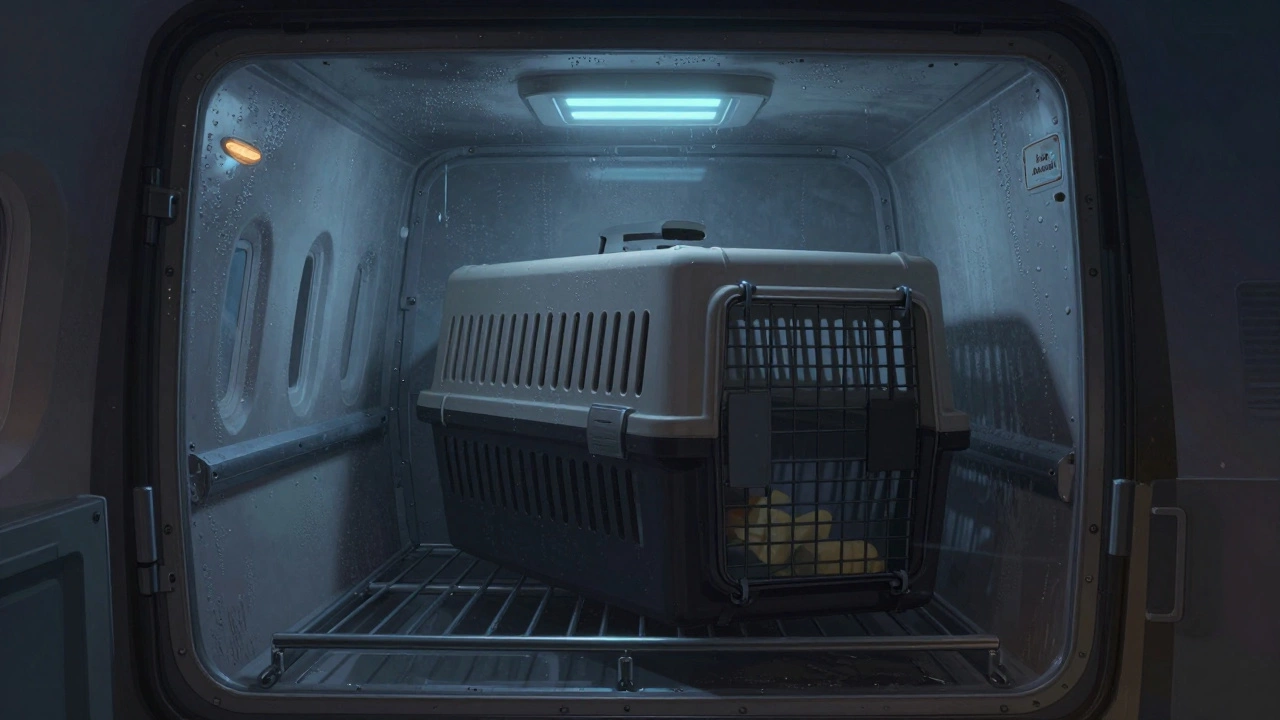
It’s not about being mean. It’s about space, safety, and airflow. A 100-pound dog can’t fit under a seat without blocking emergency exits or crushing someone’s legs. Even if they could, the cabin isn’t designed for large animals. The pressure changes, the noise, the lack of ventilation-these things stress out dogs, and airlines know it. That’s why they moved big dogs to cargo years ago. Cargo holds are pressurized, temperature-controlled, and monitored. They’re not perfect, but they’re built for this.
What airlines actually allow for large dogs
Most major U.S. and U.K. airlines accept large dogs in cargo, but each has different rules. Delta allows dogs up to 150 pounds in cargo, as long as the crate meets IATA standards. United’s limit is 170 pounds total (dog + crate). American Airlines lets you fly dogs up to 150 pounds, but you can’t book online-you have to call. British Airways requires pre-approval for any dog over 20 pounds. Southwest doesn’t allow cargo pets at all. So if you’re flying from Bristol to New York, you’ve got options-but you can’t just show up at the gate with your dog on a leash.
What your dog’s crate needs to look like
Your dog’s crate isn’t just a box. It’s their safe space for hours in a noisy, moving metal tube. Airlines follow IATA Live Animal Regulations, which means your crate must be:
- Large enough for your dog to stand, turn, and lie down comfortably
- Well-ventilated on at least three sides
- Secure with a metal door and locking latches
- Waterproof on the bottom
- Labelled with your name, phone, and "Live Animal" stickers
Many pet owners buy crates from Petmate or Sherpa, but you can also build one if you’re handy. Just make sure it’s not made of plastic that cracks in cold temperatures. Cargo holds can drop below freezing during long flights. A cracked crate isn’t just a mess-it’s dangerous.
How to prepare your dog for cargo travel
Most dogs handle cargo flights better than people think. But you can’t just throw them in the crate the night before. Start training two months out. Let your dog sleep in the crate for a few hours each night. Feed them meals inside it. Take short car rides with the crate secured in the back. This isn’t about making them "used to it"-it’s about making the crate feel like home. Dogs panic when they’re scared. If they’ve never been in a crate, they’ll howl, scratch, and try to escape. That’s how injuries happen.
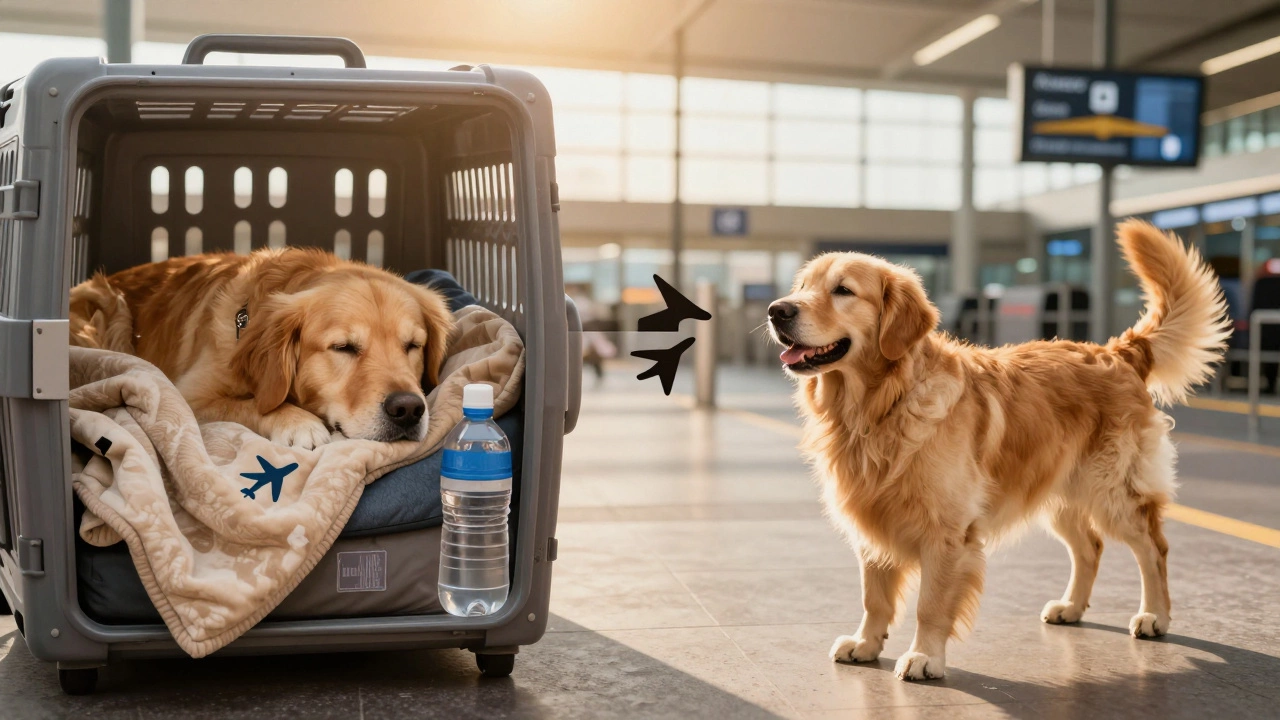
Also, skip sedatives. The FAA and most airlines ban them. They can interfere with breathing at altitude. Instead, use calming sprays with pheromones or a Thundershirt. A tired dog is a calm dog. Walk your dog for 45 minutes before check-in. Don’t feed them a big meal four hours before the flight. Water? Yes-but use a spill-proof bottle attached to the crate, not a bowl.
Costs you can’t ignore
Flying a 100-pound dog isn’t cheap. Most airlines charge between $200 and $500 each way for cargo. That’s on top of the crate, vet paperwork, and possible pre-flight health checks. If you’re flying internationally, you’ll need an EU Pet Passport or USDA health certificate, depending on your destination. The UK requires a rabies vaccination at least 21 days before entry, and a tapeworm treatment 1-5 days before arrival. You’ll also need to use an approved carrier-like PetAir or PetRelocation-because not all freight agents handle live animals. Don’t try to save money by booking through a random courier. Your dog isn’t a package.
When you should not fly your dog
Some dogs shouldn’t fly at all. Brachycephalic breeds-like Bulldogs, Pugs, or Boxers-have trouble breathing in cargo, even if they’re under 100 pounds. Older dogs with heart or joint issues, dogs with recent surgeries, and pregnant bitches are also high-risk. If your dog has ever had heatstroke, anxiety attacks, or seizures, talk to your vet before booking. Some vets will refuse to sign the health certificate if they think the trip is too dangerous. That’s not them being difficult. It’s them being responsible.
What happens at the airport
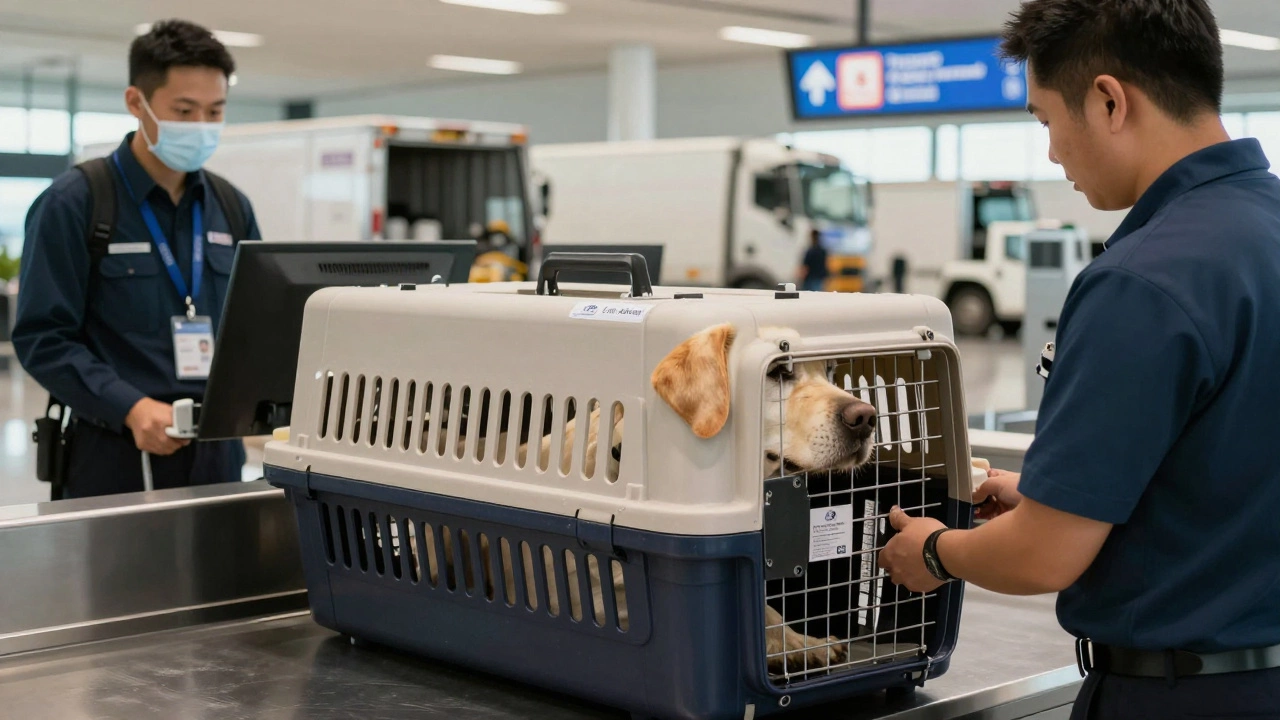
Arrive at least four hours early. Check-in for cargo is not at the main counter. You’ll go to the airline’s cargo or pet check-in desk, usually near the freight area. You’ll hand over the crate, your health certificate, and your booking confirmation. The staff will inspect the crate, check the labels, and confirm your dog is calm and healthy. Then they’ll load it onto a temperature-controlled truck. You won’t see your dog again until you land. At the destination, you’ll go to the cargo facility, show ID, and sign paperwork. It can take 30 minutes to two hours, depending on the airport. Don’t leave the airport until you’ve picked them up. Delays happen.
Real stories from real owners
One owner from Bristol flew her 98-pound Labrador to Florida last summer. She trained him for six weeks, bought a custom crate with extra airflow, and used a calming diffuser. He slept through the flight. She got him back in perfect shape.
Another owner tried to fly her 102-pound Golden Retriever on a budget airline that didn’t require pre-approval. The crate was too small. The dog overheated. He survived, but had to be treated for mild heat stress. He’s now a nervous wreck around crates. That’s avoidable.
Alternatives to flying
If your dog is too big, too old, or you’re just too nervous, consider ground transport. Pet transport companies like Dogtainers or Pet Transport UK offer door-to-door services with climate-controlled vans. It takes longer-maybe two days to get to London from Bristol-but your dog travels with a human, gets breaks, and isn’t stuck in a warehouse. It costs more, but for some dogs, it’s the only safe option.
Final checklist before you book
- Confirm your airline allows cargo pets
- Measure your dog and buy the right crate (IATA-compliant)
- Start crate training at least 60 days out
- Visit your vet for a health certificate (issued within 10 days of flight)
- Check destination country rules (vaccines, quarantine, paperwork)
- Book cargo space in advance-don’t wait until the last minute
- Don’t feed your dog 4-6 hours before check-in
- Attach water bottle and familiar blanket to the crate
- Arrive early, stay calm, and trust the process
Flying with a 100-pound dog isn’t easy. But it’s doable. Thousands of large dogs fly safely every year. The key isn’t luck-it’s preparation. If you treat this like a serious logistics job-not a last-minute trip-you and your dog will arrive together, safe and sound.