Dog Grooming Method Selector
Step 1: Select Your Dog's Coat Type
Step 2: What is your primary goal?
Recommended Approach:
Select your dog's coat and goal to see the professional recommendation.
Quick Tips for Dog Brushing
- Dry brushing is best for removing loose fur and preventing mats.
- Wet brushing helps with detangling and managing curly or thick coats.
- Never use a slicker brush on a soaking wet dog without a detangling spray.
- Always brush in the direction of hair growth to avoid skin tears.
Understanding the Dry Brushing Approach
For most dogs, dry brushing is the default and the most effective way to keep a coat healthy. When you brush a dry dog, you're primarily targeting dead hair and surface debris. Shedding is the natural process where a dog loses old hair to make room for new growth. Dry brushing helps these loose hairs leave the coat before they get trapped by newer hairs, which is exactly how mats start.
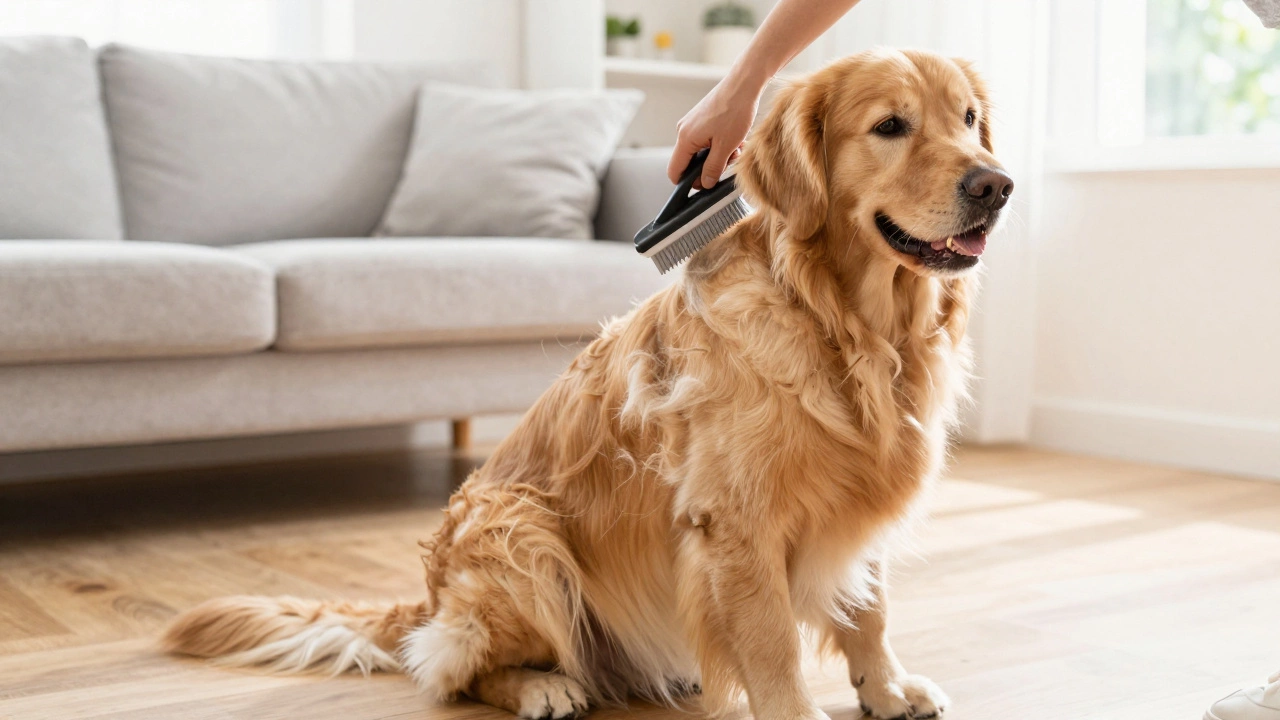
If you have a short-haired breed, like a Labrador or a Beagle, dry brushing is all you need. A Rubber Curry Brush is a lifesaver here because it grips the loose hair without scratching the skin. For those with double coats-think Huskies or Golden Retrievers-dry brushing is non-negotiable. If you try to brush these dogs while wet, the heavy undercoat clumps together, making it nearly impossible to remove the dead fur effectively. You'll likely end up with a soggy mess that takes ten times longer to dry.
The biggest advantage of dry brushing is the "loft." When hair is dry, it has more volume, which allows a Slicker Brush to reach deep into the undercoat and pull out the loose fluff. If the hair is wet, it collapses, and the brush just slides over the top, leaving the dead undercoat trapped against the skin.
The Case for Wet Brushing
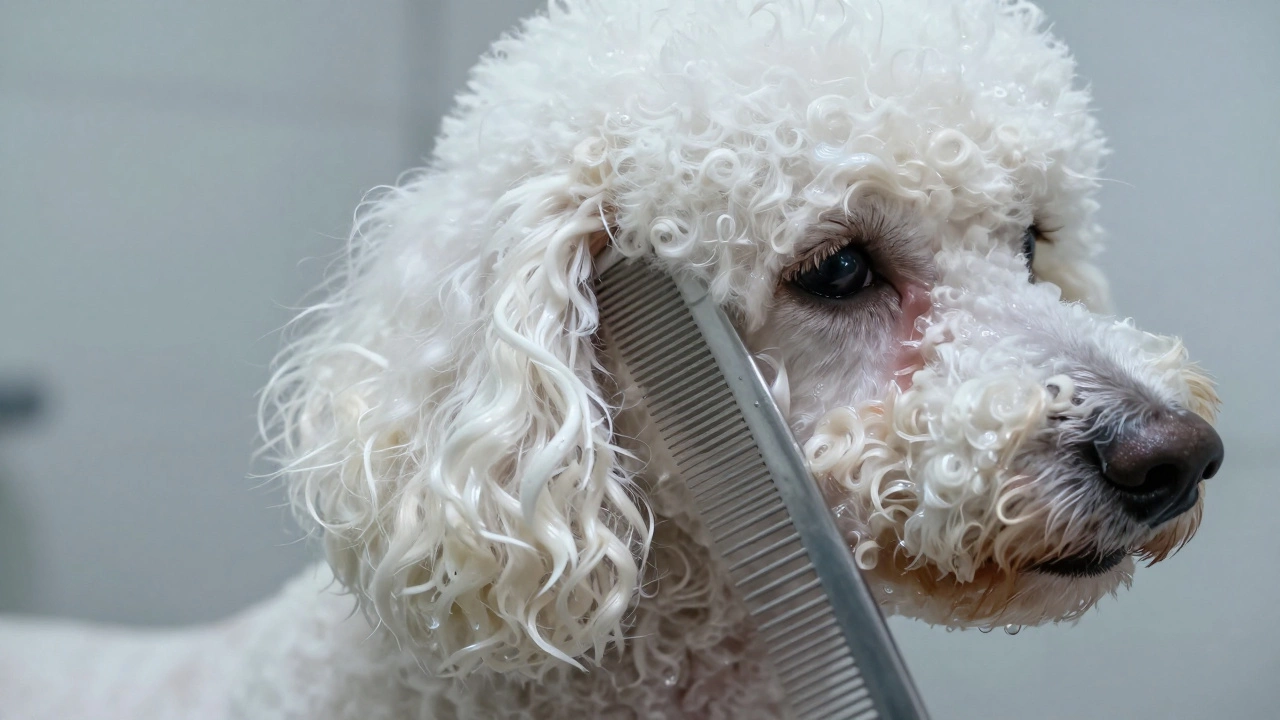
So, when does water actually help? Wet brushing is a game-changer for dogs with curly, wooly, or high-maintenance coats, like Poodles or Doodles. These breeds are prone to tight knots. When hair is wet, the tension on the hair shaft is reduced, and the curls become more pliable. This makes it much easier to slide a comb through without the dog jumping away in pain.
Think of it like human hair; you wouldn't try to brush out a massive tangle in dry, curly hair without a lot of pulling. Water, combined with a Conditioner, acts as a lubricant. It allows the brush to glide through the curls. If you're dealing with a "velcro coat" (hair that clings to everything), a wet brush-out during a bath can prevent the dreaded "shave-down" at the groomer because you can actually get the mats out.
However, there's a catch. Wet hair is more elastic and fragile. If you use a harsh metal brush and pull too hard on wet fur, you can actually stretch and snap the hair shaft. This leads to breakage and a jagged-looking coat. To avoid this, always use a wide-tooth comb or a specialized detangling brush when the dog is wet.
Comparing the Two Methods
| Feature | Dry Brushing | Wet Brushing |
|---|---|---|
| Main Goal | Shedding & Maintenance | Detangling & Smoothing |
| Best Coat Type | Short, Double, or Smooth | Curly, Wooly, or Long |
| Risk Factor | Skin irritation from scrubbing | Hair shaft breakage/stretching |
| Tool Recommendation | Slicker brush, Rubber curry | Wide-tooth comb, Detangler |
| Frequency | Daily or Weekly | During/After Bathing |
Dealing with Mats and Tangles
If you've discovered a mat the size of a golf ball, your instinct might be to soak it in water to "soften" it. While water helps, a soaking wet mat can sometimes shrink and tighten, making it even harder to remove. The best approach for brushing dogs wet or dry when mats are involved is actually a hybrid method.
Start by applying a detangling spray or a small amount of conditioner to the dry mat. This provides the lubricity of wet brushing without the weight and collapse of a full soak. Use your fingers to gently tease the mat apart, then follow up with a metal comb. If the mat is tight against the skin, avoid using scissors-this is how most accidental vet visits happen. Instead, use a Mat Splitter or a grooming shear to carefully cut the mat from the bottom up.
Once the mat is gone, finish with a dry brush-out to ensure no other tangles are hiding. Remember, the goal is to prevent the mat from forming in the first place. A quick five-minute dry brush every other day is far less stressful than a two-hour wet detangling session once a month.
Choosing the Right Tools for the Job
Using the wrong tool is the quickest way to make your dog hate grooming time. For dry brushing, the Slicker Brush is the gold standard for removing undercoat, but it can be too abrasive for sensitive skin. If your dog flinches, switch to a softer bristle brush or a rubber groomer.
When the dog is wet, put away the slicker brush. The fine wires can snag and pull on wet curls. Instead, reach for a Steel Greyhound Comb. These long, sturdy teeth allow you to feel exactly where a tangle starts and finish without ripping through the hair. If you're using a conditioner, leave it on for a few minutes before combing; this allows the product to penetrate the hair cuticle and reduce friction.
For those with very thick, long hair, consider a Undercoat Rake. This is strictly for dry use. It reaches through the top coat to pull out the dead fluff. Using a rake on a wet dog is a recipe for disaster-it will simply tangle the wet hair into clumps.
The Professional Grooming Workflow
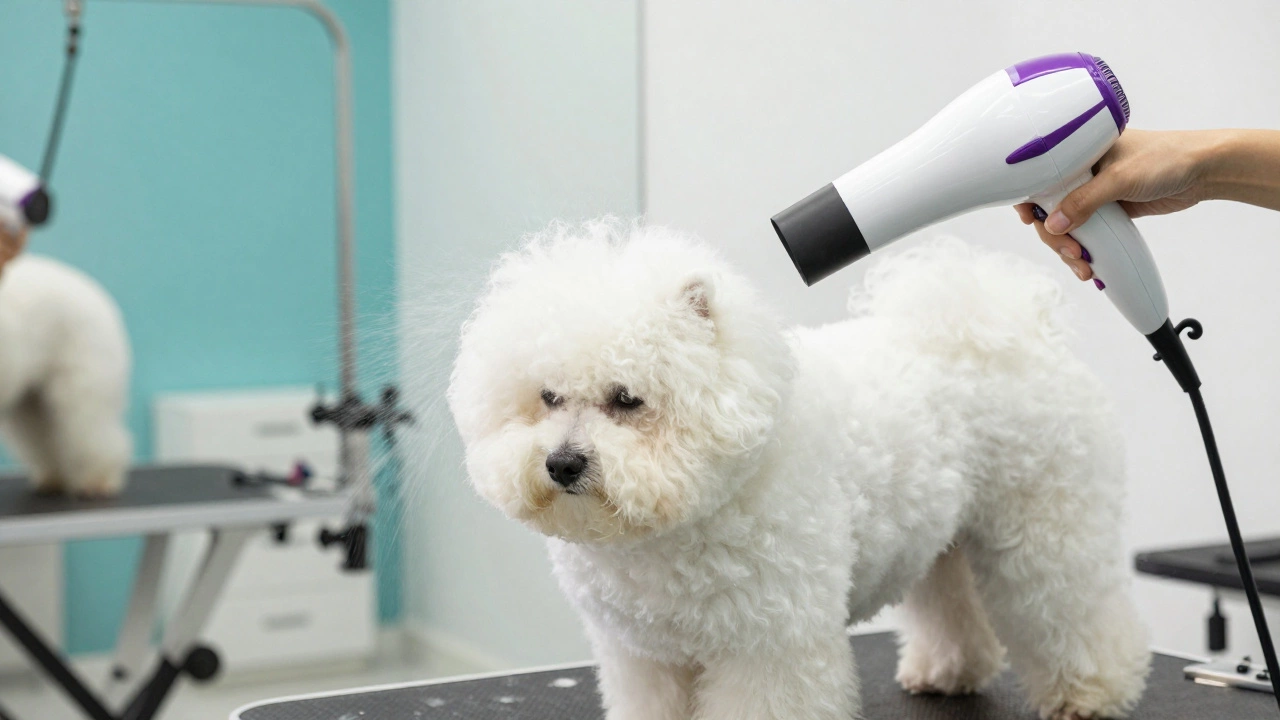
If you look at how professional groomers handle a high-shedding dog, they follow a specific sequence: Dry brush → Bath → Wet detangle → Dry/Blowout → Final dry brush. This is the most efficient way to handle a coat. By dry brushing first, they remove the bulk of the dead hair. If they bathed the dog first, that dead hair would get trapped in the wet coat and clog the drain.
After the bath, while the dog is still damp, they do a light comb-through to ensure no new tangles formed during the bath. Then, they use a high-velocity dryer. The air pressure helps separate the hairs, making the final dry brush much more effective. For the home owner, you can mimic this by brushing your dog before their bath and giving them one last groom once they are completely dry.
Don't forget the paws and the "armpits." These are high-friction areas where mats form regardless of whether the dog is wet or dry. Use a fine-tooth comb in these areas daily. If you notice the hair starting to feel "crunchy" or clumped, that's your signal to spend a bit more time with the brush.
Will brushing my dog while wet cause more tangles?
How often should I dry brush my dog?
Is it safe to use human conditioner for wet brushing?
My dog hates being brushed; will wet brushing be easier?
Can I brush my dog's undercoat while it's wet?
Next Steps for Your Grooming Routine
If you're not sure where to start, try a "feel test." Run your hands through your dog's coat. If it feels smooth and you can easily reach the skin, stick to a simple dry brushing routine. If you feel small clumps or "knots," it's time to introduce a detangling spray and a comb, focusing on those problematic areas while the hair is slightly damp.
For those with curly-coated dogs, make a habit of the "Bath-Comb-Dry" cycle. Never let your dog air-dry completely without a comb-through, as curly hair tends to shrink and lock into mats as it dries. If you're dealing with a heavy shedder, invest in a high-quality undercoat rake and use it once a week on a dry coat to keep the loose hair under control.