
puppy peeing – how to stop indoor accidents fast
When dealing with puppy peeing, the common problem of unwanted indoor urination in young dogs. Also known as puppy house accidents, it can feel overwhelming at first, but the right routine makes a big difference.
Effective house training, a structured plan that teaches a puppy where and when to eliminate combined with crate training, using a safe, confined space to manage bathroom breaks relies on positive reinforcement, reward‑based methods that encourage the right behavior. These three tools form the backbone of any successful plan and show why puppy peeing stops when you give clear cues and consistent rewards.
Key steps to end indoor accidents
First, set a regular feeding schedule. Dogs usually need to go out 15‑20 minutes after meals, so a predictable routine reduces surprise accidents. Second, choose a dedicated potty spot outdoors and always take your pup there. Repeating the same location teaches the scent cue that this is the place to go. Third, watch the early signs – sniffing, circling, or heading to the door – and act fast. A missed cue often leads to a soggy floor, while a quick response reinforces the right habit.
Crate training does more than keep your puppy safe; it teaches bladder control. Dogs naturally avoid soiling their sleeping area, so a correctly sized crate encourages them to hold until you let them out. Keep the crate comfortable but not oversized, and limit the time inside to a few hours for young pups. When you let them out, reward the successful bathroom break with a treat and praise. This links the crate experience to a clean outcome, curbing indoor peeing.
Positive reinforcement is the glue that holds the whole system together. Skip punishment – it creates fear and can make accidents worse. Instead, use high‑value treats, a happy voice, or a quick play session right after a correct potty trip. Over time the puppy learns that going outside equals good things, while indoor peeing leads to no reward. Consistency across family members is crucial; everyone must follow the same signals and reward schedule.
Cleaning up correctly prevents repeat accidents. Enzymatic cleaners break down the urine scent that dogs use to mark territory. If the smell lingers, the puppy may think the spot is still okay to use. Spray the cleaner on the affected area, let it sit, then wipe it clean. This removes the hidden cue and supports the training effort.
Health issues can also cause sudden peeing problems. A urinary infection or bladder stones may make a normally trained puppy leak unexpectedly. If accidents persist despite a solid routine, a vet visit is worth the check‑up. Ruling out medical causes lets you focus on training without hidden obstacles.
Below you’ll find a curated list of articles that dive deeper into each of these areas – from chew toy choices that keep puppies busy, to supplement timing for growing dogs, and even tricks to make bedtime calmer. Use the guidance here as a launchpad, then explore the posts for detailed step‑by‑step tips and tools that fit your pup’s unique needs.
 2 February 2026
- Morgan Ainsworth
- 0 Comments
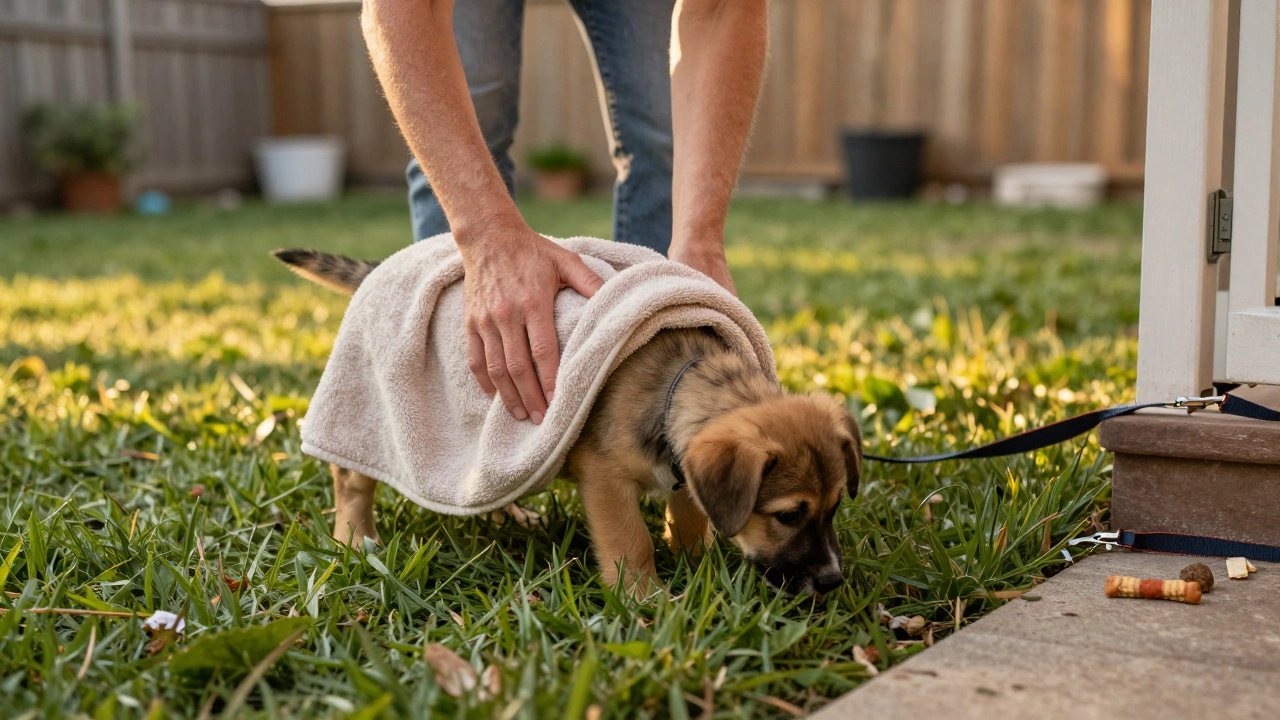
Can I Take My 8-Week-Old Puppy Outside to Pee? A Simple Guide for New Owners
Yes, you can take your 8-week-old puppy outside to pee-but only in safe, controlled areas. Learn the right schedule, where to go, what to avoid, and how to build good potty habits without risking their health.
View More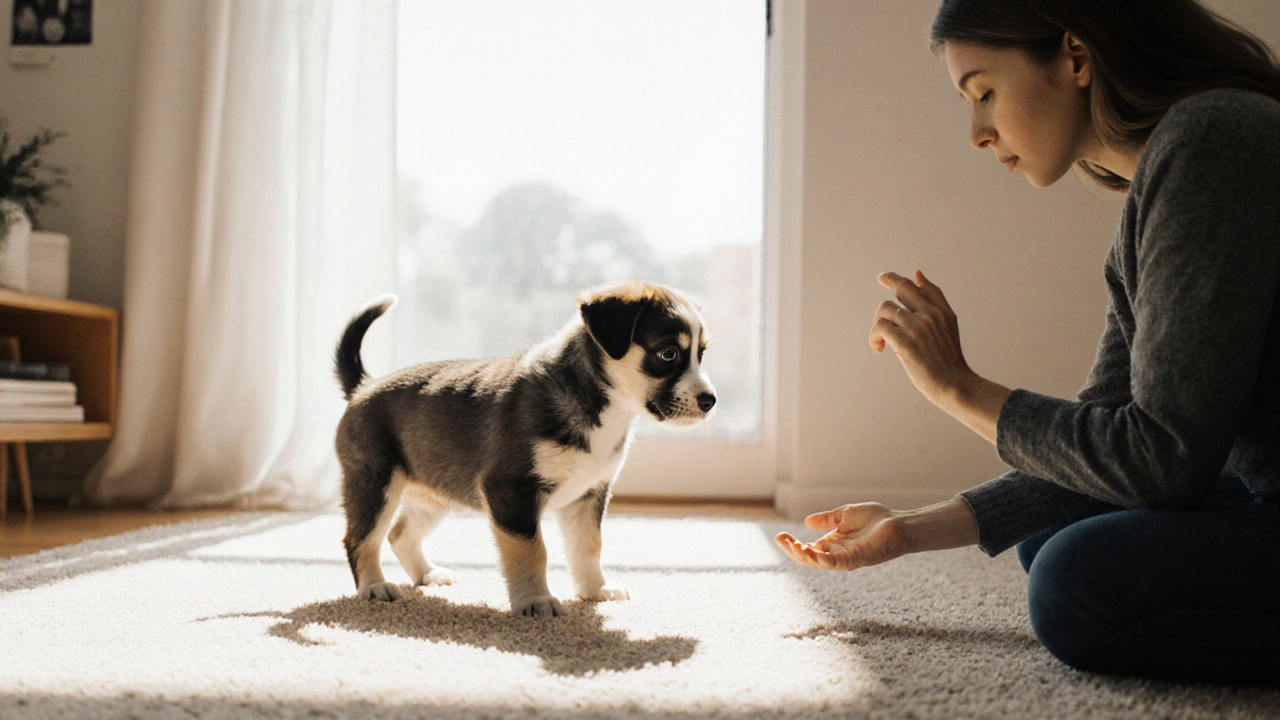 20 October 2025
- Morgan Ainsworth
- 0 Comments
Interrupting a puppy’s indoor peeing: what’s the right move?
Learn when and how to safely interrupt a puppy's indoor peeing, with step‑by‑step cues, timing tips, and cleaning advice for fast house training.
View More