
Puppy Bladder Control: How to Train Your Puppy to Hold It Until Outside
When you bring home a new puppy, one of the first things you’ll notice is how often they need to go. A puppy bladder control, a puppy’s ability to hold urine until they’re taken outside isn’t something they’re born with—it’s learned. At 8 weeks old, a puppy can typically hold it for about 2 to 3 hours. By 12 weeks, that might stretch to 4 hours. But expecting them to make it through a full workday? That’s not fair, and it’s not realistic. Bladder control develops slowly, and pushing them too hard leads to accidents, stress, and bad habits that stick.
What most people don’t realize is that puppy potty training, the process of teaching a puppy where and when to relieve themselves isn’t about punishment. It’s about timing, routine, and reading your puppy’s signals. You’ll see them sniffing, circling, or suddenly zoning out—that’s their way of saying, "I need to go." Catching them in the act and interrupting gently—without yelling—gives you a chance to rush them outside and reward the right behavior. And yes, puppy crate training, using a crate as a safe, den-like space to help with house training is one of the most effective tools you can use. Dogs don’t like to soil where they sleep, so a properly sized crate becomes a natural motivator for holding it.
But here’s the catch: accidents happen. A lot. And that’s normal. The key isn’t to avoid them completely—it’s to respond the right way. Clean up with an enzymatic cleaner, never rub their nose in it, and stick to a strict schedule. Take them out first thing in the morning, after meals, after naps, and before bed. If you’re home, take them every 2 hours. If you’re at work, set up a safe, confined space with puppy pads as a backup, not a replacement. And don’t forget: some puppies have smaller bladders, some are more excitable, and some just take longer. It’s not about being "bad"—it’s about being young.
What you’ll find in the posts below are real, no-nonsense strategies from dog owners and trainers who’ve been there. From how to interrupt a puppy mid-pee to why a crate works better than a playpen, from the best time to feed to avoid nighttime accidents, to what to do when your 12-week-old still pees on the rug—this collection gives you the practical steps, not the fluff. You won’t find magic pills or miracle gadgets. Just clear, proven methods that work in real homes with real puppies.
 4 December 2025
- Morgan Ainsworth
- 0 Comments
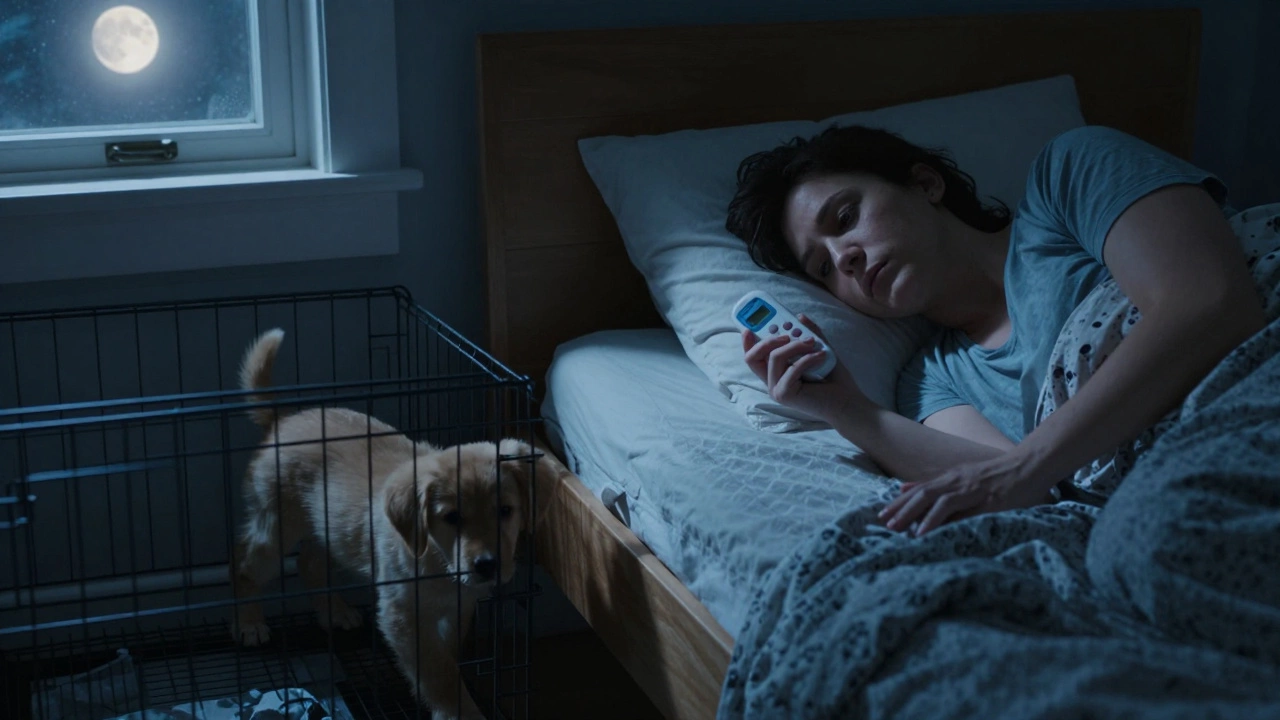
Should I Wake Up in the Middle of the Night to Let My Puppy Pee?
You don't need to wake up every time your puppy cries at night. Learn how to tell real potty needs from normal puppy behavior and train them to sleep through the night without constant interruptions.
View More