
House Training Puppy: Simple Steps for a Well-Behaved Dog
When you bring home a house training puppy, the process of teaching a young dog where to eliminate indoors and outdoors. Also known as potty training, it’s one of the first and most important skills you’ll teach your new pet. It’s not about punishment—it’s about timing, consistency, and understanding how a puppy’s body works. Most puppies can’t hold it for more than an hour or two at 8 weeks old, and their brains are still learning the connection between feeling the urge and going in the right place.
Puppy crate training, using a small, safe space to help a puppy learn bladder control and develop a den-like sense of security is one of the most effective tools you can use. A crate isn’t a punishment—it’s a tool. When used right, your puppy will see it as their safe spot, and they’ll naturally avoid soiling it. Pair that with a strict schedule: take them out first thing in the morning, after every meal, after naps, and before bed. At 8 weeks, that’s about every 45 to 60 minutes. Missing even one window can lead to an accident, and accidents teach the wrong lesson.
Puppy accidents, unintentional indoor urination or defecation during the house training process happen to everyone. The key isn’t to get angry—it’s to react fast. If you catch them in the act, interrupt with a calm "Oops!" and take them outside immediately. Never yell, rub their nose in it, or punish them after the fact—they won’t connect the punishment to the accident. Clean up with an enzymatic cleaner, not just soap. Regular cleaners leave scent trails that tell your puppy, "This is a good spot to go again."
What works better than punishment
Positive reinforcement is the only method that builds long-term success. Every time your puppy goes outside, praise them like they just won the lottery—happy voice, pets, maybe a tiny treat. They’ll start to associate going outside with good things. And don’t forget the role of early puppy training, starting house training as soon as you bring your puppy home, usually between 8 and 12 weeks. The sooner you begin, the faster the habit sticks. Waiting until they’re 4 months old makes it harder because they’ve already formed bad habits.
You’ll see progress faster than you think. Most puppies are reliably house trained by 4 to 6 months, but some take longer. It’s not about age—it’s about routine. If you’re consistent, your puppy will learn. If you’re inconsistent, they’ll stay confused. The posts below cover real stories from UK dog owners who got it right, what went wrong, how to pick the right crate size, what to do when your puppy pees at night, and why some breeds take longer than others. You’ll find no fluff—just clear, step-by-step advice that works in real homes with real puppies.
 4 December 2025
- Morgan Ainsworth
- 0 Comments
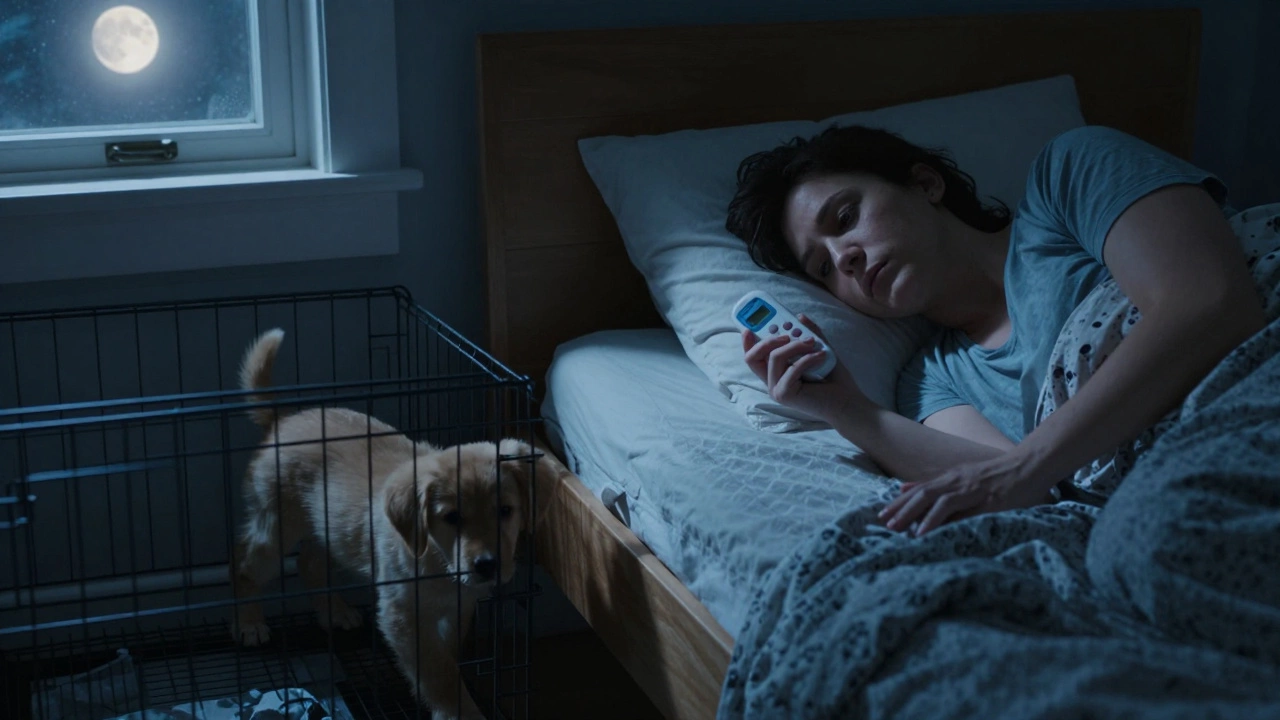
Should I Wake Up in the Middle of the Night to Let My Puppy Pee?
You don't need to wake up every time your puppy cries at night. Learn how to tell real potty needs from normal puppy behavior and train them to sleep through the night without constant interruptions.
View More