
Early Puppy Training: What Works, When to Start, and How to Avoid Common Mistakes
When you bring home a puppy, early puppy training, the process of teaching basic commands, house rules, and social skills during a puppy’s most receptive weeks. It’s not about tricks—it’s about building a reliable, confident dog. Also known as puppy socialization, this phase shapes how your dog reacts to people, other animals, loud noises, and new environments for the rest of their life. Most people think training starts at six months. It doesn’t. It starts the second you walk in the door.
Successful early puppy training isn’t about punishment or force. It’s about consistency, timing, and reading your pup’s cues. If you wait until your puppy is chewing your shoes or barking at the mailman, you’re already behind. The critical window for learning is between 8 and 16 weeks. During this time, puppies are like sponges—they absorb everything. That’s why house training puppy, teaching a puppy where and when to eliminate, needs to begin on day one. Same with puppy socialization, introducing your pup to new sights, sounds, and people in a calm, positive way. Skip this, and you risk a fearful or reactive dog later on.
What you do in those first few weeks sets the tone. If you let your puppy jump on the couch, bite your hand, or bark for attention, you’re teaching them those behaviors are okay. If you ignore them when they’re calm and reward quiet behavior, you’re building good habits. It’s that simple. And it’s not about spending hours a day. Five-minute sessions, done three or four times a day, are more effective than one long, stressful training marathon.
You’ll see posts here about interrupting indoor peeing, choosing the right chew toys, and even whether leaving the TV on helps at night. All of it ties back to early puppy training. The right chew toy prevents destructive chewing. Knowing when to interrupt a bathroom accident speeds up house training. Understanding sleep habits helps your pup rest better—and that means they’re calmer and more focused during training.
This isn’t theory. These are real, practical steps used by trainers who work with gundogs and family pets every day. You won’t find complicated charts or confusing jargon here. Just clear, proven methods that actually work with real puppies in real homes. Whether you’re raising a Labrador for hunting or a mixed breed who just wants to cuddle, the basics are the same. Start early. Stay calm. Be consistent.
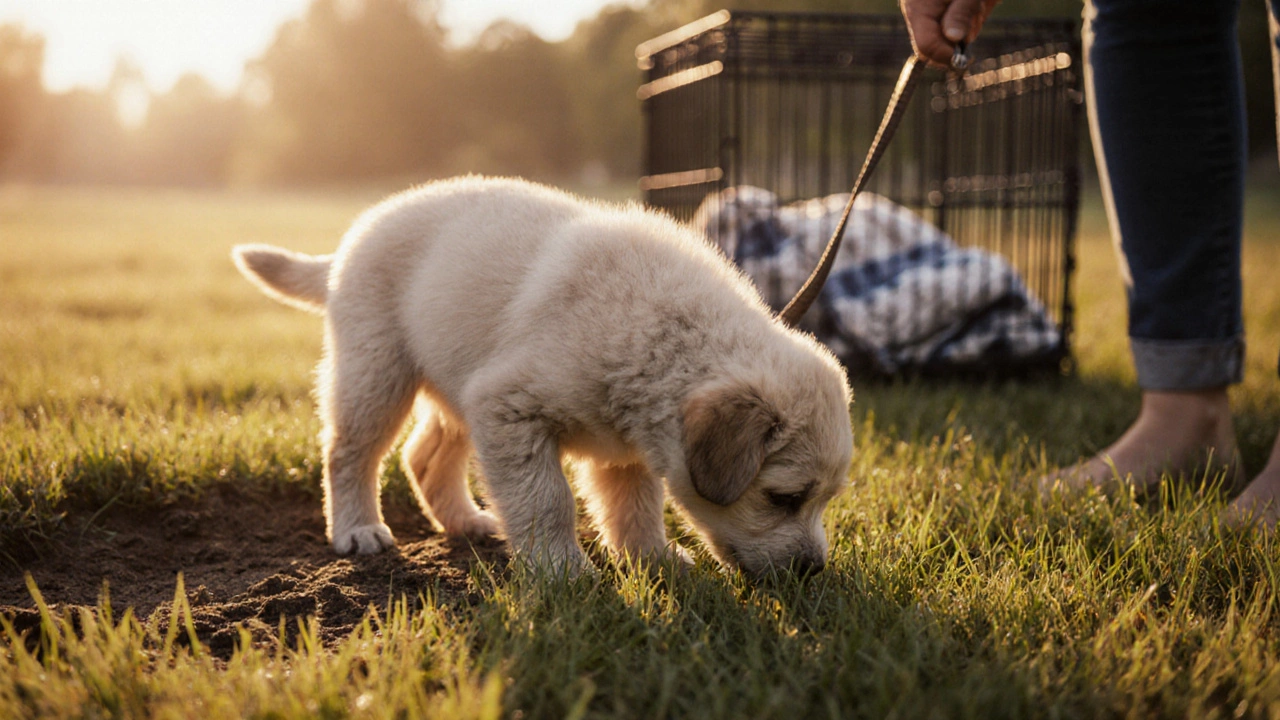 27 November 2025
- Morgan Ainsworth
- 0 Comments
Can an 8-Week-Old Puppy Be Potty Trained? Yes, Here’s How
Yes, an 8-week-old puppy can be potty trained. Start with a strict schedule, use a crate, take them out often, and reward success. Patience and consistency beat punishment every time.
View More