
Dog Collars All the Time: Safety, Comfort, and When to Skip Them
When you think of a dog collar, a strap worn around a dog’s neck to hold ID tags, leashes, or training devices. Also known as neck collar, it’s one of the most basic tools in dog ownership. But just because it’s common doesn’t mean it’s always safe—or necessary—to leave on all day, every day. Many owners assume a collar is like a watch: put it on and forget it. That’s not true. Constant collar use can lead to skin irritation, hair loss, even nerve damage, especially if it’s too tight, made of rough material, or never checked for fit.
Not all collars are the same. A flat buckle collar, a standard nylon or leather collar with a buckle closure might be fine for short walks, but if your dog sleeps in it, rolls around in the yard, or scratches at their neck, that same collar can rub raw skin. Then there’s the prong collar, a metal collar with blunt prongs designed to pinch the neck when pulled. Even if used "correctly," it’s built to cause discomfort, and leaving it on for hours—especially when unsupervised—is asking for trouble. The same goes for choke chains and electronic collars. These aren’t meant for constant wear. They’re training tools, not fashion accessories.
So when should your dog wear a collar? Only when they’re outside, on a leash, or in public spaces where ID matters. At home, especially during sleep or playtime, take it off. Your dog’s neck needs to breathe. Check the fit every week: you should be able to slip two fingers under it easily. If the collar’s frayed, stretched, or the buckle’s loose, replace it—dog collar replacement, the act of swapping out a worn or ill-fitting collar for a new one isn’t optional. It’s safety.
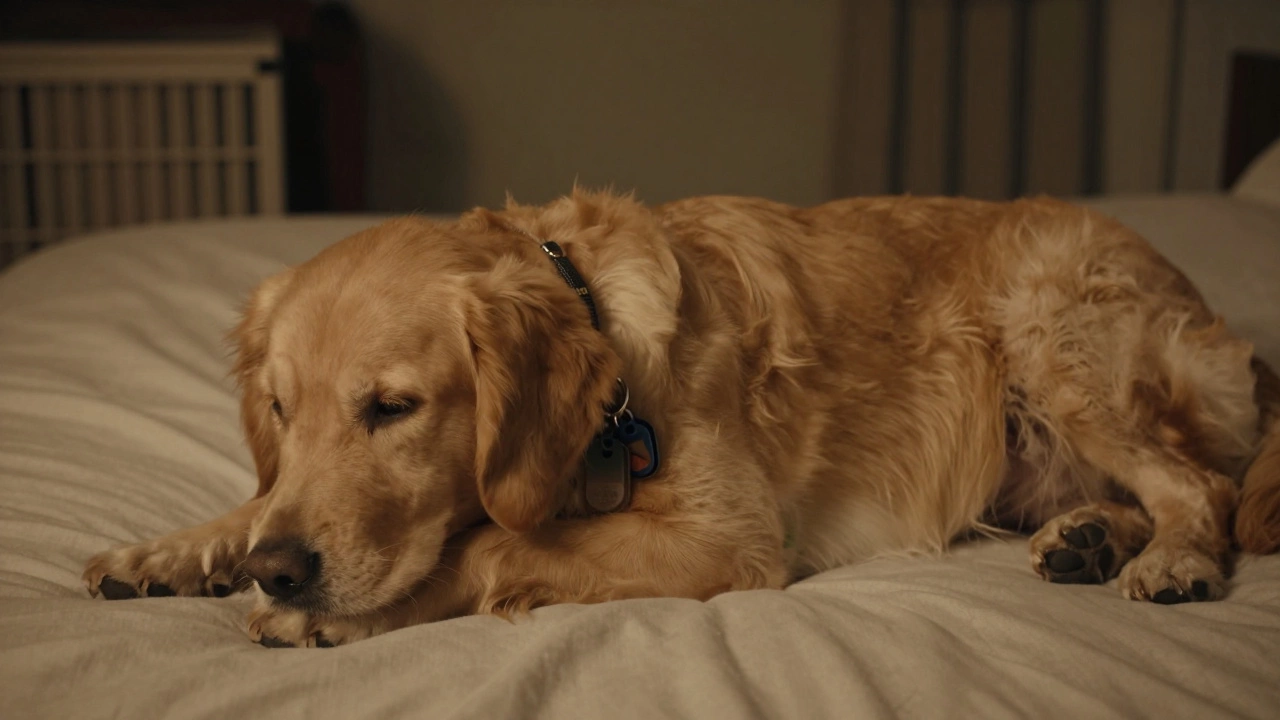
And here’s something most people miss: dogs with thick fur or sensitive skin, like Golden Retrievers or Shih Tzus, are at higher risk. Even a soft collar can trap moisture and dirt, leading to hot spots. If your dog’s neck looks red, has bald patches, or they keep scratching at it, the collar’s the likely culprit. Take it off, clean the area, and talk to your vet. You don’t need a collar to keep your dog safe indoors. Microchips are the real ID—permanent, invisible, and reliable.
Some owners worry: "What if they run off?" But a collar won’t stop a determined dog from bolting. Training, secure fencing, and a microchip are what actually keep them safe. A collar is just a handle—not a guarantee. If you’re using a collar for training, make sure it’s only on during sessions. Let your dog be a dog, without the pressure around their neck.
Below, you’ll find real advice from dog owners and professionals on what works, what doesn’t, and how to spot the signs your dog’s collar is doing more harm than good. From choosing the right material to knowing when to skip it entirely, these posts give you the facts—not the myths.
 4 December 2025
- Morgan Ainsworth
- 0 Comments
Is It Safe for Dogs to Wear Collars All the Time? Vet-Approved Guidelines
Is it safe for dogs to wear collars all the time? Learn vet-approved guidelines on collar safety, when to remove them, alternatives like harnesses and microchips, and how to prevent neck injuries and skin damage.
View More