
Raw vs Cooked Chicken for Dogs: What’s Better for Your Pet?
When it comes to feeding your dog raw chicken, uncooked poultry offered as part of a home-prepared or raw food diet. Also known as bone-in chicken pieces, it’s a popular choice among dog owners looking to mimic natural diets. But the same can’t always be said for cooked chicken, chicken that’s been boiled, baked, or grilled without seasoning. Also known as plain chicken, it’s often seen as the safer, go-to option for pet parents unsure about raw feeding. The real question isn’t just which is healthier—it’s which fits your dog’s body, your lifestyle, and your comfort level.
Many dog owners assume cooked chicken is the obvious winner because it’s ‘cleaner’ and eliminates bacteria like salmonella or campylobacter. But raw diets have been used for decades by gundog trainers and holistic vets in the UK, especially for active dogs needing high protein and natural fats. The key isn’t avoiding raw entirely—it’s handling it right. That means freezing chicken for 72 hours before feeding, using fresh cuts from trusted butchers, and keeping feeding areas clean. On the flip side, cooked chicken loses some nutrients during heating, especially B vitamins and enzymes that help digestion. It’s also easy to overcook it, making it dry and less appealing. And if you add garlic, onion, or seasoning—even a pinch—it becomes dangerous. Plain is the only way.
What about bones? Raw chicken necks or wings can be great for dental health and jaw strength, but cooked bones? They splinter. That’s not a risk worth taking. If you’re feeding cooked chicken, stick to boneless breast meat. If you’re going raw, include the bone—but only if it’s uncooked and appropriately sized for your dog. Puppies, seniors, or dogs with digestive issues might do better with cooked. High-energy gundogs? Raw often gives them the fuel they need without fillers.
There’s no one-size-fits-all answer. Some dogs thrive on raw, others get upset stomachs. Some owners love the control of preparing meals, others just want something simple. The best approach is to observe your dog: look at their stool, coat, energy, and appetite. If they’re bright-eyed, firm stools, and shiny fur, you’re likely on the right track. If they’re gassy, lethargic, or vomiting, it’s time to adjust.
You’ll find real experiences from UK dog owners in the posts below—from those who switched to raw for their hunting dogs to those who stuck with boiled chicken after a bad reaction. We cover how to transition safely, what to avoid, how to store it, and even how much to feed based on weight and activity. No fluff. No marketing hype. Just what works on the ground, with real dogs, in real homes.
 17 November 2025
- Morgan Ainsworth
- 0 Comments
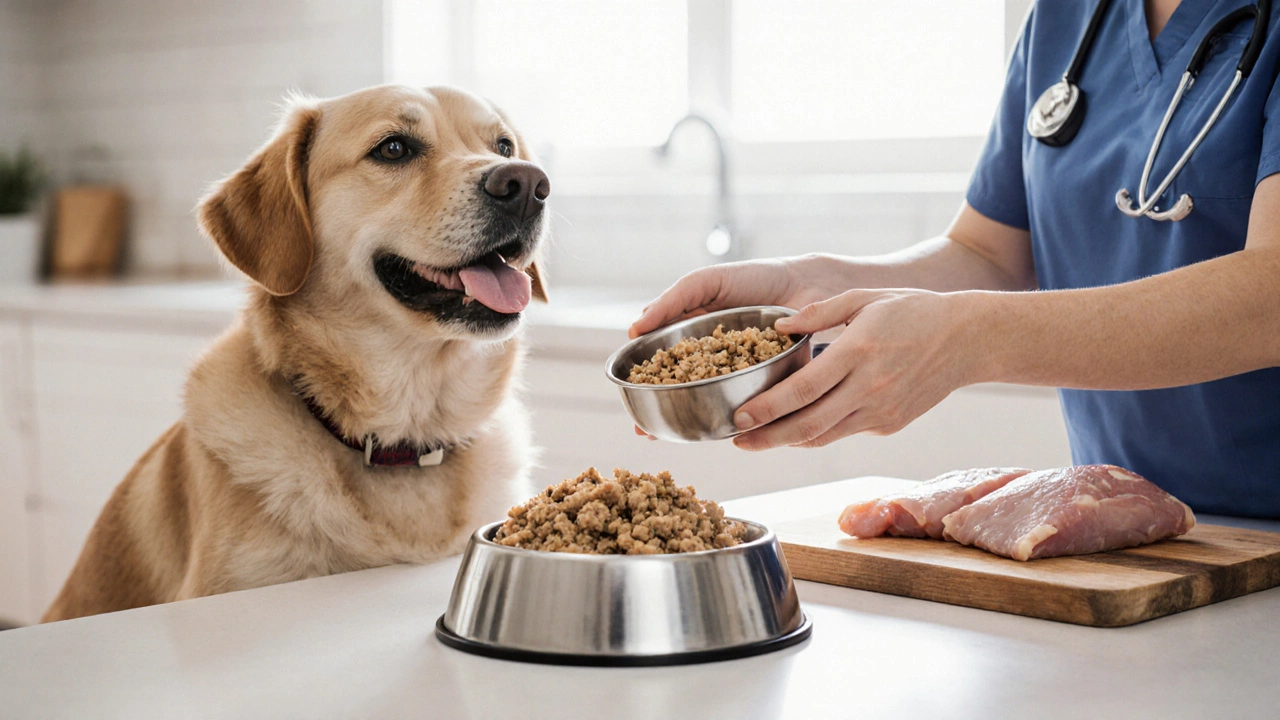
Is ground chicken good for dogs? A vet-approved guide to feeding chicken to your pet
Ground chicken can be a healthy, lean protein for dogs when cooked plain and fed in moderation. Learn the risks of raw chicken, how much to feed, and what alternatives work best.
View More