
House Training for Dogs – From Puppies to Adults
When working with House Training, the process of teaching a dog to eliminate outdoors or on cue, eliminating indoor accidents. Also known as indoor potty training, it forms the foundation for a well‑behaved pet. Puppy, a young dog under one year old owners often face the steep learning curve of accidents, while Crate Training, the method of using a confined space to teach bladder control offers a proven shortcut. Positive Reinforcement, reward‑based motivation that strengthens desired behavior is the glue that holds the whole system together. In short, house training encompasses crate training as a core tool, requires positive reinforcement to shape habits, and depends on a puppy’s developmental stage for lasting success.
Key Elements That Make House Training Work
First, consistency beats occasional brilliance. Setting a strict schedule for meals, bathroom breaks, and playtime teaches the dog’s body when to go. Pair that routine with a dedicated spot outside—dogs love routine landmarks. Second, the crate isn’t a punishment; it’s a safe den that exploits a dog’s natural den‑instinct. Keep the crate just large enough for the dog to lie down and turn around; any larger and they may use a corner as a bathroom. Third, reward immediately after the dog eliminates in the right place. A quick treat, enthusiastic praise, or a short play session cements the link between action and reward. Over time, the dog learns that the outdoors equals fun, while the indoor carpet equals nothing. Fourth, accidents happen—clean them with an enzymatic cleaner. Unlike regular detergents, enzymatic formulas break down urine molecules, eliminating scent memory that could trigger repeat accidents. Finally, consider auxiliary tools: chew toys that keep a puppy’s mouth busy can reduce stress‑related marking, and age‑appropriate supplements support joint health, making the dog more willing to stay active and stick to the schedule.
With those building blocks in place, you can adapt the plan to different life stages. Older dogs may need fewer bathroom trips but benefit from gentle prompting, while high‑energy breeds often require more frequent outdoor sessions to burn off excitement. Remember, every dog is an individual; watch for cues like sniffing, circling, or whining as signals that a break is due. The articles below dive deeper into each piece of the puzzle—whether you need a cheat sheet for stopping indoor peeing, a guide to choosing the safest chew toys for teething pups, or a step‑by‑step look at the 7‑7‑7 training rule. Browse on to find the specific tips that match your dog’s age, breed, and temperament.
 20 October 2025
- Morgan Ainsworth
- 0 Comments
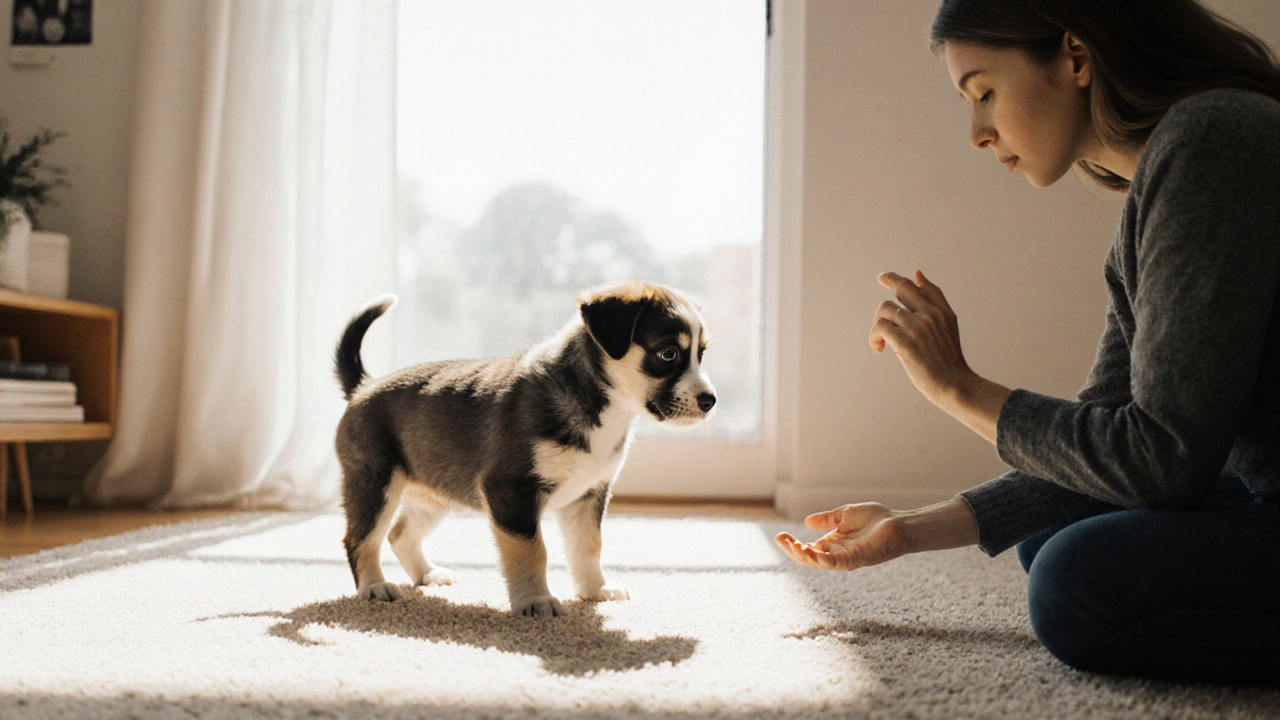
Interrupting a puppy’s indoor peeing: what’s the right move?
Learn when and how to safely interrupt a puppy's indoor peeing, with step‑by‑step cues, timing tips, and cleaning advice for fast house training.
View More