
Dogs Cold Rooms: What You Need to Know About Temperature and Comfort
When we talk about dogs cold rooms, the conditions where dogs are exposed to low indoor temperatures for extended periods. Also known as cold environments for dogs, it’s not just about whether your pup shivers—it’s about their health, stress levels, and long-term well-being. Dogs aren’t tiny humans. What feels cozy to you might be freezing to them, especially if they’re small, old, or have thin coats. Breeds like Greyhounds or Chihuahuas can struggle in rooms below 60°F, while Huskies might nap happily in the same space. It’s not about toughness—it’s about biology.
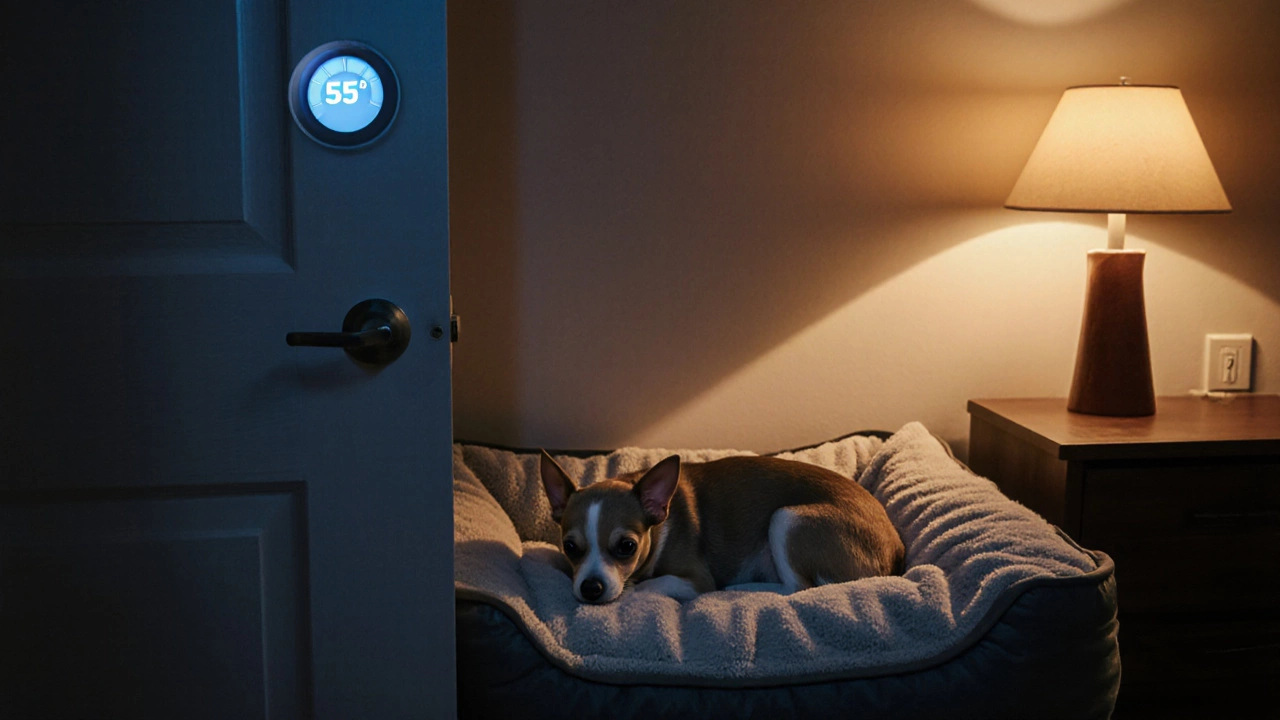
There’s a big difference between a cool room and a cold one. A dog temperature sensitivity, how a dog’s body reacts to changes in ambient temperature based on breed, age, and health varies wildly. Puppies and senior dogs have less body fat and weaker thermoregulation. A 12-year-old Labrador with arthritis won’t handle a chilly floor the same way a 3-year-old Border Collie will. Even a healthy adult dog with a thick coat can get stiff or achy if the room stays below 55°F all night. That’s not just discomfort—it’s pain waiting to happen. And if your dog is curled up in a corner, refusing to lie on the floor, or shivering after coming inside, those aren’t cute quirks—they’re signals.
Then there’s the dog indoor climate, the combination of air temperature, humidity, and airflow in a home environment that affects a dog’s physical state. A drafty window, a fan blowing directly on their bed, or even a poorly insulated basement can turn a neutral room into a health risk. You don’t need a thermometer to know something’s off—if you’re wearing a sweater indoors, your dog probably needs a coat or a warmer bed. And no, blankets alone won’t cut it if the room is too cold. Dogs lose heat through their paws and bellies. A raised bed or orthopedic pad off the floor makes a bigger difference than you think.
What about those dogs who seem to love the cold? Sure, some will sprawl out on tile floors in summer. But that’s about heat relief, not preference. In winter, even those dogs need a warm spot to retreat to. The idea that dogs are naturally built for cold is a myth. Wild wolves had layers of fur, dens, and packs. Your dog has a sofa and a radiator. They need you to bridge that gap.
Below, you’ll find real advice from dog owners and professionals who’ve dealt with cold rooms, sleeping habits, travel stress, and health impacts. You’ll see what works, what doesn’t, and how to spot trouble before it becomes a vet visit. No fluff. No guesswork. Just clear, practical info to keep your dog warm, comfortable, and healthy—no matter the season.
 26 October 2025
- Morgan Ainsworth
- 0 Comments
Do Dogs Like to Sleep in Cold Rooms? - Understanding Canine Comfort
Explore whether dogs enjoy sleeping in cold rooms, the science of canine temperature regulation, and how to pick the right bed to keep them cozy.
View More