
Dog Training Tools: What Works, What Doesn’t, and What You Really Need
When it comes to training your dog, the right dog training tools, physical or behavioral aids used to guide, reward, or communicate with a dog during learning. Also known as training equipment, they’re not about control—they’re about clarity. Too many people think you need a fancy harness, a shock collar, or a $200 training whistle. The truth? Most of that stuff sits unused. What actually moves the needle is simple, consistent, and focused on how your dog thinks—not what you think they should do.
Let’s talk about the tools that matter. A clicker, a small handheld device that makes a distinct clicking sound to mark desired behavior in dog training isn’t magic. It’s a timing tool. It tells your dog, "Yes, that right there—that’s what I wanted." It works because dogs learn from consequences, not commands. Pair it with a treat, and you’ve got a language they understand. Then there’s the leash, a strap or cord used to guide and control a dog during walks and training sessions. Not just any leash. A 6-foot nylon or biothane leash gives you control without tension. No retractables. They teach dogs to pull, not listen. And if you’re using a choke chain or prong collar, ask yourself: are you training your dog, or just punishing them? Positive reinforcement doesn’t need pain. It needs patience.
What about treats? Not just any snack. Small, soft, smelly ones. Think chicken, cheese, or freeze-dried liver. Big kibble? Too slow. Too boring. Your dog’s brain needs quick rewards to connect the dots. And don’t forget the environment. Training doesn’t happen in a vacuum. A quiet backyard beats a busy park when you’re starting out. A training mat, a designated spot used to teach dogs to stay in place during training exercises can help your dog learn focus. It’s not about the mat—it’s about creating a cue. "This spot means calm, attention, reward."
You’ll see posts below about the 7-7-7 rule, how to groom your dog at home, even how to stop a puppy from peeing inside. All of it ties back to one thing: communication. Every tool you use should make your message clearer—not louder. A clicker isn’t for obedience. It’s for understanding. A leash isn’t for dominance. It’s for safety and guidance. And treats? They’re not bribes. They’re feedback.
There’s no single magic tool. But there are a few essentials that work every time—for gundogs, family pets, rescue pups, and senior dogs alike. What you’ll find below isn’t a list of products. It’s a collection of real experiences, real mistakes, and real fixes. From how to use a clicker without overdoing it, to why that expensive training vest might be doing more harm than good, you’ll see what actually moves the needle. No hype. No gimmicks. Just what works when you’re out there, day after day, trying to build a better bond with your dog.
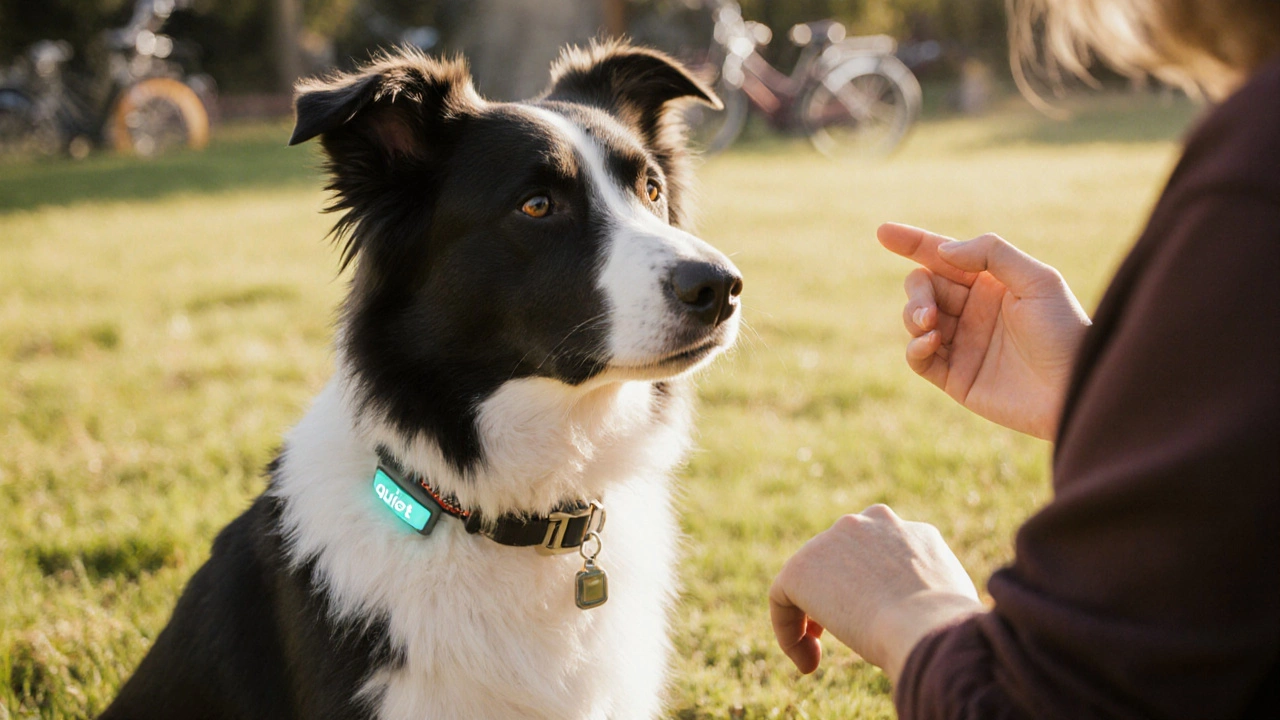 5 November 2025
- Morgan Ainsworth
- 0 Comments
Do vibrating dog collars work? Here’s what actually happens when you use them
Vibrating dog collars can work for training-but only if used correctly. Learn how they function, when they help, and why they’re safer than shock collars. Real results from UK dog owners and science.
View More