
Dog Collar Size: How to Find the Right Fit for Your Dog
When it comes to your dog’s safety and comfort, dog collar size, the proper measurement around a dog’s neck to ensure a snug but non-restrictive fit. Also known as neck circumference measurement, it’s not just about style—it’s about preventing escapes, choking, or skin damage. A collar that’s too tight cuts off circulation. One that’s too loose? Your dog could slip right out of it during a walk or at the park. This isn’t guesswork. It’s basic physics and biology.
Many dog owners think they can just grab a medium or large collar off the shelf and call it good. But dog collar fit, how snugly and safely a collar sits on a dog’s neck without causing pressure or sliding varies wildly by breed. A Greyhound’s narrow neck needs a completely different fit than a Bulldog’s thick, wrinkled one. Even within breeds, weight and muscle matter. A 50-pound Labrador with a thick coat needs more room than a lean one. That’s why measuring isn’t optional—it’s essential. Use a soft tape measure or a piece of string, wrap it snugly just behind the ears and below the jaw, and leave room for two fingers. That’s your sweet spot.
And it’s not just about the collar itself. dog harness size, the correct chest and neck dimensions for a harness that distributes pressure evenly and prevents escape often matters more than collar size, especially for pullers or dogs with tracheal issues. If your dog pulls hard on walks, a harness might be safer than a collar. But even harnesses need proper sizing. Too loose? They’ll twist or slip off. Too tight? They’ll rub or restrict movement. And don’t forget dog collar types, different styles like flat collars, martingales, or quick-release buckles, each suited to specific breeds and behaviors. A martingale collar is perfect for sighthounds who can slip out of standard collars. A flat collar works fine for most labradors. A prong or choke collar? Those are training tools, not everyday wear—and they require expert handling.
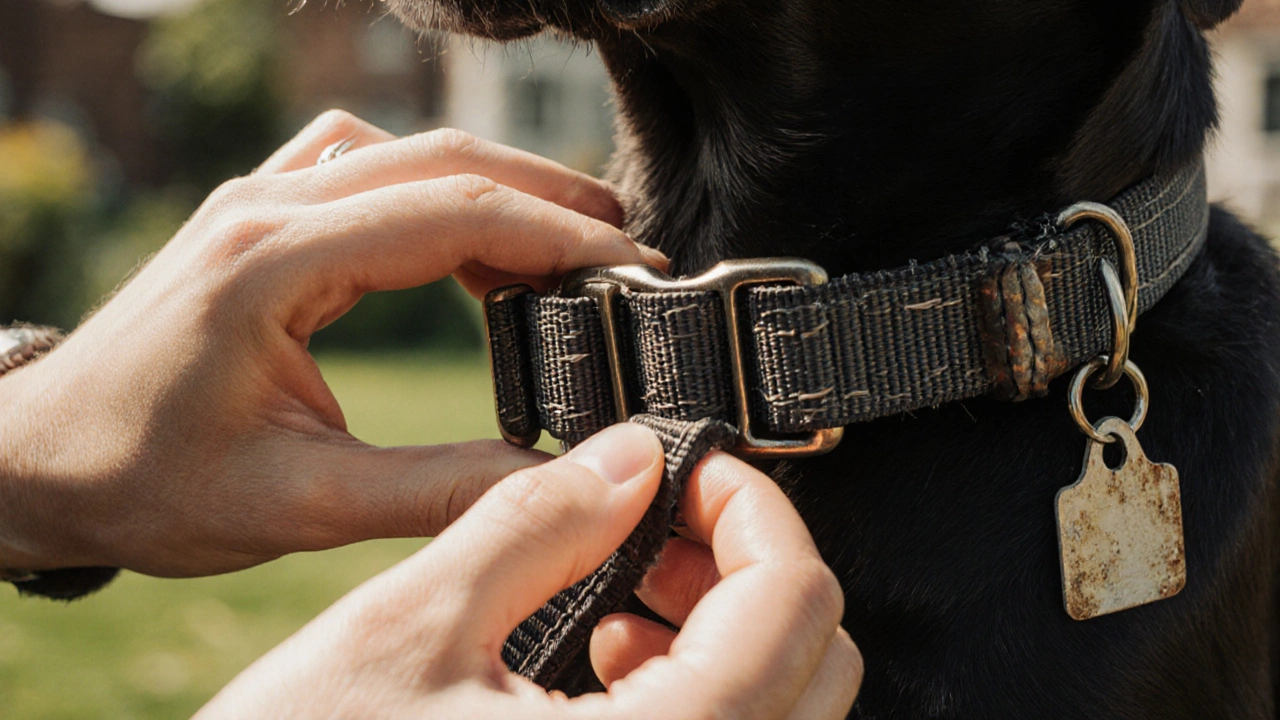
Size changes too. Puppies grow fast. Senior dogs lose muscle. Seasonal coats swell in winter and thin in summer. Re-measure every few months. If your dog’s collar leaves red marks, if they’re constantly trying to wiggle out of it, or if you can’t slide two fingers under it anymore—it’s time for a new one. Don’t wait for a near-escape to realize you got it wrong.
What you’ll find below are real-life guides from dog owners and trainers who’ve been there. From how to measure a stubborn puppy to why your German Shepherd’s collar keeps sliding, we’ve collected the most practical advice—no fluff, no theory, just what works. Whether you’re new to dog ownership or you’ve had your third labrador, these posts will help you get the fit right the first time.
 24 November 2025
- Morgan Ainsworth
- 0 Comments
How Often Should You Replace Your Dog's Collar? A Practical Guide for Pet Owners
Learn when and why to replace your dog's collar for safety and comfort. Signs of wear, material differences, sizing tips, and expert advice for UK pet owners.
View More