
Dog Collar Replacement: When and How to Swap Out a Worn or Damaged Collar
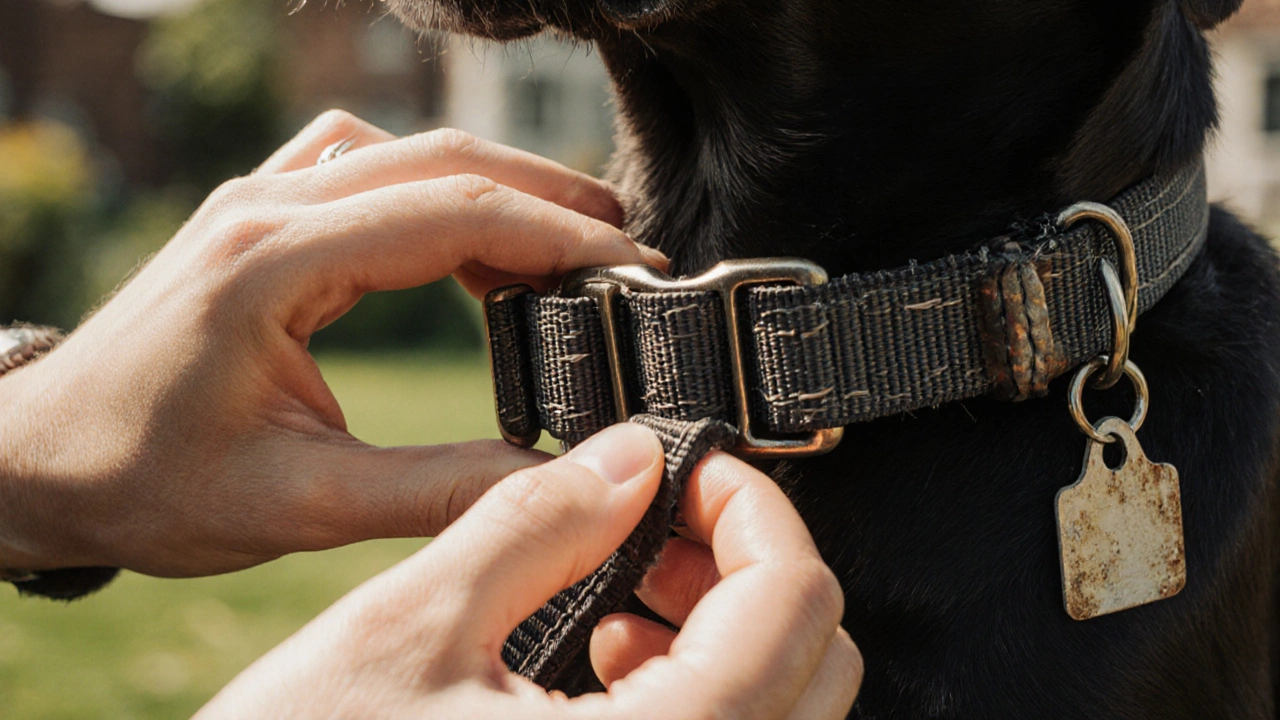
When your dog’s dog collar replacement, the process of swapping out an old, damaged, or ill-fitting collar for a new one. It’s not just about looks—it’s safety. A frayed strap, loose buckle, or stretched loop can mean your dog slips out during a walk, gets caught on something, or develops skin irritation. This isn’t something you wait for until it breaks. Most owners don’t realize their dog’s collar needs replacing until it’s already failing. That’s why checking it every few months matters more than you think.
dog collar size, the correct measurement around your dog’s neck to ensure a snug but comfortable fit changes over time. Puppies grow fast. Adult dogs gain or lose weight. Even seasonal coat changes affect how a collar sits. A collar that fits perfectly in winter might be too tight in summer. The rule? You should be able to slip two fingers easily under the strap. If you can’t, it’s too tight. If you can slide your whole hand through, it’s too loose. And if the buckle is cracked or the D-ring wobbles, it’s time for a dog harness, an alternative to traditional collars that distributes pressure across the chest and shoulders—especially if your dog pulls on leash.
Not all collars are made the same. A basic nylon collar might last a year with light use. A leather one can last years if cleaned and conditioned. But if your dog is a chewer, a heavy puller, or spends time in water, even the toughest collar wears out faster. Look for signs: frayed stitching, faded color, stiff or brittle material, or rust on metal parts. If the collar smells weird even after washing, it’s trapping bacteria. That’s a health risk. And if you’re using a dog training collar, a specialized collar designed for behavior correction, including vibrating or prong styles, make sure the replacement matches the original function. You can’t just swap a vibrating collar for a plain one and expect the same results.
Replacing a collar isn’t a chore—it’s part of basic pet care, like brushing or trimming nails. Do it right, and your dog stays safe. Do it wrong, and you risk a runaway dog, a sore neck, or worse. The posts below show real cases from UK dog owners: how a worn collar led to escape, why a poorly fitted collar caused hair loss, and which materials last longest in muddy fields or rainy walks. You’ll also find tips on measuring your dog’s neck without a tape, how to transition from collar to harness, and what to avoid when buying online. No fluff. Just what works.
 24 November 2025
- Morgan Ainsworth
- 0 Comments
How Often Should You Replace Your Dog's Collar? A Practical Guide for Pet Owners
Learn when and why to replace your dog's collar for safety and comfort. Signs of wear, material differences, sizing tips, and expert advice for UK pet owners.
View More