
Carry-on Pet Carrier: What You Need to Know Before You Fly
When you’re planning a trip with your dog or cat, a carry-on pet carrier, a compact, airline-approved container designed to fit under the seat in front of you. Also known as in-cabin pet carrier, it’s the only way most small pets can travel with you without ending up in cargo. But not all carriers are created equal—and airlines don’t always make it easy to know which one will actually get you through the gate.
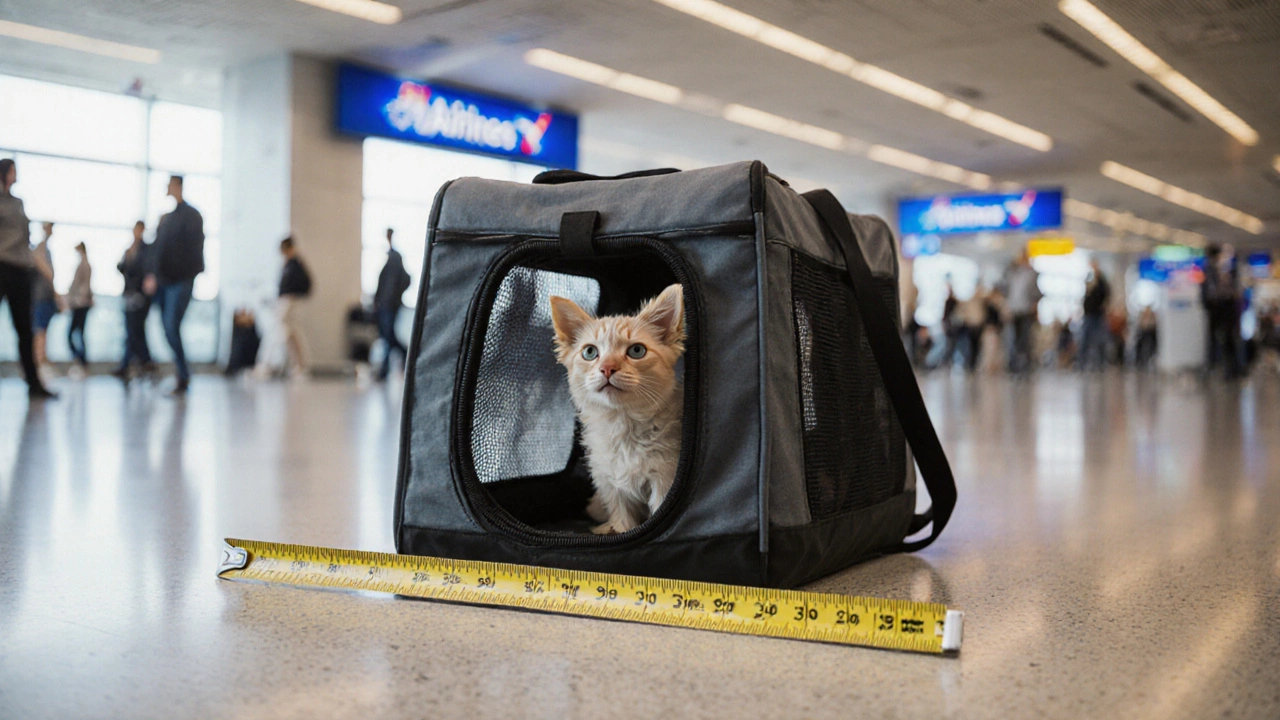
What matters most? pet carrier dimensions, the exact measurements airlines use to decide if your bag fits under the seat. Most carriers must be under 18 x 11 x 11 inches, but that’s just the starting point. Your pet needs to stand, turn around, and lie down comfortably inside. A carrier that meets the size limit but squishes your pup? That’s not travel, that’s stress. And airline pet travel, the set of rules, fees, and restrictions airlines apply to pets flying in the cabin changes often. One carrier might work on British Airways but get turned away on Ryanair. Some airlines allow soft-sided carriers only. Others require hard-shell crates with ventilation on all sides. Then there’s the weight limit—usually 15 to 20 pounds total, carrier included. If your cat weighs 12 pounds, you’ve got 3 to 8 pounds left for padding, water bottle, and leash.
Don’t assume your carrier is good just because it says "airline approved" on the label. That’s not a legal term. Airlines check carriers at the gate, not the check-in counter. I’ve seen people get turned away because their carrier was one inch too tall, or because the zipper wasn’t secure enough. The best move? Measure your carrier with a tape, not your eyes. Take a photo of it next to a ruler and email it to the airline before you leave. And if you’re flying with a service dog? You still need a carrier if it’s small enough—but you can’t be denied boarding just because you don’t have paperwork. Know your rights.
There’s a reason so many posts here talk about pet travel, grooming, and dog comfort. If you’re flying with your pet, you’re not just packing a bag—you’re preparing for a whole experience. That means thinking about bedding, hydration, calming techniques, and what happens if your carrier gets gate-checked. You’ll find real advice below from people who’ve been there: which carriers actually survived a flight from London to Edinburgh, how to pick the right size for a Cocker Spaniel versus a Persian cat, and what airlines don’t tell you about temperature controls in cargo holds. Whether you’re flying for vacation or moving homes, this collection gives you the straight facts—no fluff, no guesswork.
 6 November 2025
- Morgan Ainsworth
- 0 Comments
What Is the Largest Pet Carrier Allowed on a Plane? Size Limits and Airlines That Let You Fly Big
Find out the largest pet carrier allowed on a plane, which airlines let you fly with bigger carriers, and how to avoid being turned away at the gate. Learn size limits, weight rules, and what to do if your pet is too big.
View More